
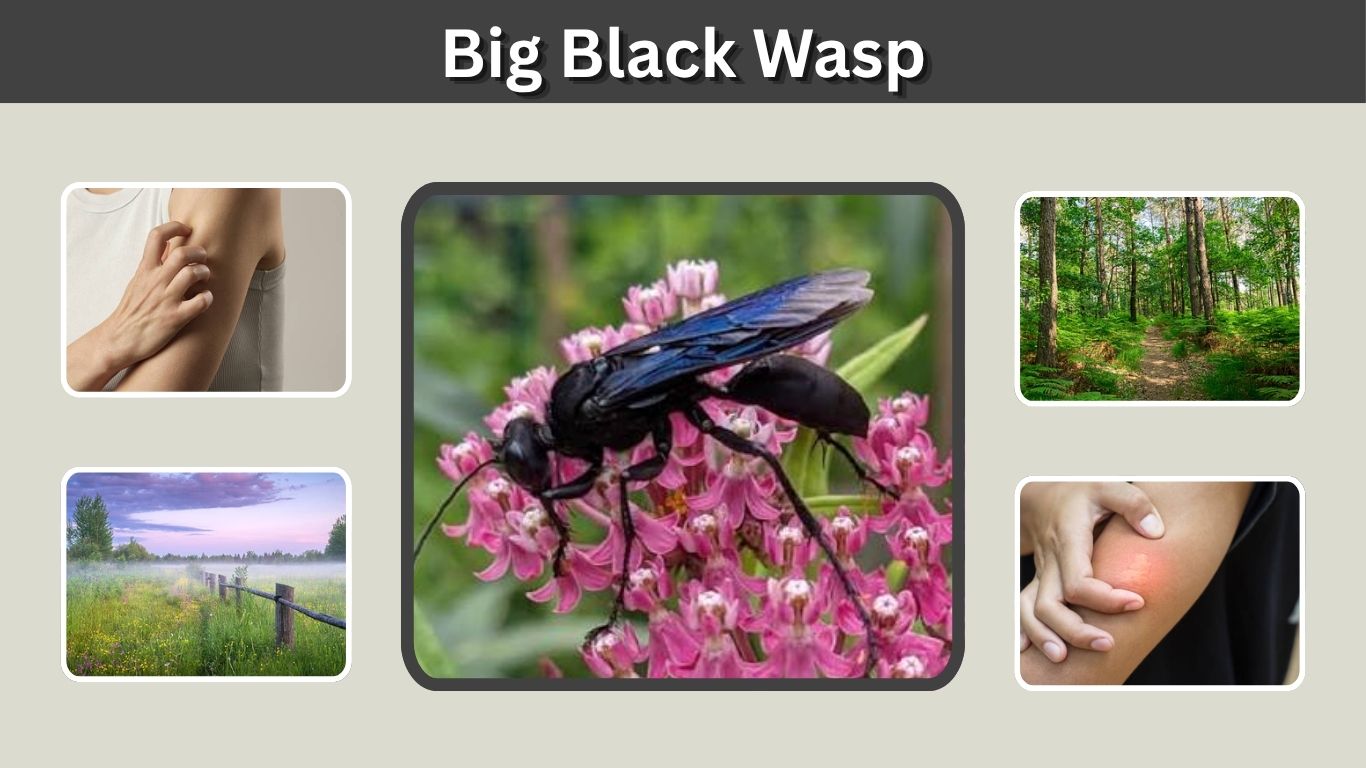
A big black wasp can be frightening when it suddenly appears in your garden, near your home, or around flowering plants. These insects often have shiny black bodies, dark wings, and impressive sizes, making them easy to mistake for dangerous hornets. However, many large black wasps are solitary hunters that rarely bother humans. Some have metallic blue wings, while others display orange, yellow, or white markings. This guide explains how to identify big black wasps, recognize different species, understand their nesting habits, and determine whether their stings are dangerous.
What Does a Big Black Wasp Look Like?
A big black wasp usually has an elongated body, a narrow waist, long antennae, and dark-colored wings. However, appearance differs significantly between species. Some wasps are completely black, while others have colorful stripes or metallic reflections. The Great Black Wasp (Sphex pensylvanicus) is among the most recognizable large black wasps in North America.
Big Black Wasp Identification
- Size: Many large species measure approximately 1–2 inches long.
- Body Color: Solid black, glossy black, or metallic blue-black.
- Wings: Dark, smoky, bluish, reddish, or orange depending on species.
- Body Shape: Elongated abdomen with a narrow waist.
- Antennae: Long, segmented antennae, usually black or dark brown.
- Legs: Slender or spiny legs adapted for walking and capturing prey.
- Stinger: Females of many species possess a venomous stinger.
How Big Is a Black Wasp?
The Great Black Wasp generally measures around 22–35 mm (0.9–1.4 inches), although individual sizes vary.
Females are typically larger than males because they hunt prey and construct underground nests.
Their black wings often reflect blue or purple when exposed to sunlight, creating a distinctive appearance.
Common Types of Big Black Wasps
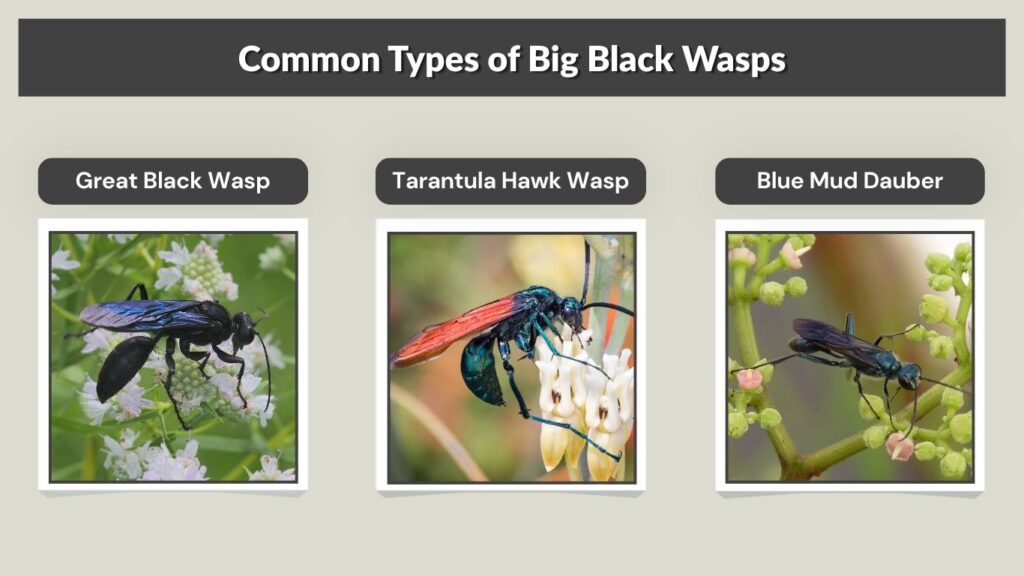
Not every big black wasp belongs to the same species. Several wasps share similar body shapes but differ in wing color, markings, and hunting behavior. Some nest underground, while others construct mud nests or establish colonies. Identifying the species helps determine whether the insect is a beneficial solitary hunter or a more defensive social wasp.
1. Great Black Wasp
The Great Black Wasp is a large, entirely black digger wasp with blue-iridescent wings.
Females hunt katydids and grasshoppers, carrying paralyzed prey into underground nesting chambers.
These solitary wasps are common around flowering gardens and rarely sting unless disturbed.
2. Tarantula Hawk Wasp
Tarantula Hawks are large black wasps with striking orange or reddish wings. Their dark bodies often show metallic blue reflections.
Females hunt tarantulas and provision their nests with paralyzed spiders.
Although generally nonaggressive, their defensive sting is exceptionally painful.
3. Blue Mud Dauber
The Blue Mud Dauber (Chalybion californicum) is a metallic blue-black wasp measuring approximately one inch long.
It frequently reuses abandoned mud nests and provisions them with spiders.
These wasps are solitary and generally avoid human contact.
4. Eastern Cicada Killer
The Eastern Cicada Killer is a big black-and-yellow wasp with reddish wings and yellow abdominal markings.
Females construct underground burrows and hunt cicadas for their developing larvae.
Despite their intimidating appearance, these wasps rarely sting people.
5. Bald-Faced Hornet
The Bald-Faced Hornet is a black-and-white wasp with distinctive pale facial and abdominal markings.
It constructs enclosed paper nests and lives in colonies.
Unlike solitary digger wasps, Bald-Faced Hornets can aggressively defend nests when disturbed.
Big Black Wasp Identification by Wing Color
Wing color is a useful clue when trying to identify a big black wasp. Some insects have entirely dark wings, while others possess brilliant orange, blue, or reddish wings. These colors can help narrow down possible species, although identification also requires examining body markings, size, antennae, and geographic location.
Common Wing and Body Color Variations
- Big black wasp with blue wings: Often a Great Black Wasp or Blue Mud Dauber.
- Big black wasp with orange wings: May be a Tarantula Hawk.
- Big black wasp with red wings: Could be a spider wasp with reddish-orange wings.
- Big black-and-yellow wasp: Commonly an Eastern Cicada Killer.
- Big black-and-white wasp: May be a Bald-Faced Hornet.
- Big red-and-black wasp: Could be a Great Golden Digger Wasp.
- Big black wasp with yellow legs: May belong to a yellow-marked digger wasp or spider wasp group.
What Is a Big All-Black Wasp?
A completely black wasp with a narrow waist and dark blue-iridescent wings is frequently a Great Black Wasp.
These insects commonly visit flowers and fly close to the ground while searching for suitable nesting sites.
Their large size can appear threatening, but they are beneficial predators and pollinators.
Where Do Big Black Wasps Live?
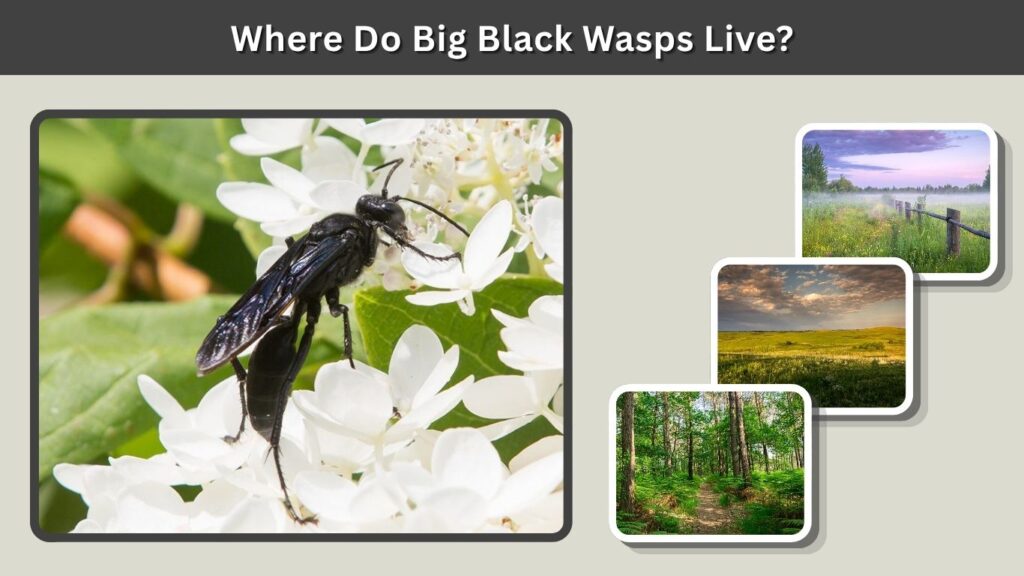
Big black wasps are found in gardens, meadows, forests, grasslands, and residential landscapes. Their distribution depends on the species and availability of suitable nesting areas. Some prefer sandy soil, while others occupy existing mud nests or wooded habitats. In North America, Great Black Wasps occur across many states, particularly during the warmer months.
Big Black Wasp in Texas
Texas supports several large wasp species, including Great Black Wasps, Tarantula Hawks, and Cicada Killers.
Tarantula Hawks are especially associated with warm, dry habitats, while Great Black Wasps frequently visit gardens and flowering plants.
Big Black Wasps in Other States
Great Black Wasps also occur in Florida, Georgia, Michigan, Minnesota, Ohio, Illinois, and numerous other states.
In northern regions, adults are primarily visible during summer. In warmer southern regions, their activity may extend across a longer seasonal period.
What Does a Big Black Wasp Nest Look Like?
Great Black Wasps excavate underground tunnels in soft soil. Each tunnel contains chambers where females deposit eggs alongside paralyzed insect prey.
Blue Mud Daubers reuse existing mud nests, frequently renovating abandoned nests constructed by other wasps.
Bald-Faced Hornets construct large, enclosed paper nests above ground. Nest appearance therefore depends heavily on the species.
Are Big Black Wasps Dangerous?
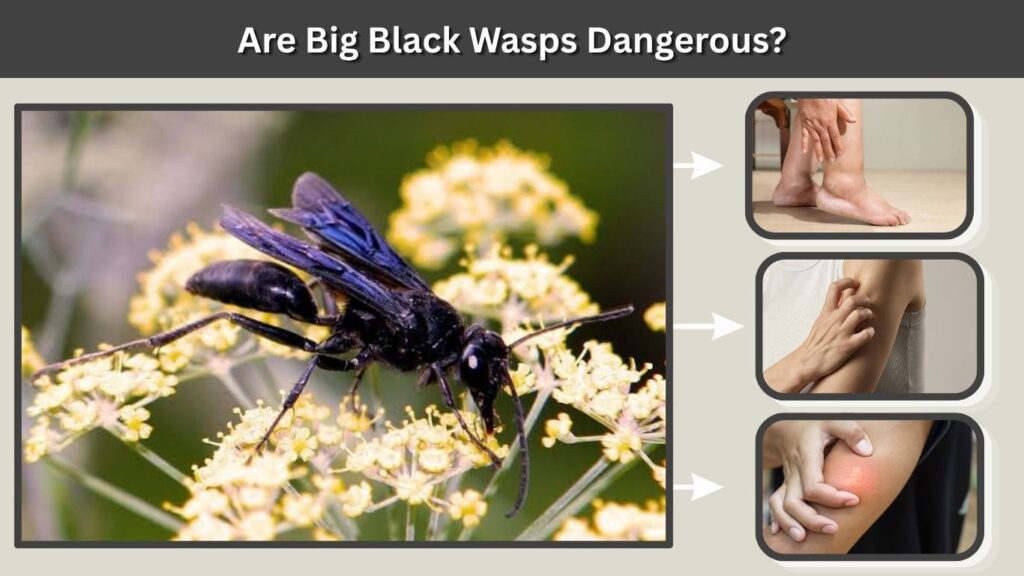
Most big black wasps are not aggressive toward humans. Solitary species generally concentrate on hunting insects, collecting nectar, and reproducing. However, females can sting when threatened or handled. Species such as Tarantula Hawks possess particularly painful stings, while social wasps may defend their nests more actively than solitary hunters.
Big Black Wasp Sting Symptoms
A sting from a large black wasp may cause:
- Immediate sharp or burning pain.
- Redness around the affected area.
- Localized swelling and tenderness.
- Itching or warmth near the sting.
- Occasionally, more extensive swelling.
Severe allergic reactions may cause difficulty breathing, throat swelling, or dizziness. These symptoms require immediate emergency medical attention.
How to Avoid Big Black Wasp Stings
Avoid handling unidentified wasps or swatting at them. Move calmly away from insects that appear agitated.
Do not disturb underground burrows or hanging paper nests.
If a nest creates a safety concern near your house, contact a qualified pest-control professional.
Big Black Wasp vs. Similar Flying Insects
Several insects resemble big black wasps despite belonging to different insect groups. Carpenter bees, robber flies, and mydas flies may have dark bodies and powerful flight patterns. However, their anatomical features, feeding habits, and defensive abilities differ. Understanding these differences can prevent unnecessary concern when encountering an unfamiliar black flying insect.
Big Black Wasp vs. Carpenter Bee
Carpenter bees have broad, robust bodies, often with hairy thoraxes and shiny black abdomens.
Great Black Wasps generally have narrower waists, longer-looking legs, and more elongated bodies.
Female carpenter bees can sting, but they rarely do so unless provoked.
Big Black Wasp vs. Black Mydas Fly
Black Mydas Flies resemble wasps through their dark wings and elongated bodies.
However, mydas flies have only one functional pair of wings and cannot sting.
True wasps possess two pairs of wings and often have a more distinctly constricted waist.
FAQs
Big black wasps raise common questions about their identification, nesting habits, and possible danger to humans. Because several species share similar appearances, accurate identification often requires considering wing color, body markings, and location. The following answers address five frequently searched questions about these large flying insects and their behavior.
1. What Is a Big Black Wasp With Blue Wings?
A big black wasp with blue wings may be a Great Black Wasp or Blue Mud Dauber. Both have dark bodies and metallic wing reflections. Great Black Wasps generally have larger bodies and construct underground nests.
2. Does a Big Black Wasp Sting?
Yes. Female Great Black Wasps can sting, but they are generally nonaggressive. They usually sting only when handled, trapped, or directly threatened. Males cannot sting.
3. What Is a Big Black Wasp With a Long Tail?
A big black wasp with a long tail may be a giant ichneumon wasp. Its long, needle-like structure is an ovipositor used to deposit eggs into wood, not a defensive stinger. These wasps are generally harmless to humans.
4. Why Is There a Big Black Wasp in My House?
A big black wasp may enter through an open window, door, or damaged screen while searching for an exit or exploring its surroundings. A single indoor sighting does not necessarily indicate a nest inside the house.
5. Should I Kill a Big Black Wasp?
Usually, killing a solitary big black wasp is unnecessary. Many species pollinate plants and control populations of other insects. If a wasp is indoors, it may be safely guided outside without direct handling. If there is an active nest in a dangerous location, professional assessment is preferable.
