
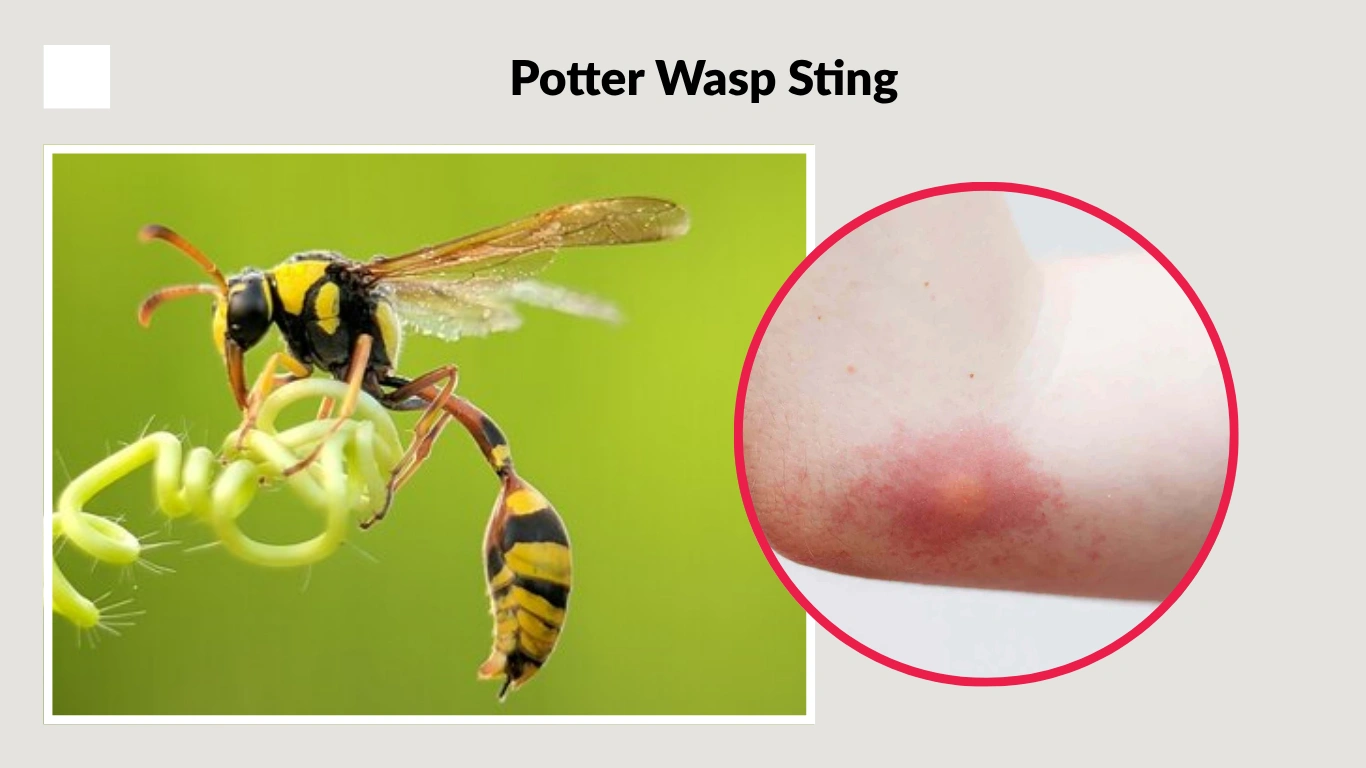
Potter wasps are fascinating creatures known for their unique nest-building abilities and distinctive appearance. These solitary wasps are not typically aggressive and are considered beneficial due to their role in pest control. However, like most wasps, potter wasps can sting when threatened or provoked, leading to concerns about their danger to humans. In this article, we will explore whether potter wasps are dangerous, how their stings affect humans, and what to do if you are stung.
Are Potter Wasps Dangerous?
While potter wasps are not inherently dangerous, their sting can cause discomfort and pain. Unlike social wasps, which live in large colonies and may sting multiple times to protect their nests, potter wasps are solitary creatures. They are typically not aggressive and will sting only in self-defense or if their nests are disturbed.
Potter wasps, like other wasp species, are equipped with a venomous sting used for hunting and defending themselves. The venom causes localized pain and swelling at the sting site. In most cases, the sting is not life-threatening, but it can cause significant discomfort, especially for individuals who are allergic to wasp venom.
In rare instances, a potter wasp sting can lead to an allergic reaction, which may require medical attention. However, for most people, potter wasp stings are not considered dangerous beyond the immediate pain and swelling.
Identification of Potter Wasp Sting
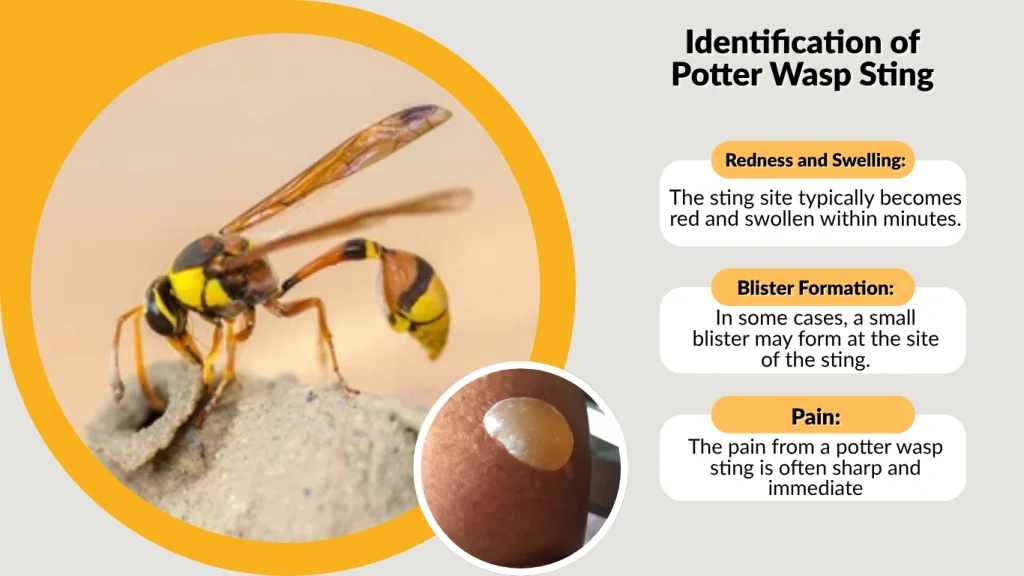
Identifying the symptoms of a potter wasp sting is important for managing the situation effectively. Here are the key signs:
Physical Appearance of the Sting Area
- Redness and Swelling: The sting site typically becomes red and swollen within minutes. The swelling can last for several hours to a couple of days, depending on the severity of the sting.
- Blister Formation: In some cases, a small blister may form at the site of the sting. This is a normal response as the body reacts to the venom.
Behavioral Signs
- Pain: The pain from a potter wasp sting is often sharp and immediate, but it usually subsides within a few minutes to an hour. The intensity of the pain can vary based on the individual’s sensitivity to the venom.
- Itching and Inflammation: After the initial pain fades, itching and inflammation often set in, lasting for a few hours or up to a couple of days. This is a normal reaction, as the body is trying to heal the sting site.
How to Identify a Potter Wasp

Potter wasps are generally easy to identify, even after a sting. They are medium-sized, ranging from 1 to 1.5 inches in length. These wasps have a slender body with a narrow waist, which is typical of the family Vespidae. Their color can range from black to dark brown, often with yellow or orange markings on their abdomen. The name “potter wasp” comes from the shape of their nests, which resemble small, pot-like structures.
Symptoms of a Potter Wasp Sting
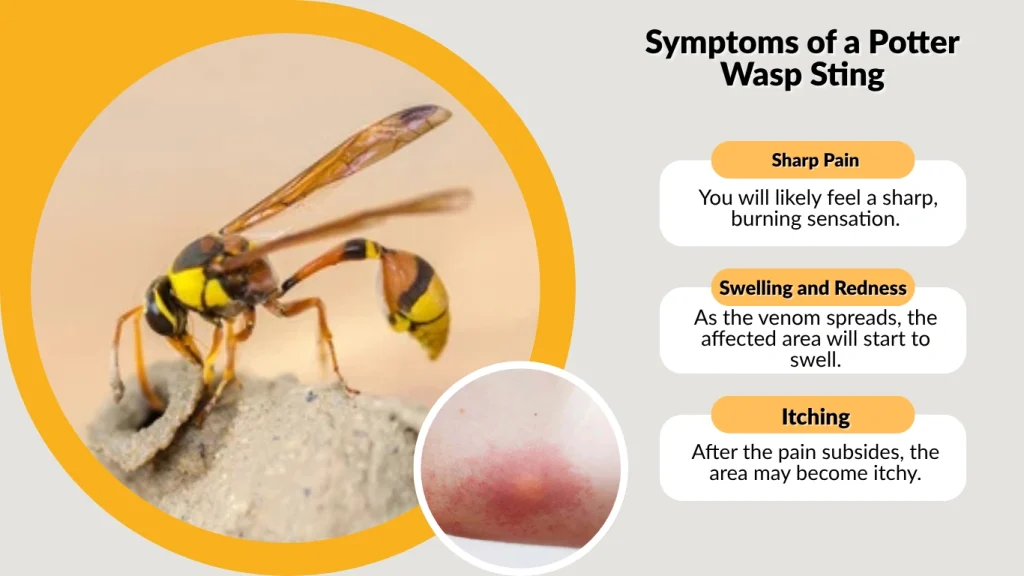
While a potter wasp sting is typically not dangerous, the symptoms can cause temporary discomfort. Here are the common symptoms you might experience after being stung:
Immediate Symptoms
- Sharp Pain: Immediately following the sting, you will likely feel a sharp, burning sensation. This is the most intense part of the sting and can last for a few minutes.
- Swelling and Redness: As the venom spreads, the affected area will start to swell, and the skin will become red. This reaction is common with most insect stings.
Delayed Symptoms
- Itching: After the pain subsides, the area may become itchy. This can be a sign of an allergic reaction, although in most cases, it’s simply the body’s way of healing itself.
- Rash or Hives: In some individuals, a rash or small hives may develop around the sting site. This is usually not a cause for concern unless accompanied by other allergic symptoms.
Severe Symptoms (Rare)
In rare cases, individuals may experience more severe reactions, especially if they are allergic to wasp venom. Symptoms of an allergic reaction can include:
- Difficulty Breathing: If you experience shortness of breath, it may indicate an anaphylactic reaction, which requires immediate medical attention.
- Swelling Beyond the Sting Site: Swelling that spreads to other areas of the body, such as the face or neck, could indicate an allergic reaction.
- Dizziness or Nausea: These symptoms can occur in some individuals after a sting and may be a sign of an allergic reaction.
Treatment for a Potter Wasp Sting
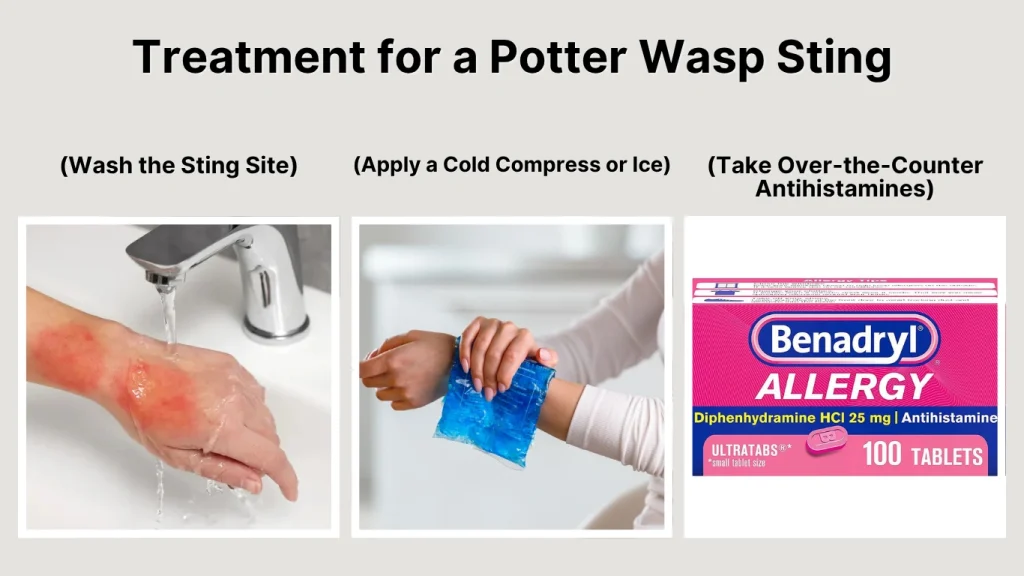
If you are stung by a potter wasp, there are several steps you can take to alleviate the symptoms and manage the pain. Here’s how to treat a potter wasp sting effectively:
First Aid Steps
- Wash the Sting Site: Start by washing the sting site with soap and water. This will help remove any venom that may still be on the skin and reduce the risk of infection.
- Apply a Cold Compress or Ice: Use a cold compress or an ice pack wrapped in a cloth to reduce swelling and numb the area. Apply it for 10 to 15 minutes every few hours for the first few hours after the sting.
- Take Over-the-Counter Antihistamines: If you are experiencing itching or swelling, an over-the-counter antihistamine can help reduce these symptoms. Antihistamines such as Benadryl can also help with any mild allergic reactions.
- Use Topical Steroid Creams: Applying a hydrocortisone cream or calamine lotion to the sting site can help reduce inflammation and ease itching.
When to Seek Medical Attention
While most potter wasp stings can be treated at home, there are times when you should seek medical help:
- Severe Allergic Reactions: If you experience any symptoms of anaphylaxis, such as difficulty breathing, swelling of the face or throat, or dizziness, seek emergency medical help immediately.
- Infection: If the sting site becomes increasingly red, warm, or painful, it could indicate an infection. In this case, you should see a doctor for further treatment.
Are Potter Wasps Aggressive?
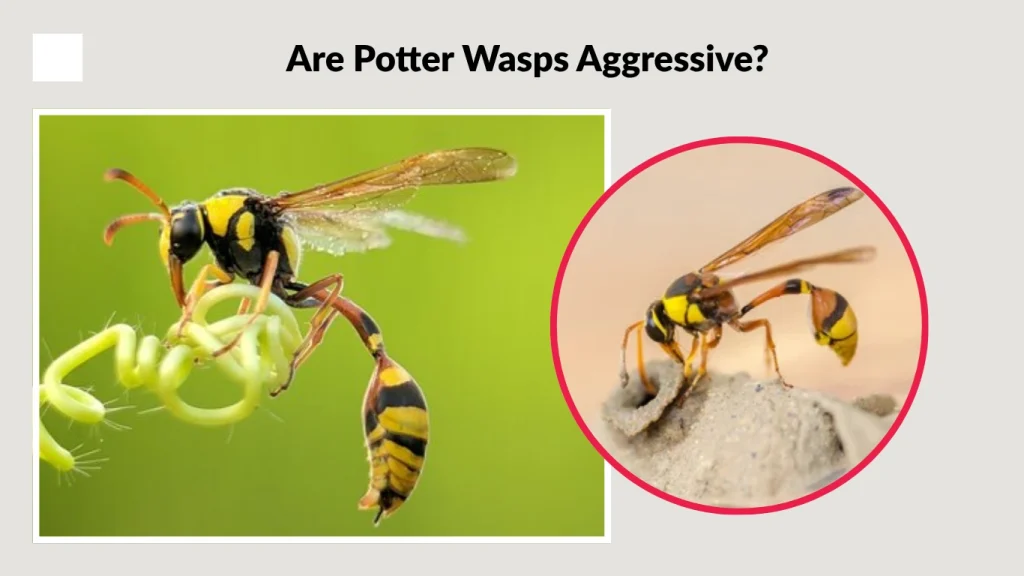
Potter wasps are generally not aggressive and will not sting unless they feel threatened. Unlike social wasps, which work together in colonies to protect their nests, potter wasps are solitary creatures. They primarily sting to protect themselves or their nests.
Typical Behavior
Not Aggressive: Potter wasps are peaceful by nature. They spend most of their time hunting for food or constructing their nests.
Sting in Defense: They are most likely to sting if their nest is disturbed or if they are handled roughly. However, if left undisturbed, they typically won’t sting.
How to Avoid Being Stung
Avoid Disturbing Nests: Potter wasps are known for building nests that resemble small clay pots. These nests are typically placed in sheltered areas like tree branches or under eaves. If you see a potter wasp nest, it’s best to leave it alone.
Stay Calm Around Wasps: If you encounter a potter wasp, stay calm and avoid swatting at it. Sudden movements can provoke the wasp to defend itself.
FAQs
What should I do if I get stung by a Potter Wasp?
Follow first aid steps, including cleaning the sting site, applying a cold compress, and taking antihistamines for itching. Seek medical help if you experience severe symptoms.
Can Potter Wasps cause an allergic reaction?
Yes, in rare cases, potter wasps can cause an allergic reaction, including anaphylaxis. It’s important to monitor for symptoms like difficulty breathing or swelling and seek medical attention if these occur.
How long does the pain from a Potter Wasp sting last?
The pain from a potter wasp sting usually lasts for a few minutes, though swelling and itching may persist for several hours to a couple of days.
Are Potter Wasps harmful to pets?
While potter wasps are not typically dangerous to pets, they may sting in self-defense. If your pet is stung, treat the sting as you would for a human and monitor for signs of allergic reactions.
How can I prevent Potter Wasps from nesting near my home?
Remove potential nesting sites, such as sheltered areas on your property. You can also use natural deterrents like peppermint oil or eucalyptus oil around your home.
