
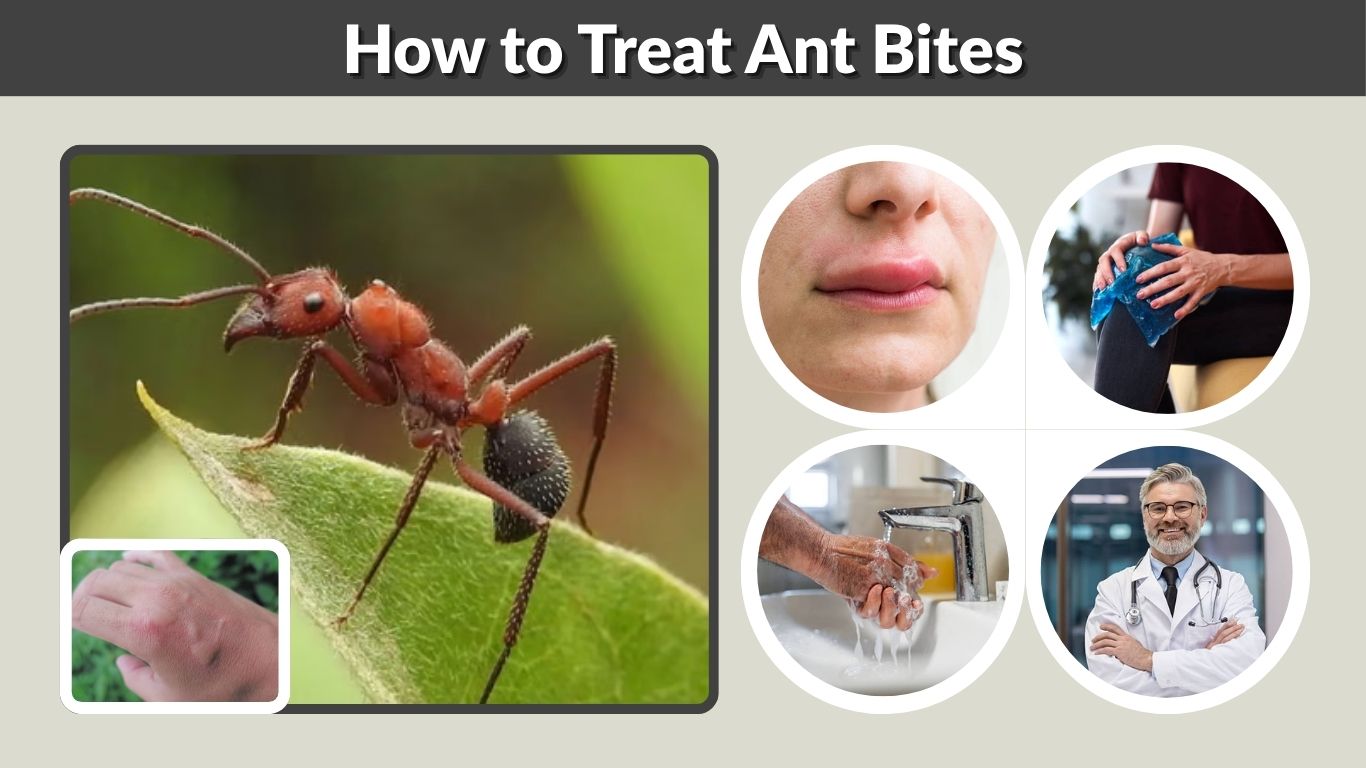
Ant bites and stings can cause burning, itching, redness, swelling, and sometimes small blisters or pustules. Most mild reactions improve with simple home care, but fire ant stings and allergic reactions may need closer attention. Knowing how to treat ant bites correctly can reduce discomfort while helping prevent scratching and secondary infection. Treatment usually involves cleaning the skin, cooling the area, controlling itching, and watching for warning signs such as worsening swelling, breathing problems, fever, or spreading redness.
How to Treat Ant Bites at Home
Most uncomplicated ant bites or stings can be managed at home. The goal is to remove any remaining ants, clean the affected skin, decrease inflammation, and avoid damaging the area through scratching. Mild pain, localized swelling, and itching are common and may improve within a few days. More intense reactions require additional monitoring.
Immediate First Aid for Ant Bites
If you have just been bitten or stung, start treatment as soon as possible.
- Move away from the ants or ant mound to prevent additional stings.
- Brush away any ants still attached to your clothing or skin.
- Wash the affected area gently with soap and clean water.
- Apply a cold, damp cloth or wrapped ice pack for about 10–20 minutes.
- Elevate a bitten hand, foot, arm, or leg when practical to reduce swelling.
- Avoid scratching, rubbing, or squeezing the affected skin.
Cold treatment is especially useful for ant bites on the feet, hands, arms, or legs because these areas may become noticeably swollen. Never place ice directly against bare skin for prolonged periods.
Medicines for Itching and Irritation
For persistent itching, an over-the-counter hydrocortisone cream may help reduce localized inflammation. Calamine lotion can also soothe irritated skin. An oral antihistamine may help when itching is more bothersome.
Follow product directions carefully, and ask a pharmacist or healthcare professional before giving medicines to young children or if you take other medications, are pregnant, or have medical conditions that could affect which medicines are appropriate.
How to Treat Fire Ant Bites and Blisters
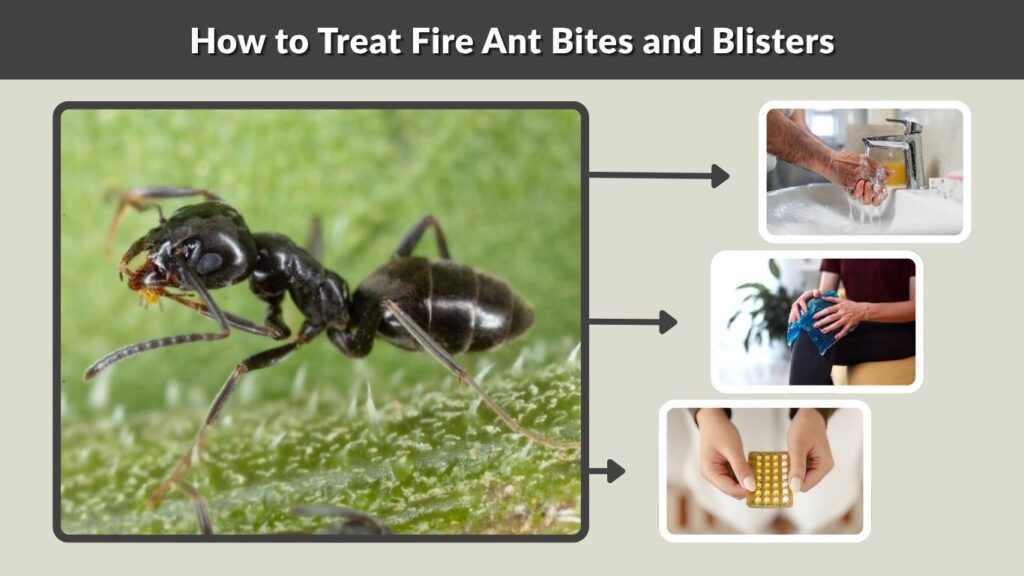
Fire ants differ from many other ants because they use their jaws to hold onto the skin and then sting, injecting venom. What people commonly call a “fire ant bite” is therefore often a venomous sting. Immediate burning may be followed by redness and swelling, and a small pustule can develop later.
What Happens After a Fire Ant Sting?
A fire ant sting commonly causes sudden burning or pain followed by a raised, red area. A small white or yellowish pustule may later form. This pustule can look infected even when it is not.
Fire ant pustules are often sterile rather than being filled with bacteria. They may appear within hours and naturally change over the following couple of days. For that reason, a normal pustule does not automatically mean antibiotics are needed.
How to Treat Fire Ant Bites at Home
For an uncomplicated fire ant reaction:
- Wash the skin gently with soap and water.
- Apply a wrapped cold pack for 10–20 minutes at a time.
- Use hydrocortisone or another appropriate anti-itch treatment if needed.
- Consider an oral antihistamine for significant itching when appropriate.
- Leave fire ant pustules or blisters intact.
- Keep the area clean if a blister accidentally breaks.
- Avoid scratching, picking, squeezing, or deliberately popping the pustule.
The same approach usually applies when figuring out how to treat red ant bites, although reactions vary depending on the ant species.
How to Treat Itchy, Swollen, or Painful Ant Bites
Itching and localized swelling are among the most common reasons ant bites remain uncomfortable after the initial pain disappears. In some people, swelling may increase for several hours before gradually improving. Controlling inflammation while protecting the skin from scratching is usually more useful than applying multiple unproven home remedies.
How to Treat Itchy Ant Bites
To reduce itching and irritation:
- Use a cold compress several times during the day.
- Apply hydrocortisone cream according to the product directions.
- Consider an appropriate oral antihistamine if itching is troublesome.
- Keep fingernails short to reduce skin damage from accidental scratching.
- Cover the area loosely if scratching during sleep is a problem.
- Keep broken skin clean and dry.
Scratching may temporarily feel satisfying, but repeated scratching can break the protective skin barrier and increase the chance of bacterial infection.
What to Do About Swelling
Localized swelling does not necessarily mean you are having a dangerous allergic reaction. Some insect reactions naturally produce a larger area of redness and swelling.
Elevating the affected arm or leg and periodically using a cold compress can help. However, rapidly worsening swelling—particularly around the lips, tongue, face, mouth, or throat—needs much more urgent attention, especially when accompanied by breathing, swallowing, or circulation problems.
When Ant Bites Need Medical Attention
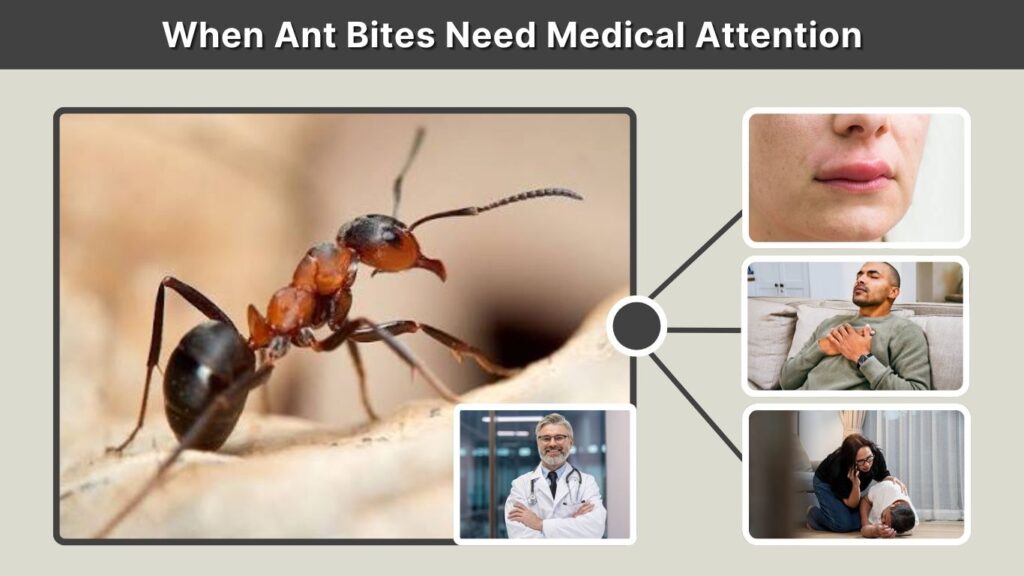
Most ant bites heal without professional treatment, but allergic reactions and infections are important exceptions. Fire ants can trigger serious systemic reactions in susceptible people. Multiple stings may also produce more significant symptoms. Pay attention to changes occurring away from the sting site as well as symptoms that become progressively worse instead of gradually improving.
Signs of a Severe Allergic Reaction
Seek emergency medical help immediately if an ant sting is followed by symptoms such as:
- Difficulty breathing, wheezing, choking, or gasping
- Sudden swelling of the lips, tongue, mouth, or throat
- Difficulty swallowing or throat tightness
- Widespread hives
- Severe dizziness, confusion, or fainting
- Weakness or collapse
- Rapidly developing symptoms involving several parts of the body
These can indicate anaphylaxis, a life-threatening allergic reaction. If someone has been prescribed an epinephrine auto-injector for severe allergies, use it according to their emergency plan and seek emergency medical care.
Signs an Ant Bite May Be Infected
Seek medical advice when you notice:
- Increasing pain rather than gradual improvement
- Redness that continues spreading after a day or two
- Increasing warmth around the wound
- Drainage associated with worsening inflammation
- Red streaking from the affected area
- Fever, chills, or swollen glands
- Significant tenderness developing after the initial reaction
Remember that the small white pustule caused by a fire ant sting can be a normal venom reaction. Infection is more concerning when pain, redness, heat, or systemic symptoms progressively worsen.
Ant Bites on Babies, Children, and Dogs
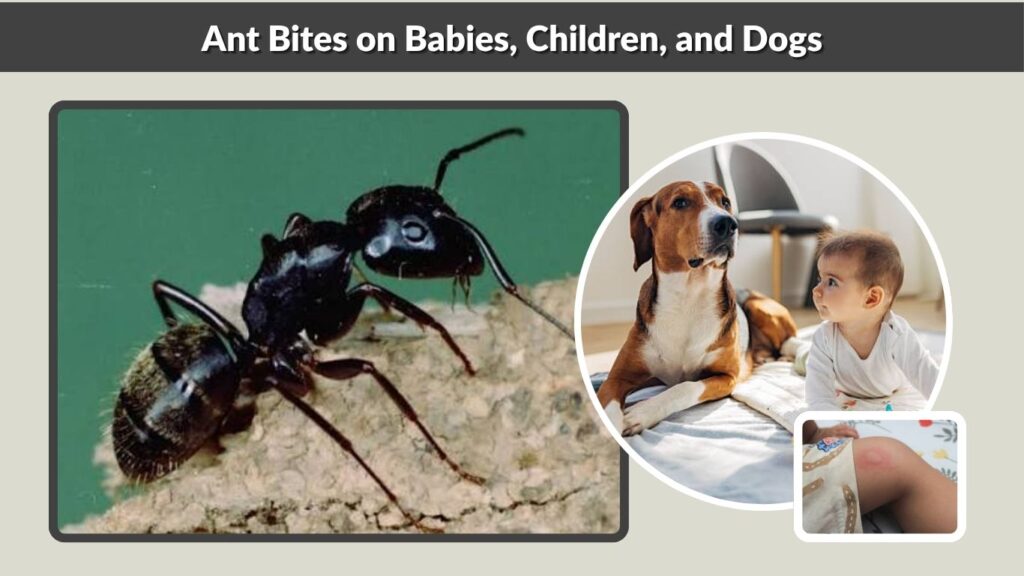
Ant bites can affect people of every age as well as household pets. Children may scratch itchy bites more aggressively, while dogs often encounter ants with their paws, nose, and face. Treatment principles are similar—remove the source, clean the affected area, cool the skin, and monitor symptoms—but medicines require additional caution in children and animals.
How to Treat Ant Bites on Babies and Toddlers
Wash the child’s skin gently and apply a cool compress to mild bites. Prevent scratching as much as possible. Do not automatically use adult-strength creams or oral medicines on babies or toddlers.
Medication choice and dosage should be appropriate for the child’s age and weight, so check the label and consult a pediatric healthcare professional or pharmacist when uncertain. Infants and children with numerous stings, rapidly increasing swelling, facial or mouth involvement, or any breathing difficulty should receive prompt medical evaluation.
How to Treat Ant Bites on Dogs
Move the dog away from the ant mound and carefully brush remaining ants from its coat, paws, and between the toes. A wrapped cold pack may help with minor localized swelling.
Do not give your dog human antihistamines or other medications without veterinary guidance because the correct product and dose depend on the individual animal. Contact a veterinarian urgently if your dog develops facial swelling, hives, vomiting, weakness, pale gums, breathing difficulty, or collapse.
FAQs
1. How long do ant bites take to heal?
Mild ant bites often improve within a few days. Larger local reactions may take longer to settle. Fire ant pustules can remain noticeable for several days, particularly if they are irritated or scratched.
2. Should I pop a blister from a fire ant bite?
No. It is generally better to leave a fire ant blister or pustule intact. Breaking it unnecessarily can damage the skin and create an opening through which bacteria may enter.
3. How do you treat fire ant bites the next day?
Continue keeping the area clean, use cold compresses for swelling, and consider appropriate anti-itch treatments. Avoid scratching or popping pustules. Seek medical care if redness, pain, warmth, swelling, or other symptoms are becoming significantly worse.
4. What is the fastest way to stop an ant bite from itching?
A cold compress can provide quick temporary relief. Hydrocortisone cream or an appropriate oral antihistamine may provide longer-lasting relief for some people. Always follow medication directions and age restrictions.
5. When should I worry about an ant bite?
Seek emergency help for trouble breathing, throat or tongue swelling, fainting, severe dizziness, or other signs of anaphylaxis. Medical attention is also appropriate for multiple stings, stings near the mouth or eyes, worsening symptoms, or signs of infection such as increasing pain, spreading redness, fever, or red streaks.
