

Cicada killer wasps are large, intimidating insects that often raise alarm when spotted around yards or gardens. While they’re not typically aggressive toward humans, their burrowing nests can become a recurring problem—especially in sandy or dry soil. Knowing how to correctly identify a cicada killer wasp nest is the first step toward safe removal. This guide will help you recognize their nesting behavior, understand the risks, and learn effective methods—both natural and chemical—to get rid of them and prevent them from returning.
What Is a Cicada Killer Wasp?
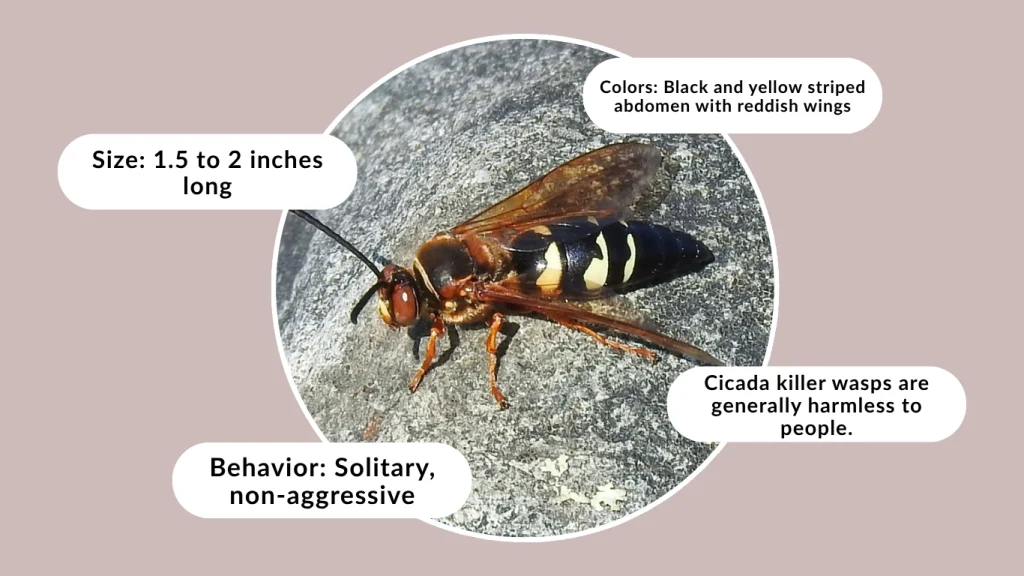
Cicada killer wasps are solitary ground-nesting insects known for their large size and dramatic appearance, but they are not as dangerous as they look.
Appearance and Behavior
- Size: 1.5 to 2 inches long
- Colors: Black and yellow striped abdomen with reddish wings
- Behavior: Solitary, non-aggressive, rarely sting humans unless handled or threatened
Are They Dangerous?
While their size can be intimidating, cicada killer wasps are generally harmless to people. Males can’t sting at all, and females only sting when provoked. Their primary target is cicadas, which they paralyze and carry into their nests as food for their larvae.
Where Do Cicada Killer Wasps Nest?
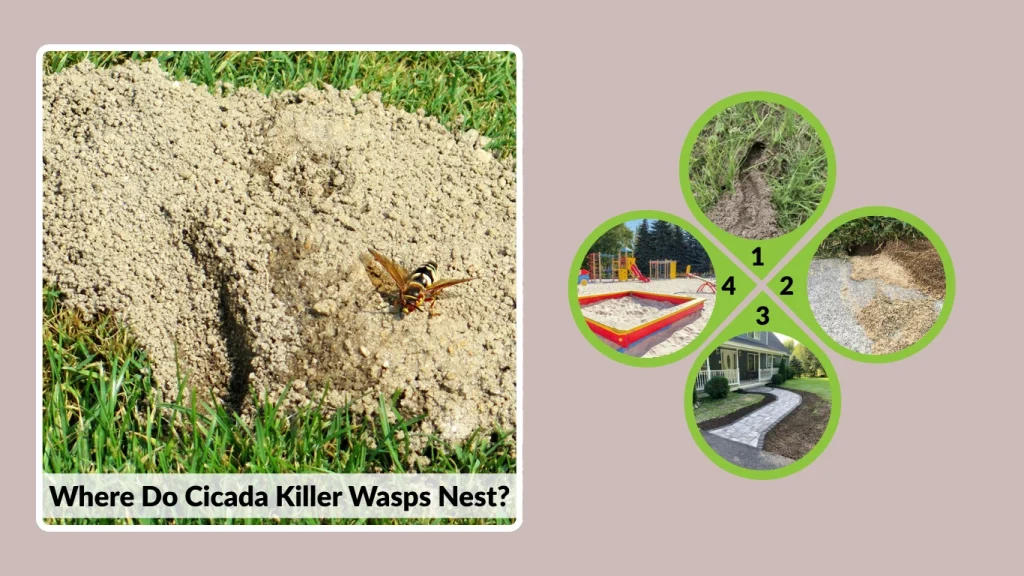
These wasps prefer dry, sunny areas with loose or sandy soil where they can easily dig their burrows.
Typical Nesting Sites
- Lawns with patchy or thin grass
- Flower beds and garden edges
- Along sidewalks, driveways, and patios
- Playgrounds or sandy areas
When Do They Nest?
Nesting season usually begins in mid-to-late summer. Each female digs her own burrow, often resulting in clusters of nests when the environment is ideal.
How to Identify a Cicada Killer Wasp Nest
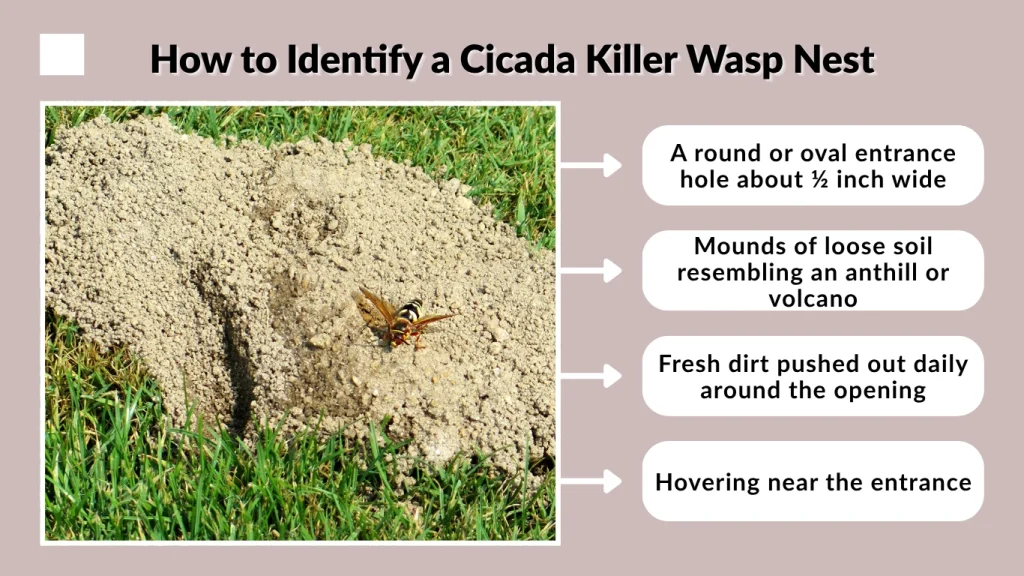
Their nests have a distinct structure and appearance that makes them easier to spot if you know what to look for.
Visual Signs
- A round or oval entrance hole about ½ inch wide
- Mounds of loose soil resembling an anthill or volcano
- Fresh dirt pushed out daily around the opening
Behavioral Clues
- Large wasps flying low to the ground
- Hovering near the entrance
- Males often seen patrolling and chasing off other insects (but can’t sting)
Are Cicada Killer Nests Dangerous?
While cicada killer wasps are not aggressive, their nests can still cause various problems—especially when they appear in large numbers or high-traffic areas.
Potential Issues with Their Nests
- Lawn Damage: Their digging can disrupt soil, uproot grass, and leave unsightly holes.
- Fear Factor: Their size and low flight can cause fear, especially in children and pets.
- Multiple Nests: One nest can quickly turn into several if the environment is suitable, creating a larger infestation risk.
How to Get Rid of Cicada Killer Wasp Nests
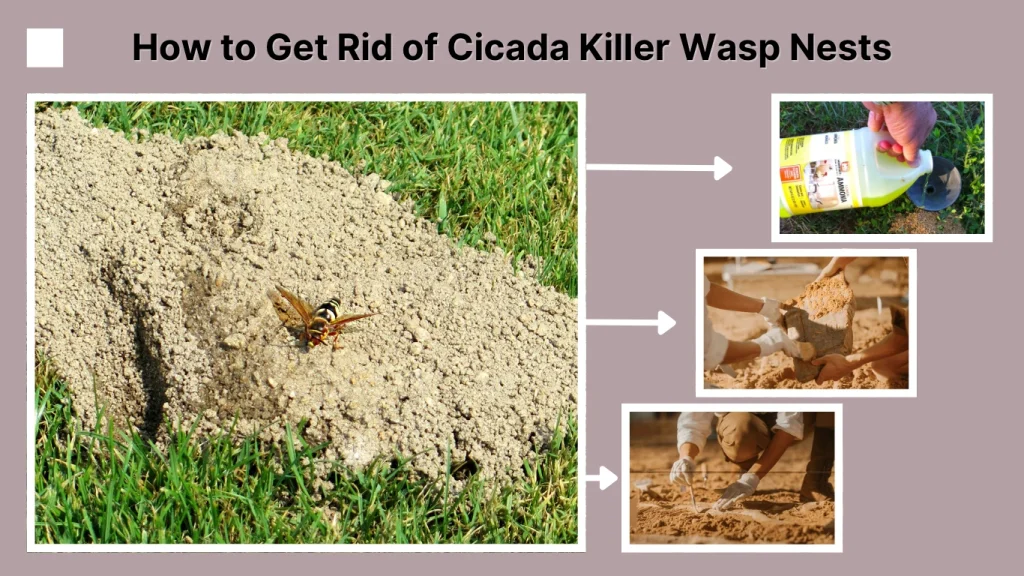
There are several methods to remove these nests—some natural and manual, others chemical. Choose the safest and most effective based on your comfort level and nest location.
Manual Removal Methods
- Flood the nest with water (preferably at night when the wasp is inside)
- Cover the entrance with a heavy brick or landscape stone
- Carefully dig up the tunnel using gloves and protective clothing
Natural Remedies
- Sprinkle diatomaceous earth into and around the tunnel
- Spray with essential oils like peppermint, clove, or citronella
- Fill the tunnel with soil mixed with chili powder or vinegar as a deterrent
Insecticidal Solutions
- Apply insecticidal dust made for ground-nesting wasps directly into the tunnel
- Do this in the evening or early morning when activity is lowest
- Always wear gloves and follow product directions
How to Prevent Cicada Killer Wasps from Nesting Again
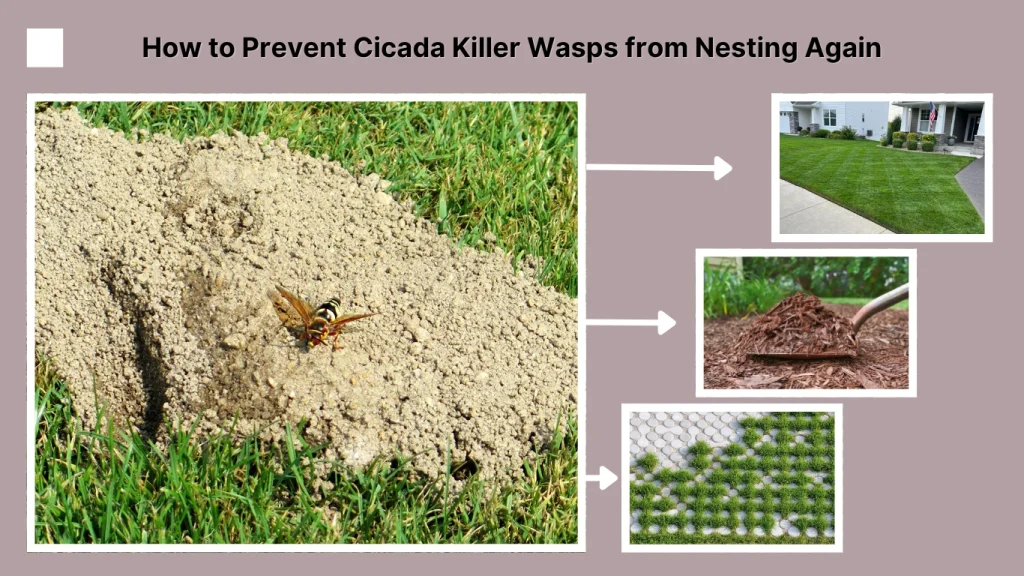
Once nests are removed, take proactive steps to discourage wasps from returning to the same area.
Prevention Strategies
- Thicken your lawn: Overseed or fertilize to create dense grass
- Water regularly: Wasps avoid moist or muddy soil
- Mulch exposed soil: Especially in garden beds and walkways
- Fill previous tunnels: Use gravel or compacted soil to block access
- Limit sandy patches: Replace with grass, stone, or pavers if necessary
When to Leave the Nest Alone
In some situations, removing a cicada killer wasp nest may not be necessary. These wasps are non-aggressive and play a role in controlling cicada populations.
When It’s Okay to Avoid Removal
- Remote Area: If the nest is in a far corner of your yard or away from human activity
- Low Risk: No children, pets, or foot traffic nearby
- Late in Season: Cicada killers are seasonal and usually die off by the end of summer
- Minimal Activity: If you only see one or two wasps with no damage or cluster formation
Unless they are interfering with your daily life or damaging your property, cicada killers can often be left alone without issue.
FAQs
1. Do cicada killer wasps sting humans?
Yes, but rarely. Females can sting if handled or threatened, but they are not aggressive. Males cannot sting at all—they only act territorial.
2. Are they harmful to plants or pets?
No, cicada killer wasps don’t feed on plants or attack pets. However, their nesting activity can create holes and displace soil around garden beds.
3. How deep are their nests?
Their burrows can reach depths of 6 to 10 inches and may include several chambers where they store paralyzed cicadas for their larvae.
4. Can I use boiling water to kill the nest?
Yes, pouring boiling water into the nest entrance at night can be an effective natural method, but use caution to avoid burns and ensure no pets or children are nearby.
5. Do cicada killers return to the same nest each year?
No, they do not reuse the same tunnels. However, new wasps may return to the same general area if soil conditions are still favorable.
