

Bees and wasps are often confused due to their similar buzzing and flying patterns, but they are quite different in many ways. From their body structure and diet to their behaviour and role in nature, these two insects serve very different purposes. Whether you’re gardening, picnicking, or simply curious, understanding how to tell them apart can help you stay safe and informed. Below is a detailed table comparing their key traits, followed by explanations of 11 major differences to help you recognise and appreciate their unique characteristics.
Comparison Table:

| Feature | Bees | Wasps |
| 1. Body Shape | Round, stout, and fuzzy | Slender, smooth, with a narrow waist |
| 2. Hair Coverage | Covered in dense hair | Mostly hairless and shiny |
| 3. Color Pattern | Dull yellow, golden, or brown tones | Bright yellow and black contrast |
| 4. Behavior | Gentle, non-aggressive | Aggressive and defensive |
| 5. Stinger Use | Sting once and die (honeybees) | Can sting multiple times |
| 6. Nest Material | Made of wax | Paper-like pulp from wood fibers |
| 7. Diet | Nectar and pollen | Insects, meat, sugar, and food waste |
| 8. Pollination Role | Essential pollinators | Limited or no pollination contribution |
| 9. Social Structure | Large, organized colonies | Some solitary, some social |
| 10. Lifespan | Weeks to years (queen bees) | Most live for a season |
| 11. Seasonal Activity | Active in spring and early summer | Most active in late summer to fall |
11 Key Differences
1. Body Shape
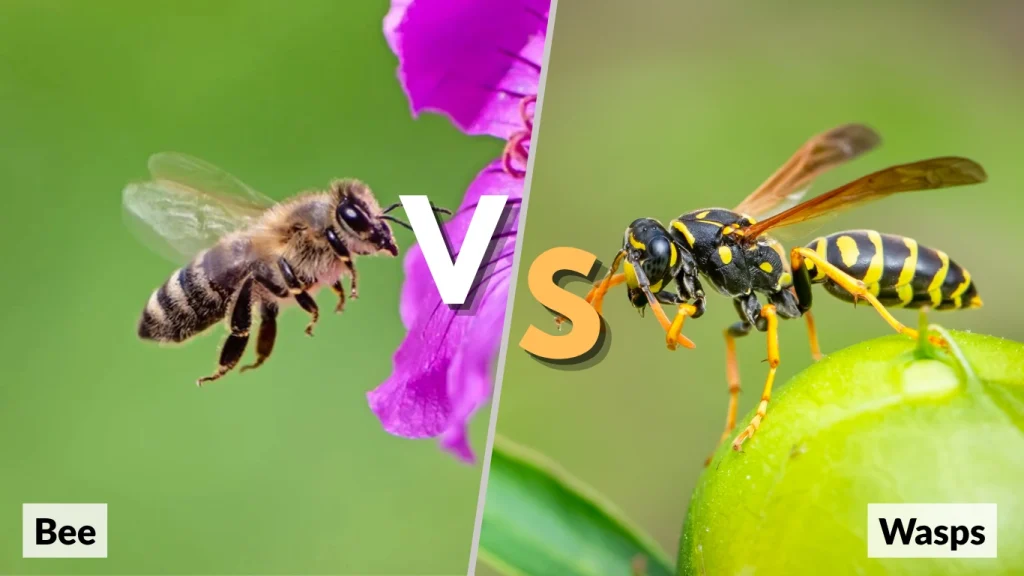
Bees have a rounded, compact body with a thick waist and a slightly fuzzy appearance. Their bodies are designed for collecting pollen and navigating flowers. Wasps, by contrast, have a sleek, slender body with a noticeably narrow waist, giving them a more wasp-waisted, aerodynamic shape ideal for hunting and flying swiftly.
2. Hair Coverage
Bees are covered in tiny hairs that help trap pollen grains as they move from flower to flower. These hairs are essential for their role in pollination. Wasps, on the other hand, are smooth and shiny with little to no visible hair, which reflects their predatory and scavenger nature rather than a pollination role.
3. Color Pattern
Bees usually display muted colors such as golden brown, pale yellow, or black. Their coloring blends well in floral environments. Wasps feature bold, high-contrast patterns—typically bright yellow and black—which serve as a visual warning to predators. This coloration helps signal danger due to their ability to sting repeatedly.
4. Behavior
Bees are typically non-aggressive and focused on collecting nectar and pollen. They only sting when they feel directly threatened. Wasps, however, are known for their defensive and sometimes aggressive behavior, especially around food or when their nest is disturbed. They are more likely to sting without much provocation.
5. Stinger Use
Most bees, like honeybees, have a barbed stinger that lodges into the skin, causing the bee to die after a single sting. Wasps have smooth stingers, allowing them to sting multiple times without injury. This makes wasps particularly more dangerous in situations where they feel provoked or cornered.
6. Nest Material

Bees build their nests using wax secreted from glands in their bodies. These wax cells form the classic hexagonal honeycomb structure found in hives. Wasps, however, chew wood fibers mixed with saliva to create a papery substance. This pulp is used to build nests that often resemble paper-like, layered structures hanging from trees or buildings.
7. Diet
Bees feed primarily on nectar and pollen from flowers. Their diet supports pollination and honey production. Wasps are more opportunistic and omnivorous. They hunt insects, feed on meat, and are often attracted to sugary drinks and food scraps, especially in late summer. This dietary difference impacts their behavior around humans.
8. Pollination Role
Bees are among the most important pollinators in nature and agriculture. Their hairy bodies and constant visits to flowers make them efficient pollen carriers. Wasps do visit flowers but are not built for pollination. They may contribute slightly to the process, but they are not reliable or intentional pollinators like bees.
9. Social Structure
Bees live in complex, organized colonies with specific roles for queens, workers, and drones. Their hive functions with impressive cooperation. Wasps can be either solitary or social, depending on the species. Social wasps do form colonies, but many wasps live alone, building small nests and working independently.
10. Lifespan
A worker bee typically lives a few weeks to a couple of months, while queen bees can live for several years. In contrast, most wasps have a much shorter lifespan. Workers die in the fall, and only mated queens survive the winter to restart the colony in the spring.
11. Seasonal Activity
Bees are most active in spring and early summer when flowers are in full bloom. Wasps are more noticeable in late summer and early fall. This seasonal pattern is tied to colony growth and food availability. As food becomes scarce, wasps become more aggressive and visible around human spaces.
FAQs
Can bees and wasps live in the same area?
Yes, bees and wasps can inhabit the same general environment, especially gardens or wooded areas. However, they typically build separate nests and do not interact. Bees prefer hives or cavities, while wasps often build exposed, papery nests. Their behavior and diet keep them focused on different tasks even in shared spaces.
Which insect is more dangerous to humans—bees or wasps?
Wasps are generally more dangerous due to their aggressive nature and ability to sting multiple times. Bees are less likely to sting unless provoked, and most will die after one sting. However, allergic reactions to either sting can be severe, making both potentially hazardous for sensitive individuals.
Why do wasps become more aggressive in late summer?
By late summer, wasp colonies reach their peak size, and natural food sources become limited. Worker wasps start scavenging for sugary and protein-rich food, often around humans. This shortage of food, combined with colony defense, makes them more aggressive and likely to sting.
Do all bees die after stinging?
No. Only honeybees die after stinging because their barbed stinger gets lodged in the skin and tears from their abdomen. Other bee species, such as bumblebees and carpenter bees, can sting multiple times without dying, although they are generally not aggressive.
How can I safely identify whether it’s a bee or a wasp near me?
Observe body shape and behavior. Bees are fuzzy and round with slow, deliberate movements, usually around flowers. Wasps are slender, shiny, and fly more erratically. If it’s hanging around sugary drinks or meat, it’s likely a wasp. If it’s visiting flowers consistently, it’s probably a bee.
