

If you’ve been stung by a wasp and noticed the swelling isn’t going away—or even getting worse—after 24 hours, you’re not alone. While mild swelling is expected, delayed or increased swelling can sometimes raise questions or concern. This guide explains why swelling may persist or worsen after a full day, how to treat it effectively, and how to recognize warning signs that require medical attention.
Understanding Wasp Stings
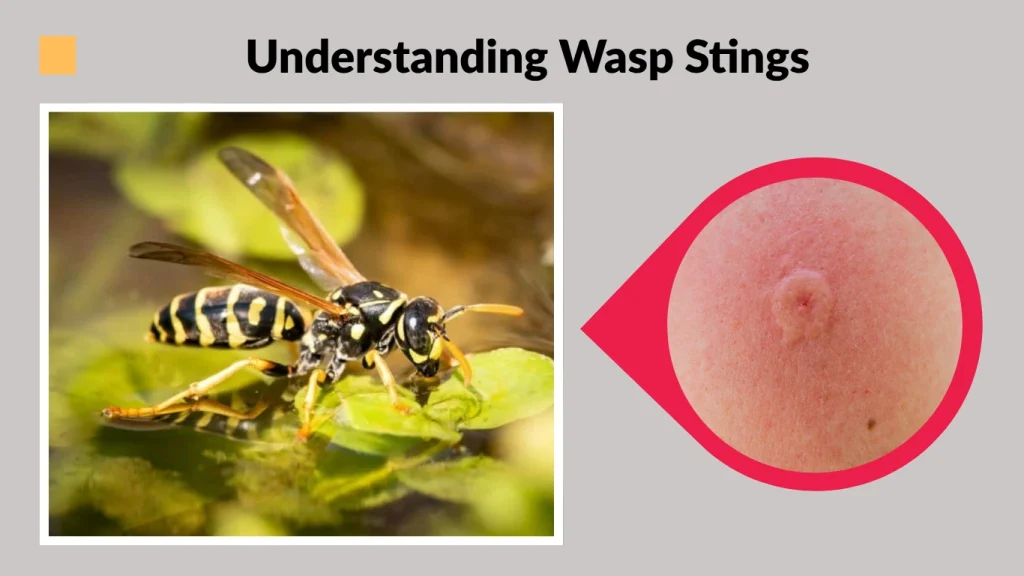
Wasp stings inject venom that triggers an immediate immune response in your body. For most people, this results in pain, redness, and swelling. However, the body’s reaction can vary depending on individual sensitivity, previous exposure, and how the sting is treated.
What Happens When a Wasp Stings?
- A wasp uses its stinger to inject venom into the skin.
- The venom contains proteins that affect blood cells and the immune system.
- Pain, swelling, and redness occur due to the body’s natural defense mechanisms.
Immediate vs. Delayed Reactions
- Immediate: Pain, redness, and swelling appear within minutes.
- Delayed: Swelling or discomfort may worsen after several hours or even a full day.
Local vs. Systemic Reactions
- Local reaction: Affects only the area around the sting.
- Systemic reaction: Involves other parts of the body (e.g., hives, breathing issues), which can be dangerous.
Signs the Swelling May Not Be Normal

While some swelling after 24 hours is expected, certain symptoms may indicate a problem. If the reaction goes beyond the sting area or causes new discomfort, it’s important to evaluate the signs more closely.
Abnormal Size and Spread
Swelling that spreads significantly beyond the initial area—especially past a joint or across large parts of the body—can be a sign of a more serious reaction. If the redness and firmness keep expanding well after the 24-hour mark, it’s best to monitor it carefully.
Signs of Possible Infection
An infected wasp sting may cause increased redness, warmth, and throbbing pain. Pus, red streaks spreading away from the site, or skin that feels unusually hot could be signs of infection rather than a normal reaction.
Systemic Symptoms to Watch
You should be cautious if you develop symptoms like nausea, headache, dizziness, fever, or swollen lymph nodes after 24 hours. These may suggest a systemic reaction or spreading infection and require medical attention.
Treatment for Swelling 24 Hours After Wasp Sting

If the swelling is mild to moderate and you’re not showing any alarming symptoms, home care is usually enough to manage the discomfort and inflammation.
Basic At-Home Care
Apply a cool compress several times a day to reduce swelling and relieve pain. Keep the affected area elevated if possible, especially if the sting is on a leg or arm. Antihistamines can help reduce the itching and inflammation, while pain relievers like ibuprofen can ease soreness.
How Long It Should Last
- Mild swelling: 1 to 3 days
- Large local swelling: 3 to 7 days
- If symptoms worsen or new symptoms appear beyond this window, consult a healthcare provider.
Optional Natural Remedies
Some people find relief using natural treatments like aloe vera gel for its soothing effects or a baking soda paste to neutralize residual venom. However, these should not replace medical treatment if the sting site shows signs of infection or worsening symptoms.
When to See a Doctor
Not all cases of swelling after a wasp sting require medical care, but there are situations where it’s safer to consult a healthcare provider. If the swelling keeps spreading or you develop additional symptoms, don’t ignore the warning signs.
Red Flags That Require Medical Attention
If the sting area becomes increasingly painful, hot, or red with pus, it may be infected. Swelling that continues growing after 48 hours or spreads well beyond the sting site should be evaluated. General symptoms like fever, chills, or a feeling of illness are also causes for concern.
Difficulty Breathing or Swallowing
Symptoms like shortness of breath, tightness in the throat, or trouble swallowing could indicate a severe allergic reaction (anaphylaxis). Even if these symptoms appear many hours after the sting, you should seek emergency medical attention immediately.
Risk of Infection After 24 Hours
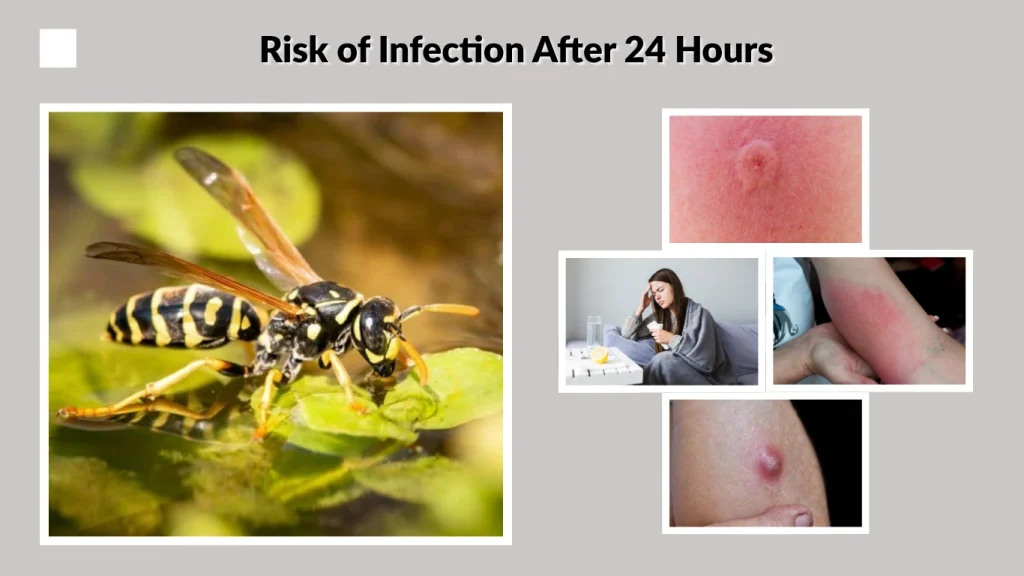
Although wasp venom itself is not infectious, the sting site can become infected later—especially if scratched or exposed to bacteria. This can happen if the area isn’t cleaned properly or if you keep touching it.
How Infection Develops
When the skin is punctured by a sting, it opens the door for bacteria. Scratching or poor hygiene can allow microbes to enter the wound, triggering infection. Even a minor infection can cause discomfort and complications if left untreated.
Symptoms of a Sting-Site Infection
- Swelling that keeps increasing
- Redness that becomes darker or more intense
- Pus or fluid oozing from the sting
- Warmth and pain at the site
- Red streaks radiating from the area
- Swollen or tender lymph nodes nearby
- Fever or general feeling of sickness
8. Is It a Delayed Allergic Reaction?
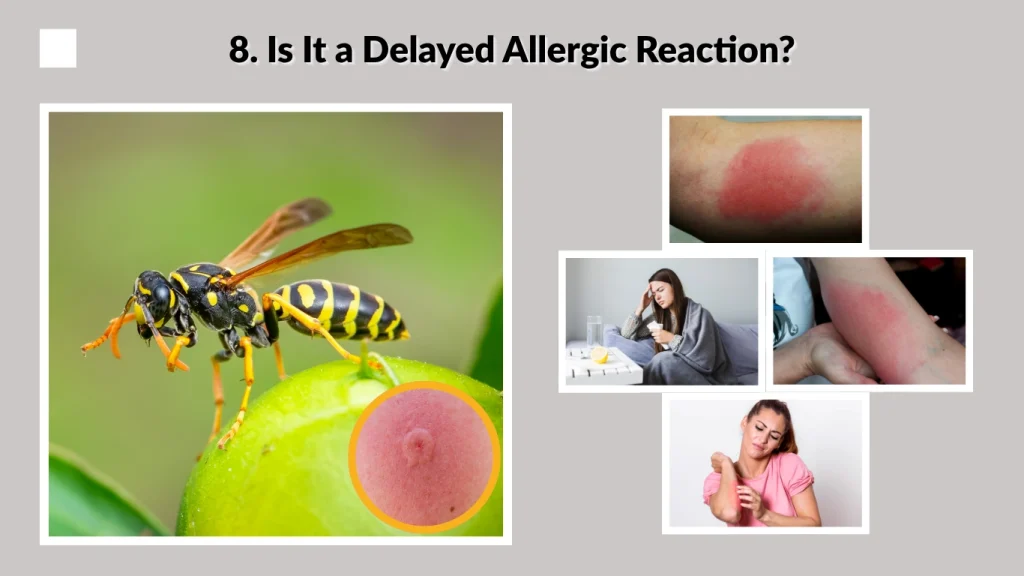
A delayed allergic reaction, also known as delayed hypersensitivity, can appear hours or even a day after the sting. While not usually life-threatening, it can be uncomfortable and easily mistaken for an infection or second sting.
What Causes It
This delayed response happens when your immune system takes longer to recognize the wasp venom as a threat. Once triggered, the immune reaction can cause swelling, itchiness, and discomfort long after the initial sting.
Symptoms of Delayed Allergic Reaction
- Itchy, red rash developing around or beyond the sting site
- Swelling that increases in size after 24 hours
- Skin tenderness and burning sensation
- Fatigue or low energy
- Headache or general discomfort
- Warm or tight skin sensation in the area
- Slight fever in rare cases
Long-Term Symptoms to Watch For
In most cases, swelling and discomfort from a wasp sting resolve within a week. However, some people may experience longer-lasting effects depending on their sensitivity and skin type.
Possible Long-Term Effects
Some sting sites remain itchy or discolored for several days or even weeks. Scabbing or blistering can occur if the area was scratched excessively. A small lump or skin firmness might persist, especially in cases of large local reactions.
Scarring and Hyperpigmentation
Occasionally, the affected area may heal with slight scarring or leave behind a darker or lighter patch of skin. This is more common in people with sensitive skin or those prone to post-inflammatory hyperpigmentation.
Preventing Future Wasp Stings

Reducing your risk of being stung again is important, especially if you’ve had a strong reaction. Prevention requires a combination of environmental awareness and personal protection.
How to Stay Safe
Avoid areas with visible wasp nests or high insect activity, especially in warmer months. Keep sugary drinks and food covered when outdoors. Wear light-colored, smooth-fabric clothing and avoid using scented products when spending time outside. If you find a nest near your home, contact pest control rather than handling it yourself.
Wasp Sting vs Bee Sting: Delayed Reactions Compared
Wasp and bee stings both inject venom, but the type of venom and reaction can differ. Wasps tend to sting multiple times and their venom is more likely to cause strong local reactions.
Key Differences
Wasp stings are more alkaline and cause sharper, burning pain. Bee venom is more acidic and often causes a deeper, throbbing discomfort. Both can result in delayed swelling, but wasps are more likely to cause prolonged local reactions due to the structure of their venom.
Summary: What to Expect & How to Stay Safe
Swelling 24 hours after a wasp sting is often part of the body’s natural response and may continue for several days. Understanding the difference between normal and abnormal swelling helps you avoid unnecessary panic. Treating the area gently, monitoring for infection, and seeking medical attention when needed ensures faster healing and safety from complications in the future.
FAQs
1. Is swelling 24 hours after a wasp sting normal?
Yes, swelling can increase or peak 24 to 48 hours after a wasp sting. This is often part of a normal large local reaction and typically resolves with basic care.
2. How long should swelling last after a wasp sting?
Mild swelling usually lasts 1–3 days. Larger reactions may last 5–7 days. If it continues growing or worsens after this period, seek medical advice.
3. What does infected wasp sting swelling look like?
Infected swelling is usually redder, warmer, and more painful. It may leak pus or develop red streaks, and is often accompanied by fever or swollen lymph nodes.
4. Can antihistamines help after 24 hours?
Yes, antihistamines like diphenhydramine (Benadryl) can still reduce itching and swelling even after 24 hours. They’re especially helpful if the reaction is allergy-related.
5. How do I know if it’s an allergic reaction or infection?
Allergic reactions often involve itching, rash, or generalized swelling, while infe
