

Black and white wasps are striking insects that often cause confusion and curiosity due to their bold colouring. While many people associate their sharp contrast with danger, not all of these wasps are harmful or aggressive. Some are solitary, peaceful pollinators, while others may defend their nests fiercely. From the well-known bald-faced hornet to lesser-known mason and ichneumon wasps, these insects play a unique role in nature.
In this article, you’ll discover how to identify black and white wasps, learn about the most common species, understand their nesting and behavior patterns, and know what to do if you spot them around your home or garden.
What Is a Black and White Wasp?
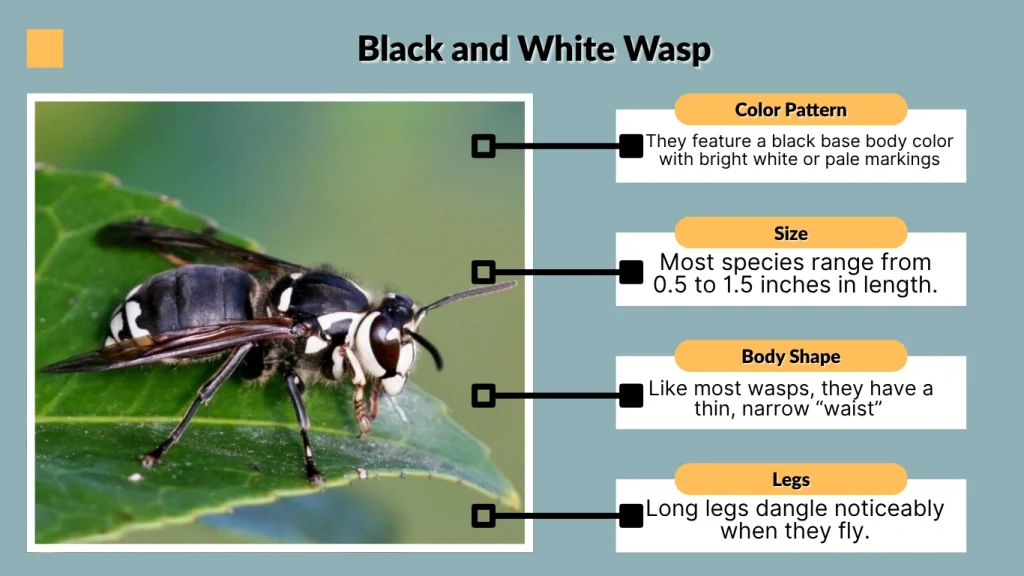
Black and white wasps are a visually striking group of insects that can easily catch your attention. Their bold coloration often sparks fear or caution, especially because many people associate contrasting colors in nature with danger. However, not all black and white wasps are aggressive or harmful. Some species are solitary and rarely interact with humans, while others, particularly social wasps like bald-faced hornets, are more territorial and defensive when their nests are disturbed. These wasps belong to different genera and serve various ecological roles, from controlling pest populations to aiding in pollination. Their appearance may be similar across species, but their behaviors and nesting habits vary widely.
Identification Guide
You can identify black and white wasps using several visual markers:
- Color Pattern: They feature a black base body color with bright white or pale markings, especially on the face, thorax, and abdominal segments.
- Size: Most species range from 0.5 to 1.5 inches in length.
- Body Shape: Like most wasps, they have a thin, narrow “waist” that separates the thorax and abdomen.
- Wings: Wings are clear or slightly tinted and fold lengthwise over their back when at rest.
- Legs: Long legs dangle noticeably when they fly.
- Antennae: Straight and usually black, used for sensing their environment.
- Eyes: Large, compound eyes set on the sides of the head.
These features not only help in identification but also distinguish black and white wasps from similar-looking insects like bees or hoverflies.
Common Types of Black and White Wasps

Several wasp species fall into the black and white category. Below are the most commonly seen ones:
- Bald-Faced Hornet (Dolichovespula maculata): Large, social wasps known for their paper nests and defensive behavior. They are aggressive near their nests but mostly leave people alone otherwise.
- Four-Toothed Mason Wasp (Monobia quadridens): A solitary wasp that builds nests in wood holes or crevices. It is non-aggressive and rarely stings.
- Ichneumon Wasps (Various species): Slender-bodied wasps that parasitize other insects. Although some have black and white markings, they are harmless to humans.
- White-Marked Spider Wasps: These wasps paralyze spiders to feed their larvae. They can appear black with white or pale leg bands.
- Black Mud Daubers with White Markings: Some solitary mud daubers have pale patches or white streaks, especially around the thorax.
Behavior and Temperament
The behavior of black and white wasps varies greatly depending on the species. Social species like the bald-faced hornet tend to be more defensive, especially when their nest is disturbed. They will not usually chase or sting humans unprovoked but can become aggressive when they sense a threat nearby. In contrast, solitary species such as the four-toothed mason wasp and certain ichneumon wasps are non-aggressive and spend most of their lives focused on hunting for food or building nests. These solitary wasps are far less likely to sting unless directly handled or trapped.
Black and white wasps are typically active during daylight hours. You may see them flying around flowers, wooden structures, or tree branches. Their movements are quick and purposeful, often involving short stops to inspect potential nest sites or food sources. Despite their intimidating look, many of these wasps prefer to avoid conflict and play vital roles in controlling insect populations.
Nesting Habits
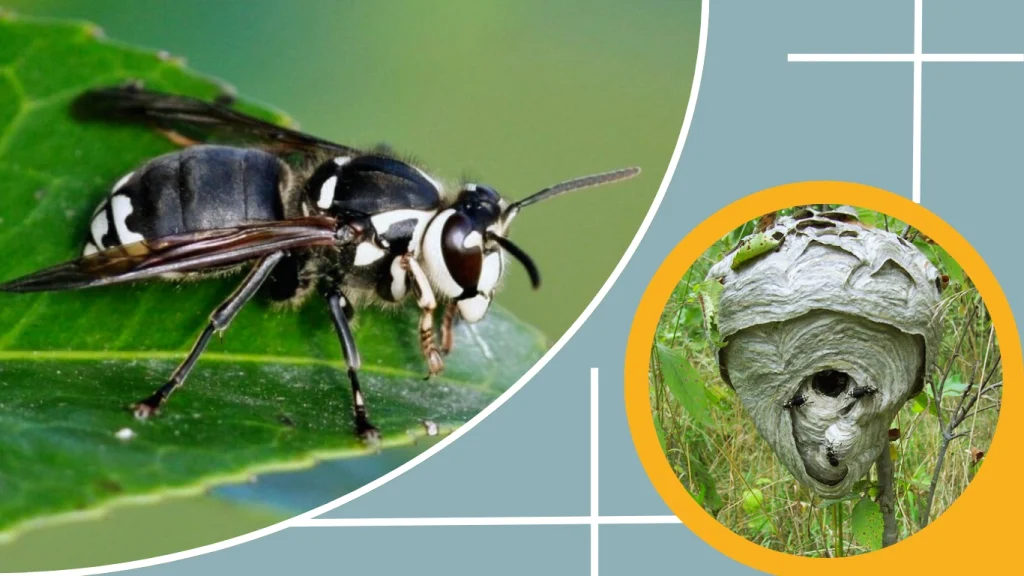
Nesting behavior among black and white wasps depends on whether they are solitary or social. Bald-faced hornets, for example, are known for constructing large, enclosed paper nests in trees, under eaves, or attached to buildings. These nests can house hundreds of individuals and are fiercely defended. Their nests are often gray with a papery texture and resemble an inflated football hanging in the air.
Solitary wasps like mason wasps take a different approach. They look for pre-existing holes in wood, plant stems, or man-made structures such as window frames. These wasps fill the space with mud or resin and lay their eggs inside. Each chamber is sealed after an egg and a food supply (usually a paralyzed caterpillar or spider) are placed inside. Their nests are much smaller, less visible, and rarely lead to conflicts with humans.
Understanding these nesting preferences can help you decide whether a wasp nest poses any risk or if it can be left alone safely.
Do Black and White Wasps Sting?

Yes, black and white wasps are capable of stinging, but the likelihood and intensity depend on the species. Social wasps, such as the bald-faced hornet, will sting to defend their nest or when they feel cornered. Their sting can be painful and may cause swelling, redness, or even more serious allergic reactions in sensitive individuals. However, most stings from these wasps are non-lethal and go away within a few hours to a couple of days.
Solitary black and white wasps, including mason and ichneumon wasps, rarely sting humans. They may possess stingers, but they are far less likely to use them unless handled directly. Some ichneumon wasps have long ovipositors that resemble stingers, but these are harmless and used only for laying eggs.
Overall, black and white wasps are not naturally aggressive, and their sting is primarily a defense mechanism. Avoiding sudden movements near nests and not disturbing their flight paths can greatly reduce any risk of being stung.
Life Cycle and Reproduction

The life cycle of black and white wasps consists of four key stages: egg, larva, pupa, and adult. The exact timeline and method vary depending on whether the wasp is solitary or social.
In social species like the bald-faced hornet, a fertilized queen overwinters and begins a new nest in spring. She lays the first batch of eggs and cares for them until they develop into sterile female workers. These workers then take over foraging, nest expansion, and feeding duties, allowing the queen to focus solely on egg production.
Solitary species, such as mason wasps, operate independently. A female finds or constructs a small nesting chamber, places a single egg inside, and stocks it with food (usually paralyzed insects or spiders). Once sealed, the egg hatches into a larva, consumes the prey, and eventually pupates before emerging as an adult.
This cycle is repeated through warmer months, with most adult wasps dying by the onset of winter, except for new queens or overwintering solitary females.
Role in the Ecosystem
Black and white wasps contribute significantly to ecosystems in ways that benefit both plants and animals. Their impact is often overlooked, but it’s vital to maintaining ecological balance. Here’s how they contribute:
- Natural pest control: Many species prey on garden pests like caterpillars, beetle larvae, spiders, and flies, helping reduce the need for chemical insecticides.
- Pollination support: Although not as efficient as bees, solitary wasps like mason wasps visit flowers for nectar and incidentally pollinate plants.
- Prey for other animals: Wasps themselves are food sources for birds, frogs, praying mantises, and larger predatory insects.
- Soil and wood recyclers: Some solitary wasps use dead wood, plant stems, or old burrows for nesting, aiding in decomposition and soil aeration.
Their presence may feel intimidating, but these wasps play a crucial part in maintaining healthy gardens and wild environments.
Are They Dangerous to Humans or Pets?
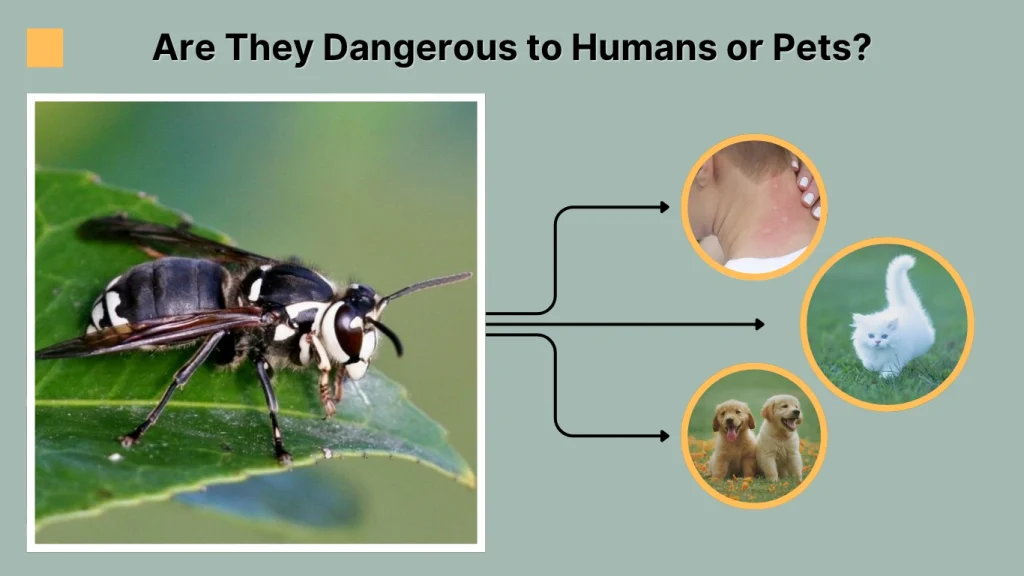
Black and white wasps aren’t naturally aggressive, but they can pose risks when disturbed — especially for people who are allergic to wasp stings. Social species are the ones to be more cautious around, as they defend their nests actively. However, even then, most encounters end without conflict if you’re not swatting or standing too close to the nest.
For pets, the main issue is curiosity. Dogs and cats may snap at flying wasps or paw at a nest, which could trigger a sting. In most cases, stings on pets result in temporary swelling and discomfort, but some animals may require veterinary care if they are stung multiple times or experience allergic reactions.
To minimize danger:
- Avoid disturbing visible nests.
- Do not swat at wasps — sudden movement may provoke them.
- Keep children and pets away from high activity zones, especially during late summer when colonies are largest.
In general, black and white wasps are not dangerous unless provoked. Awareness and caution are usually enough to avoid trouble.
How to Prevent Black and White Wasps
Prevention starts with limiting their access to food, water, and nesting sites. Wasps typically build nests in places that feel safe, sheltered, and close to food sources. If you make your space less inviting, they’re more likely to move on.
Here are practical ways to prevent black and white wasps from nesting near your home:
- Seal cracks and holes: Close up gaps in siding, soffits, and around windows or vents where solitary wasps might enter.
- Cover garbage and compost: Use sealed containers and clean them regularly to eliminate food odors that attract foraging wasps.
- Remove fallen fruit or pet food outdoors: These sweet-smelling food sources can attract both solitary and social species.
- Install decoy nests: Some wasps avoid nesting near other colonies. Hanging a paper decoy may discourage nest building.
- Use natural repellents: Peppermint oil, vinegar sprays, and citronella candles can help repel wasps from patios or doors.
Taking action early in spring — before nesting starts — is the best way to stay ahead of a potential problem.
What to Do If You Find a Nest
Not all nests need to be removed, but some require attention — especially if they’re in high-traffic or indoor areas. Knowing when and how to act can prevent stings and unnecessary panic.
If the nest belongs to a solitary wasp and it’s in a low-risk area, it’s often best to leave it alone. These wasps rarely sting and may help reduce garden pests. However, if the nest belongs to bald-faced hornets or another aggressive species, removal might be necessary.
Here’s how to approach nest removal safely:
- Assess the location: Avoid removal if the nest is too high, in tight spaces, or heavily populated.
- Don’t disturb it during the day: Wasps are most active in daylight. Attempting removal then increases your sting risk.
- Use protective clothing: If handling it yourself, wear gloves, long sleeves, and a face net.
- Spray at night if needed: Insecticide sprays are most effective at night when wasps are less active.
- Call professionals: If the nest is large or near children, pets, or living areas, it’s best to contact pest control experts.
FAQs
Are all black and white wasps aggressive?
No. Only social species like bald-faced hornets are defensive. Most solitary wasps are peaceful and avoid confrontation.
Can black and white wasps sting more than once?
Yes. Like most wasps, they don’t lose their stinger after one sting and can sting multiple times if provoked.
What’s the difference between a bald-faced hornet and a regular hornet?
Bald-faced hornets are technically a type of yellowjacket, not a true hornet, but they behave similarly and build large paper nests.
Do black and white wasps pollinate flowers?
Some solitary types, like mason wasps, visit flowers and contribute to pollination, though less efficiently than bees.
