
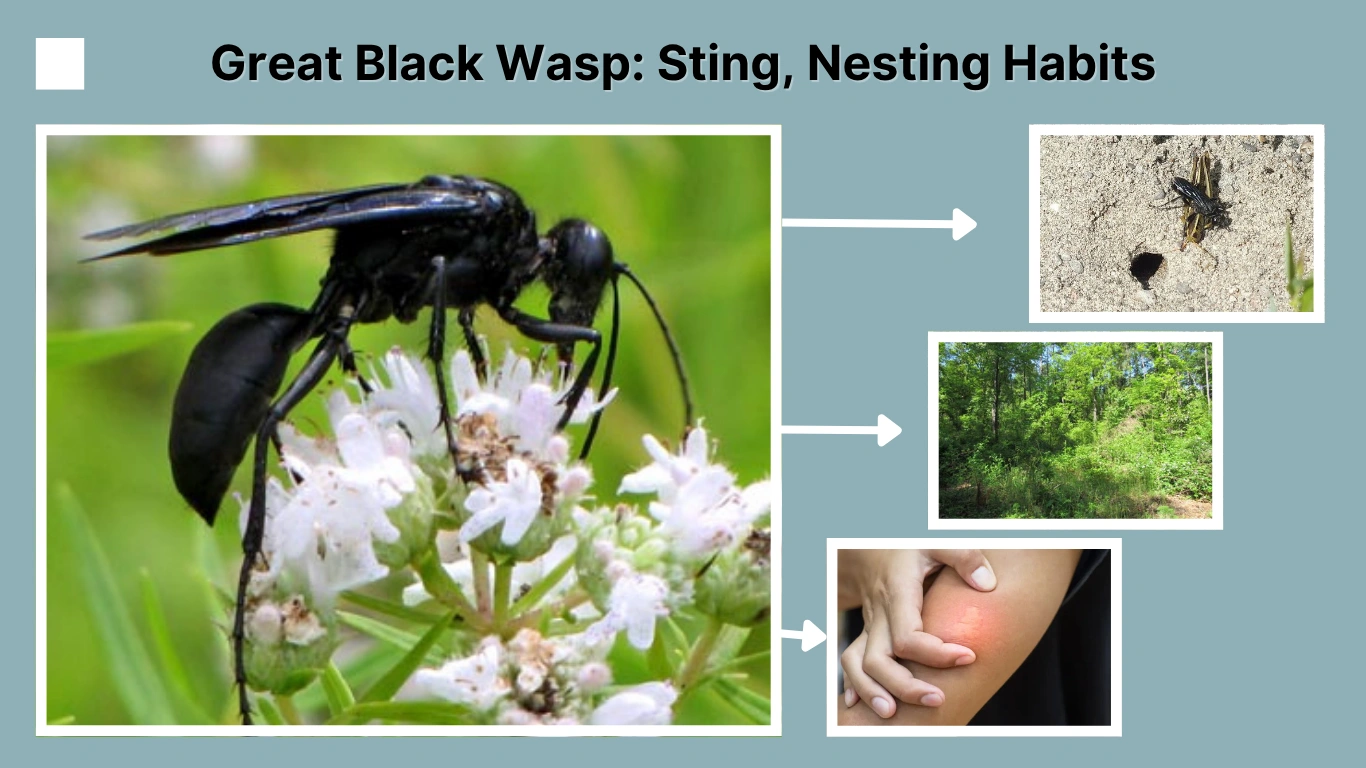
The great black wasp (Sphex pensylvanicus) is a striking and solitary insect known for its all-black, glossy body and large size. Often seen buzzing around gardens or meadows in late summer, this wasp is both feared and admired. While its intimidating look and ability to sting may raise alarm, the great black wasp is actually a beneficial predator that helps control pest populations—especially katydids and grasshoppers. In this article, you’ll discover everything you need to know about the great black wasp, including how to identify it, understand its nesting behavior, and whether or not you should be concerned about its sting.
What Is a Great Black Wasp?
The great black wasp is a large, solitary wasp species found across North America. Despite its intimidating appearance, it’s generally non-aggressive toward humans and plays an important role in natural pest control.
Scientific Name and Classification
- Scientific Name: Sphex pensylvanicus
- Family: Sphecidae (Thread-waisted wasps)
- Order: Hymenoptera
- Common Name: Great Black Wasp
Role in Ecosystem
- Natural predator of katydids and grasshoppers
- Helps reduce garden pest populations
- Pollinates certain flowers while foraging
Identification of the Great Black Wasp

This wasp is easily recognized by its jet-black color, large size, and loud buzzing sound. It is often mistaken for other wasps or even carpenter bees, but certain features make it stand out.
Size and Appearance
- Length: 1 to 1.5 inches
- Shiny black exoskeleton
- Narrow waist and long, spiny legs
- Wings have a smoky or bluish tint
- Flies with legs hanging down
Male vs Female
- Females are larger and equipped with a stinger
- Males are smaller and cannot sting
- Females are responsible for nest digging and hunting prey
Where Are Great Black Wasps Found?

Great black wasps are common in warm regions with loose soil. They are often spotted flying low over gardens, fields, or open meadows during the summer months.
Habitat and Range
- Widely distributed across the eastern and central United States
- Prefer sunny, open areas with sandy or loose soil for nesting
- Often found in:
- Gardens
- Fields
- Forest edges
- Abandoned lots
- Gardens
Seasonal Activity
- Active from late spring through early fall
- Most visible in July and August when nesting and hunting intensify
Great Black Wasp Nesting Behavior
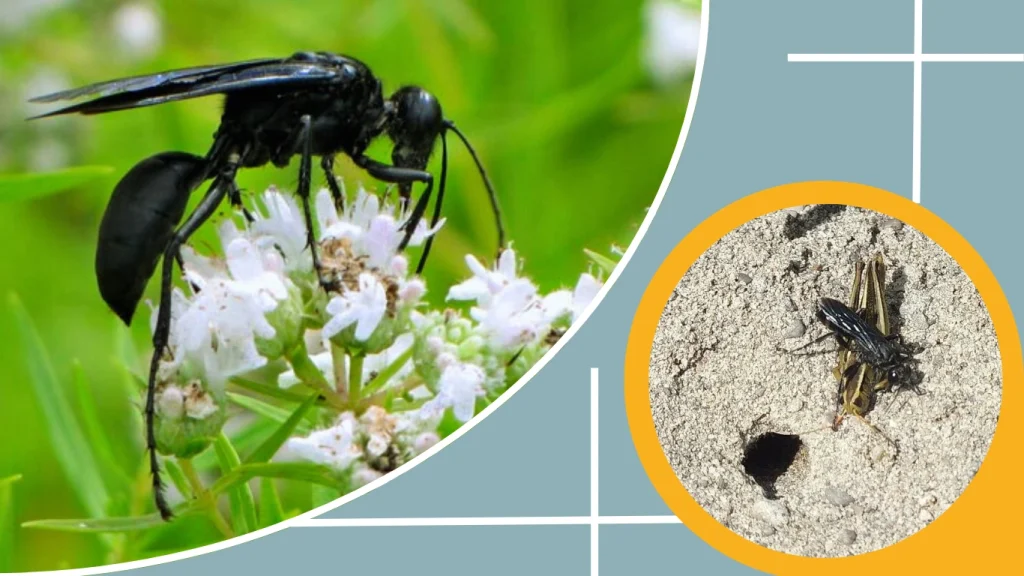
The great black wasp is a solitary nester that digs its own burrows underground. These nests are specifically designed to house and feed their developing young.
How They Build Their Nests
Female wasps choose dry, sandy, or loose soil to dig a tunnel, which can be several inches deep. Using their strong mandibles and legs, they excavate the soil and create multiple chambers underground. Each chamber is stocked with paralyzed prey, usually katydids, which serve as food for their larvae.
Nest Location and Signs
You may notice small mounds of soil with a central hole in sunny garden beds, along fence lines, or in bare patches of yard. These are usually signs of active nesting. Since they are solitary, each nest is built and maintained by one female.
Do Great Black Wasps Sting?

Although they can sting, great black wasps are not aggressive toward humans unless directly threatened or handled.
Sting Purpose and Usage
Females use their sting mainly for hunting, not defense. They paralyze prey such as katydids and transport them to their nest chambers for their offspring to consume. They typically ignore humans unless provoked.
Sting Effects on Humans
- The sting can be painful but is not usually dangerous
- Symptoms may include swelling, redness, and brief discomfort
- Serious allergic reactions are rare but possible
Are Great Black Wasps Dangerous?
Despite their fierce look, these wasps are not considered dangerous to humans or pets in most situations.
Myth vs. Reality
They are often mistaken for aggressive wasps or hornets, but the great black wasp is solitary and shy. It doesn’t defend its nest like social wasps do and rarely stings unless directly disturbed.
Helpful Insect in Gardens
They help control pest populations and pollinate flowers, making them more helpful than harmful in most backyards.
Great Black Wasp Sting: Pictures and Real Experiences
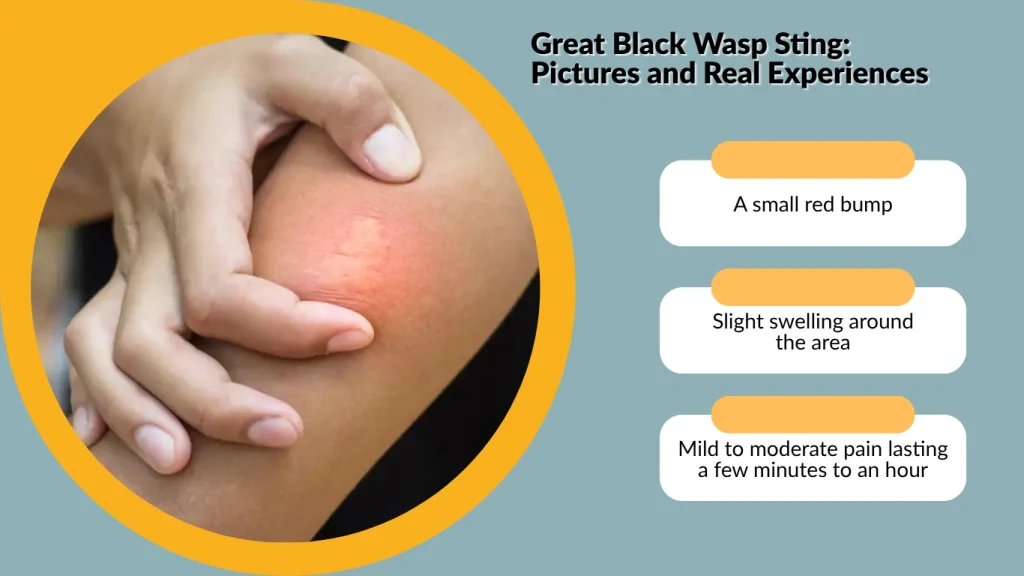
People often search for images of great black wasp stings to compare symptoms or confirm if they were stung by this insect. Visual references and real-life stories can help identify the sting and ease concerns.
What the Sting Looks Like
Most stings appear as:
- A small red bump
- Slight swelling around the area
- Mild to moderate pain lasting a few minutes to an hour
In most cases, the reaction is localized and fades quickly.
Shared Experiences
Some individuals report a sudden sharp pain followed by a burning or throbbing sensation. Others describe it as less painful than a yellowjacket sting. Most say the sting site returned to normal within a day without treatment.
Great Black Wasp Behavior and Life Cycle
These wasps are solitary hunters with a unique way of providing for their young. Their entire behavior revolves around survival and reproduction.
Hunting Behavior
Females are skilled hunters, capturing live prey by stinging and paralyzing them. They carry the paralyzed insect back to the nest, often struggling due to the prey’s size.
Life Cycle Stages
- Egg: Laid on a paralyzed katydid inside a nest chamber
- Larva: Feeds on the prey for several days
- Pupa: Develops in the soil over winter
- Adult: Emerges in summer to start the process again
How to Prevent or Control Great Black Wasps (If Needed)
Most of the time, these wasps don’t need to be removed, but if they’re nesting in unwanted areas, simple control methods can help.
When Control Might Be Needed
- Nesting too close to entryways or walkways
- Causing anxiety for children or pets
- Digging up garden beds
Safe Removal and Prevention Tips
- Avoid disturbing active nests
- Water the soil regularly to discourage burrowing
- Fill in old nest holes with compacted soil or mulch
- If necessary, consult a pest control expert (avoid spraying unless truly needed)
FAQs
What eats the great black wasp?
Natural predators include birds, larger wasps, praying mantises, and some small mammals. Their underground nests may also be raided by skunks or raccoons.
How long do great black wasps live?
Adult great black wasps typically live a few weeks during summer. However, their full life cycle—from egg to adult—spans nearly a year.
Can they sting multiple times?
Yes, female great black wasps can sting multiple times, though they rarely sting humans unless physically handled or trapped.
Are great black wasps pollinators?
Yes, while searching for nectar, they help pollinate flowers such as milkweed, goldenrod, and wild carrot.
