

Dirt daubers, also known as mud daubers, are solitary wasps that often spark curiosity and concern when spotted around homes. Unlike their aggressive relatives like yellowjackets or hornets, dirt daubers are mostly harmless and prefer to go about their business quietly—building nests from mud and hunting spiders for their young. But even though they rarely sting humans, their mud nests can be an eyesore and their sudden appearance indoors or in garages may raise questions about danger and control.
In this article, we’ll explore everything you need to know about dirt daubers—from how they look and where they live, to whether they sting, what they eat, and how to prevent or remove their nests safely.
What Are Dirt Daubers?
Dirt daubers are solitary wasps known for building their nests from mud. Unlike social wasps that live in colonies, dirt daubers work alone—each female creating her own nest, stocking it with food, and laying eggs. They belong to families like Sphecidae and Crabronidae and are sometimes called mud daubers or mud wasps.
These wasps are not aggressive and rarely sting, which sets them apart from more feared wasp types. Although their nests may look messy on walls or ceilings, dirt daubers are generally considered beneficial insects because of their spider-hunting behavior.
What Do Dirt Daubers Look Like?
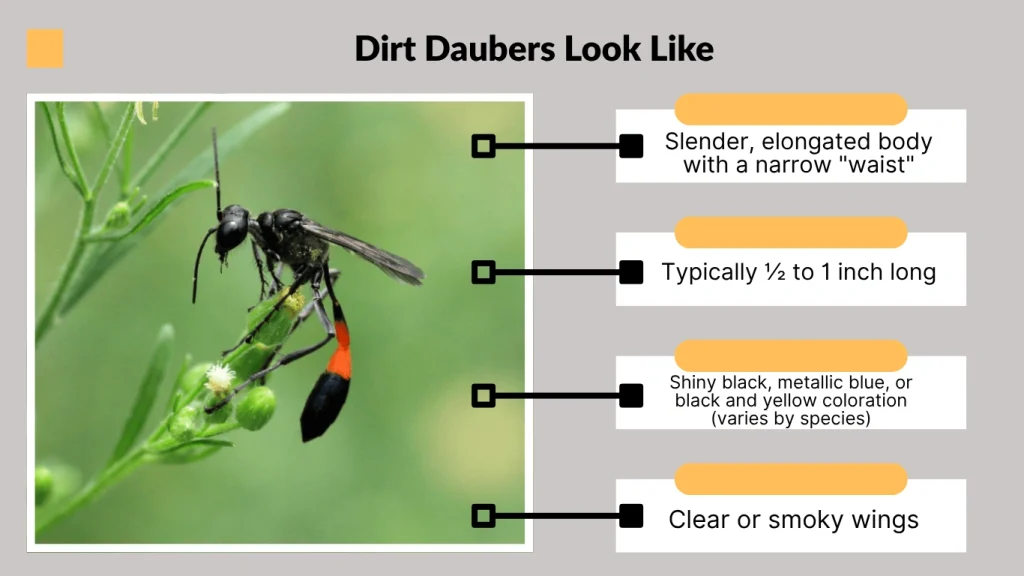
Dirt daubers have a distinctive appearance that sets them apart from other wasps. Their long, narrow bodies and shiny colors make them easy to identify if you know what to look for.
Identification Features
- Slender, elongated body with a narrow “waist”
- Typically ½ to 1 inch long
- Shiny black, metallic blue, or black and yellow coloration (varies by species)
- Clear or smoky wings
- Long legs that hang down in flight
Different species may show slight variations, but most dirt daubers share this streamlined shape and glossy look.
Where Do Dirt Daubers Live?
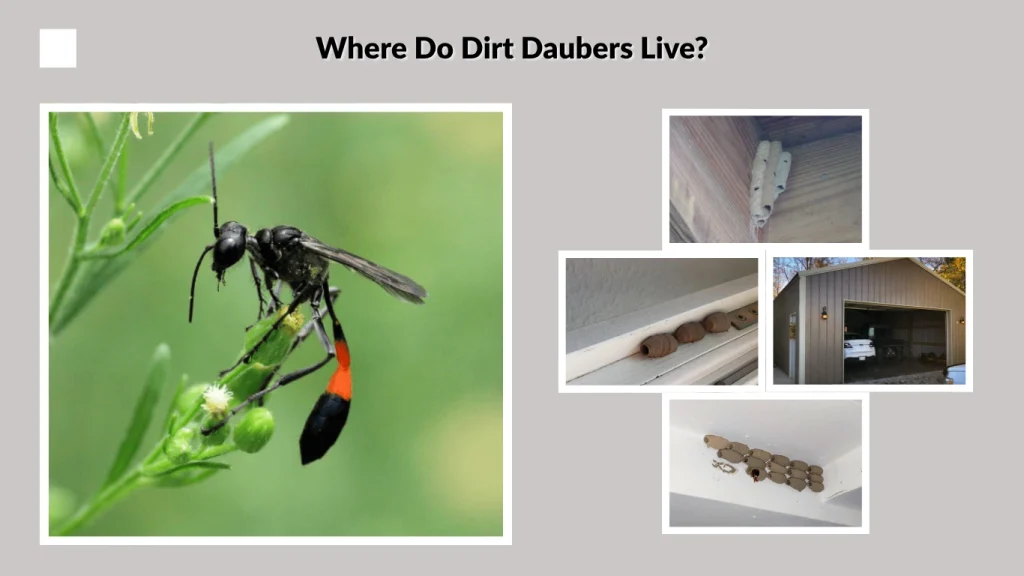
Dirt daubers thrive in warm, sheltered environments where mud and spiders are readily available. They’re commonly found around human structures, making them familiar backyard visitors.
Common Nesting Locations
- Under eaves and porch ceilings
- Inside garages and sheds
- In attics, barns, and unused structures
- Beneath outdoor furniture or equipment
- Around window frames or under decks
They prefer quiet, undisturbed places and often return to the same locations season after season.
How Do Dirt Daubers Build Their Nests?
Dirt dauber nests are fascinating creations made entirely from mud. Each nest consists of several tubular chambers, carefully crafted and sealed by the female.
Nest Construction Process
- Female collects mud and forms tube-like structures
- Builds multiple adjacent chambers on flat surfaces
- Paralyzes spiders and stores them inside each chamber
- Lays one egg per chamber before sealing it shut
Once the egg hatches, the larva feeds on the stored spiders until it’s ready to emerge. The result is a dry, hardened mud nest that may stay intact long after the wasp is gone.
Dirt Dauber Nest: Appearance & Behavior

Dirt dauber nests are one of the most recognizable signs of their presence. These mud structures may look rough or unsightly but are a product of impressive natural engineering.
What the Nest Looks Like
- Made of hardened mud tubes or cylinders
- Often found in clusters on walls or ceilings
- Resemble organ pipes or finger-length tunnels
- Can dry, crack, or fall off over time
Dirt daubers are non-territorial, so their nests may be located near other insects or even reused by other species after the wasps leave.
Do Dirt Daubers Sting?

Yes, dirt daubers are capable of stinging—but they almost never do. Unlike aggressive wasps that defend their nests, dirt daubers are calm and rarely confront humans.
Important Sting Facts
- Only females have stingers
- Stings are mild and not medically significant
- Typically only sting if crushed or directly handled
- Not known to swarm or attack
Most people never experience a sting from a dirt dauber, even when the wasps are nesting nearby.
Do Dirt Daubers Sting or Bite People?
Dirt daubers do not bite people, and their sting is extremely rare and non-aggressive in nature.
Clarifying Misconceptions
- No biting behavior toward humans
- Stings are not used in defense like hornets or yellowjackets
- Stinging is only used to paralyze prey (mainly spiders)
- Safe to observe from a distance without fear
Despite their appearance, dirt daubers are among the least threatening wasps you might encounter around your home.
Are Dirt Daubers Poisonous or Dangerous?
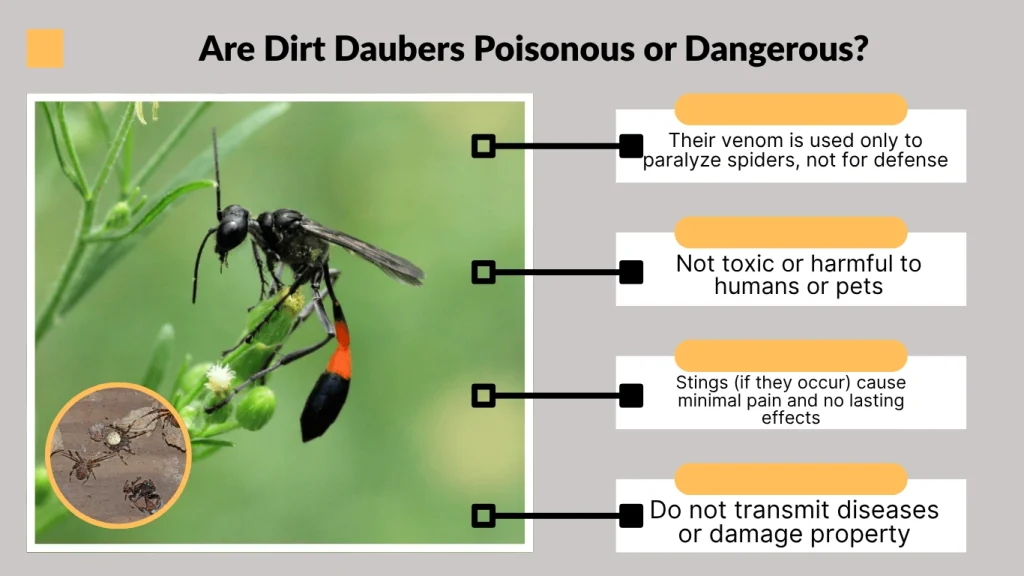
Dirt daubers may look intimidating, but they are not poisonous to humans and pose little to no threat.
Key Points
- Their venom is used only to paralyze spiders, not for defense
- Not toxic or harmful to humans or pets
- Stings (if they occur) cause minimal pain and no lasting effects
- Do not transmit diseases or damage property
In fact, they can be seen as beneficial insects because of their role in controlling spider populations.
Are Dirt Daubers Aggressive?
Dirt daubers are solitary and incredibly docile compared to social wasps.
Behavior Traits
- Do not defend their nests aggressively
- Prefer to flee rather than fight when disturbed
- No swarming behavior
- Can coexist near humans without becoming a problem
They are far more interested in building nests and hunting spiders than bothering people.
What Do Dirt Daubers Eat?
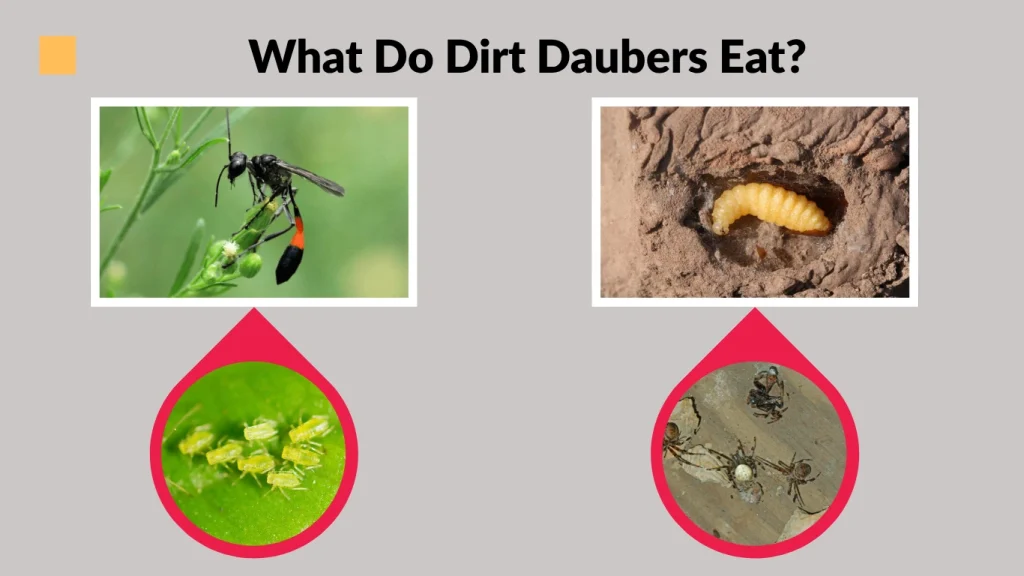
While adult dirt daubers feed on nectar, their young are raised on a diet of spiders.
Diet Breakdown
- Adults: Feed on nectar, plant juices, and honeydew from aphids
- Larvae: Consume paralyzed spiders provided by the female
- The female wasp hunts and stings spiders to immobilize them, then seals them inside the nest as food
Their spider-hunting habits make them helpful natural pest controllers around homes and gardens.
Do Dirt Daubers Eat Spiders?
Yes, eating spiders is a major part of the dirt dauber’s life cycle—especially for their young. Female dirt daubers actively hunt spiders to feed their larvae.
Step-by-Step: How Dirt Daubers Use Spiders
- Hunt – The female searches for spiders, including black widows and other small species.
- Paralyze – She stings the spider to paralyze (not kill) it.
- Transport – Carries the immobilized spider back to her mud nest.
- Store – Places multiple spiders inside a single nest chamber.
- Lay Egg – Lays one egg on or near the stored spiders.
- Seal Chamber – Closes the chamber with mud to protect it.
- Larva Hatches – The young wasp hatches and feeds on the fresh, still-living spiders.
This process ensures the larva has a protein-rich food source until it’s ready to pupate and emerge as an adult.
How to Get Rid of Dirt Daubers

Although not dangerous, dirt dauber nests can become unsightly or bothersome around your home. Here’s a safe and effective way to remove them:
Step-by-Step: Removing Dirt Daubers
- Wait Until Night – Wasps are less active in cooler evening hours.
- Wear Protective Gear – Long sleeves, gloves, and eye protection.
- Use a Scraper – Gently remove the mud nest with a putty knife or similar tool.
- Dispose Properly – Place removed nest in a sealed bag and discard.
- Clean the Surface – Wash the area with soap and water to remove remaining mud or scent markers.
- Optional Insecticide – Use a wasp spray if you see active daubers returning repeatedly (usually not needed).
Avoid removing nests with bare hands, and don’t try during peak heat or daylight hours when daubers are active.
How to Get Rid of Dirt Dauber Nests Safely
You can take a few extra steps to safely handle nests that are old, large, or in sensitive locations:
Safe Nest Removal Tips
- Confirm It’s Abandoned – Old nests are dry, cracked, and may have small exit holes.
- Use Tools – A scraper, brush, or hose can break and remove hardened mud.
- Clean Up Residue – Remove all debris to discourage reuse.
- Patch Entry Points – If inside your home or attic, seal the access areas after removal.
- Avoid Chemicals Indoors – Opt for natural methods when dealing with interior nests.
These steps help prevent stains, unwanted insects, or future nest-building in the same area.
How to Prevent Dirt Daubers from Returning
Once you’ve removed dirt daubers and their nests, it’s important to take proactive steps to prevent them from building new ones.
Step-by-Step Prevention Methods
- Seal Entry Points
- Close gaps, cracks, and holes around windows, vents, and eaves
- Repair torn screens and caulk around pipes or wiring access points
- Close gaps, cracks, and holes around windows, vents, and eaves
- Remove Mud Sources
- Fix leaky faucets or irrigation systems
- Avoid having exposed soil or wet areas near structures
- Fix leaky faucets or irrigation systems
- Use Natural Repellents
- Spray diluted peppermint oil, citrus oil, or eucalyptus oil around common nesting spots
- These scents can deter many flying insects, including dirt daubers
- Spray diluted peppermint oil, citrus oil, or eucalyptus oil around common nesting spots
- Install Fake Wasp Nests
- Hanging a decoy wasp nest can trick dirt daubers into thinking the area is already claimed
- Hanging a decoy wasp nest can trick dirt daubers into thinking the area is already claimed
- Reduce Spider Populations
- Clean corners, ceiling edges, and garage walls regularly
- Fewer spiders mean less food for dirt daubers
- Clean corners, ceiling edges, and garage walls regularly
- Limit Access to Sheltered Spaces
- Keep garage doors closed when not in use
- Use fine mesh over attic or crawlspace vents
- Install motion lights or small fans in covered outdoor areas to discourage nesting
- Keep garage doors closed when not in use
By taking these steps, you can make your home far less appealing to dirt daubers without using harsh chemicals.
Conclusion
Dirt daubers may look intimidating, but they’re among the least aggressive wasps you’ll encounter. With their narrow bodies and mud nests, they’re easy to recognize—and their habit of hunting spiders makes them more friend than foe in many environments.
