

Cricket insects are small but fascinating members of the order Orthoptera, closely related to grasshoppers and katydids. They are famous for their nighttime chirping, which is actually a form of communication used mainly by males. Found on every continent except Antarctica, crickets live in a wide range of habitats, including grasslands, forests, underground burrows, caves, and even human homes. With thousands of species worldwide, crickets show remarkable diversity in size, color, behavior, and lifestyle.
1. House Cricket (Acheta domesticus)

House crickets are one of the most common and widely recognized cricket species in the world. They are well known for their steady chirping sounds, light-brown color, and close association with human homes, warehouses, and warm indoor spaces. Originally native to parts of Asia and the Middle East, house crickets are now found on every continent except Antarctica.
Identification
- Light brown to tan body with darker bands on the head
- Slender body, usually 16–21 mm long
- Long, thin antennae, often longer than the body
- Fully developed wings; males produce loud chirping sounds
- Strong hind legs adapted for jumping
Habitat
House crickets prefer warm, dry environments. Outdoors, they live in fields, grasslands, and under stones. Indoors, they are commonly found in kitchens, basements, warehouses, and near heating systems, where temperatures remain stable and food is available.
Behavior
They are mostly nocturnal and become active at night. Male house crickets chirp by rubbing their wings together to attract females and to defend territory. They are fast runners, good jumpers, and often hide in cracks or dark corners during the day.
Diet
House crickets are omnivores. They feed on plant material, grains, fruits, small insects, fabrics, and food scraps. This flexible diet allows them to survive easily around human environments.
Lifecycle
House crickets undergo incomplete metamorphosis: egg, nymph, and adult. Females lay eggs in moist soil or soft materials. Nymphs hatch looking like small adults and molt several times before reaching maturity, usually within 6 to 8 weeks under warm conditions.
2. Field Cricket (Gryllus species)

Field crickets are common outdoor crickets known for their dark coloration, strong chirping calls, and frequent presence in fields, gardens, and grassy areas. They are often heard more than they are seen, especially during warm evenings when males produce loud, rhythmic songs. Many species fall under the genus Gryllus, and they are widely distributed across different continents.
Identification
- Black to dark brown, robust body
- Body length usually 18–25 mm
- Large head with strong chewing mouthparts
- Long antennae, often as long as or longer than the body
- Fully developed wings; males chirp loudly
- Powerful hind legs adapted for jumping
Habitat
Field crickets live mainly outdoors in meadows, lawns, crop fields, roadsides, and open woodlands. They hide under rocks, logs, leaf litter, and in self-dug burrows. During cooler months, they may move closer to buildings for warmth.
Behavior
They are mostly nocturnal and become active after sunset. Male field crickets chirp to attract females and to establish territory. They are aggressive compared to many other crickets and may fight rival males. When disturbed, they quickly jump or run for cover.
Diet
Field crickets are omnivorous scavengers. They feed on grasses, seeds, fruits, fungi, dead insects, and organic debris. Sometimes they may nibble on young plants, making them minor agricultural pests in certain areas.
Lifecycle
Their life cycle includes egg, nymph, and adult stages. Females lay eggs in soil during warm seasons. Nymphs hatch and resemble small, wingless adults, molting several times before maturity. Most field crickets complete their life cycle within one year.
3. Camel Cricket (also called Cave Cricket or Spider Cricket)

Camel crickets are unusual-looking crickets known for their hump-backed bodies, extremely long legs, and lack of wings. Unlike many other crickets, they do not chirp. They are named “camel” crickets because of their arched back, which gives them a camel-like shape. These crickets are commonly found in damp, dark places.
Identification
- Hump-backed body with a rounded, arched shape
- Pale brown to dark brown coloration
- Very long hind legs and antennae
- Wingless body, so they do not produce chirping sounds
- Body length usually 13–30 mm
Habitat
Camel crickets prefer cool, moist, and dark environments. Outdoors, they live in caves, under stones, logs, leaf litter, and in forest crevices. Indoors, they are often found in basements, crawl spaces, bathrooms, and garages where humidity is high.
Behavior
They are nocturnal and avoid light. Instead of chirping, camel crickets rely on jumping and hiding to escape predators. When disturbed, they may leap suddenly toward movement, which often startles people. They usually live alone rather than in large groups.
Diet
Camel crickets are scavengers. They feed on fungi, decaying plant matter, cardboard, fabric, dead insects, and food scraps. Their ability to eat a wide variety of organic materials helps them survive in both natural and human environments.
Lifecycle
They develop through incomplete metamorphosis: egg, nymph, and adult. Females lay eggs in moist soil or crevices. Nymphs hatch as smaller versions of adults and molt several times before reaching maturity, usually within a few months depending on temperature and humidity.
4. Mole Cricket (Gryllotalpa species)

Mole crickets are burrowing crickets specially adapted for life underground. They are named for their mole-like front legs, which are shaped for digging through soil. Unlike most crickets, they spend most of their lives below the surface, creating tunnel systems that can damage lawns, turf, and crop roots.
Identification
- Cylindrical, velvety brown body
- Broad, spade-shaped front legs adapted for digging
- Body length usually 25–50 mm
- Long antennae, shorter than those of most crickets
- Two long cerci (tail-like appendages) at the rear
- Adults usually have wings; males can chirp from burrows
Habitat
Mole crickets live in moist soil, especially in lawns, pastures, golf courses, vegetable gardens, and agricultural fields. They prefer sandy or loose soil where tunneling is easy and moisture is available.
Behavior
They are mostly nocturnal and remain hidden in underground tunnels during the day. At night, they come closer to the surface to feed and mate. Males create special resonating chambers in the soil to amplify their chirping calls and attract females.
Diet
Depending on the species, mole crickets may be herbivorous, omnivorous, or predatory. They feed on plant roots, shoots, worms, and small soil-dwelling insects. Root-feeding species are considered serious lawn and crop pests.
Lifecycle
Female mole crickets lay eggs in underground chambers. The eggs hatch into nymphs that resemble small adults and live in soil, molting several times. Development from egg to adult may take several months to over a year, depending on species and climate.
5. Jerusalem Cricket (Stenopelmatus species)
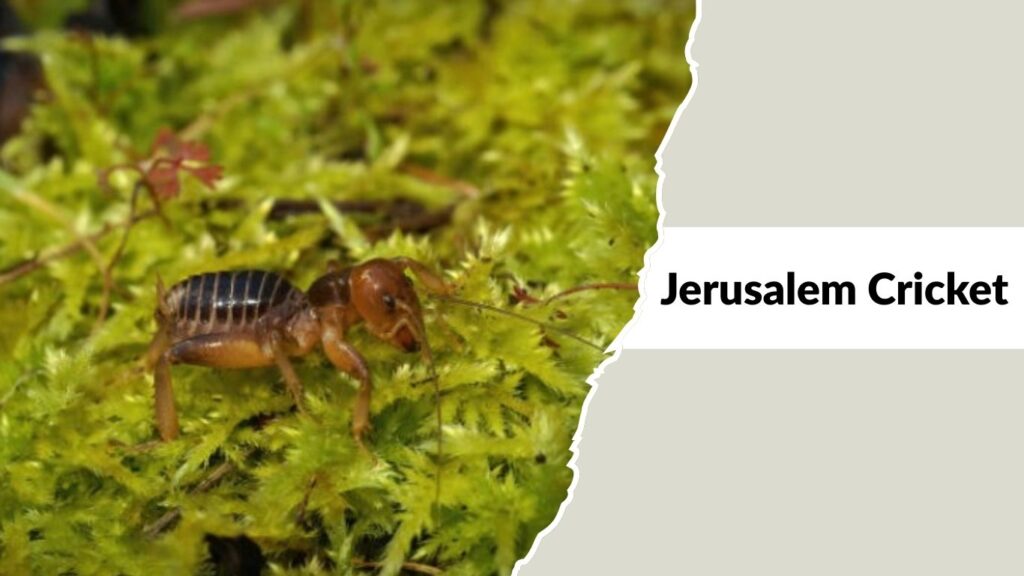
Jerusalem crickets are large, heavy-bodied insects often mistaken for spiders or beetles. Despite their name, they are true crickets. They are famous for their oversized, human-like heads and powerful jaws. These crickets do not chirp but can make hissing or drumming sounds when disturbed.
Identification
- Large, thick-bodied insect, usually 30–50 mm long
- Pale tan to yellowish body with dark brown or black bands
- Very large, round head with strong mandibles
- Long antennae and spiny legs
- Wingless; cannot chirp
- Distinct black and tan striped abdomen
Habitat
Jerusalem crickets live underground in loose, sandy soils. They are commonly found in grasslands, gardens, farmlands, and woodland edges. During the day, they remain in burrows or under rocks, logs, and soil debris.
Behavior
They are nocturnal and slow-moving compared to other crickets. When threatened, they may rear up, drum their abdomen on the ground, or bite in defense. They are solitary insects and rarely seen in groups.
Diet
Jerusalem crickets are omnivores. They feed on roots, tubers, decaying plant material, insects, and sometimes other small invertebrates. Their strong jaws allow them to chew tough plant matter underground.
Lifecycle
Females lay eggs in moist soil chambers. The eggs hatch into nymphs that look like smaller adults. They molt many times and may take one to two years to reach full adulthood, making them relatively long-lived among crickets.
6. Tree Cricket (Oecanthus species)
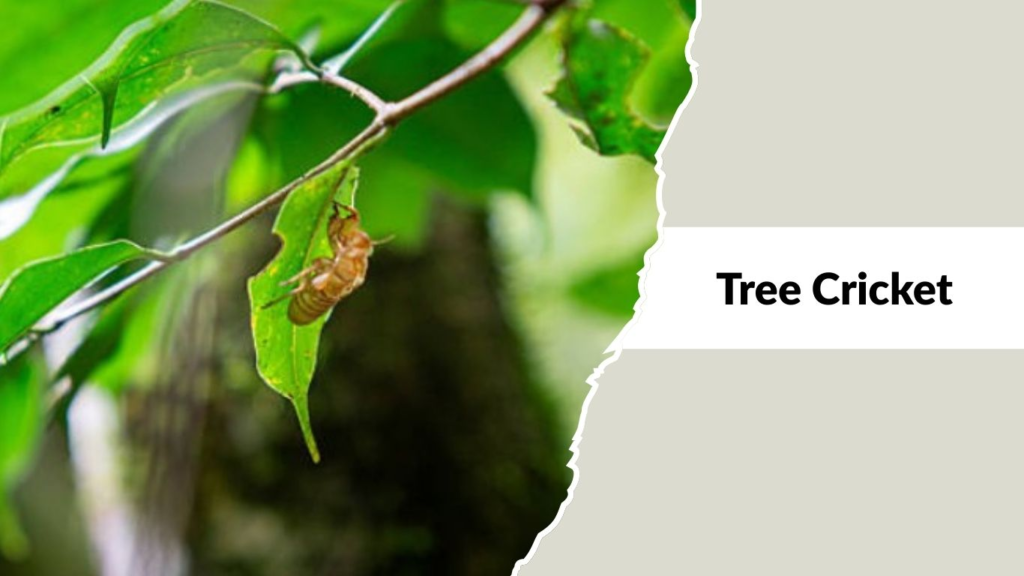
Tree crickets are slender, pale-colored crickets best known for their soft, musical chirping that is often heard on warm summer nights. They are excellent climbers and are usually found on shrubs, trees, and tall grasses. Many species are called “temperature crickets” because the speed of their chirping can roughly indicate air temperature.
Identification
- Slim, delicate body, usually pale green or light tan
- Body length about 12–20 mm
- Very long, thin antennae
- Transparent or pale wings held flat over the back
- Small dark markings often present near the base of the wings
- Fine legs adapted for climbing
Habitat
Tree crickets live on trees, bushes, vines, and tall grasses. They are commonly found in gardens, orchards, forest edges, and shrublands. Unlike ground-dwelling crickets, they spend most of their lives above ground on vegetation.
Behavior
They are mostly nocturnal. Males produce high-pitched, gentle chirps to attract females, often from leaves where they sometimes create small holes to amplify their sound. Tree crickets are less aggressive and more delicate in behavior than field crickets.
Diet
Tree crickets feed mainly on plant material such as leaves, flowers, pollen, and fruits. They also eat aphids and other small insects, making some species beneficial in gardens.
Lifecycle
Females lay eggs in soft plant stems using a needle-like ovipositor. The eggs overwinter and hatch into nymphs in spring. Nymphs molt several times before becoming adults by early to mid-summer.
7. Snowy Tree Cricket (Oecanthus fultoni)
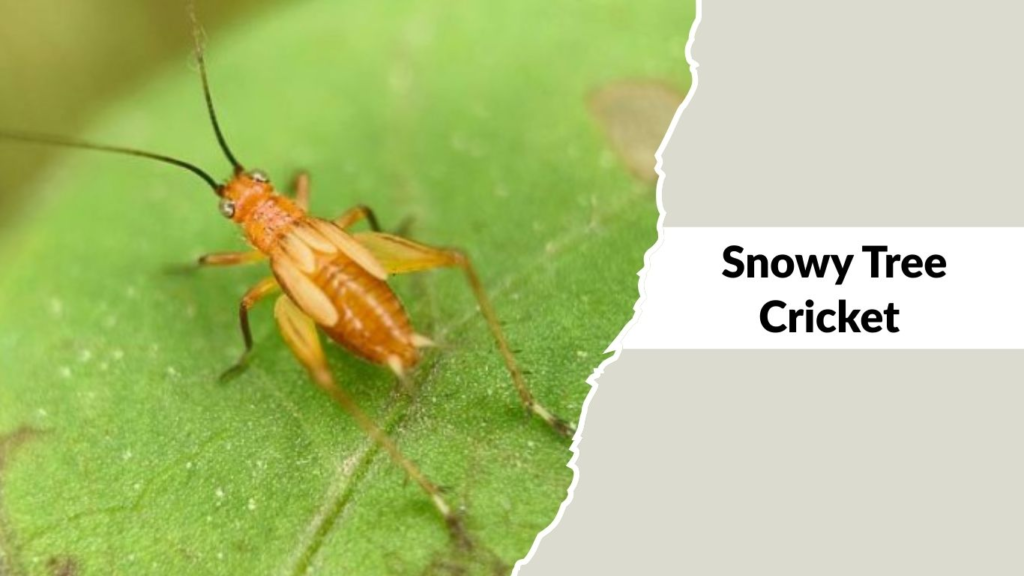
Snowy tree crickets are delicate, pale green to whitish crickets famous for their clear, bell-like chirping sounds. They are often called “the thermometer cricket” because their chirp rate closely matches surrounding air temperature. These crickets are commonly found on shrubs and small trees during warm months.
Identification
- Pale green to almost white body
- Slim shape, about 13–18 mm long
- Long, thread-like antennae
- Transparent wings with fine veins
- Small dark spots near the base of the wings
- Slender legs adapted for climbing
Habitat
Snowy tree crickets live on shrubs, garden plants, vines, and low tree branches. They prefer warm, humid environments such as gardens, forest edges, hedgerows, and agricultural areas with abundant vegetation.
Behavior
They are nocturnal and sing mostly at night. Males chirp from leaves, sometimes chewing small holes in them to create a natural sound amplifier. Their calls are often softer and more musical than those of field crickets.
Diet
They feed on plant juices, tender leaves, pollen, and small insects like aphids. This mixed diet allows them to survive easily in gardens and natural vegetation.
Lifecycle
Females lay eggs inside plant stems. The eggs overwinter and hatch in spring. Nymphs develop through several molts and reach adulthood in summer, with most adults living until early autumn.
8. Ground Cricket (Allonemobius species)
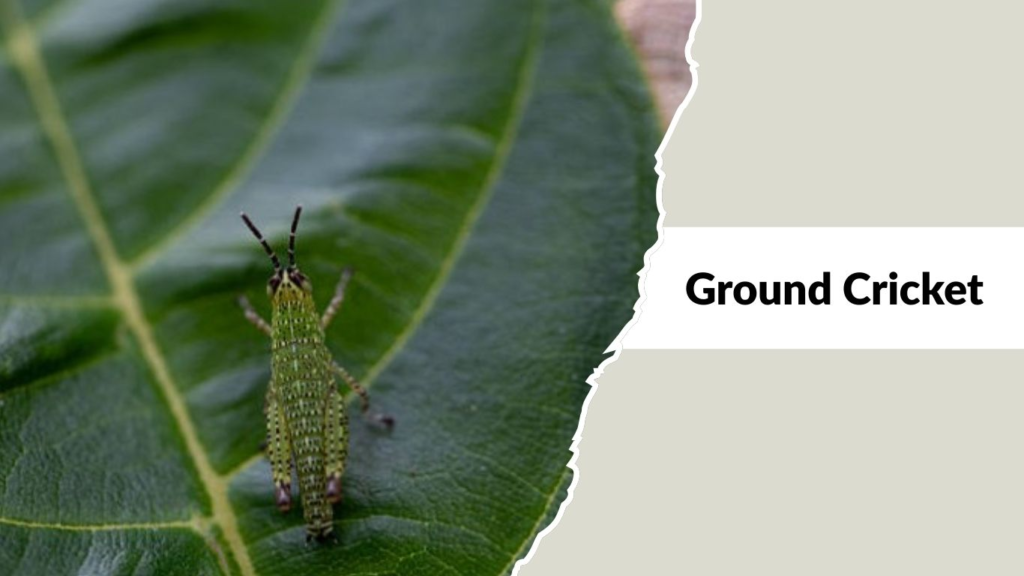
Ground crickets are small, fast-moving crickets that live close to the soil surface. They are less well known than house or field crickets, but they are very common in grassy and open habitats. Their calls are usually softer and higher-pitched than those of larger field crickets.
Identification
- Small body size, usually 6–12 mm long
- Dark brown to black coloration
- Slender body with relatively short wings
- Long antennae compared to body size
- Strong hind legs for jumping
- Often seen running quickly along the ground
Habitat
Ground crickets live in grasslands, lawns, meadows, pastures, and open woodland floors. They hide among grass roots, soil cracks, leaf litter, and under small stones where moisture and shelter are available.
Behavior
They are mostly nocturnal and very active runners. Instead of flying, they rely on quick jumps and rapid movement to escape predators. Males produce quiet, high-pitched chirps that are often difficult to hear unless nearby.
Diet
Ground crickets are omnivores. They feed on grasses, seeds, algae, fungi, and small insects. They also consume decaying organic matter, helping recycle nutrients in the soil.
Lifecycle
Females lay eggs in soil. The nymphs hatch looking like tiny adults and molt several times before maturity. Many species complete their life cycle within one season, especially in warm climates.
9. Two-spotted Cricket (Gryllus bimaculatus)
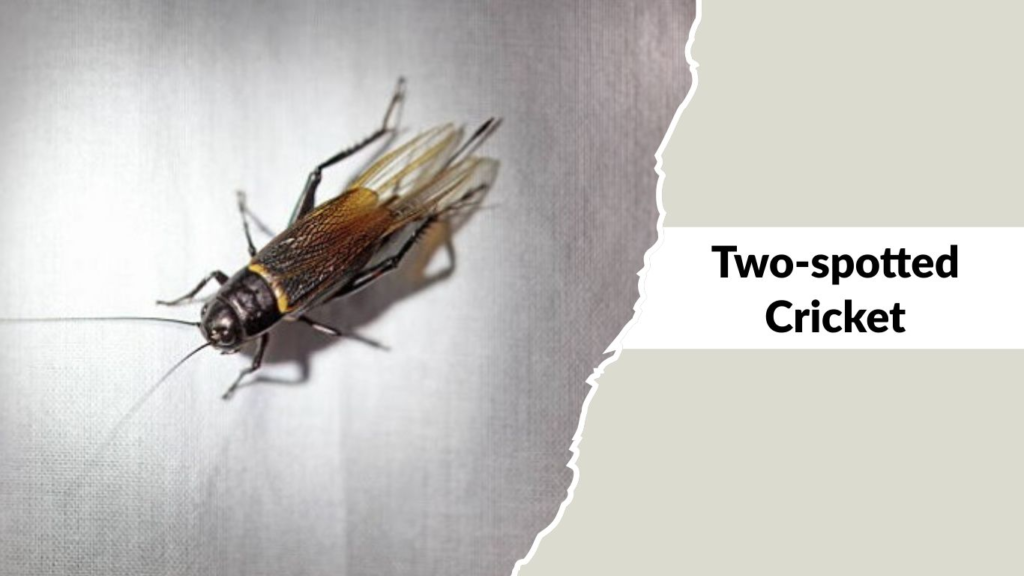
The two-spotted cricket is a large, dark cricket widely found in Africa, Asia, and parts of southern Europe. It is well known both in nature and in laboratories, where it is often used for research and as feeder insects. Its name comes from the two pale spots at the base of its wings.
Identification
- Black to very dark brown body
- Two distinct pale or yellowish spots near the wing bases
- Body length usually 20–30 mm
- Strong hind legs built for jumping
- Long antennae and large head
- Fully developed wings; males chirp loudly
Habitat
Two-spotted crickets live in grasslands, agricultural fields, gardens, and open scrublands. They hide under stones, plant debris, and in shallow soil burrows. They prefer warm regions and are common in tropical and subtropical climates.
Behavior
They are mostly nocturnal and very active after sunset. Males produce loud, rhythmic chirps to attract females. They are strong runners and jumpers and may also fly short distances when disturbed.
Diet
They are omnivores, feeding on leaves, seeds, fruits, insects, and decaying organic matter. Because of their fast growth and high protein content, they are commonly farmed as food for reptiles, birds, and even humans in some cultures.
Lifecycle
Females lay eggs in moist soil. The eggs hatch into nymphs that resemble small adults. After several molts, they mature within about 2–3 months under warm conditions.
10. Tropical House Cricket (Gryllodes sigillatus)
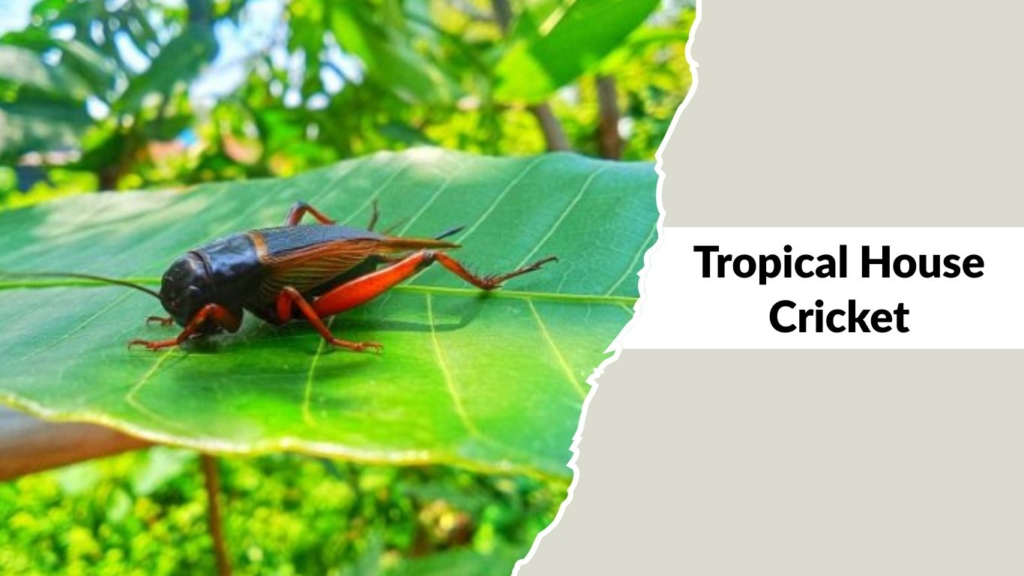
The tropical house cricket is a small, light-colored cricket commonly found in warm regions around the world. It is closely associated with human environments and is widely bred as a feeder insect for reptiles and birds. Compared to the common house cricket, it is quieter, faster-growing, and more tolerant of high temperatures.
Identification
- Light tan to yellowish-brown body
- Distinct dark bands across the head
- Small to medium size, usually 12–18 mm long
- Long antennae and slender legs
- Wings present; chirping is softer than house crickets
- Smooth, delicate body appearance
Habitat
Tropical house crickets thrive in warm indoor and outdoor environments. They are found in warehouses, kitchens, animal-rearing facilities, compost piles, gardens, and grassy areas, especially in tropical and subtropical regions.
Behavior
They are mainly nocturnal and hide during the day. Males chirp softly to attract females. They are excellent climbers and quick runners, often seen on walls or ceilings in warm buildings.
Diet
They are omnivorous and feed on grains, fruits, vegetables, dead insects, and organic waste. Their adaptability to many food sources makes them easy to culture in captivity.
Lifecycle
Females lay eggs in moist substrates. Eggs hatch within 10–14 days. Nymphs grow quickly, molting several times before becoming adults in about 6–8 weeks under warm conditions.
11. Jamaican Field Cricket (Gryllus assimilis)
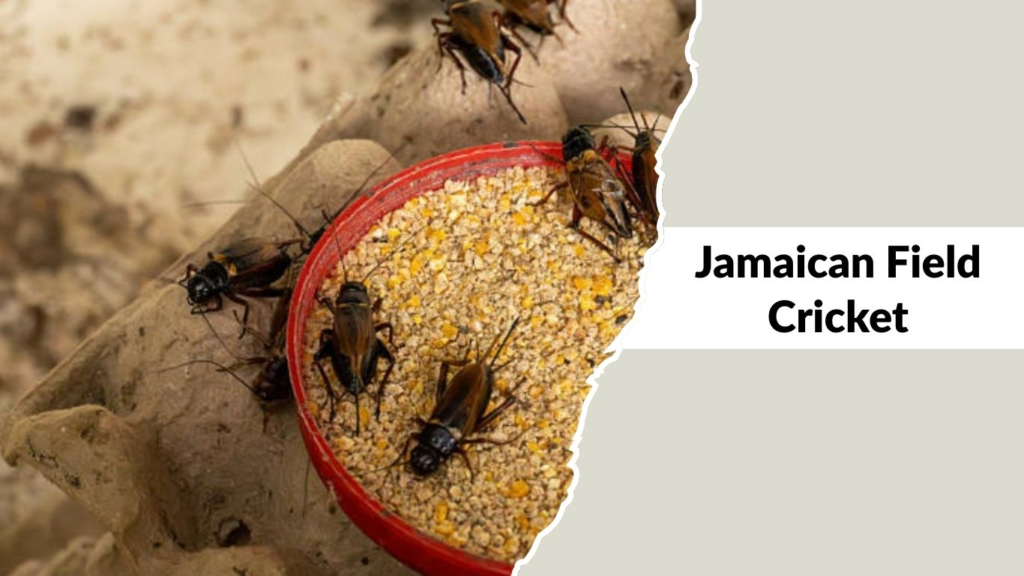
The Jamaican field cricket is a large, dark cricket native to the Caribbean, Central America, and parts of South America. It is widely bred worldwide as a feeder insect and for biological studies. It looks similar to other field crickets but is usually more robust and tolerant of warm, humid conditions.
Identification
- Dark brown to black, stout body
- Body length about 18–30 mm
- Large rounded head with strong jaws
- Long antennae and powerful hind legs
- Fully developed wings; males chirp loudly
- Shiny appearance compared to many field crickets
Habitat
In the wild, Jamaican field crickets live in grasslands, forest edges, gardens, and agricultural fields. They hide under rocks, logs, leaf litter, and in shallow soil burrows. In human environments, they are often found in breeding facilities and warm storage areas.
Behavior
They are nocturnal and most active at night. Males call loudly to attract females and defend territory. They are strong jumpers and runners and can become aggressive when crowded.
Diet
They are omnivores that feed on leaves, fruits, seeds, dead insects, and organic matter. In captivity, they readily eat commercial cricket feed, vegetables, and grains.
Lifecycle
Females lay eggs in moist soil or soft substrates. Eggs hatch within about two weeks. Nymphs molt several times and reach adulthood in roughly 2–3 months, depending on temperature and food availability.
12. Texas Field Cricket (Gryllus texensis)
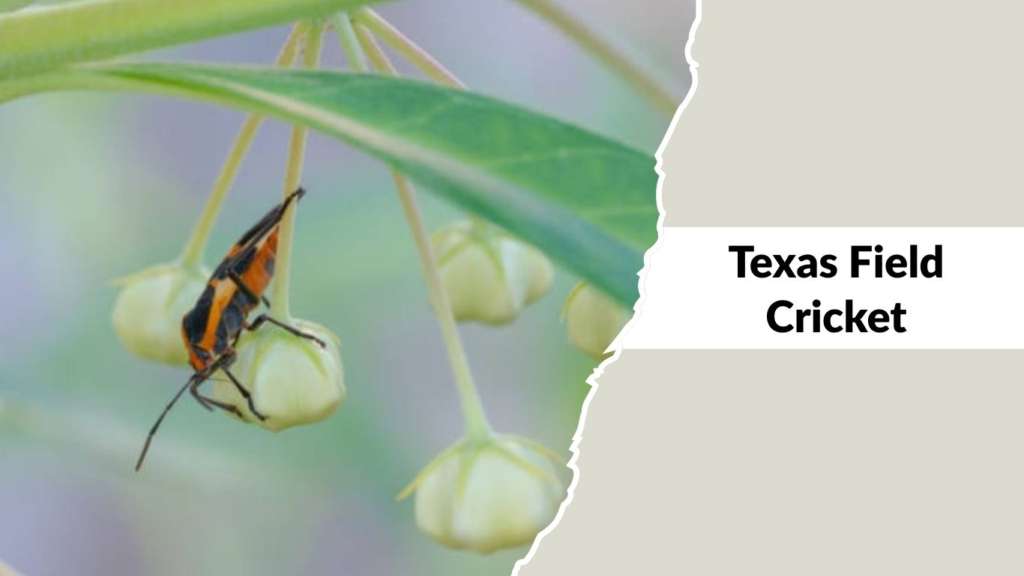
The Texas field cricket is a common North American species known for its loud, steady chirping and dark, glossy body. It is often found in fields, lawns, and around buildings, especially in the southern United States. This species is one of the most frequently heard crickets during warm summer and autumn nights.
Identification
- Shiny black to very dark brown body
- Body length usually 16–25 mm
- Large head with prominent eyes
- Long antennae and strong hind legs
- Fully developed wings; males produce loud chirps
- Smooth, robust appearance
Habitat
Texas field crickets live in grasslands, pastures, roadsides, gardens, and suburban lawns. They hide under stones, logs, thick grass, and in shallow soil burrows. They are often attracted to outdoor lights at night.
Behavior
They are nocturnal and highly vocal. Males chirp to attract females and to warn rival males. They are fast-moving insects and quickly run or jump when disturbed.
Diet
They are omnivorous scavengers, feeding on grasses, seeds, fruits, small insects, fungi, and organic debris. Occasionally, they may nibble on tender garden plants.
Lifecycle
Females lay eggs in soil during warm months. The eggs overwinter, and nymphs hatch in spring. After several molts, they mature into adults by late summer or early fall.
13. European Field Cricket (Gryllus campestris)
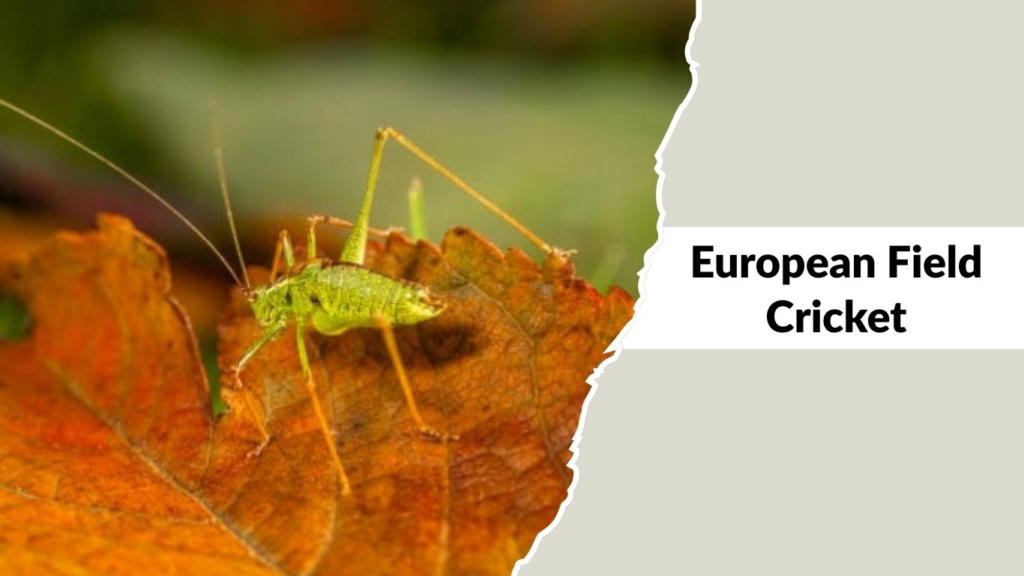
The European field cricket is a large, dark cricket native to Europe and parts of western Asia. It is well known for its loud, cheerful chirping, which is a classic sound of European grasslands in late spring and summer. Unlike many crickets, this species often sings from the entrance of its burrow.
Identification
- Black, stocky body with a slightly glossy surface
- Body length usually 20–26 mm
- Large rounded head with strong mandibles
- Long antennae and sturdy hind legs
- Shorter wings compared to many other field crickets
- Males produce loud, repetitive chirps
Habitat
European field crickets prefer dry, sunny grasslands, meadows, heaths, and open pastures. They dig permanent burrows in well-drained soil and often remain near the same burrow throughout their adult life.
Behavior
They are mostly diurnal and crepuscular, often active during warm daylight hours. Males sit at the entrance of their burrows and chirp loudly to attract females. They are territorial and may fight other males.
Diet
They are omnivores, feeding on grasses, herbs, seeds, roots, small insects, and decaying plant matter. Their diet changes depending on seasonal availability.
Lifecycle
Females lay eggs in soil near burrows. Nymphs hatch and develop slowly, usually overwintering before becoming adults the following spring. The full life cycle often takes about one year.
14. Australian Field Cricket (Teleogryllus oceanicus)
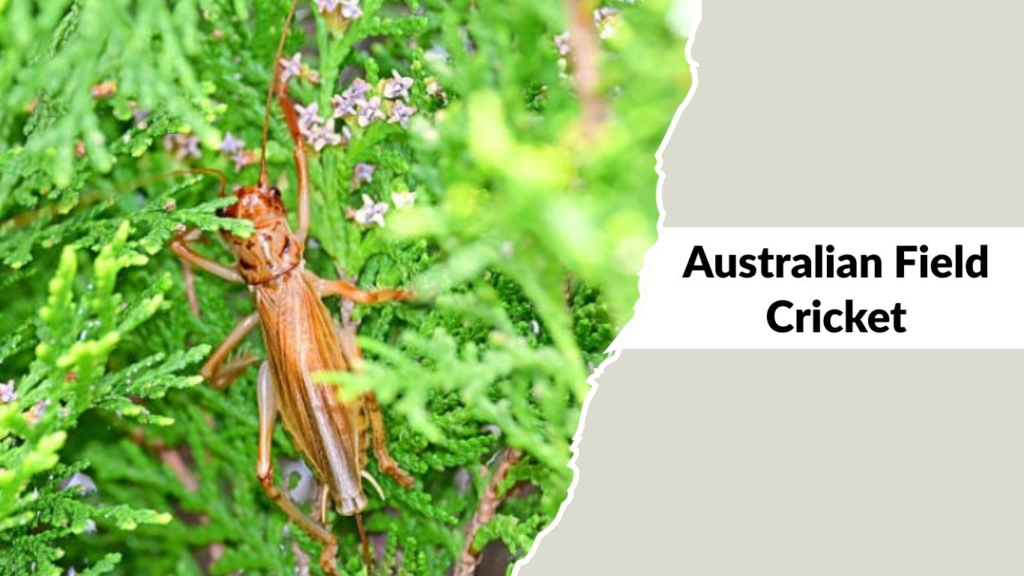
The Australian field cricket, also known as the Pacific field cricket, is a robust, dark-colored cricket widely found in Australia and many Pacific islands. It is famous for its loud, penetrating call and for being one of the most studied cricket species in behavioral research.
Identification
- Dark brown to black, sturdy body
- Body length usually 20–35 mm
- Large head with strong mouthparts
- Long antennae and powerful hind legs
- Fully developed wings; males produce loud chirping sounds
- Smooth, glossy appearance
Habitat
Australian field crickets inhabit grasslands, coastal areas, gardens, agricultural fields, and urban environments. They hide under rocks, logs, debris, and in soil cracks, often near human structures.
Behavior
They are nocturnal and very vocal at night. Males chirp loudly to attract females and defend territories. They are fast runners and capable of short flights.
Diet
They are omnivores, feeding on grasses, seeds, fruits, insects, and decaying organic matter. They may occasionally damage crops or garden plants.
Lifecycle
Females lay eggs in soil or soft plant material. Eggs hatch into nymphs that resemble tiny adults. After multiple molts, they reach adulthood in about 2–4 months under favorable conditions.
15. Black Field Cricket (Teleogryllus commodus)
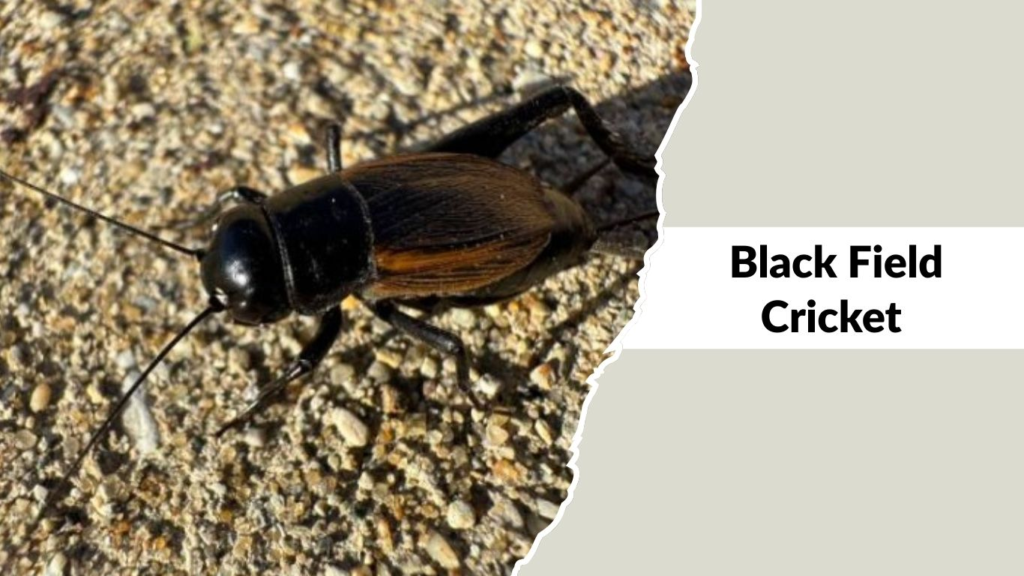
The black field cricket is a large, dark cricket native to Australia and nearby regions. It is one of the most common and well-known crickets in Australia, often heard calling loudly at night from gardens, fields, and open ground. Its strong chirping makes it a familiar summer sound.
Identification
- Deep black to very dark brown body
- Body length usually 20–30 mm
- Broad head with strong jaws
- Long antennae and powerful hind legs
- Fully developed wings; males chirp loudly
- Stocky, heavy-bodied appearance
Habitat
Black field crickets live in grasslands, farmlands, gardens, forest edges, and suburban areas. They shelter under stones, logs, thick vegetation, and in soil cracks or shallow burrows.
Behavior
They are nocturnal and highly territorial. Males produce loud calling songs to attract females and chase away rivals. When disturbed, they run quickly or hide rather than fly.
Diet
They are omnivores and feed on grasses, seeds, fallen fruits, insects, and organic matter. They may also chew on soft garden plants and seedlings.
Lifecycle
Females lay eggs in soil during warm seasons. Nymphs hatch and molt several times before adulthood. Most individuals complete their life cycle within one year.
16. Red-headed Bush Cricket (Phyllopalpus pulchellus)
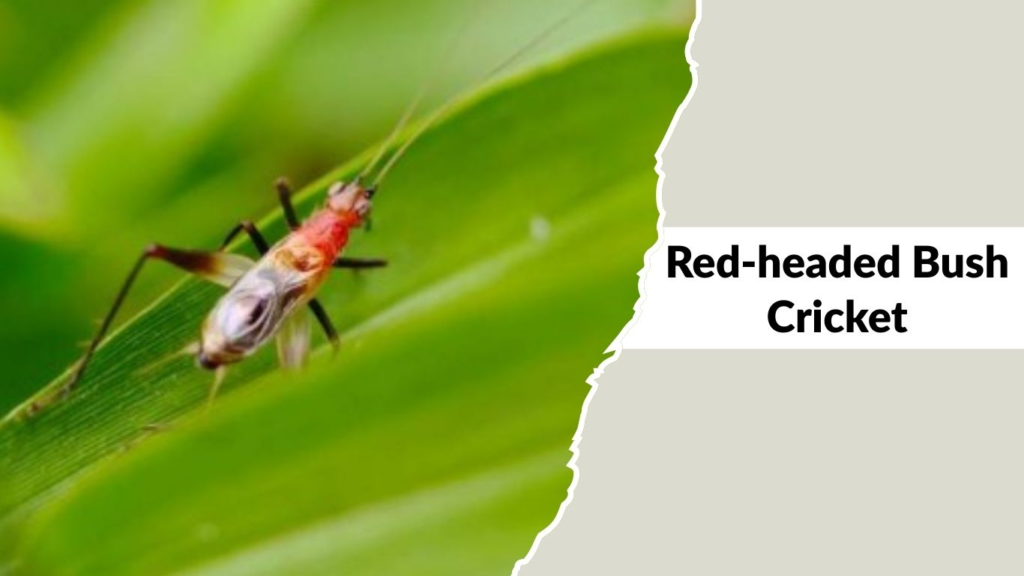
The red-headed bush cricket is a small, colorful cricket best known for its bright reddish head and contrasting dark body. It is commonly found in North America, especially in weedy fields, forest edges, and gardens. Its soft, high-pitched calls are often heard in late summer and autumn.
Identification
- Distinct reddish or orange head
- Dark brown to black body
- Small size, usually 7–12 mm long
- Long, thin antennae
- Slender legs adapted for climbing and jumping
- Wings present; males produce soft, high-pitched chirps
Habitat
Red-headed bush crickets live in shrubs, weeds, tall grasses, forest edges, and gardens. They are usually found on low vegetation rather than on the ground.
Behavior
They are mostly nocturnal and are active on plants at night. Males call quietly compared to field crickets. They are quick movers and often hide among leaves and stems.
Diet
They feed on small insects, aphids, plant material, pollen, and decaying organic matter. This mixed diet makes them both plant feeders and minor predators.
Lifecycle
Females lay eggs in plant stems or soft tissues. The eggs overwinter, and nymphs hatch in spring. After several molts, they mature into adults by late summer.
17. Fork-tailed Bush Cricket (Phyllopalpus pulchellus group)
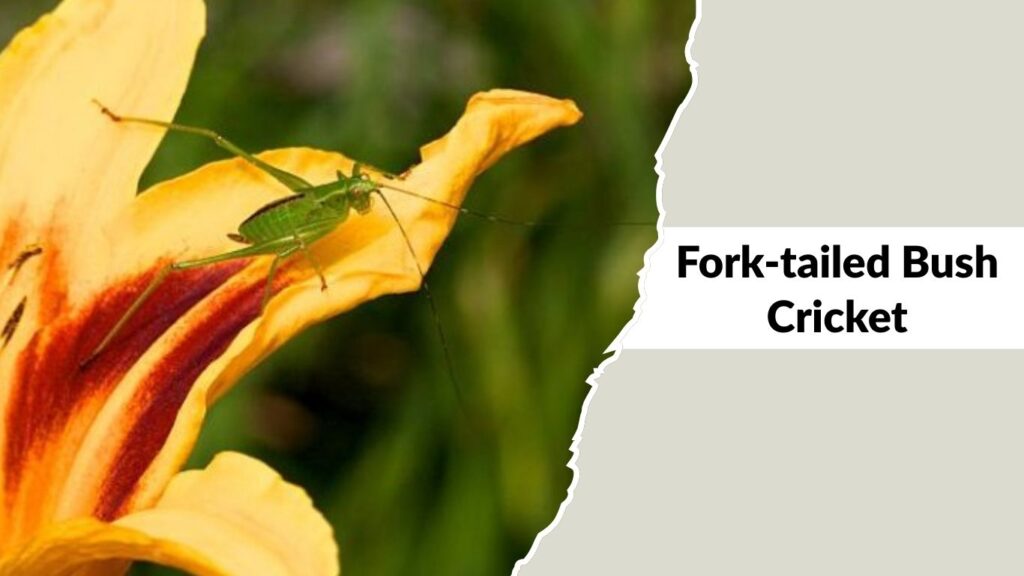
Fork-tailed bush crickets are small, slender crickets named for the forked or split appearance of the tail-like cerci at the end of the abdomen. They are quiet, plant-dwelling crickets often overlooked because of their size and soft calls. They are usually found in low vegetation and shrubs.
Identification
- Small body, usually 7–13 mm long
- Brown to dark brown coloration
- Forked or split cerci at the tip of the abdomen
- Long, thin antennae
- Slender legs suited for climbing
- Narrow wings; males produce very soft chirps
Habitat
Fork-tailed bush crickets live on shrubs, weeds, tall grasses, and low tree branches. They are common in forest edges, gardens, meadows, and overgrown fields.
Behavior
They are mostly nocturnal and remain hidden in vegetation during the day. Males produce faint, high-pitched calls at night. They move quickly through leaves and stems and drop to the ground when disturbed.
Diet
They feed on plant matter, pollen, small insects, and aphids. Their diet includes both vegetable material and tiny arthropods found on plants.
Lifecycle
Females lay eggs in soft plant tissues. Eggs overwinter, and nymphs emerge in spring. After several molts, they develop into adults by mid to late summer.
18. Indian Tree Cricket (Oecanthus indicus)
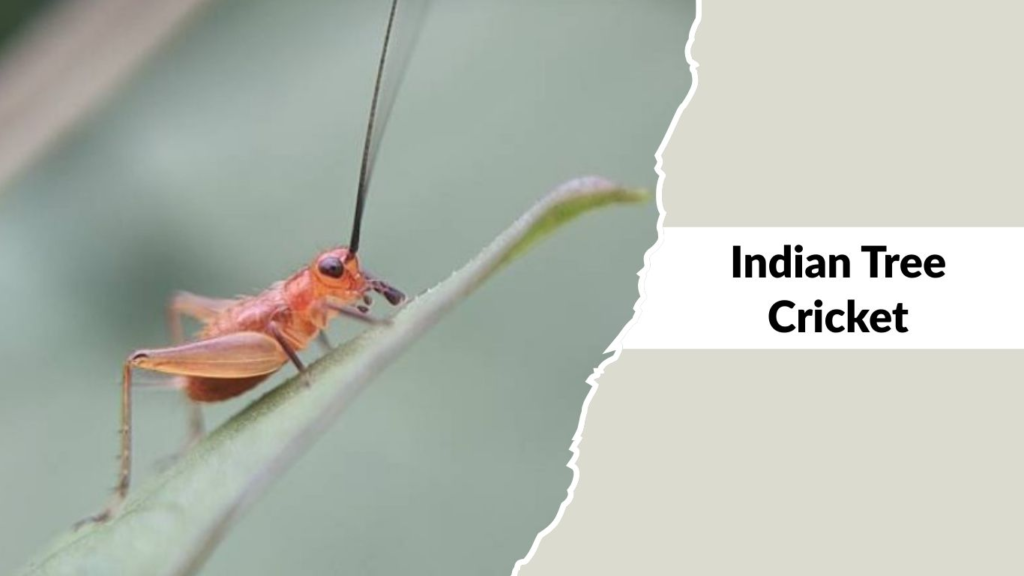
Indian tree crickets are slender, pale-green crickets commonly found across South Asia. They are known for their soft, musical chirping and their habit of living on shrubs, crops, and small trees. Their calls are a familiar nighttime sound in rural and semi-urban areas.
Identification
- Light green to pale yellow body
- Slim, delicate shape, about 12–20 mm long
- Very long, thread-like antennae
- Transparent wings with fine veins
- Small dark markings near the wing bases
- Long legs adapted for climbing
Habitat
Indian tree crickets live on bushes, fruit trees, crop plants, hedges, and tall grasses. They are common in gardens, farmlands, forest edges, and roadside vegetation, especially in warm and humid climates.
Behavior
They are mostly nocturnal and remain hidden on leaves during the day. At night, males sing from plant surfaces to attract females. Their calls are high-pitched and rhythmic, softer than those of field crickets.
Diet
They feed on plant juices, tender leaves, pollen, and small insects such as aphids. This mixed diet allows them to thrive in both natural ecosystems and agricultural areas.
Lifecycle
Females insert eggs into soft plant stems. The eggs hatch into nymphs that resemble tiny adults. Nymphs molt several times and usually reach adulthood within one warm season.
19. Silent Bush Cricket (Aphonoides species)
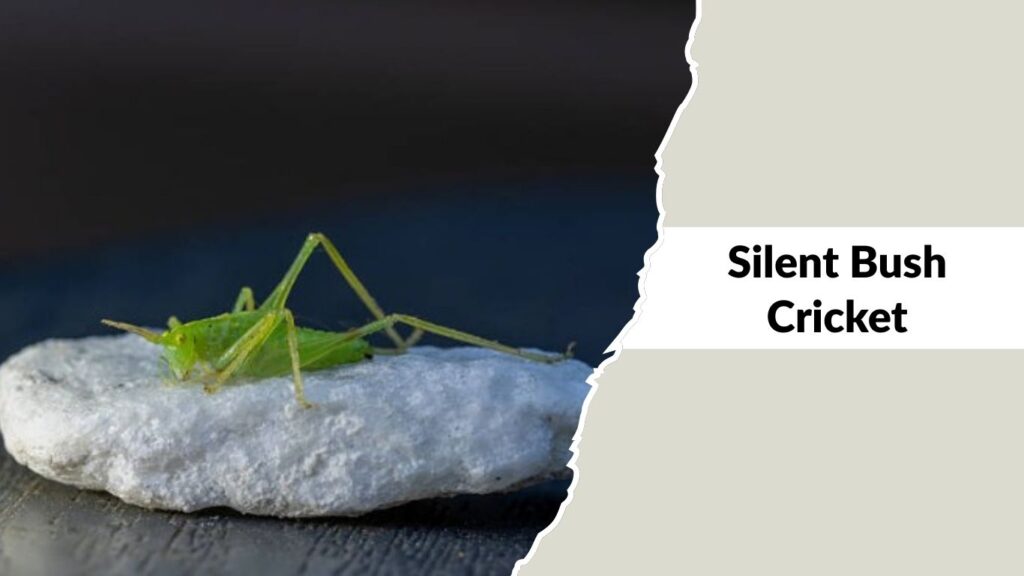
Silent bush crickets are small, plant-dwelling crickets known for producing little or no audible sound, unlike most other crickets. Instead of loud chirping, they rely more on vibration, movement, and chemical signals to communicate. They are usually well camouflaged and easily overlooked in vegetation.
Identification
- Small, slender body, usually under 12 mm long
- Greenish, brown, or mottled coloration
- Long antennae often longer than the body
- Narrow wings, often reduced
- Slender legs adapted for climbing
- Generally lacks strong sound-producing structures
Habitat
Silent bush crickets live on shrubs, tall grasses, weeds, and low tree branches. They are common in forest edges, meadows, gardens, and tropical vegetation zones.
Behavior
They are nocturnal and shy. Instead of chirping loudly, they move quietly through leaves and stems. When threatened, they hide or drop to the ground rather than jumping far.
Diet
They feed on plant matter, pollen, small insects, and soft-bodied arthropods found on vegetation. Their flexible diet supports survival in dense plant habitats.
Lifecycle
Females lay eggs in soft plant tissues. Eggs hatch into nymphs that resemble tiny adults. After several molts, they mature into adults within a few months.
20. Short-winged Mole Cricket (Scapteriscus abbreviatus)
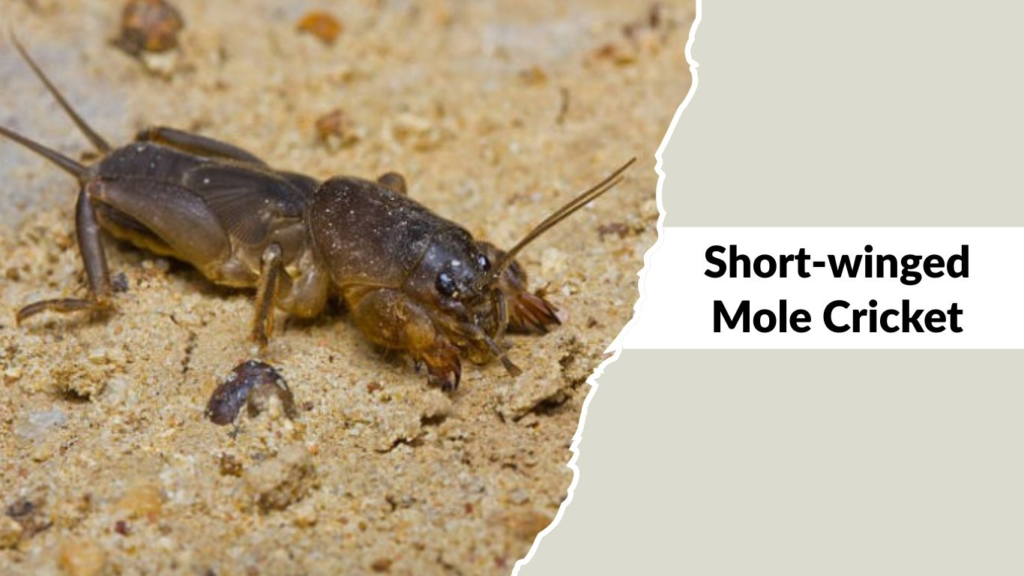
The short-winged mole cricket is a burrowing cricket species best known for its reduced wings and poor flying ability. Unlike many other mole crickets, this species rarely flies and spends nearly its entire life underground. It is often considered a serious lawn and turf pest because of the damage it causes to plant roots.
Identification
- Stocky, cylindrical brown body
- Short, reduced wings that do not support flight
- Broad, shovel-like front legs for digging
- Body length usually 22–30 mm
- Velvety body surface
- Two tail-like cerci at the rear
Habitat
Short-winged mole crickets live in moist, sandy soils. They are common in lawns, golf courses, pastures, vegetable gardens, and agricultural fields where they can easily tunnel underground.
Behavior
They are nocturnal and highly subterranean. Most activity happens below the soil surface, where they create extensive tunnel systems. Unlike many crickets, males rarely call loudly above ground.
Diet
They primarily feed on plant roots, tubers, and underground stems. Occasionally, they may also eat small soil insects. Their feeding habits often lead to wilting grass and damaged turf.
Lifecycle
Females lay eggs in underground chambers. Nymphs hatch and immediately begin burrowing. They molt several times and usually reach adulthood within one year, depending on climate and soil conditions.
21. Southern Mole Cricket (Scapteriscus borellii)
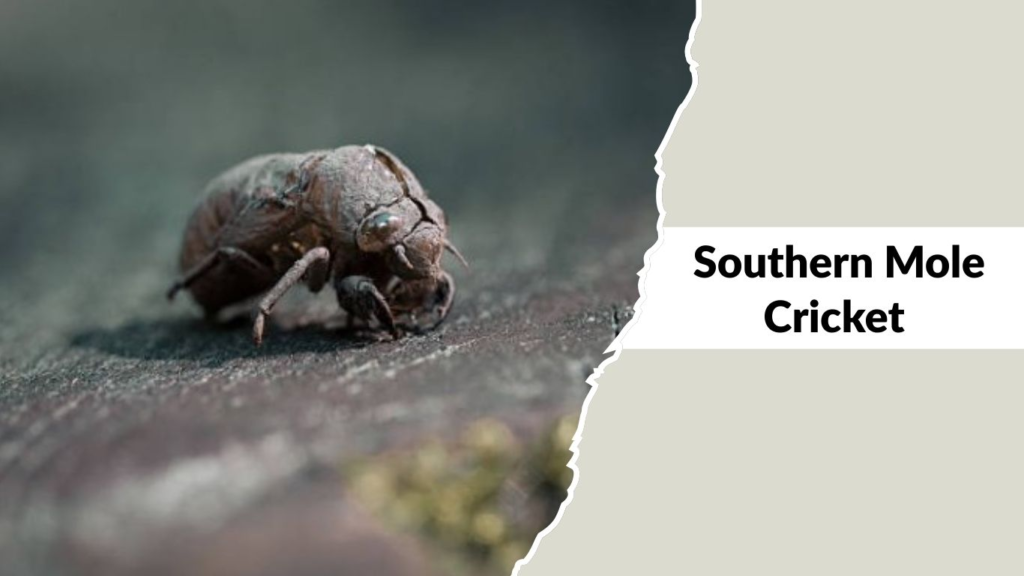
The southern mole cricket is one of the most destructive mole cricket species, especially in turfgrass and pasturelands. It is well adapted for underground life, using its powerful front legs to tunnel through soil. This species is widely known as a major pest of lawns, golf courses, and crops.
Identification
- Brown to dark brown, cylindrical body
- Body length usually 25–35 mm
- Broad, spade-like front legs with two large claws
- Long antennae and short wings
- Velvety body texture
- Two long cerci at the end of the abdomen
Habitat
Southern mole crickets prefer sandy, well-drained soils. They are commonly found in lawns, golf courses, pastures, vegetable fields, and coastal plains, where soil is easy to dig and moisture is available.
Behavior
They are mostly nocturnal and spend most of their lives underground. At night, they tunnel near the surface to feed. Males construct special burrows to amplify their mating calls during breeding season.
Diet
They are mainly carnivorous, feeding on insects, earthworms, and other small soil-dwelling invertebrates. While tunneling, they also disturb plant roots, which can cause serious turf damage.
Lifecycle
Females lay eggs in underground chambers. Eggs hatch into nymphs that look like small adults. They molt several times and usually complete development within one year.
22. Tawny Mole Cricket (Scapteriscus vicinus)
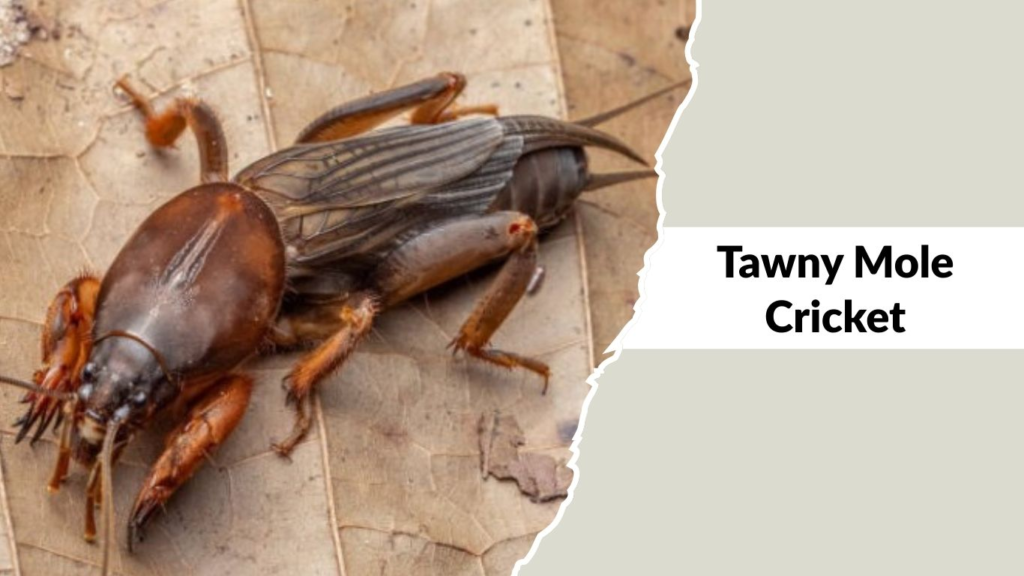
The tawny mole cricket is a large, burrowing cricket well known for the serious damage it causes to lawns, pastures, and crops. It is one of the most destructive mole cricket species and is widely distributed in warm regions. Its tunneling and root-feeding habits make it a major agricultural pest.
Identification
- Light brown to tawny-colored body
- Cylindrical shape, usually 30–40 mm long
- Broad, spade-like front legs adapted for digging
- Short wings; capable of limited flight
- Velvety body texture
- Two tail-like cerci at the rear
Habitat
Tawny mole crickets prefer sandy, loose soils. They are commonly found in turfgrass, agricultural fields, golf courses, vegetable gardens, and coastal lowlands.
Behavior
They are nocturnal and highly subterranean. At night, they move through shallow tunnels to feed. Males create acoustic chambers underground to amplify their mating calls.
Diet
They are mainly herbivorous, feeding on roots, stems, and tubers of grasses and crops. Their feeding often leads to wilting plants and dead patches of turf.
Lifecycle
Females lay eggs in underground chambers. Nymphs hatch and immediately begin burrowing. They pass through several nymphal stages and usually reach adulthood within one year.
23. Pygmy Ground Cricket (Nemobius species)
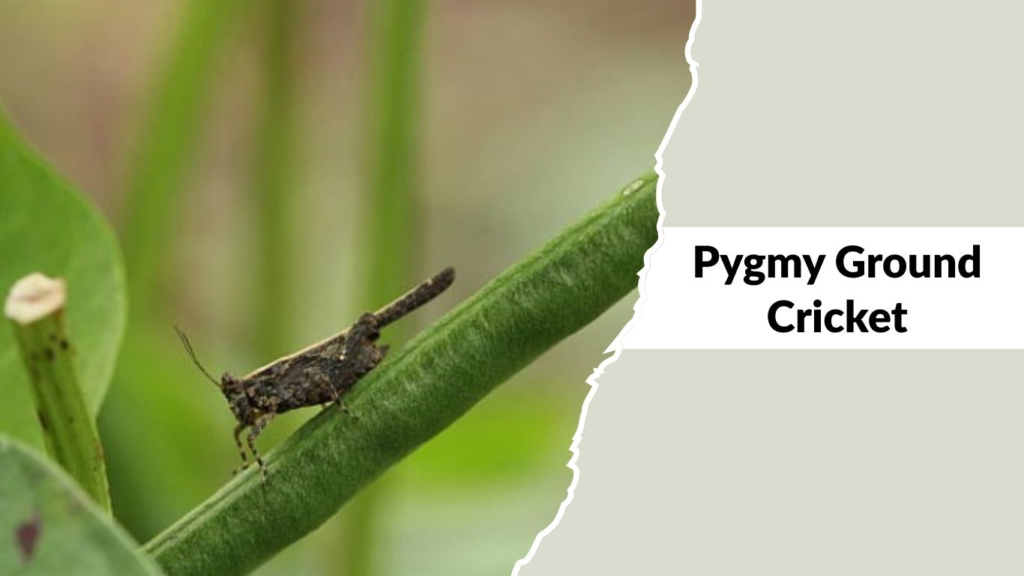
Pygmy ground crickets are among the smallest true crickets. They are quick, secretive insects that live close to the soil surface and are often found running through leaf litter and low vegetation. Because of their tiny size and soft calls, they are frequently overlooked.
Identification
- Very small body, usually 5–8 mm long
- Dark brown to black coloration
- Slender body with short wings
- Long antennae relative to body size
- Strong hind legs for quick jumps
- Shiny or smooth body appearance
Habitat
Pygmy ground crickets live in leaf litter, moss, forest floors, grassy edges, and moist ground cover. They prefer damp environments where they can hide easily among debris.
Behavior
They are mostly nocturnal and extremely fast runners. Instead of flying, they rely on quick movements and short jumps. Males produce faint, high-pitched sounds that are difficult for humans to hear.
Diet
They feed on algae, fungi, decaying plant material, seeds, and tiny insects. Their diet plays an important role in breaking down organic matter in forest and grassland ecosystems.
Lifecycle
Females lay eggs in soil or decaying plant matter. Nymphs hatch and develop quickly, molting several times before becoming adults, often within a single warm season.
24. Jumping Bush Cricket (Neoaclisis species)
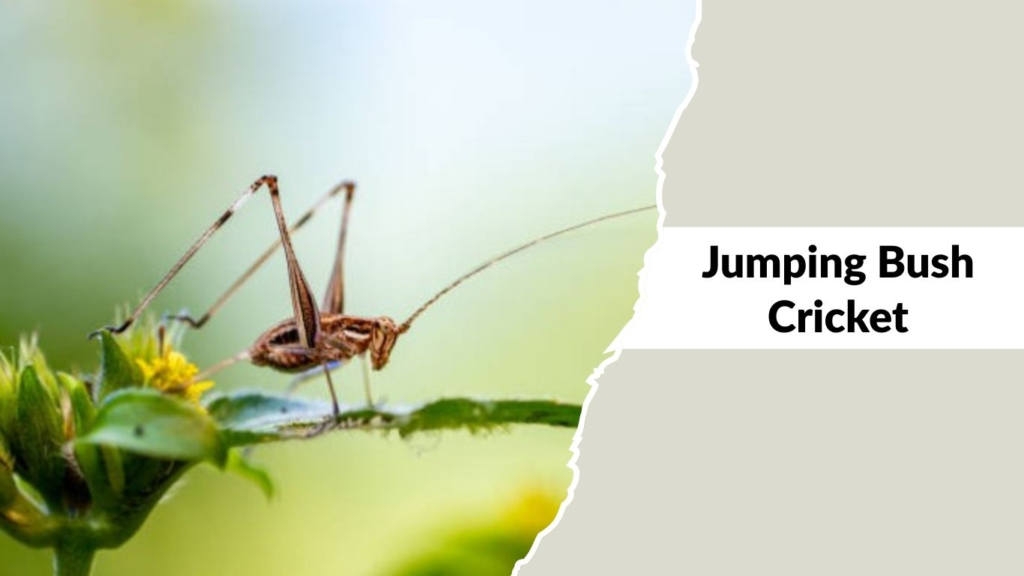
Jumping bush crickets are small, agile crickets known for their strong hind legs and excellent jumping ability. They live mostly on low vegetation and are quick to escape when disturbed. Their soft, high-pitched calls are often barely noticeable to human ears.
Identification
- Small to medium size, usually 8–14 mm long
- Brown, tan, or greenish body
- Slender shape with long antennae
- Powerful hind legs adapted for jumping
- Narrow wings; males produce faint chirps
- Lightly patterned or plain body surface
Habitat
Jumping bush crickets live in bushes, tall grasses, weeds, and low shrubs. They are commonly found in forest edges, meadows, overgrown fields, and gardens.
Behavior
They are mostly nocturnal and remain hidden in vegetation during the day. When threatened, they leap quickly between plants rather than flying. Males call softly at night to attract females.
Diet
They feed on plant matter, pollen, small insects, and soft-bodied arthropods found on leaves and stems.
Lifecycle
Females lay eggs in plant tissues. Nymphs hatch and resemble tiny adults. After several molts, they mature into adults within a few months, depending on temperature and food availability.
25. Wood Cricket (Nemobius sylvestris)
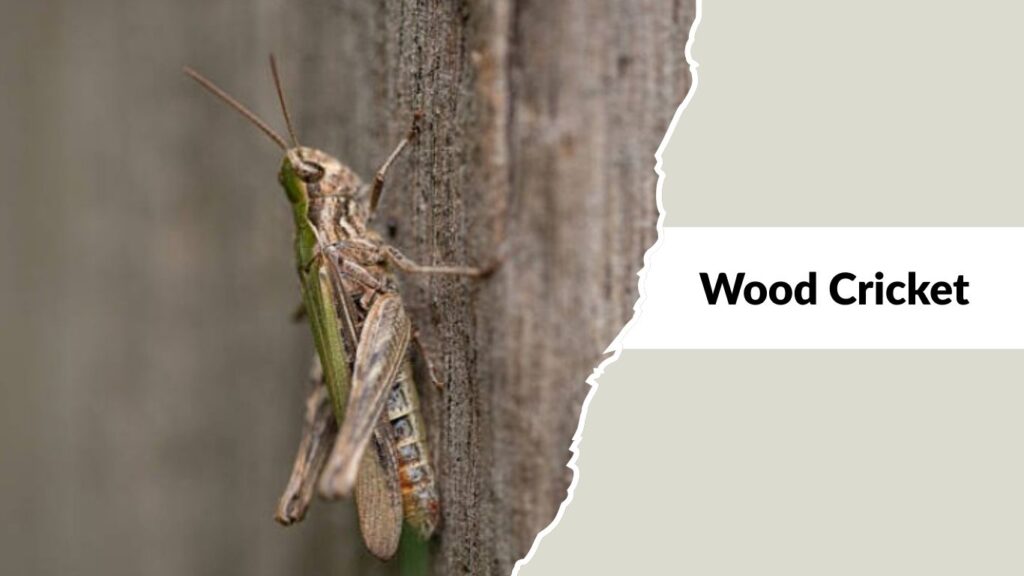
The wood cricket is a small, dark cricket native to European forests and woodlands. It is closely associated with leaf litter and forest floors, where it blends in well with its surroundings. Unlike many other crickets, its song is very soft and often goes unnoticed.
Identification
- Small body, usually 7–11 mm long
- Dark brown to black coloration
- Slender shape with short wings
- Long antennae and thin legs
- Smooth, slightly shiny body
- Hind legs adapted for short jumps
Habitat
Wood crickets live mainly in deciduous forests, woodland edges, hedgerows, and shaded parks. They hide among leaf litter, moss, and fallen branches where moisture is high.
Behavior
They are mostly nocturnal and stay hidden under leaves and debris during the day. Males produce faint, high-pitched sounds that are difficult to hear without close range.
Diet
They feed on decaying plant matter, fungi, seeds, and tiny invertebrates. Their feeding habits help recycle nutrients within forest ecosystems.
Lifecycle
Females lay eggs in soil or decaying organic material. Nymphs hatch and overwinter in leaf litter, molting several times before reaching adulthood in summer.
26. Scaly Cricket (Cycloptilum species)
Scaly crickets are unusual crickets known for the scale-like patterns on their bodies and their preference for dry, sandy habitats. They are small to medium-sized and are more closely related to camel and sand crickets than to typical field crickets.
Identification
- Small to medium body size, usually 10–20 mm
- Brown, tan, or gray coloration with scale-like texture
- Rounded, somewhat hump-backed appearance
- Long antennae
- Often reduced or absent wings
- Strong hind legs for jumping
Habitat
Scaly crickets live in dry grasslands, sandy deserts, scrublands, and coastal dunes. They hide under stones, driftwood, and soil debris where moisture is limited but shelter is available.
Behavior
They are nocturnal and prefer dry conditions. Instead of loud chirping, many species make little or no sound. They rely on camouflage and sudden jumps to escape predators.
Diet
They feed on decaying plant matter, seeds, fungi, and small insects. Their flexible diet allows them to survive in harsh, dry environments.
Lifecycle
Females lay eggs in sandy soil. Nymphs hatch and resemble tiny adults. They molt several times before reaching maturity, often within one warm season.
27. Cave Cricket (Hadenoecus species)
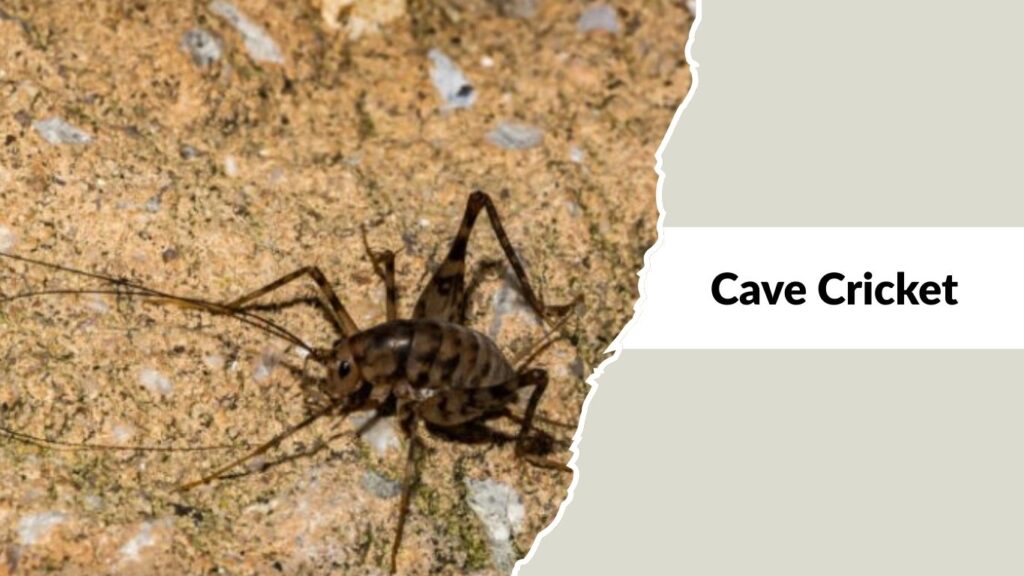
Cave crickets are long-legged, wingless crickets specially adapted for life in dark, damp environments. They are closely related to camel crickets and are best known for living in caves, tunnels, and deep crevices where sunlight rarely reaches. Unlike most crickets, they do not chirp.
Identification
- Hump-backed body with a rounded shape
- Pale brown, tan, or gray coloration
- Very long antennae and extremely long hind legs
- Wingless body, no chirping organs
- Body length usually 12–25 mm
- Spiny legs adapted for jumping
Habitat
Cave crickets live in caves, abandoned mines, rock crevices, and damp underground spaces. They are also found in basements, crawl spaces, and cellars where conditions are cool, dark, and humid.
Behavior
They are nocturnal and avoid light. During the day, they rest on cave walls or in cracks. At night, they move out to forage. When disturbed, they jump suddenly and rely on speed rather than sound for defense.
Diet
Cave crickets are scavengers. They feed on fungi, algae, decaying plant matter, dead insects, and organic debris found in caves and moist environments.
Lifecycle
Females lay eggs in moist soil, cave sediments, or crevices. Nymphs hatch as smaller versions of adults and molt several times before maturity. Development is slow and depends heavily on stable humidity and temperature.
FAQs
What is a cricket insect?
Crickets are insects belonging to the order Orthoptera and are closely related to grasshoppers and katydids. They are best known for the chirping sounds made by males, which are produced by rubbing their wings together. Crickets are found worldwide in grasslands, forests, caves, and even inside homes.
Why do crickets make chirping sounds?
Male crickets chirp mainly to attract females and to warn other males to stay away from their territory. The sound is made by rubbing specialized areas of the wings together, a process called stridulation. Different species have unique chirping patterns that help them identify each other.
Where do cricket insects usually live?
Crickets live in a wide variety of habitats, including fields, gardens, forests, caves, and underground burrows. Some species prefer dry grasslands, while others thrive in moist soil, tree branches, or human buildings. Their habitat depends largely on the species and climate.
What do crickets eat in nature?
Most crickets are omnivores. They feed on leaves, seeds, fruits, fungi, small insects, and decaying organic matter. Some species mainly eat plant roots, while others hunt tiny insects. This flexible diet helps crickets survive in many different environments.
Are cricket insects harmful to humans?
Most crickets are harmless to humans. They do not bite unless handled roughly, and their bites are not dangerous. However, some species like mole crickets can damage lawns and crops by tunneling and feeding on roots, making them agricultural and turf pests.
