
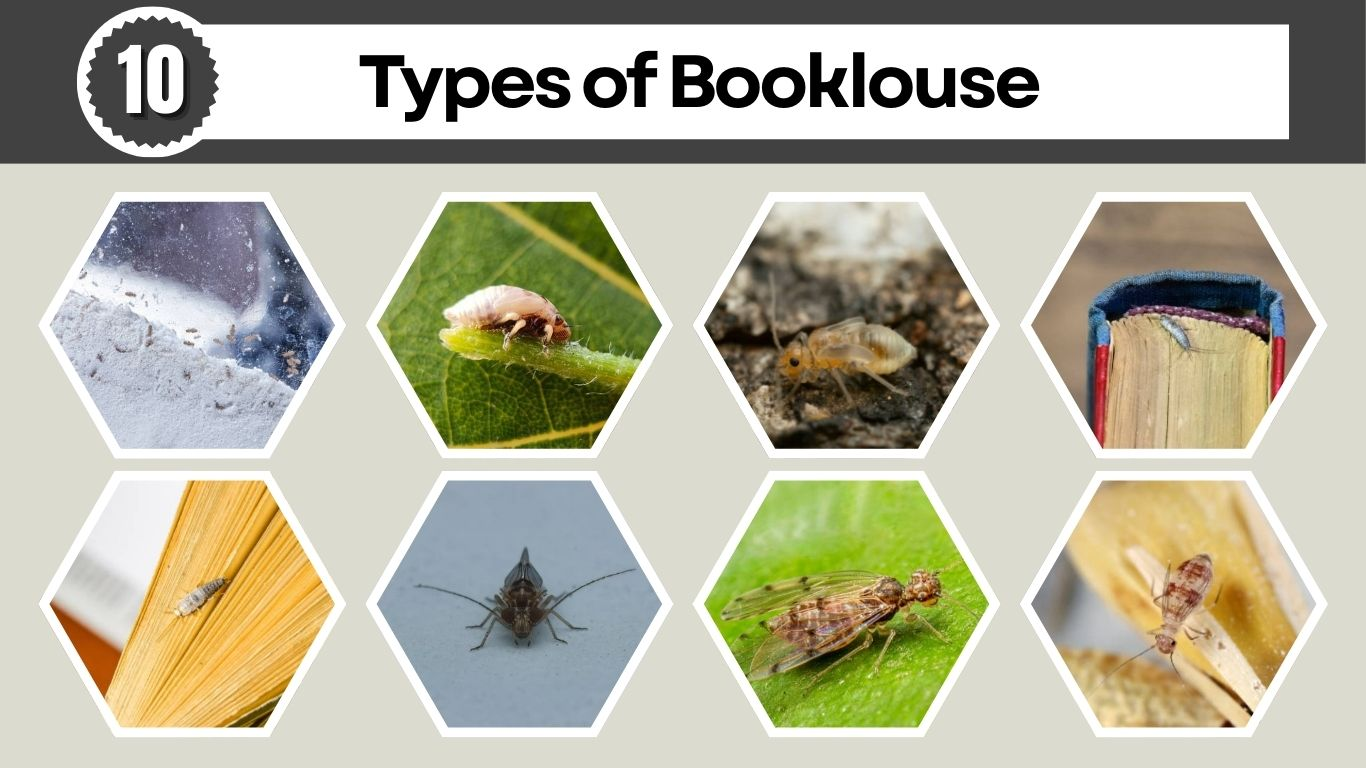
Booklice, also called booklouse, are tiny insects commonly found in homes, libraries, warehouses, and storage areas where moisture and mold are present. Despite their name, they do not actually eat books, but feed on microscopic fungi, organic debris, and starchy residues on paper and cardboard. These insects thrive in warm, humid environments and often appear on walls, shelves, and inside cupboards. Understanding the different types of booklice helps with accurate identification and effective moisture-based control.
1. Common Booklouse (Liposcelis bostrychophila)
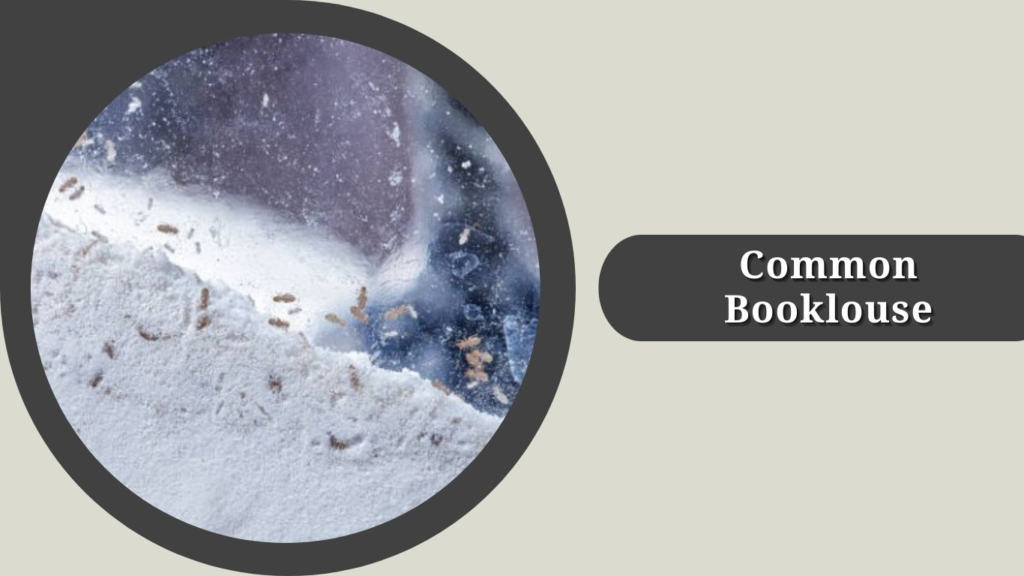
The common booklouse is one of the most widespread indoor psocids found in homes, libraries, warehouses, and food storage areas. Despite its name, it does not bite or damage books directly, but feeds on microscopic molds, fungi, and organic residues found on paper, cardboard, and stored products. This species thrives in warm, humid environments and is often noticed crawling on walls, shelves, or inside book bindings.
Identification
- Very small, usually about 1–2 mm long
- Soft-bodied, flattened appearance
- Pale white to light brown coloration
- Wingless in most indoor populations
- Long, thin antennae and relatively large head
- Moves quickly when disturbed
Habitat
Common booklice prefer damp, poorly ventilated places such as bathrooms, kitchens, basements, bookcases, and food cupboards. They are often found in cracks, behind wallpaper, inside old books, and around stored grains where mold growth provides a steady food source.
Diet
This species feeds mainly on molds, fungal spores, algae, and tiny organic particles. It may also consume starchy materials like glue, book bindings, and paper coatings, but it does not chew solid paper in the way that termites or silverfish do.
Lifecycle
The common booklouse undergoes gradual metamorphosis, developing from egg to nymph to adult. Females can reproduce rapidly, sometimes even without males, laying eggs in hidden, humid locations. Under warm and moist conditions, populations can increase quickly, making them noticeable indoors.
2. Large Pale Booklouse (Liposcelis divinatorius)
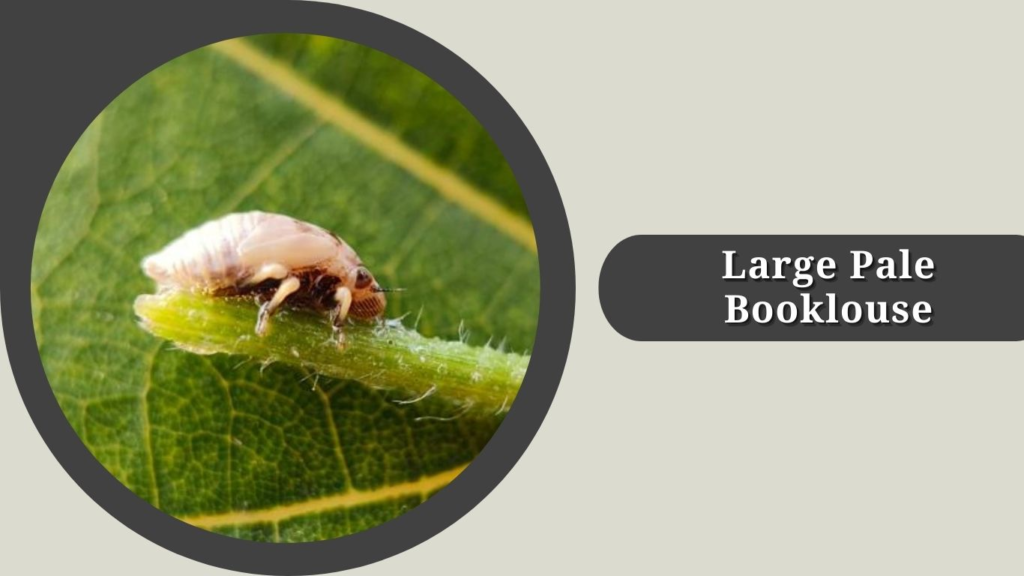
The large pale booklouse is a common indoor psocid often found in old books, paper stacks, stored foods, and damp household areas. It is slightly larger than many other booklice and is known for its light coloration and preference for humid environments. Like other booklice, it does not bite humans but can become a nuisance when populations build up indoors.
Identification
- About 1.5–2.5 mm in length
- Pale cream to light yellow body color
- Soft-bodied and somewhat flattened shape
- Wingless, with a relatively large head
- Long, thread-like antennae
- Fast-moving when exposed
Habitat
Large pale booklice are most often found in warm, moist indoor locations such as libraries, cupboards, basements, and storage rooms. They hide in cracks, book bindings, cardboard boxes, and behind wall coverings where humidity allows mold to grow.
Diet
Their diet mainly consists of mold, mildew, fungal spores, and organic debris. They may also graze on starchy substances like book paste, wallpaper glue, and food dust, which explains their presence around stored paper and pantry items.
Lifecycle
This species develops through egg, nymph, and adult stages. Eggs are laid in hidden, humid crevices. The nymphs resemble small adults and molt several times before maturity. Under favorable conditions, the full lifecycle can be completed in just a few weeks.
3. Brown Booklouse (Liposcelis brunnea)
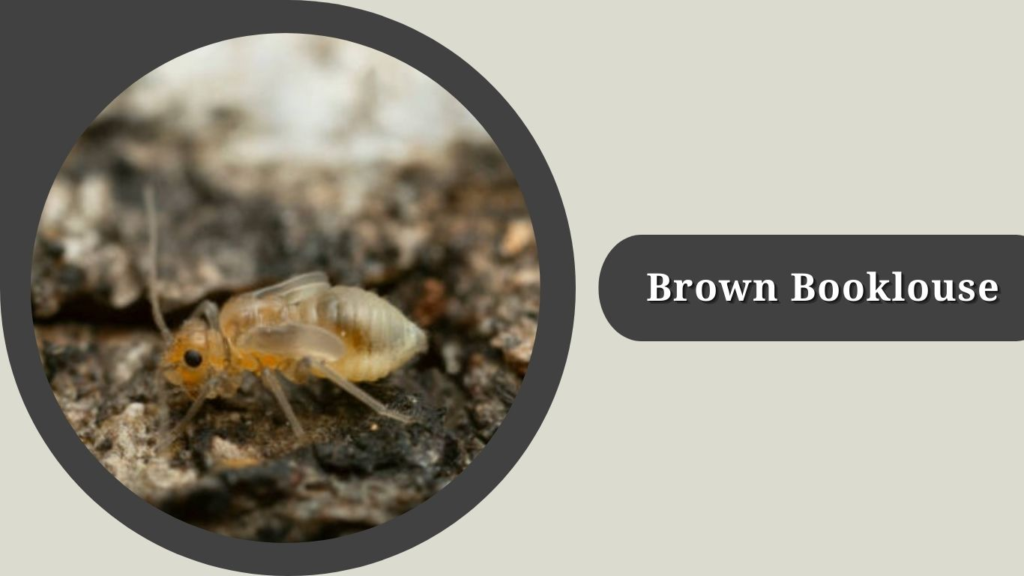
The brown booklouse is a small indoor psocid commonly encountered in houses, libraries, and storage areas. It is known for its slightly darker body color compared to many other booklice and its strong association with damp, mold-prone environments. Although harmless to humans, heavy infestations can indicate moisture problems indoors.
Identification
- Tiny, about 1–2 mm long
- Light brown to medium brown body
- Soft, flattened body shape
- Usually wingless indoors
- Long antennae and prominent head
- Runs quickly when disturbed
Habitat
Brown booklice are usually found in humid, undisturbed places such as bookcases, wall cracks, cardboard boxes, basements, and food storage shelves. They thrive where condensation or poor ventilation allows mold to grow on paper, wood, or stored products.
Diet
They feed primarily on molds, mildew, fungal spores, and microscopic organic matter. They may also consume starches from book bindings, wallpaper paste, and cereal dust, which is why they are often seen in libraries and pantries.
Lifecycle
The lifecycle includes egg, nymph, and adult stages. Females lay eggs in hidden crevices, and the nymphs look like smaller versions of adults. With warmth and moisture, development is rapid and several generations can occur in a single year.
4. Household Booklouse (Liposcelis corrodens)
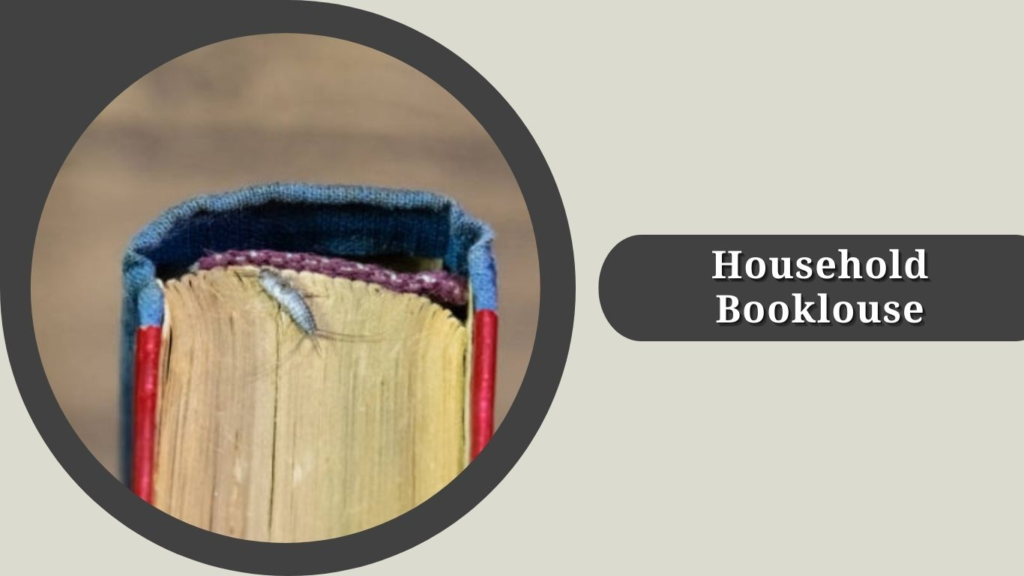
The household booklouse is a widely distributed indoor species frequently found in homes, apartments, and storage areas. It is well adapted to living alongside humans and is often noticed in cupboards, behind baseboards, or within book collections. Although it does not bite or spread disease, its presence usually points to excess moisture and mold growth indoors.
Identification
- Very small, around 1–2 mm long
- Pale brown to grayish body color
- Soft, flattened body form
- Wingless with a relatively large head
- Long, thin antennae
- Quick, darting movements
Habitat
Household booklice favor warm, humid environments such as kitchens, bathrooms, basements, and poorly ventilated rooms. They hide in cracks, book bindings, wallpaper seams, and food storage areas where microscopic fungi are available.
Diet
They mainly consume mold, mildew, fungal spores, and organic residues. They may also feed on starchy materials like paper coatings, glue, and crumbs, which explains their frequent presence around books and pantry goods.
Lifecycle
This species develops gradually from egg to nymph to adult. Eggs are laid in protected, humid spots. Nymphs resemble adults but are smaller and molt several times. In favorable indoor conditions, reproduction can occur year-round.
5. Pale Booklouse (Liposcelis palea)
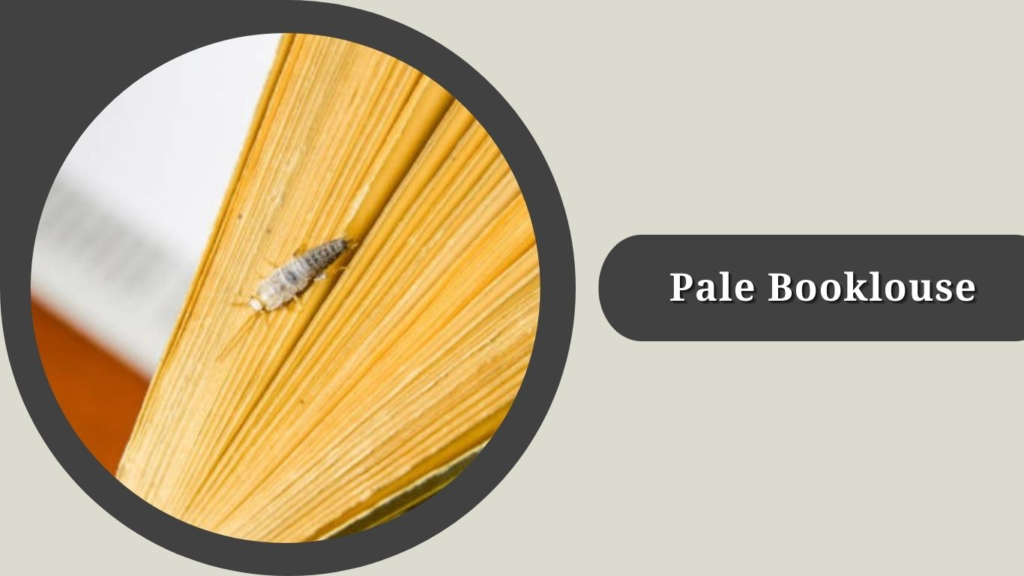
The pale booklouse is a lightly colored species commonly found in indoor environments with elevated humidity. It often goes unnoticed because of its tiny size and translucent body, yet it can become abundant in homes, libraries, and storage rooms where mold growth is present. Like other booklice, it is harmless to people and pets.
Identification
- Extremely small, about 1–1.5 mm long
- Very pale, almost translucent white body
- Soft-bodied with a flattened appearance
- Wingless in indoor populations
- Long, fine antennae
- Quick, jerky movements
Habitat
Pale booklice thrive in moist, sheltered places such as behind wallpaper, inside book spines, in cardboard boxes, and around damp shelves or cupboards. They are particularly common in rooms with poor airflow and persistent humidity.
Diet
Their primary food source is mold, mildew, fungal spores, and microscopic organic debris. They may also graze on starch-based materials like book glue, paper coatings, and food dust, which helps sustain them indoors.
Lifecycle
The lifecycle includes egg, nymph, and adult stages. Eggs are deposited in hidden, humid crevices. Nymphs look similar to adults and mature through several molts. Under warm and damp conditions, development is rapid and populations can grow quickly.
6. Long-headed Booklouse (Liposcelis entomophila)
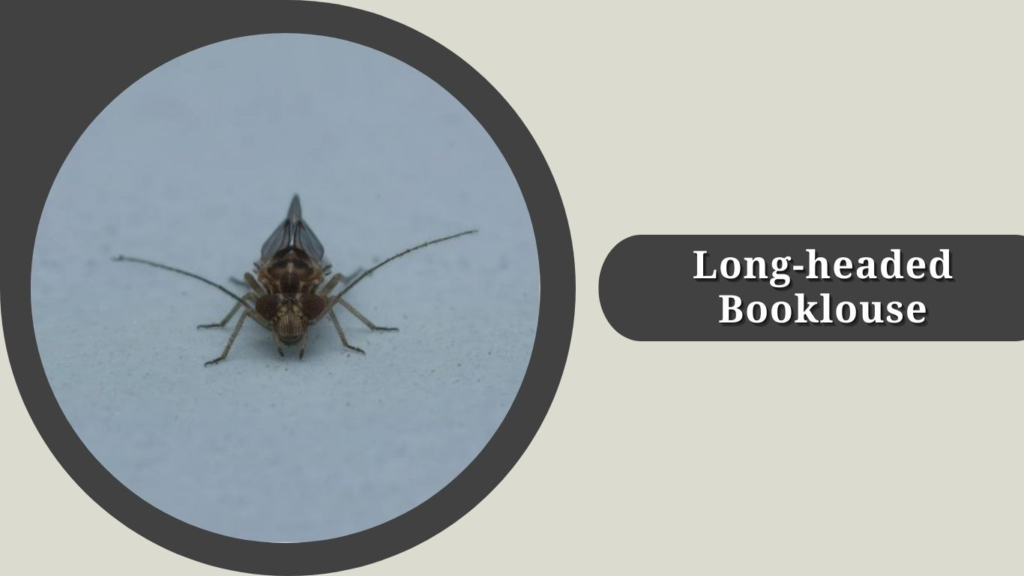
The long-headed booklouse is named for its noticeably elongated head compared to many other booklice. It is a common indoor psocid in homes, warehouses, and libraries, where it lives quietly among paper products and stored goods. Although it does not cause direct harm, its presence usually signals damp conditions and hidden mold growth.
Identification
- About 1.5–2 mm in length
- Pale yellow to light brown body
- Distinctively elongated head shape
- Soft, flattened body
- Wingless, with long antennae
- Moves rapidly when uncovered
Habitat
This species prefers warm, humid environments such as bookcases, storage rooms, basements, and food cupboards. It hides in cracks, under packaging, and inside book bindings where moisture and fungi are available.
Diet
Long-headed booklice feed mainly on molds, mildew, fungal spores, and tiny organic particles. They may also scrape starch from paper surfaces, adhesives, and food residues found in pantries and warehouses.
Lifecycle
They develop through egg, nymph, and adult stages. Eggs are laid in concealed, moist areas. Nymphs resemble adults but are smaller and gradually mature through multiple molts. Under ideal indoor conditions, several generations can appear in one year.
7. Tropical Booklouse (Liposcelis paeta)
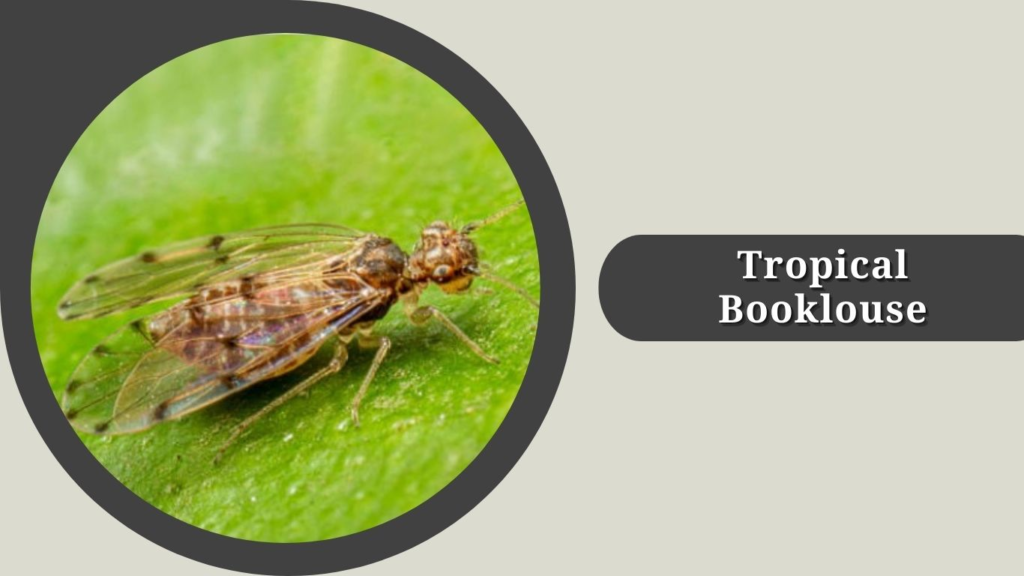
The tropical booklouse is a species commonly associated with warm climates and heated indoor environments. It is frequently found in food storage areas, libraries, and warehouses, especially where humidity is consistently high. This booklouse is harmless to humans but can become a nuisance when large numbers gather on walls, shelves, or packaged goods.
Identification
- Very small, about 1–2 mm long
- Pale brown to yellowish body color
- Soft-bodied and flattened form
- Wingless, with a relatively large head
- Long, thin antennae
- Quick, crawling movements
Habitat
Tropical booklice thrive in warm, humid locations such as kitchens, storage rooms, shipping containers, and pantries. They hide in cracks, under packaging, and within book spines or cardboard where moisture supports mold growth.
Diet
Their diet consists mainly of molds, fungal spores, algae, and organic debris. They may also feed on starches from paper, book glue, and food dust, which explains their presence around stored products.
Lifecycle
The lifecycle includes egg, nymph, and adult stages. Eggs are laid in hidden, damp sites. Nymphs resemble miniature adults and develop through several molts. In consistently warm and humid environments, reproduction can continue throughout the year.
8. Slender Booklouse (Liposcelis pearmani)
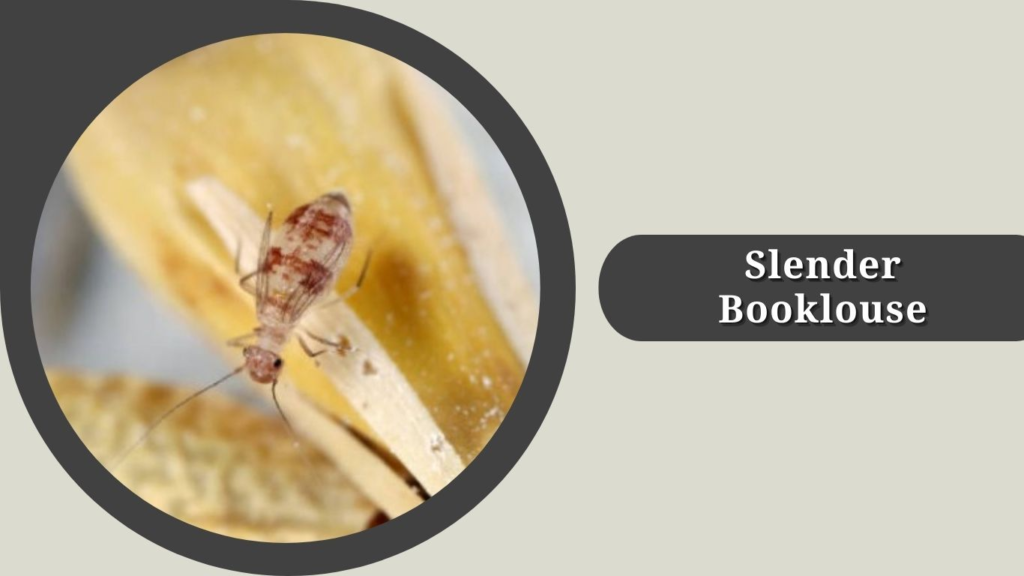
The slender booklouse is a delicate-looking species known for its narrow body shape and discreet indoor habits. It is often found in libraries, storage facilities, and quiet household areas where moisture levels are slightly elevated. Although not dangerous, its appearance often indicates hidden dampness and mold development.
Identification
- Around 1–2 mm long
- Narrow, slender body shape
- Pale yellow to light brown coloration
- Soft-bodied and wingless
- Long antennae and prominent head
- Moves quickly when disturbed
Habitat
Slender booklice prefer sheltered, humid environments such as bookcases, cupboards, behind baseboards, and inside cardboard boxes. They are especially common in places with poor ventilation and minimal light.
Diet
They feed primarily on mold, mildew, fungal spores, and microscopic organic materials. Starch-based substances like wallpaper paste, book bindings, and fine food dust may also form part of their diet.
Lifecycle
This species develops gradually from egg to nymph to adult. Eggs are laid in protected, moist crevices. Nymphs resemble adults but are smaller and molt several times before reaching maturity. Populations increase rapidly under warm, humid conditions.
9. Warehouse Booklouse (Liposcelis rufa)
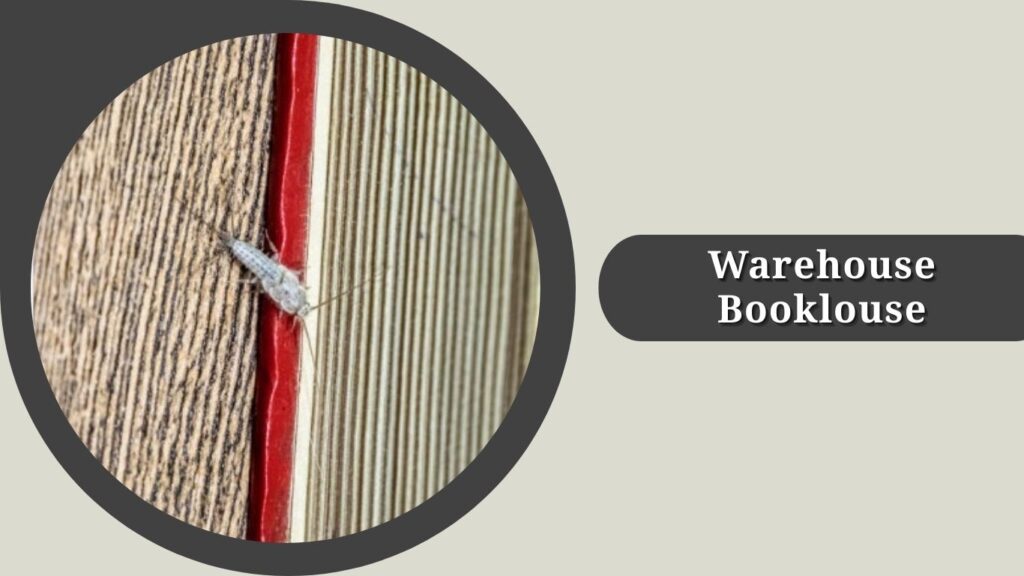
The warehouse booklouse is commonly associated with large storage facilities, grain stores, and food warehouses, but it can also appear in homes with pantry infestations. It is well adapted to living among packaged goods and paper products where moisture and organic dust are present. While harmless, its presence often signals excess humidity and mold.
Identification
- About 1.5–2 mm in length
- Reddish-brown to light brown body color
- Soft-bodied with a flattened shape
- Wingless, with a relatively large head
- Long, thread-like antennae
- Active, fast-running behavior
Habitat
Warehouse booklice are most often found in stored food areas, shipping boxes, libraries, and storerooms. They hide in cracks, under packaging, and among paper or cardboard materials where mold can develop.
Diet
They mainly consume mold, mildew, fungal spores, and fine organic debris. They may also feed on starch residues from grains, flour dust, book glue, and packaging materials.
Lifecycle
The lifecycle includes egg, nymph, and adult stages. Eggs are laid in hidden, humid places. Nymphs resemble adults and grow through several molts. In warm, moist storage environments, several generations can be produced each year.
10. Dust Booklouse (Lepinotus reticulatus)
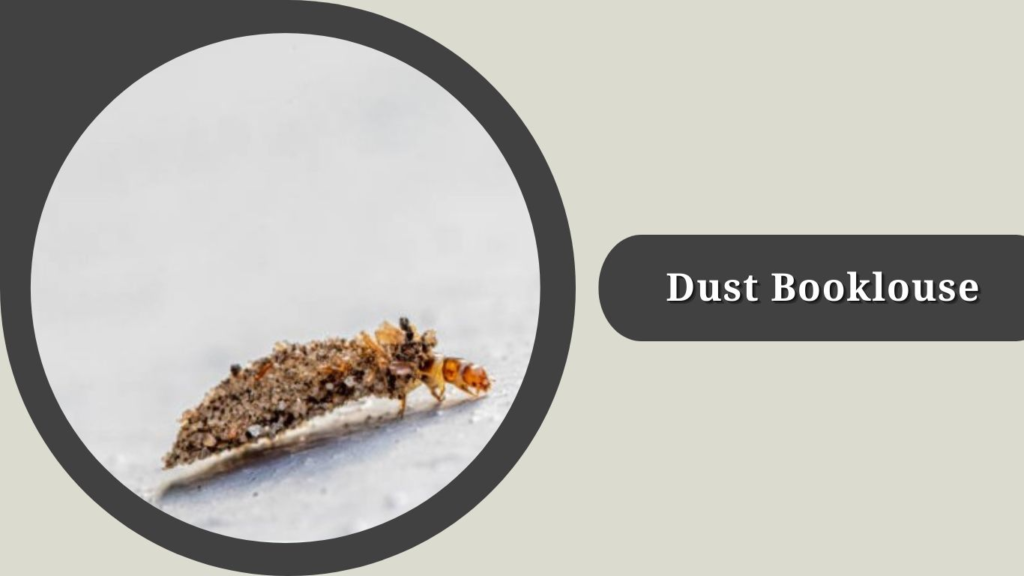
The dust booklouse is a small psocid often found in dusty, undisturbed indoor areas such as old book collections, storage boxes, and rarely cleaned shelves. Unlike many Liposcelis species, it may occasionally have tiny wings, though indoor forms are usually wingless. It is harmless to humans but commonly appears where humidity supports mold growth.
Identification
- About 1.5–2.5 mm long
- Light brown to grayish body color
- Soft-bodied, slightly rounded shape
- Sometimes with tiny wings, often wingless indoors
- Long antennae and large, visible eyes
- Slow to moderately quick movement
Habitat
Dust booklice prefer quiet, slightly damp places such as attics, bookcases, archives, and storage rooms. They hide among papers, cardboard, and dusty surfaces where microscopic fungi are present.
Diet
They feed mainly on molds, fungal spores, algae, and organic particles found in dust. They may also graze on starchy materials such as book bindings, wallpaper paste, and paper coatings.
Lifecycle
The dust booklouse develops through egg, nymph, and adult stages. Eggs are laid in sheltered, humid crevices. Nymphs resemble small adults and molt several times before maturity. Under suitable indoor conditions, populations can persist year-round.
FAQs
What is a booklouse and is it harmful to humans?
A booklouse is a tiny insect that feeds mainly on mold, mildew, and microscopic organic matter. It does not bite humans, sting, or spread known diseases. Although harmless, large numbers can be annoying and usually indicate excess moisture problems inside a home or building.
Why are booklice commonly found in books and paper?
Booklice are attracted to books and paper because these materials often collect moisture and develop microscopic mold. They do not eat paper itself but feed on the fungi, starches, and glues found on book bindings, cardboard, and stored documents.
What conditions cause booklice infestations indoors?
High humidity, poor ventilation, water leaks, and damp storage areas create ideal conditions for booklice. Bathrooms, kitchens, basements, libraries, and pantries are common hotspots. Controlling moisture is the most important step in preventing or eliminating infestations.
How can booklice be controlled naturally?
Lowering indoor humidity, improving airflow, and drying damp materials are the most effective natural controls. Using dehumidifiers, fixing leaks, and cleaning moldy surfaces removes their food source. Once conditions are dry, booklice usually disappear on their own.
Are booklice the same as silverfish or mites?
No, booklice are different from silverfish and mites. Booklice are tiny psocids that feed on mold, while silverfish chew paper and fabrics, and mites are often microscopic and may bite. Correct identification helps choose the right control method.
