
Dobsonflies are large, dramatic insects best known for their powerful aquatic larvae, called hellgrammites, and the long, intimidating mandibles of some adult males. They belong to the family Corydalidae and are closely associated with clean, fast-flowing rivers and streams. Found across North America, Asia, and parts of Central and South America, dobsonflies play an important ecological role as top invertebrate predators and as a major food source for fish and other wildlife.
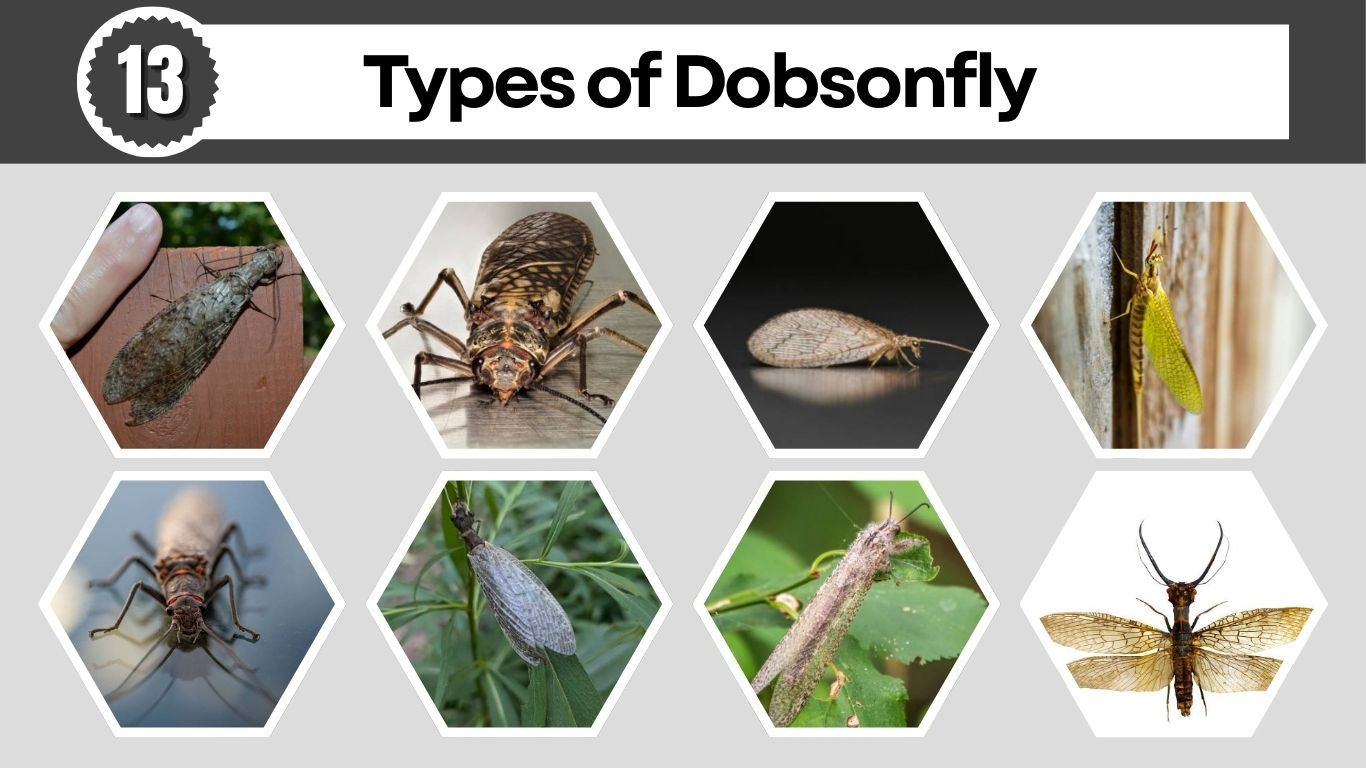
1. Eastern Dobsonfly (Corydalus cornutus)
The Eastern dobsonfly is the most famous and widely recognized dobsonfly species in North America. It is best known for the male’s extremely long, curved mandibles, which look dangerous but are mainly used for mating displays rather than biting. The aquatic larvae, commonly called hellgrammites, are powerful predators and an important food source for fish in rivers and streams.
Identification
- Very large insect, often 9–12 cm in wingspan
- Males have extremely long, curved jaws; females have shorter, stronger jaws
- Body dark brown to black with lighter markings on wings
- Wings broad, heavily veined, and held roof-like at rest
- Larvae (hellgrammites) long, flattened, dark, with strong jaws
- Lateral filaments along the abdomen and hooked legs
Habitat
Eastern dobsonfly larvae live in clean, fast-flowing rivers and large streams with rocky bottoms. They hide under stones, logs, and debris where oxygen levels are high. Larvae can live in water for two to three years before pupating. Adults stay near waterways, resting on trees, rocks, bridges, and walls close to their natal streams.
Behaviors
Larvae are aggressive predators and will defend themselves if handled, often biting strongly. They are mostly nocturnal, hunting other aquatic insects, small crustaceans, and even small fish. Adult dobsonflies are also mainly nocturnal and are strongly attracted to lights. Males use their long mandibles in courtship and competition, not for feeding.
Diet and Lifecycle
Hellgrammites feed on aquatic insects, worms, small crustaceans, and sometimes fish eggs or tiny fish. After several larval molts over one to three years, they leave the water to pupate in moist soil near the shore. Adults emerge, mate, lay eggs on vegetation or rocks above water, and usually die within a few days.
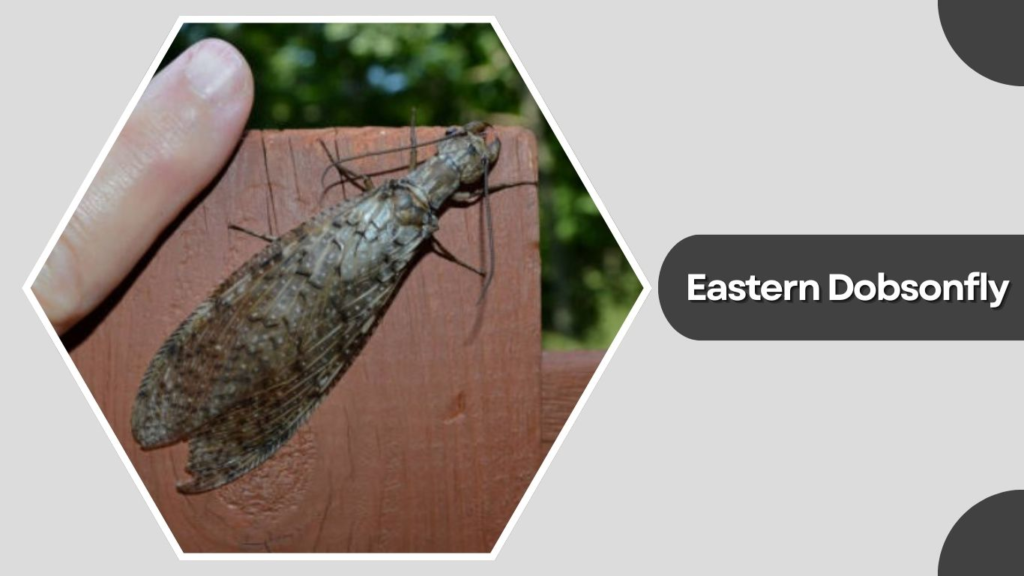
2. Western Dobsonfly (Corydalus eurycephalus)
The Western dobsonfly is the largest dobsonfly species in North America and is closely related to the Eastern dobsonfly. It is famous for its impressive size and the powerful aquatic larvae known as hellgrammites. This species is mainly found in the western United States and parts of Mexico, where it inhabits clean, fast-flowing rivers and mountain streams.
Identification
- One of the largest dobsonflies, with wingspans up to 14 cm
- Dark brown to black body with smoky, heavily veined wings
- Males have elongated mandibles, shorter than Eastern dobsonfly males
- Females have shorter but much stronger jaws
- Larvae large, flattened, dark, and heavily armored
- Prominent lateral filaments and strong hooked legs
Habitat
Western dobsonfly larvae live in cold, well-oxygenated rivers and fast-flowing mountain streams. They are usually found under large stones and submerged logs where current is steady. These habitats provide both shelter and abundant prey. Adults remain close to waterways, often resting on nearby trees, cliffs, and human structures near rivers.
Behaviors
Larvae are fierce nocturnal predators that hide during the day and hunt at night. They cling strongly to rocks to avoid being swept away by currents. When threatened, they rear up and bite in defense. Adult Western dobsonflies are mostly nocturnal and are strongly attracted to lights, where they are often noticed by people.
Diet and Lifecycle
Larvae feed on aquatic insects, small crustaceans, worms, and sometimes small fish. The larval stage may last two to four years before pupation occurs in moist soil along riverbanks. Adults emerge in warm months, mate, lay eggs on vegetation or rocks overhanging water, and usually die within a short adult lifespan.
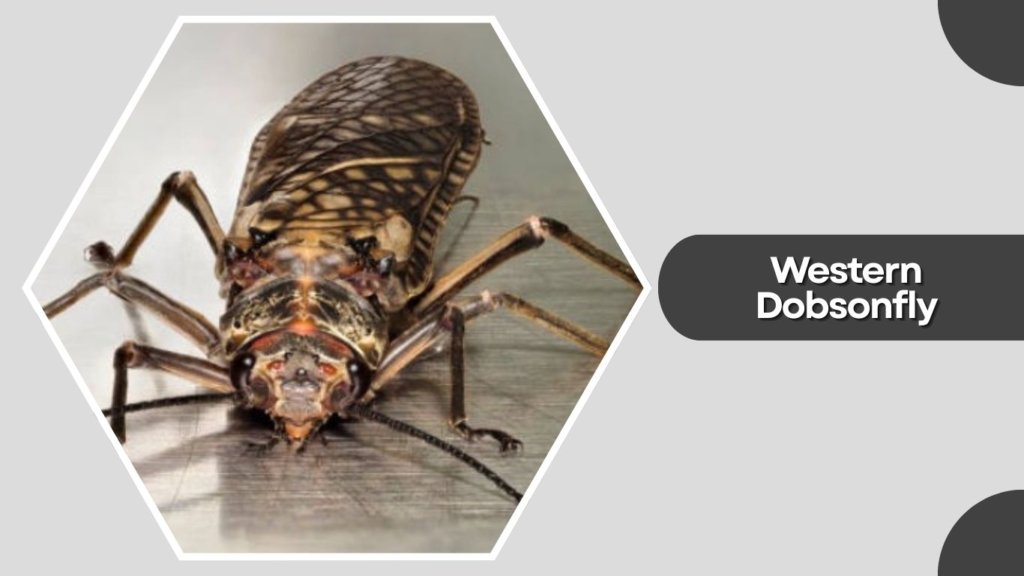
3. Corydalus texanus (Texas Dobsonfly)
Corydalus texanus is a large dobsonfly species native to the southern United States and parts of Mexico. It closely resembles the Eastern and Western dobsonflies but is generally more restricted in range. Its larvae, known as hellgrammites, are strong aquatic predators and are important members of warm, fast-flowing river ecosystems.
Identification
- Large dobsonfly with broad, smoky-brown wings
- Body dark brown to nearly black
- Males have elongated mandibles, shorter than Eastern dobsonfly males
- Females have shorter but more powerful jaws
- Larvae long, flattened, dark, with strong biting mouthparts
- Distinct lateral filaments along the abdomen
Habitat
Corydalus texanus larvae inhabit warm, well-oxygenated rivers and large streams, especially in Texas and neighboring regions. They prefer rocky bottoms with plenty of hiding places under stones and logs. These waters usually have steady current and abundant prey. Adults remain close to rivers, resting on vegetation, rocks, and bridges near water.
Behaviors
Larvae are aggressive and mostly nocturnal, hunting at night and hiding during the day. They grip rocks firmly to resist strong currents. When disturbed, they often raise their bodies and attempt to bite. Adults are mainly active at night and are commonly attracted to lights in riverside towns and camps.
Diet and Lifecycle
Hellgrammites feed on aquatic insects, worms, small crustaceans, and sometimes fish eggs or small fish. The larval stage can last several years. When fully grown, larvae leave the water to pupate in moist soil near the riverbank. Adults emerge, mate, lay eggs above water, and die shortly after.
4. Corydalus luteus (Yellow Dobsonfly)
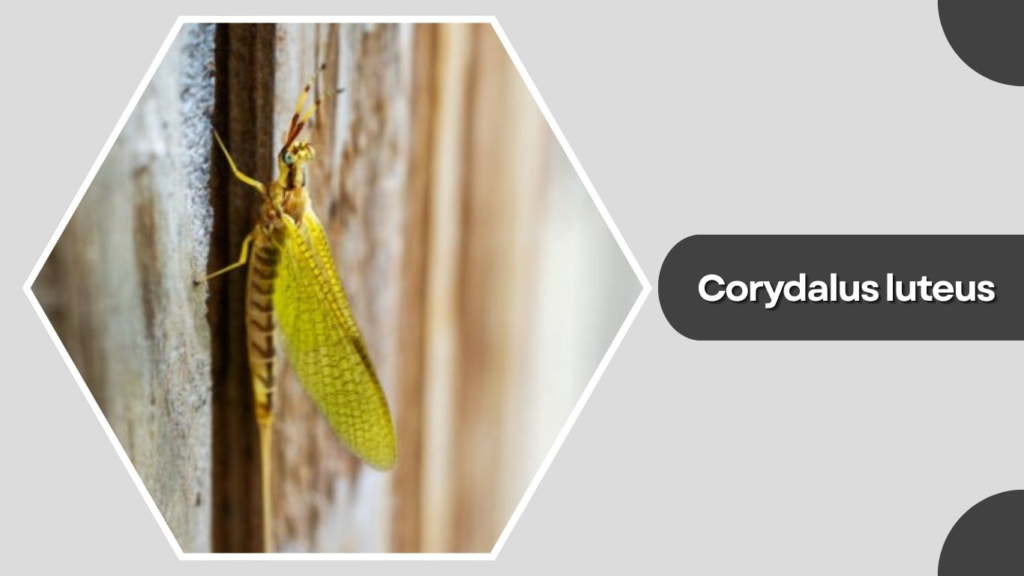
Corydalus luteus is a striking dobsonfly species recognized by its lighter, more yellowish coloration compared to many other dark-bodied dobsonflies. It is native to Central and South America, where its powerful aquatic larvae live in rivers and large streams. Like other members of the group, its larvae are fierce predators and play an important role in freshwater ecosystems.
Identification
- Large dobsonfly with yellowish-brown to golden wings
- Body lighter brown compared to many Corydalus species
- Wings broad, strongly veined, often with a warm yellow tint
- Males have elongated mandibles; females shorter, stronger jaws
- Larvae long, flattened, dark, with strong biting mouthparts
- Lateral filaments visible along the abdomen
Habitat
Corydalus luteus larvae live in warm, fast-flowing rivers and large streams, especially in tropical and subtropical regions. They prefer rocky substrates where they can hide under stones and submerged wood. These habitats provide high oxygen levels and abundant prey. Adults usually stay close to riverbanks, resting on plants and rocks.
Behaviors
Larvae are nocturnal predators, remaining hidden during the day and actively hunting at night. They are aggressive when disturbed and will bite to defend themselves. Adult dobsonflies are mostly nocturnal and are often attracted to lights near rivers and settlements.
Diet and Lifecycle
Larvae feed on aquatic insects, small crustaceans, worms, and sometimes small fish. The larval stage lasts one to several years depending on conditions. Pupation occurs in moist soil along riverbanks. Adults emerge, mate, lay eggs on surfaces above water, and die within a short adult lifespan.
5. Corydalus bidenticulatus (Two-Toothed Dobsonfly)
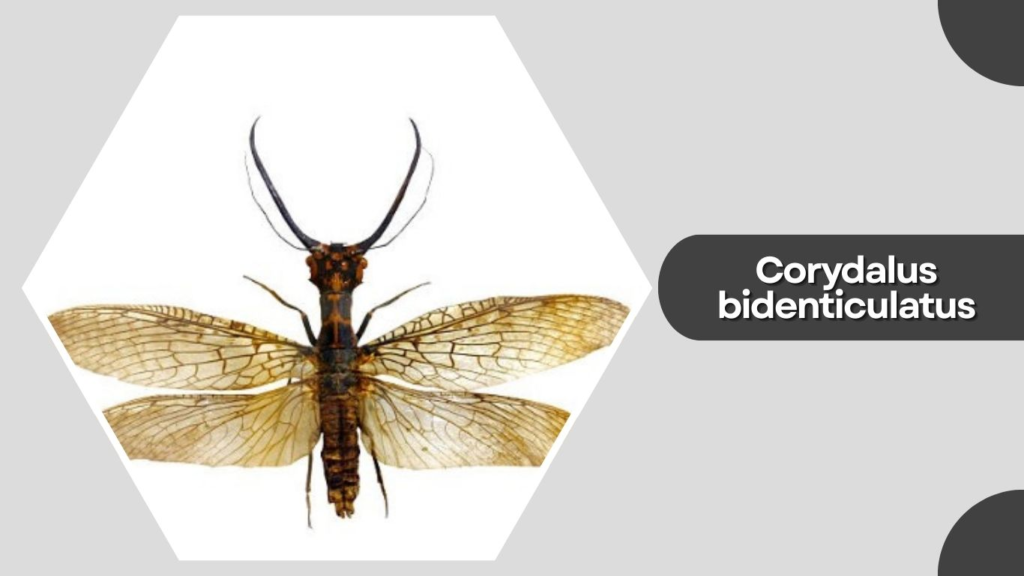
Corydalus bidenticulatus is a large dobsonfly species found mainly in parts of Central and South America. It is named for the distinctive structure of its mandibles, which show two prominent tooth-like projections. Like other dobsonflies, its aquatic larvae are known as hellgrammites and are powerful predators in fast-flowing freshwater habitats.
Identification
- Large dobsonfly with dark brown to black body
- Broad, smoky wings with strong visible veins
- Males have elongated mandibles with two noticeable tooth-like points
- Females have shorter, thicker, strongly biting jaws
- Larvae long, flattened, dark, with robust mouthparts
- Lateral abdominal filaments and strong hooked legs
Habitat
Corydalus bidenticulatus larvae inhabit clean, fast-flowing rivers and large streams, particularly in tropical regions. They are usually found under rocks, logs, and debris where current is strong and oxygen levels are high. These habitats provide ideal conditions for their predatory lifestyle. Adults remain close to rivers and stream margins.
Behaviors
Larvae hide under stones during the day and become active at night, hunting other aquatic invertebrates. They cling tightly to surfaces to avoid being swept away. When disturbed, they display defensive postures and may bite. Adults are mostly nocturnal and are commonly attracted to lights.
Diet and Lifecycle
Hellgrammites feed on insect larvae, small crustaceans, worms, and occasionally small fish. The larval stage lasts one to several years. Mature larvae leave the water to pupate in moist soil near the riverbank. Adults emerge, mate, lay egg masses above water, and die within a short time.
6. Corydalus ignotus (Hidden Dobsonfly)
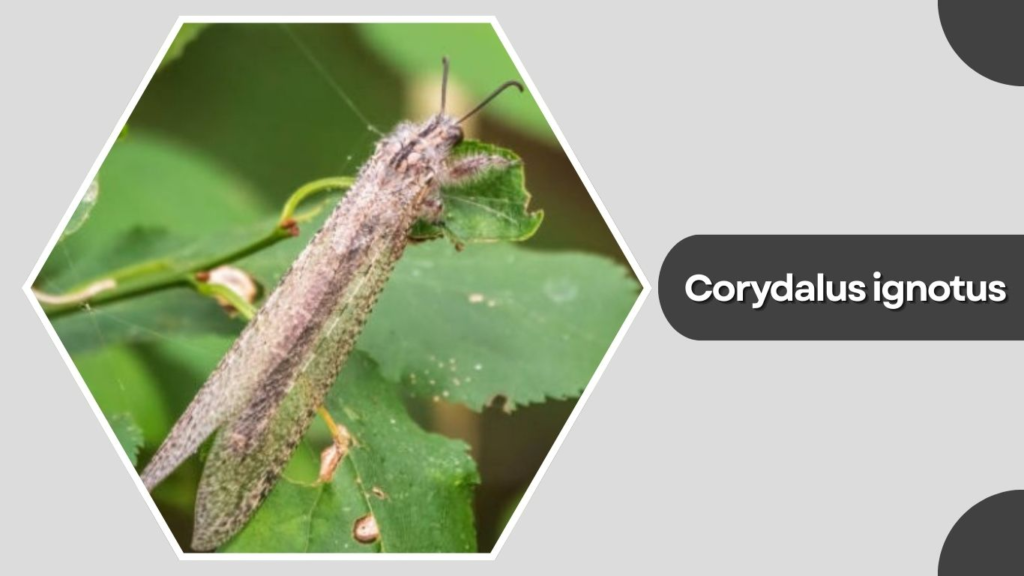
Corydalus ignotus is a lesser-known dobsonfly species native to parts of Central and South America. Although not as famous as the Eastern dobsonfly, it shares the same impressive size and powerful aquatic larvae. Its presence is usually associated with healthy river systems, where its hellgrammite larvae act as top invertebrate predators.
Identification
- Large dobsonfly with dark brown to nearly black coloration
- Broad, smoky wings with dense, visible veins
- Males have elongated mandibles, less exaggerated than some species
- Females possess shorter but very strong jaws
- Larvae long, flattened, dark, and heavily segmented
- Distinct lateral filaments along the sides of the abdomen
Habitat
Corydalus ignotus larvae live in clean, fast-moving rivers and large streams, especially in tropical and subtropical regions. They are most often found beneath stones, submerged logs, and rocky crevices where oxygen levels are high. These environments provide both protection and abundant prey. Adults usually stay near riverbanks and forested stream edges.
Behaviors
Larvae are mostly nocturnal, hiding during the day and emerging at night to hunt. They are aggressive predators and will bite if handled. Their strong legs help them cling to rocks in swift currents. Adult dobsonflies are also nocturnal and are frequently attracted to artificial lights near water.
Diet and Lifecycle
Hellgrammites feed on aquatic insects, worms, crustaceans, and sometimes very small fish. The larval stage may last one to three years. When ready, larvae leave the water and pupate in moist soil near the shore. Adults emerge, mate, lay eggs above water, and usually die within a few days.
7. Corydalus peruvianus (Peruvian Dobsonfly)
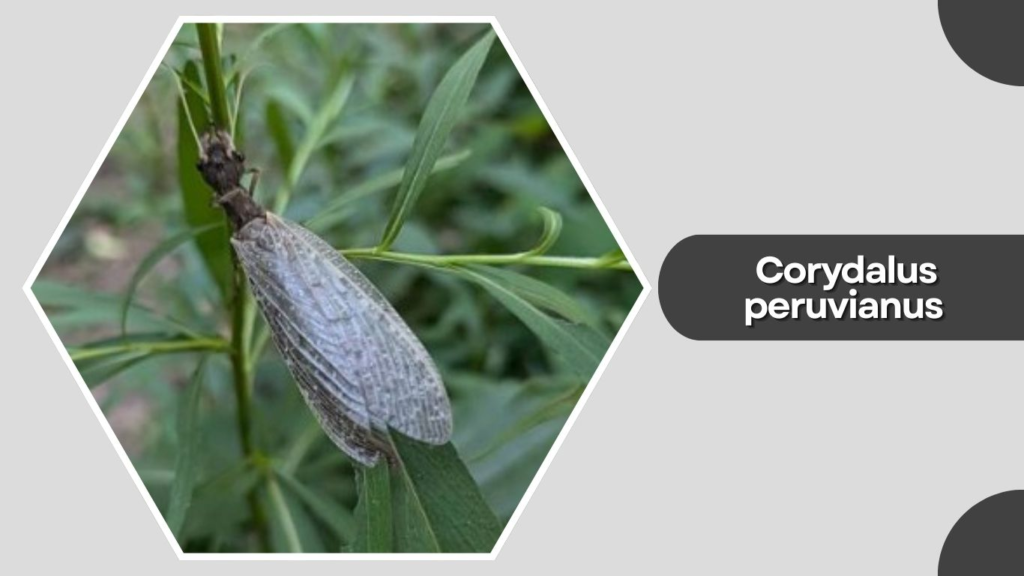
Corydalus peruvianus is a large dobsonfly species native to South America, especially in regions around Peru and neighboring countries. It is one of the impressive tropical members of the Corydalus genus, known for its strong-flying adults and fierce aquatic larvae. Like other dobsonflies, its larvae are important predators in river ecosystems.
Identification
- Large dobsonfly with dark brown to black body
- Broad wings with smoky appearance and heavy venation
- Males possess elongated mandibles; females have shorter, powerful jaws
- Adults often show subtle lighter markings on wings
- Larvae long, flattened, dark, with strong biting mouthparts
- Prominent lateral filaments along the abdomen
Habitat
Corydalus peruvianus larvae live in warm, fast-flowing rivers and large mountain streams. They prefer rocky bottoms where water is clear and well oxygenated. These habitats provide ideal conditions for ambush hunting and shelter. Adults usually remain close to river corridors, resting on vegetation, rocks, and tree trunks.
Behaviors
Larvae hide under stones and debris during daylight and become active at night to hunt prey. They grip tightly to rocks to resist strong currents. When threatened, they may arch their bodies and bite. Adults are mostly nocturnal, flying at night and often coming to lights near riverside settlements.
Diet and Lifecycle
Hellgrammites feed on aquatic insect larvae, worms, small crustaceans, and occasionally fish eggs or tiny fish. The larval stage can last several years. Pupation occurs in moist soil along riverbanks. Adults emerge, mate, lay egg masses above water, and die within a short adult lifespan.
8. Corydalus arpi (Arp’s Dobsonfly)
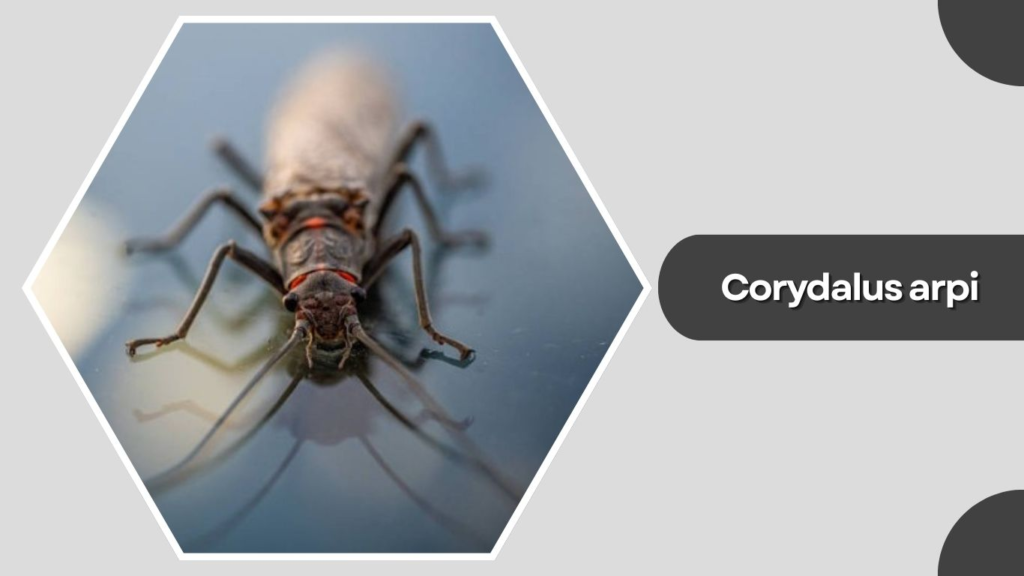
Corydalus arpi is a large tropical dobsonfly species found mainly in parts of Central America. It belongs to the same impressive group as other Corydalus species, with powerful adults and fierce aquatic larvae. Although not widely known outside scientific literature, it plays a significant ecological role as a top invertebrate predator in fast-flowing rivers.
Identification
- Large dobsonfly with dark brown to black coloration
- Broad, smoky wings with strong, net-like veins
- Males have elongated mandibles; females have shorter, stronger jaws
- Body robust and heavily built
- Larvae long, flattened, dark, with strong mandibles
- Distinct lateral abdominal filaments
Habitat
Corydalus arpi larvae inhabit clean, fast-flowing rivers and large streams in tropical regions. They are usually found under stones, logs, and in crevices where water is well oxygenated. These habitats offer protection from current and plenty of prey. Adults remain close to riverbanks and forest edges near water.
Behaviors
Larvae are nocturnal hunters, hiding during the day and becoming active at night. They cling tightly to rocks and are aggressive when disturbed. Adults are mainly nocturnal and are frequently attracted to artificial lights, sometimes appearing in large numbers near rivers.
Diet and Lifecycle
Hellgrammites feed on aquatic insects, small crustaceans, worms, and occasionally small fish. The larval period may last one to several years. Mature larvae leave the water to pupate in moist soil near riverbanks. Adults emerge, mate, lay eggs above water, and usually die soon after reproduction.
9. Acanthacorydalis asiatica (Asian Giant Dobsonfly)
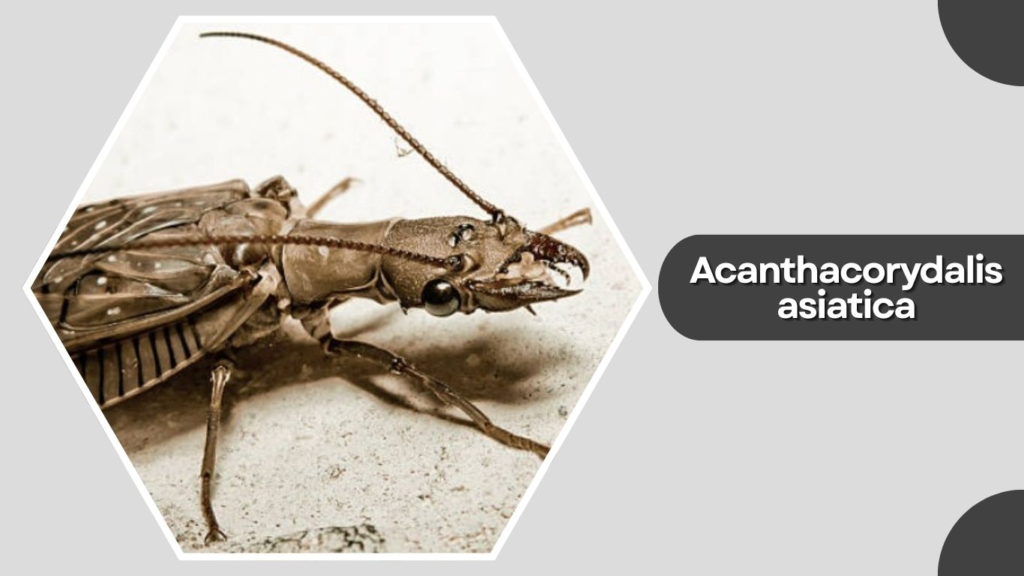
Acanthacorydalis asiatica is one of the largest dobsonflies in the world and is native to East Asia, especially China, Vietnam, and nearby regions. It is famous for its enormous size and the extremely long mandibles of males. Its aquatic larvae are massive hellgrammites that dominate invertebrate food chains in large, fast-flowing rivers.
Identification
- One of the world’s largest dobsonflies, wingspan often over 16 cm
- Body dark brown to black with broad, smoky wings
- Males have extremely long, curved mandibles
- Females have shorter but very powerful jaws
- Larvae very large, flattened, dark, and heavily armored
- Prominent lateral filaments and strong hooked legs
Habitat
Acanthacorydalis asiatica larvae live in large, clean, fast-flowing rivers and mountain streams. They prefer rocky bottoms with strong currents and high oxygen levels. Larvae hide under large stones and submerged logs. Adults usually stay close to rivers, resting on trees, rocks, bridges, and sometimes buildings near water.
Behaviors
Larvae are aggressive nocturnal predators that hide by day and hunt at night. They cling tightly to rocks and will bite fiercely if disturbed. Adults are also nocturnal and are strongly attracted to lights, often drawing attention because of their huge size. Males use their long mandibles mainly in mating displays.
Diet and Lifecycle
Hellgrammites feed on aquatic insects, crustaceans, worms, tadpoles, and even small fish. The larval stage may last two to four years. When mature, larvae leave the water to pupate in moist soil near riverbanks. Adults emerge, mate, lay eggs above water, and usually die within a short time.
10. Acanthacorydalis fruhstorferi (Fruhstorfer’s Giant Dobsonfly)
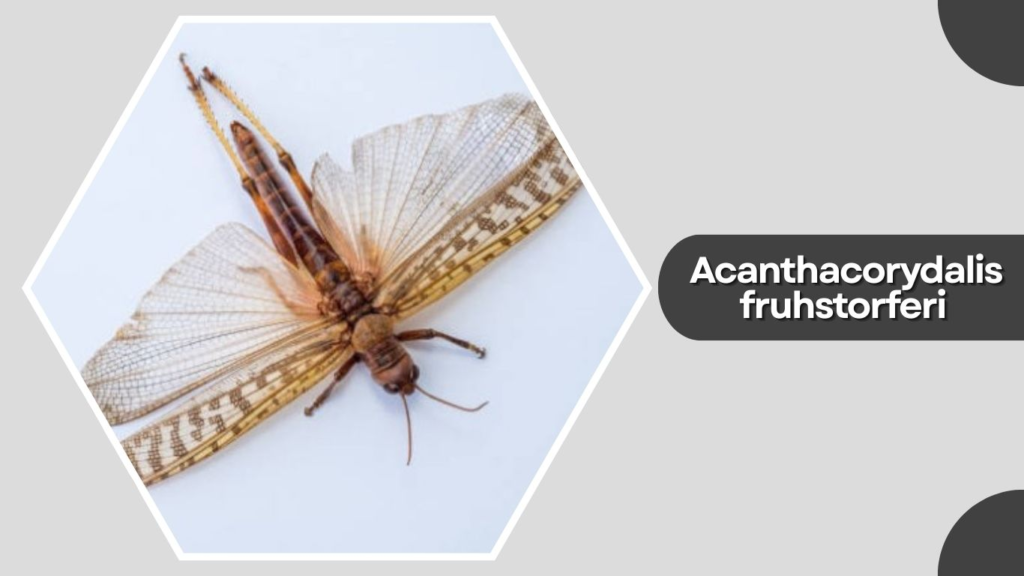
Acanthacorydalis fruhstorferi is a massive dobsonfly species closely related to Acanthacorydalis asiatica and is native to parts of Southeast Asia. It is among the largest dobsonflies in the world, known for its impressive wingspan and powerful larvae. Its hellgrammites are dominant predators in fast-flowing tropical rivers.
Identification
- Extremely large dobsonfly with very broad, smoky-brown wings
- Body dark brown to black, robust and heavy
- Males have very long, curved mandibles
- Females have shorter but extremely strong jaws
- Larvae very large, flattened, dark, with strong mouthparts
- Prominent lateral filaments along the abdomen
Habitat
Larvae of Acanthacorydalis fruhstorferi inhabit large, clean, fast-flowing rivers and mountain streams in Southeast Asia. They prefer rocky riverbeds with strong current and high oxygen content. Larvae hide under stones and logs. Adults usually remain near rivers, resting on nearby vegetation, rocks, and sometimes buildings.
Behaviors
Larvae are nocturnal predators, emerging at night to hunt insects, crustaceans, and small vertebrates. They cling tightly to rocks and are aggressive when disturbed. Adults are mostly nocturnal and are strongly attracted to lights, where they are often noticed because of their huge size.
Diet and Lifecycle
Hellgrammites feed on aquatic insects, crustaceans, worms, tadpoles, and small fish. The larval stage can last several years. Mature larvae leave the water and pupate in moist soil near the riverbank. Adults emerge, mate, lay egg masses above water, and die shortly after reproduction.
11. Protohermes grandis (Giant Fishfly)
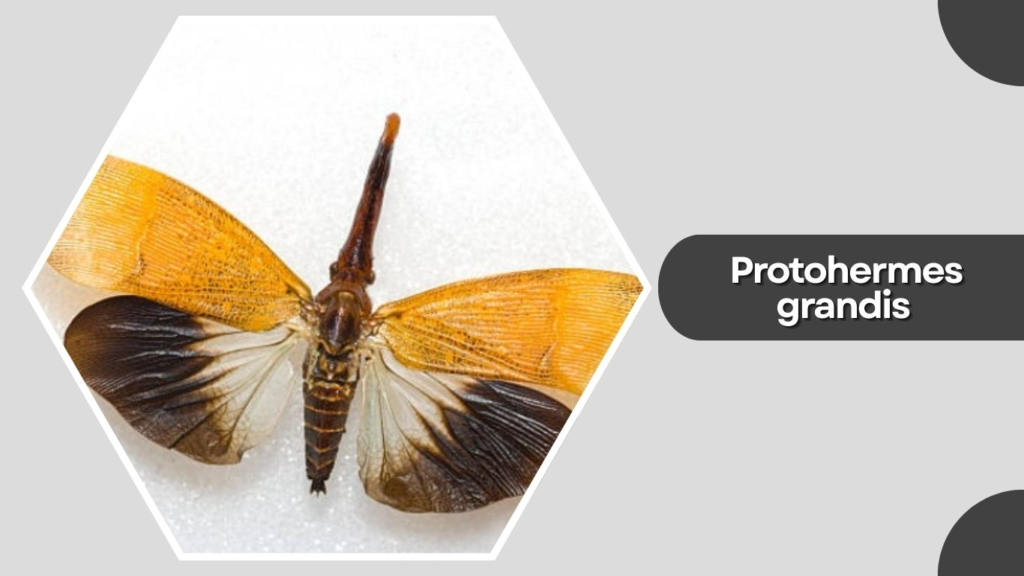
Protohermes grandis is a large dobsonfly relative often called a giant fishfly, native to East Asia, especially Japan, China, and Korea. Although commonly grouped with dobsonflies, it belongs to the same family and shares similar aquatic, predatory larvae. Its hellgrammites are powerful hunters and an important food source for fish.
Identification
- Large insect with broad, smoky-brown wings
- Body dark brown to black with lighter wing markings
- Mandibles strong but not as extremely elongated as giant dobsonflies
- Antennae long and bead-like
- Larvae long, flattened, dark, with strong jaws
- Lateral abdominal filaments and strong hooked legs
Habitat
Protohermes grandis larvae live in clean rivers, streams, and mountain brooks with good oxygen flow. They prefer rocky bottoms and hide under stones and submerged wood. These habitats support their predatory lifestyle. Adults usually stay near rivers and forested stream margins.
Behaviors
Larvae are nocturnal predators that hunt aquatic insects, worms, and small invertebrates. They hide during the day and cling firmly to rocks. Adults are mostly nocturnal and are attracted to lights. Unlike some Corydalus species, males do not have extremely long mandibles.
Diet and Lifecycle
Hellgrammites feed on aquatic insect larvae, crustaceans, worms, and occasionally small fish. The larval stage lasts one to three years. Mature larvae pupate in moist soil near streams. Adults emerge, mate, lay eggs above water, and usually live only a short time.
12. Nevromus maculatus (Spotted Dobsonfly)
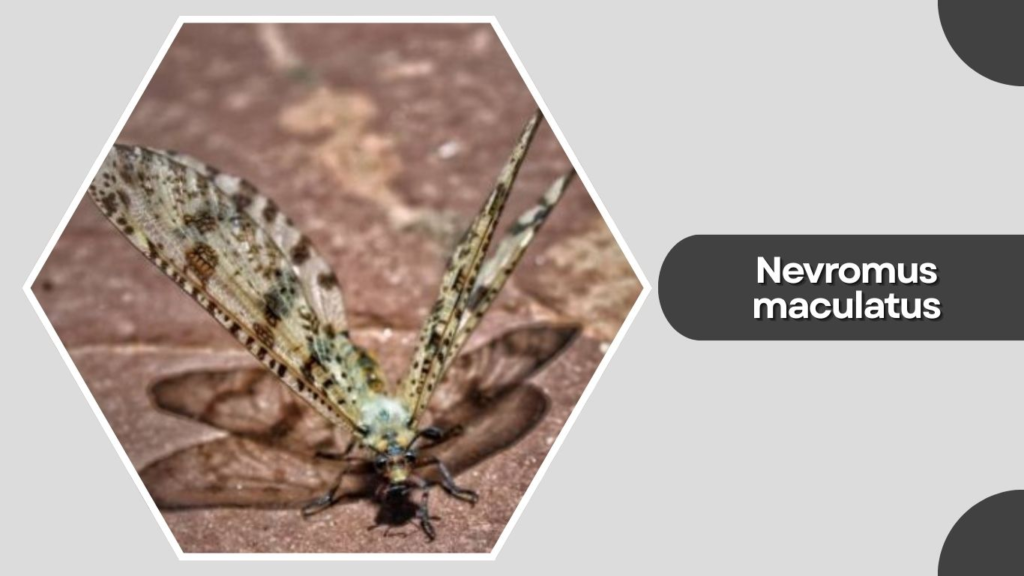
Nevromus maculatus is a striking Asian dobsonfly species known for the spotted patterns on its wings. It is native to parts of South and Southeast Asia and is a member of the family Corydalidae. Like other dobsonflies, it has aquatic, predatory larvae that live in fast-flowing freshwater habitats.
Identification
- Large dobsonfly with brown wings marked by dark spots
- Body dark brown to black, moderately robust
- Wings broad with strong, net-like venation
- Mandibles well developed; males less exaggerated than Corydalus
- Larvae long, flattened, dark, with strong biting mouthparts
- Distinct lateral filaments along the abdomen
Habitat
Nevromus maculatus larvae inhabit clean, fast-flowing rivers and mountain streams. They prefer rocky substrates where water is clear and oxygen-rich. Larvae hide beneath stones and submerged wood, ambushing prey. Adults remain close to water sources, resting on nearby vegetation, rocks, and tree trunks.
Behaviors
Larvae are mostly nocturnal predators, becoming active at night to hunt. They cling tightly to rocks to avoid strong currents and defend themselves aggressively if disturbed. Adults are mainly nocturnal and are often attracted to lights near rivers and forested areas.
Diet and Lifecycle
Larvae feed on aquatic insects, worms, small crustaceans, and sometimes fish eggs or tiny fish. The larval stage may last one to several years. When mature, larvae leave the water to pupate in moist soil near riverbanks. Adults emerge, mate, lay eggs above water, and usually die shortly after.
13. Chloronia corrugata (Green Dobsonfly)
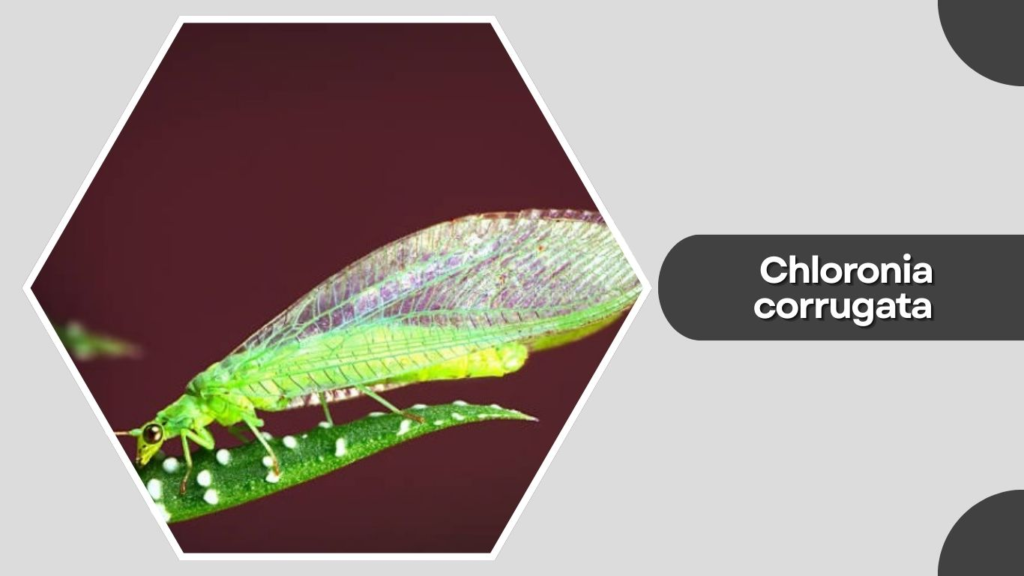
Chloronia corrugata is a distinctive dobsonfly species often called a green dobsonfly because of its lighter greenish to yellow-brown coloration, which sets it apart from the darker Corydalus species. It is native to parts of Central America and the southern regions of North America. Like all dobsonflies, its aquatic larvae are powerful predators and important members of freshwater ecosystems.
Identification
- Large dobsonfly with greenish-brown to yellow-brown wings
- Body lighter in color compared to most dark Corydalus species
- Wings broad, strongly veined, and slightly translucent
- Mandibles well developed; males less exaggerated than giant dobsonflies
- Larvae long, flattened, dark, with strong biting jaws
- Lateral filaments clearly visible along the abdomen
Habitat
Chloronia corrugata larvae inhabit clean, fast-flowing rivers and large streams. They are most often found under rocks, submerged logs, and debris in well-oxygenated water. These habitats provide both protection and abundant prey. Adults usually remain close to riverbanks, resting on vegetation, rocks, and tree trunks near water.
Behaviors
Larvae are mainly nocturnal predators, hiding during the day and becoming active at night. They cling tightly to stones to resist strong currents and defend themselves aggressively if disturbed. Adult dobsonflies are mostly nocturnal and are often attracted to lights near rivers and forested areas.
Diet and Lifecycle
Hellgrammites feed on aquatic insect larvae, worms, small crustaceans, and sometimes fish eggs or tiny fish. The larval stage may last one to several years. Mature larvae leave the water to pupate in moist soil near the shore. Adults emerge, mate, lay egg masses above water, and usually die shortly after reproduction.
FAQs
What is a dobsonfly?
A dobsonfly is a large aquatic insect belonging to the family Corydalidae. It is best known for its impressive size and, in some species, the extremely long mandibles of males. The larvae, called hellgrammites, live in freshwater and are fierce predators.
Where do dobsonflies live?
Dobsonflies are found near clean rivers, streams, and large creeks. Their larvae live underwater among rocks and logs in fast-flowing, well-oxygenated water. Adults usually stay close to these habitats, resting on vegetation, rocks, and buildings near water.
Are dobsonflies dangerous to humans?
Dobsonflies are not dangerous, but their larvae can bite painfully if handled. Adult males have very long jaws that look threatening, but they are weak and mainly used for mating. Females can bite more strongly but are not aggressive.
What do dobsonfly larvae eat?
Hellgrammites are carnivorous. They feed on aquatic insects, worms, crustaceans, and sometimes small fish or fish eggs. Because they are top invertebrate predators, they help control insect populations in freshwater ecosystems.
Why are dobsonflies important to ecosystems?
Dobsonflies are important indicators of clean water because their larvae require high oxygen levels. They also play a key role in food webs, both as predators of smaller organisms and as prey for fish, birds, and amphibians.
