
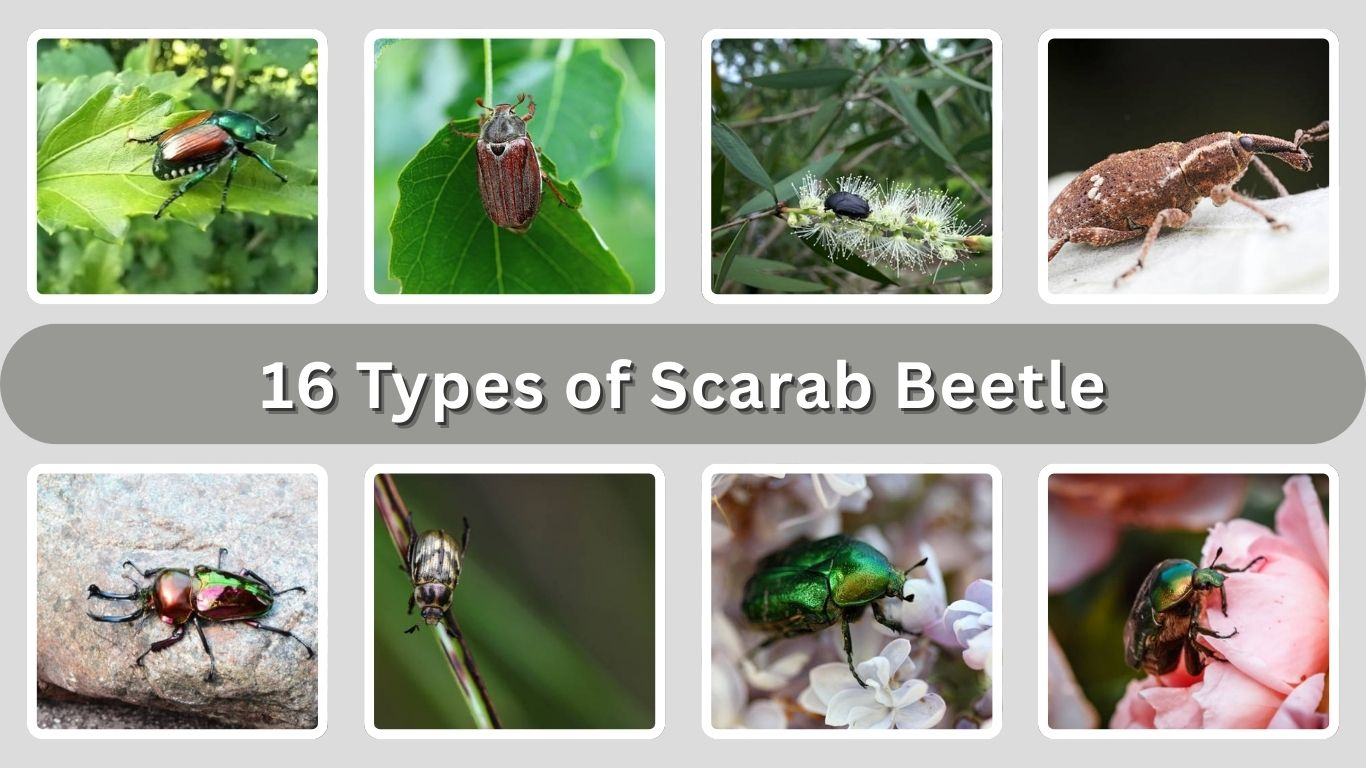
Scarab beetles are a diverse and fascinating group of insects known for their strong bodies, unique behaviors, and wide global distribution. They include well-known species such as dung beetles, chafers, and horned beetles, each playing an important role in natural ecosystems. Some scarab beetles help recycle organic matter, while others impact agriculture and lawns, making them both ecologically valuable and economically significant insects.
1. Japanese Beetle (Popillia japonica)
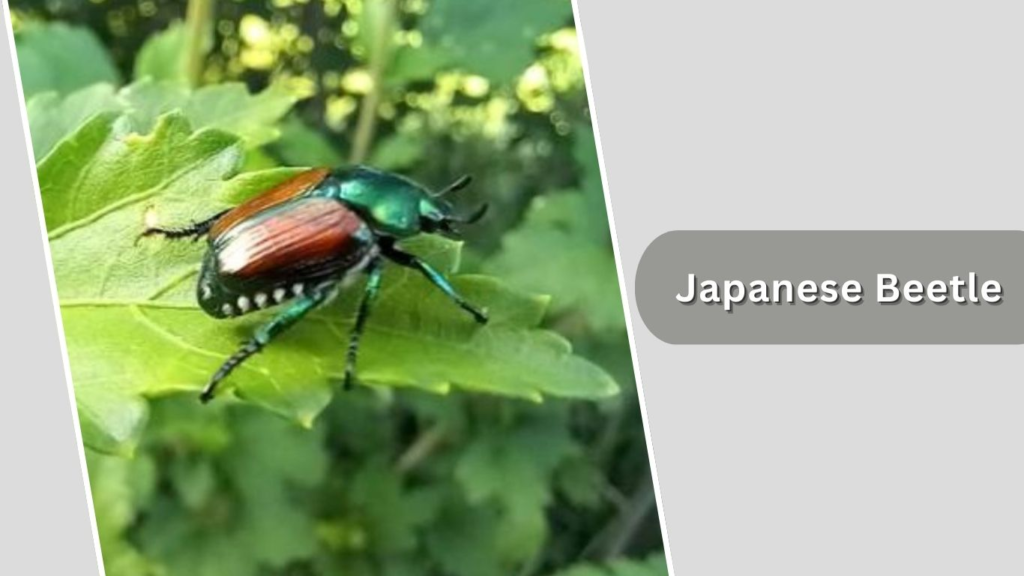
The Japanese beetle is a well-known scarab beetle species recognized for its destructive feeding habits and distinctive metallic appearance. Native to Japan, this beetle has spread widely to other regions, especially North America, where it is considered a major agricultural and garden pest. Both adults and larvae cause damage, making it an important species to identify and understand.
Identification
- Oval-shaped body, about 10–12 mm long
- Metallic green head and thorax
- Coppery-brown wing covers
- Six small white hair tufts along each side of the abdomen
- White hair patches at the tip of the abdomen
Habitat
Japanese beetles are commonly found in gardens, lawns, farmland, and ornamental landscapes. Adults prefer sunny areas with abundant vegetation, while larvae live underground in soil, especially in grassy areas such as lawns and pastures.
Diet
Adult Japanese beetles feed on the leaves, flowers, and fruits of over 300 plant species, including roses, grapes, beans, and fruit trees. The larvae, known as grubs, feed on grass roots, which can cause brown patches and weakened turf.
Life Cycle
This species has a complete life cycle consisting of egg, larva, pupa, and adult stages. Eggs are laid in soil during summer, larvae develop underground through fall and spring, pupation occurs in early summer, and adults emerge to feed and reproduce.
2. June Beetle (June Bug)
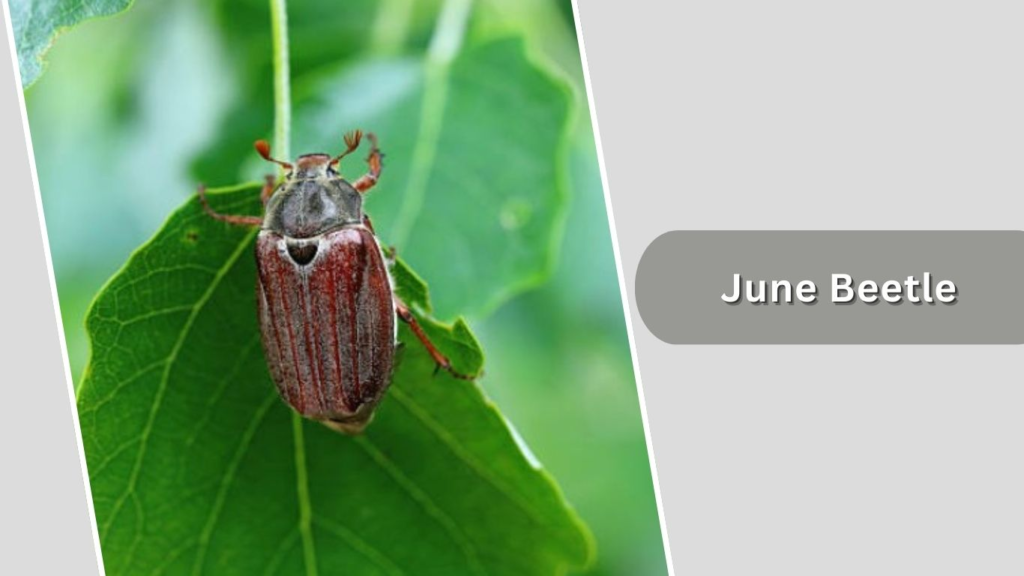
June beetles are common scarab beetles best known for their large size and seasonal appearance in late spring and early summer. They are often seen flying at night and are attracted to lights. While adults are mostly a nuisance, their larvae can cause noticeable damage to lawns and crops.
Identification
- Large, oval, and robust body shape
- Length usually between 15–25 mm
- Reddish-brown to dark brown coloration
- Smooth, shiny wing covers
- Short antennae with fan-like tips
Habitat
June beetles are widely distributed across North America and other regions. They are commonly found in grasslands, gardens, agricultural fields, forests, and suburban lawns. Larvae live underground in soil, especially in grassy areas.
Diet
Adult June beetles feed on leaves, flowers, and tree foliage, often causing minor defoliation. The larvae, known as white grubs, feed on roots of grasses and crops, which can weaken plants and damage lawns.
Life Cycle
June beetles have a relatively long life cycle that may take one to three years to complete. Eggs are laid in soil, larvae develop slowly underground, pupation occurs in the soil, and adults emerge in late spring or early summer.
3. Rhinoceros Beetle
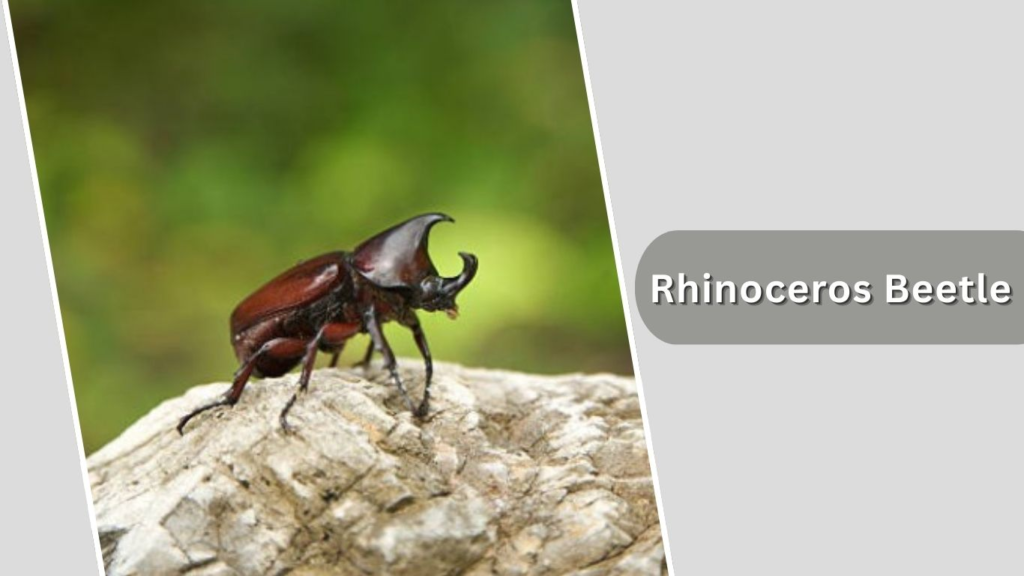
Rhinoceros beetles are large and powerful scarab beetles named for the horn-like projections found on the heads of many males. These beetles are admired for their strength and striking appearance rather than feared as pests. They are commonly found in tropical and subtropical regions and play an important role in breaking down organic matter.
Identification
- Large, heavy-bodied beetle with a glossy surface
- Males have one or more prominent horn-like projections
- Body length ranges from 25–60 mm, depending on species
- Color varies from dark brown to black
- Strong legs adapted for digging
Habitat
Rhinoceros beetles typically inhabit forests, plantations, gardens, and areas rich in decaying organic material. They are often associated with rotting logs, compost piles, and palm debris, where larvae can easily develop.
Diet
Adult rhinoceros beetles mainly feed on plant sap, tree juices, and soft fruit. Larvae feed on decaying wood, leaf litter, and other organic matter, helping recycle nutrients back into the soil.
Life Cycle
Their life cycle includes egg, larva, pupa, and adult stages. Larval development can last several months to over a year, depending on species and environmental conditions, before pupation occurs in soil or decaying wood.
4. Hercules Beetle
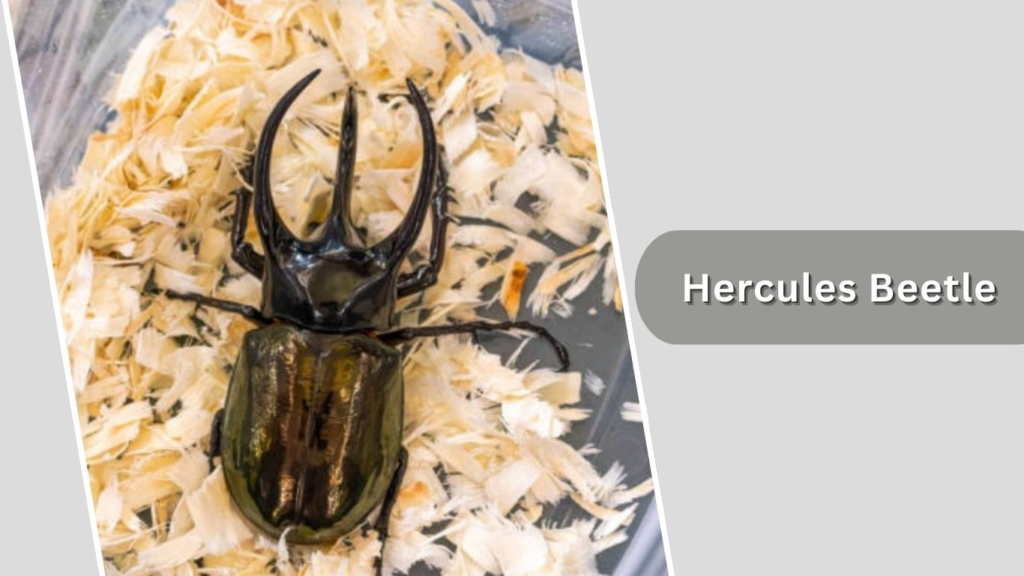
The Hercules beetle is one of the largest and most famous scarab beetles in the world, known for its impressive size and long horn-like structures. Named after the mythical hero Hercules, this beetle is especially remarkable for the strength of males, which use their horns in combat to compete for mates. It is native to Central and South America.
Identification
- Very large body, often 50–70 mm long (excluding horns)
- Males have long forward-curving horns on the head and thorax
- Color ranges from olive green to yellowish with black spots
- Females lack horns and are smaller in size
- Strong legs and thick exoskeleton
Habitat
Hercules beetles are mainly found in tropical rainforests. They prefer humid environments with plenty of decaying wood, where larvae can grow safely and adults can find shelter during the day.
Diet
Adult Hercules beetles feed on rotting fruit, tree sap, and sweet plant juices. The larvae consume decaying wood and organic material, contributing to the natural decomposition process within forest ecosystems.
Life Cycle
The life cycle includes egg, larva, pupa, and adult stages. Larval development can take one to two years due to their large size. Pupation occurs in soil or rotting wood, and adults usually live for several months.
5. Goliath Beetle
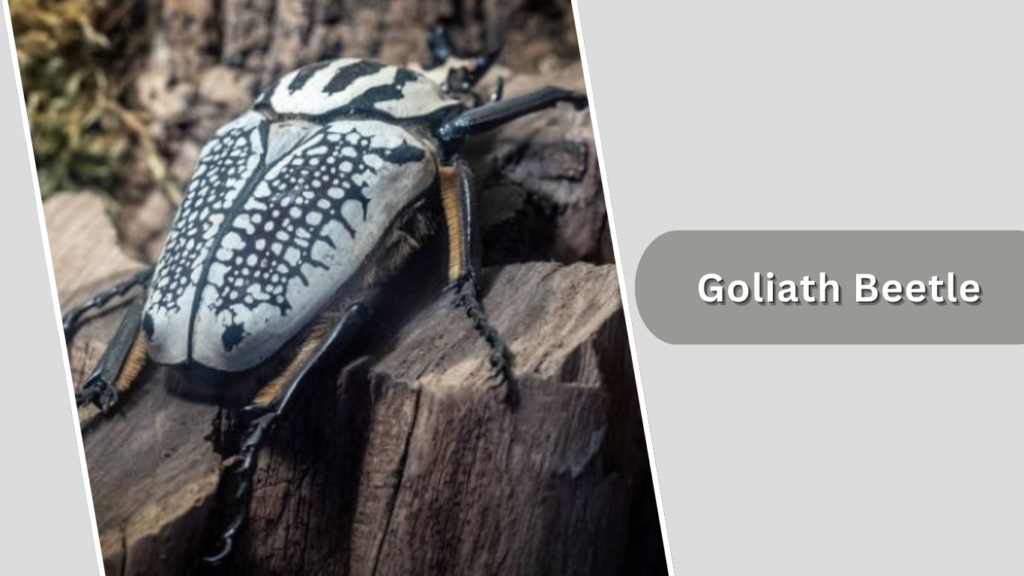
Goliath beetles are among the heaviest and most visually striking scarab beetles in the world. Native to Africa, they are well known for their bold patterns and impressive size. These beetles are often studied for their strength, growth rate, and unique coloration, making them popular in entomology and insect collections.
Identification
- Extremely large and heavy-bodied beetle
- Body length typically 50–110 mm
- Distinct black, white, and brown patterned exoskeleton
- Males often have a Y-shaped horn on the head
- Females lack horns and have a broader body
Habitat
Goliath beetles live mainly in tropical African rainforests and woodlands. They are commonly found in areas with abundant tree cover, where adults can access sap and fruit and larvae can develop in soil rich in organic matter.
Diet
Adult Goliath beetles feed on tree sap, fruit, and sugary plant substances. Larvae require a protein-rich diet and feed on decaying plant material and organic matter in the soil, which supports their rapid growth.
Life Cycle
Their life cycle consists of egg, larva, pupa, and adult stages. Larvae grow quickly compared to many other beetles and pupate in soil chambers. Adults usually live several months, focusing on feeding and reproduction.
6. Dung Beetle
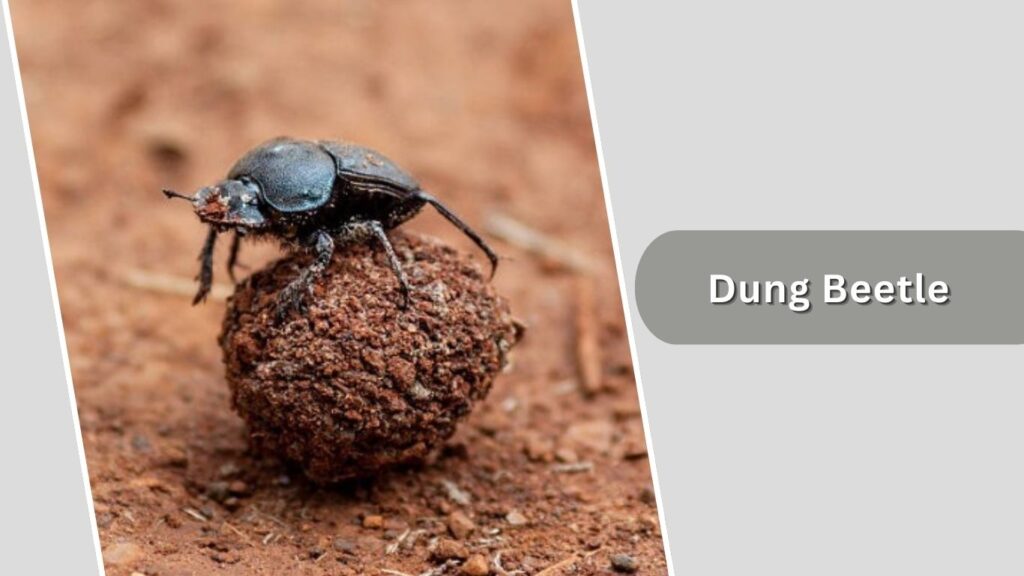
Dung beetles are a diverse group of scarab beetles best known for their unique behavior of feeding on and recycling animal dung. They play a vital ecological role by improving soil quality, reducing parasites, and helping control flies. Found on every continent except Antarctica, dung beetles vary widely in size, shape, and behavior.
Identification
- Small to medium-sized beetle with a rounded or oval body
- Body length ranges from 5–30 mm depending on species
- Color varies from black and brown to metallic green or blue
- Strong front legs adapted for digging and rolling dung
- Some species have small horns or ridges on the head
Habitat
Dung beetles are commonly found in grasslands, pastures, farms, forests, and savannas—anywhere large animals are present. They are usually active near fresh animal droppings, which provide both food and breeding sites.
Diet
As the name suggests, dung beetles primarily feed on animal feces. Some species consume the liquid portion, while others eat solid material. Larvae develop within dung balls prepared by adults, relying entirely on dung for nutrition.
Life Cycle
Dung beetles undergo complete metamorphosis with egg, larva, pupa, and adult stages. Eggs are laid inside dung balls buried underground. Larvae develop safely within these structures before pupating and emerging as adults.
7. Flower Chafer
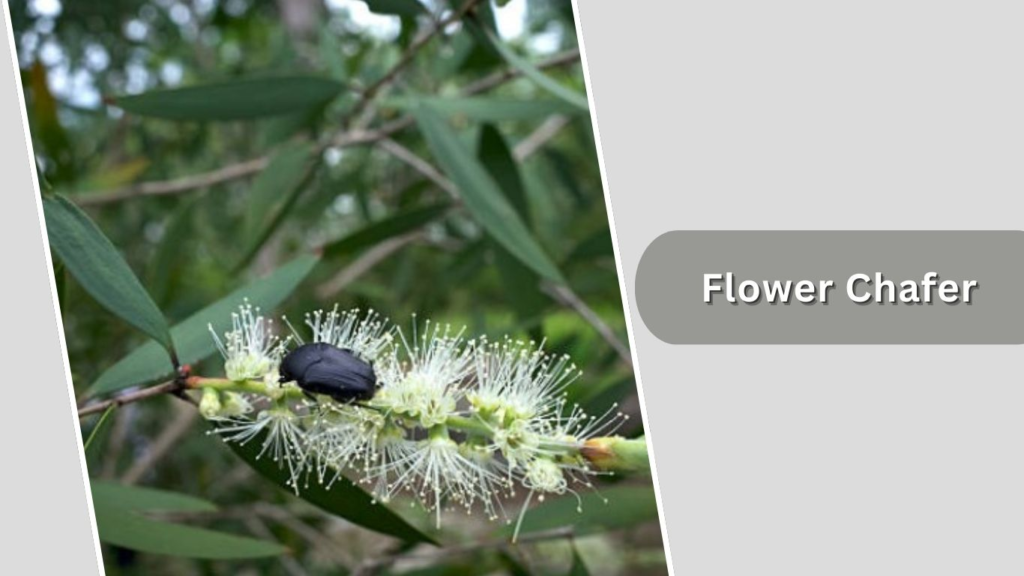
Flower chafers are colorful scarab beetles commonly seen visiting flowers during daylight hours. Unlike many other beetles, they are active fliers and are often mistaken for bees because of their movement and feeding behavior. These beetles are generally harmless and play a role in pollination.
Identification
- Medium-sized beetle with a compact, oval body
- Body length usually 10–25 mm
- Bright metallic colors such as green, bronze, or gold
- Short wing covers with exposed abdominal tip in some species
- Strong legs adapted for clinging to flowers
Habitat
Flower chafers are found in gardens, meadows, woodlands, and forest edges. They prefer warm, sunny environments with abundant flowering plants. Larvae usually live in soil, compost, or decaying organic matter.
Diet
Adult flower chafers feed mainly on nectar, pollen, flower petals, and overripe fruits. Larvae consume decaying plant material, compost, and organic debris, helping break down nutrients in the soil.
Life Cycle
Their life cycle includes egg, larva, pupa, and adult stages. Eggs are laid in soil or organic matter, larvae develop underground, and pupation occurs in earthen cells before adults emerge, usually in warm seasons.
8. Rose Chafer

The rose chafer is a common scarab beetle known for feeding on flowers and soft plant tissues. It is often seen during warm, sunny days and is especially noticeable in gardens and orchards. While visually attractive, this beetle can become a pest when present in large numbers.
Identification
- Slender, oval-shaped body
- Body length typically 8–12 mm
- Light tan to yellowish-brown coloration
- Long legs compared to body size
- Covered with fine hairs giving a velvety appearance
Habitat
Rose chafers are commonly found in gardens, fields, meadows, orchards, and sandy areas. They prefer dry, loose soils where larvae can develop easily. Adults are often seen on flowering plants and fruit trees.
Diet
Adult rose chafers feed on flowers, buds, leaves, and fruits, especially roses, peonies, grapes, and apples. Larvae live in soil and feed on plant roots, particularly grasses and weeds.
Life Cycle
The life cycle includes egg, larva, pupa, and adult stages. Eggs are laid in sandy soil, larvae develop underground by feeding on roots, pupation occurs in the soil, and adults emerge in late spring or early summer.
9. Green June Beetle
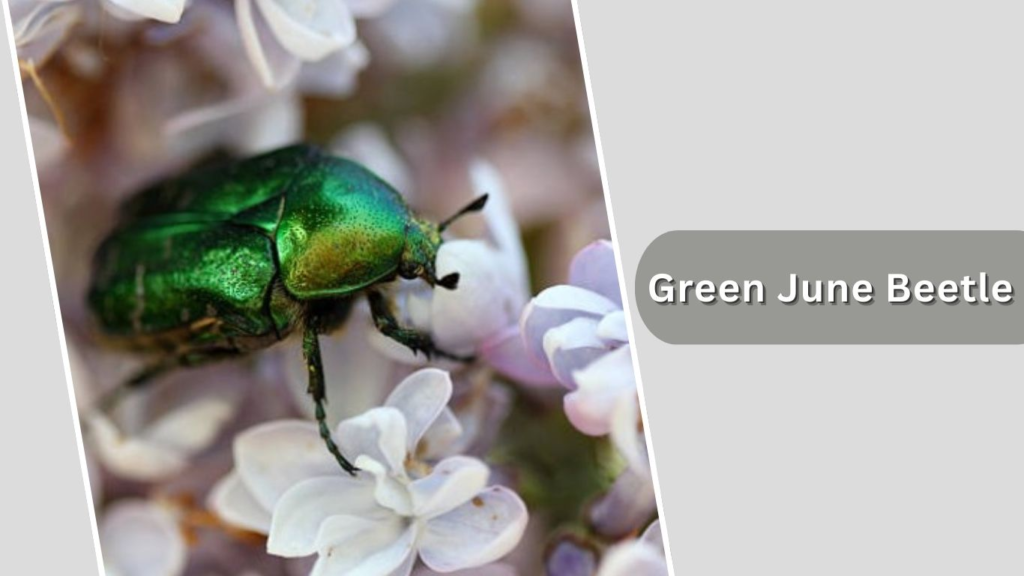
The green June beetle is a large, noisy scarab beetle best known for its bright metallic coloration and loud buzzing flight. It is commonly seen during hot summer months, flying low over lawns and gardens. Although eye-catching, this beetle can be a nuisance due to both adult feeding and larval soil disturbance.
Identification
- Large, oval, heavy-bodied beetle
- Body length usually 20–28 mm
- Metallic green upper surface with bronze or gold sheen
- Underside often shiny green with orange margins
- Strong legs adapted for digging
Habitat
Green June beetles are commonly found in lawns, gardens, parks, agricultural fields, and open woodlands. They prefer areas with moist soil rich in organic matter, where larvae can easily develop underground.
Diet
Adult green June beetles feed on ripe fruits, corn, peaches, figs, and soft plant material. Larvae live in soil and consume decaying organic matter and plant roots, sometimes pushing soil to the surface as they move.
Life Cycle
This species undergoes complete metamorphosis with egg, larva, pupa, and adult stages. Eggs are laid in soil during summer, larvae overwinter underground, pupate in spring, and adults emerge in early to mid-summer.
10. Elephant Beetle
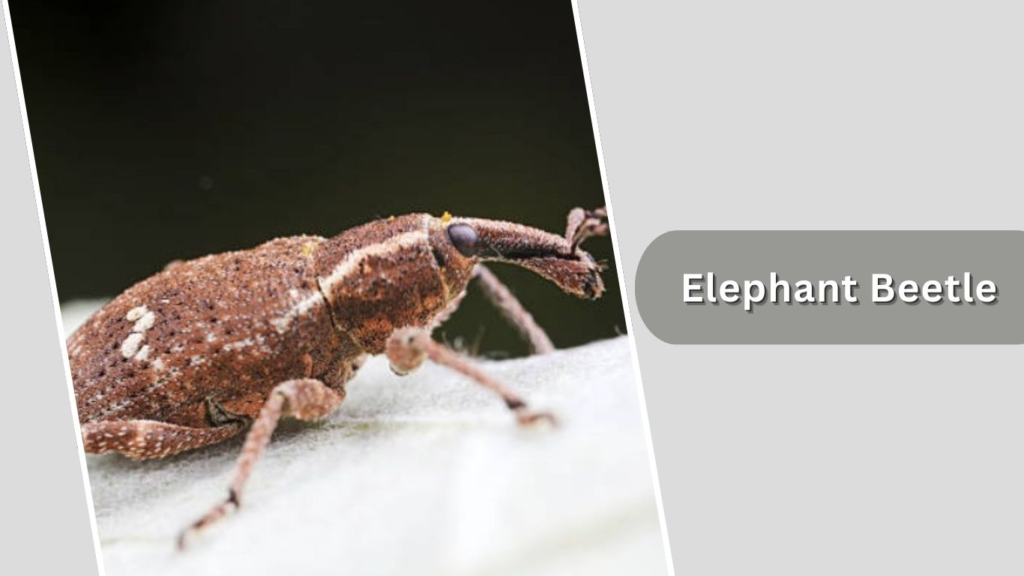
The elephant beetle is a large and powerful scarab beetle named for its thick body and impressive horn, which resembles an elephant’s trunk. Native mainly to Central and South America, this beetle is admired for its strength and striking appearance. Males use their horn to compete with rivals during mating.
Identification
- Very large, heavy-bodied beetle
- Body length usually 50–70 mm
- Males have a long, curved horn on the head
- Dark brown to black coloration
- Females lack horns and are slightly smaller
Habitat
Elephant beetles are typically found in tropical forests, plantations, and wooded areas. They prefer warm, humid environments with plenty of decaying wood and organic matter where larvae can develop safely.
Diet
Adult elephant beetles feed mainly on tree sap, soft fruits, and plant juices. Larvae consume decaying wood and organic material, playing an important role in nutrient recycling within forest ecosystems.
Life Cycle
Their life cycle includes egg, larva, pupa, and adult stages. Larval development can last over a year due to their large size. Pupation occurs in soil or rotting wood, and adults usually live for several months.
11. Atlas Beetle
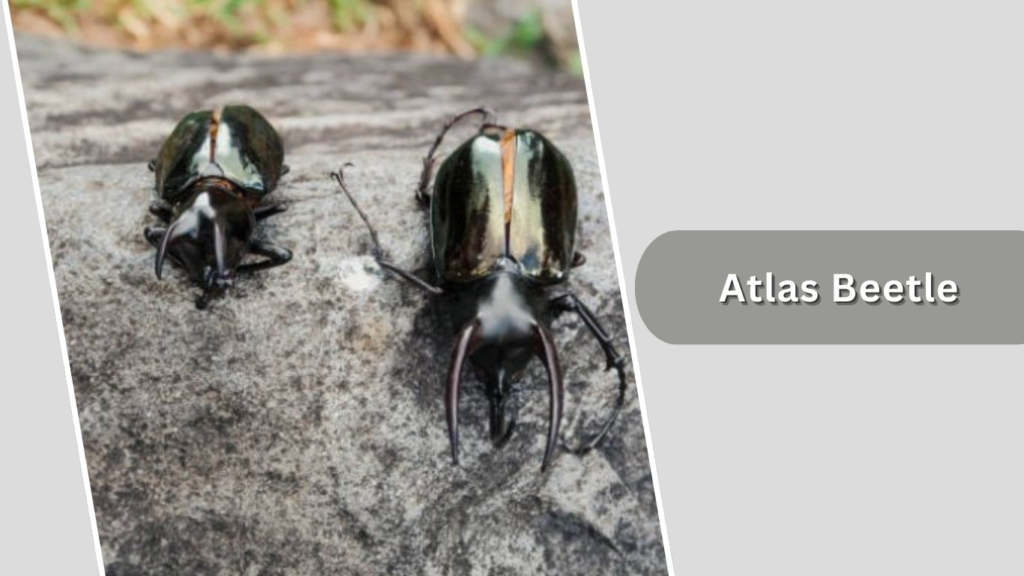
The Atlas beetle is a large horned scarab beetle named after the Titan Atlas from Greek mythology. It is known for its impressive size and the prominent horns found on males, which are used during fights over territory and mates. This beetle is mainly found in Southeast Asia and nearby regions.
Identification
- Large, robust body with a glossy surface
- Body length usually 30–60 mm
- Males have three distinct horns (one on the head, two on the thorax)
- Dark brown to black coloration
- Females are smaller and lack horns
Habitat
Atlas beetles inhabit tropical forests, forest edges, and plantations. They prefer warm, humid environments with plenty of decaying wood and plant matter, which provide suitable conditions for larval development.
Diet
Adult Atlas beetles feed primarily on tree sap, overripe fruit, and plant juices. Larvae live in rotting wood and organic debris, where they break down decomposing material and recycle nutrients into the soil.
Life Cycle
The life cycle consists of egg, larva, pupa, and adult stages. Larvae may take several months to over a year to fully develop. Pupation occurs in soil or decayed wood, and adults typically live for a few months.
12. Rainbow Scarab
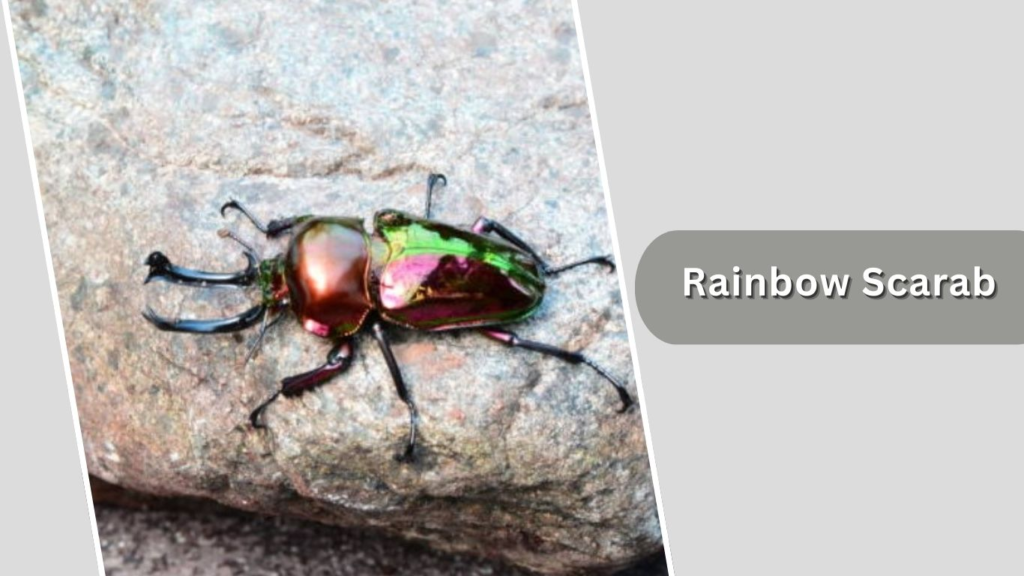
The rainbow scarab is a small but striking scarab beetle known for its brilliant, iridescent coloration that reflects shades of green, blue, red, and gold. Found mainly in Africa and parts of Asia, this beetle is admired more for its beauty than its impact on plants or crops.
Identification
- Small to medium-sized oval body
- Body length usually 10–18 mm
- Highly iridescent, rainbow-like metallic coloration
- Smooth, glossy exoskeleton
- Short antennae with fan-shaped tips
Habitat
Rainbow scarabs are typically found in grasslands, open woodlands, gardens, and forest edges. They favor warm climates and are often seen on vegetation or near flowers during sunny days.
Diet
Adult rainbow scarabs feed on plant material such as leaves, flowers, pollen, and sometimes fruit. Larvae live in soil and feed on decaying organic matter, contributing to nutrient recycling.
Life Cycle
This beetle follows a complete metamorphosis cycle of egg, larva, pupa, and adult. Eggs are laid in soil, larvae develop underground, pupation occurs in earthen cells, and adults emerge during warm seasons.
13. African Black Beetle
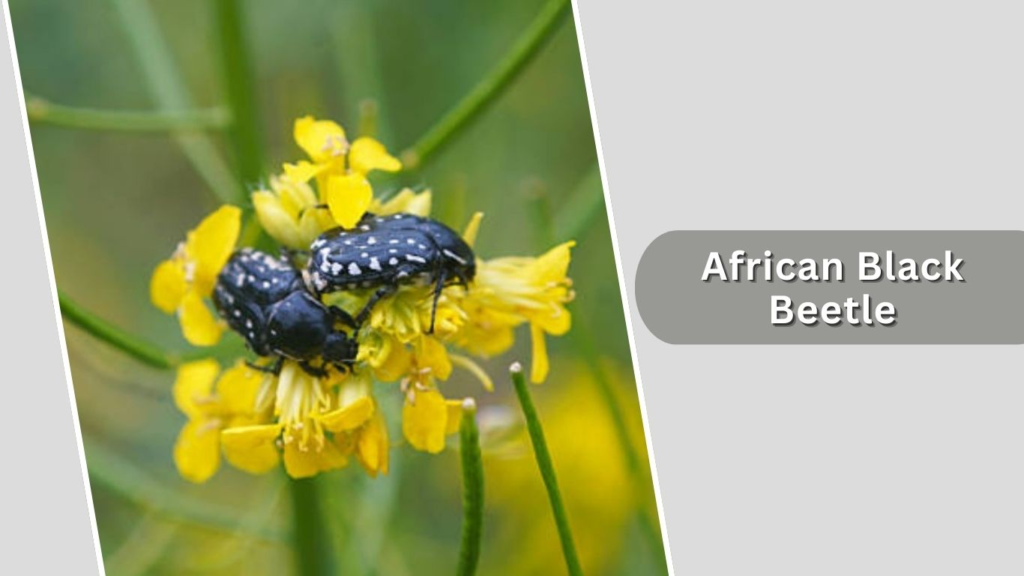
The African black beetle is a common scarab beetle species widely known for its impact on crops, pastures, and lawns. Although native to Africa, it has spread to other regions, including Australia and parts of Asia. This beetle is mainly active at night and often goes unnoticed until damage appears.
Identification
- Medium-sized, oval-shaped body
- Body length typically 10–15 mm
- Shiny black or very dark brown coloration
- Smooth wing covers with faint grooves
- Strong legs adapted for digging in soil
Habitat
African black beetles are commonly found in grasslands, agricultural fields, lawns, and pastures. They prefer moist soil with abundant grass roots, which provide food for developing larvae.
Diet
Adult beetles feed on stems and leaves of grasses and young plants. The larvae, known as white grubs, live underground and feed on grass roots, often causing thinning turf and weakened crops.
Life Cycle
The life cycle includes egg, larva, pupa, and adult stages. Eggs are laid in soil, larvae develop underground through several stages, pupation occurs in the soil, and adults emerge during warm months.
14. Oriental Beetle
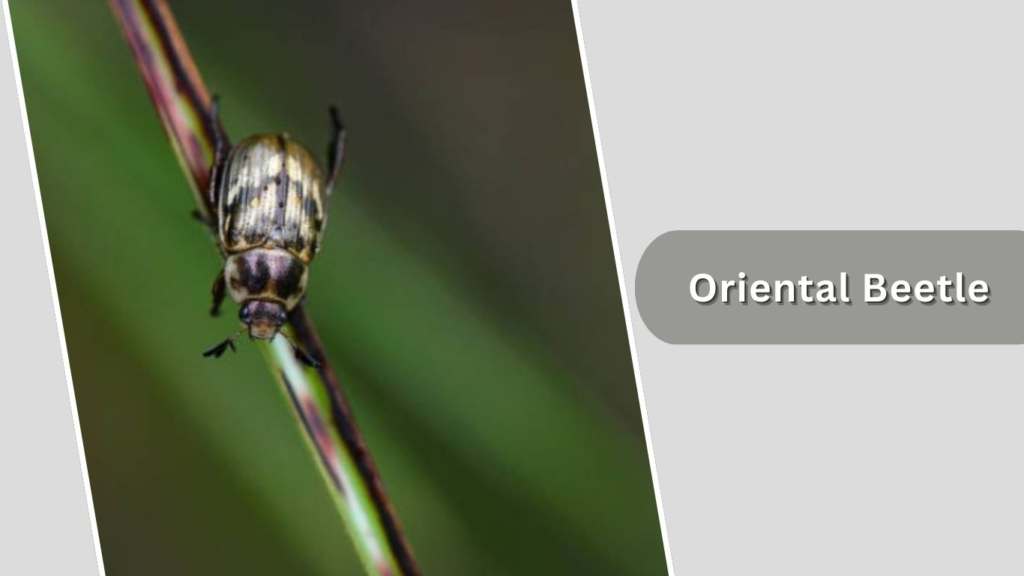
The Oriental beetle is a turf-damaging scarab beetle closely related to the Japanese beetle. It is best known for its soil-dwelling larvae, which can cause serious damage to lawns, golf courses, and ornamental grass. Adults are less noticeable but play a key role in reproduction.
Identification
- Medium-sized oval body
- Body length around 10–12 mm
- Mottled grayish-brown to dark brown coloration
- Small head with short, clubbed antennae
- Larvae are white, C-shaped grubs found in soil
Habitat
Oriental beetles are commonly found in lawns, gardens, parks, and landscaped areas. They prefer sandy or well-drained soils where eggs and larvae can survive and develop easily.
Diet
Adult Oriental beetles feed lightly on plant leaves and flowers, causing minimal damage. The larvae feed on grass roots and organic matter underground, which can lead to thinning turf and brown patches.
Life Cycle
This beetle has a one-year life cycle with egg, larva, pupa, and adult stages. Eggs are laid in summer, larvae feed through fall, overwinter in soil, pupate in spring, and adults emerge in early summer.
15. Brown Chafer Beetle
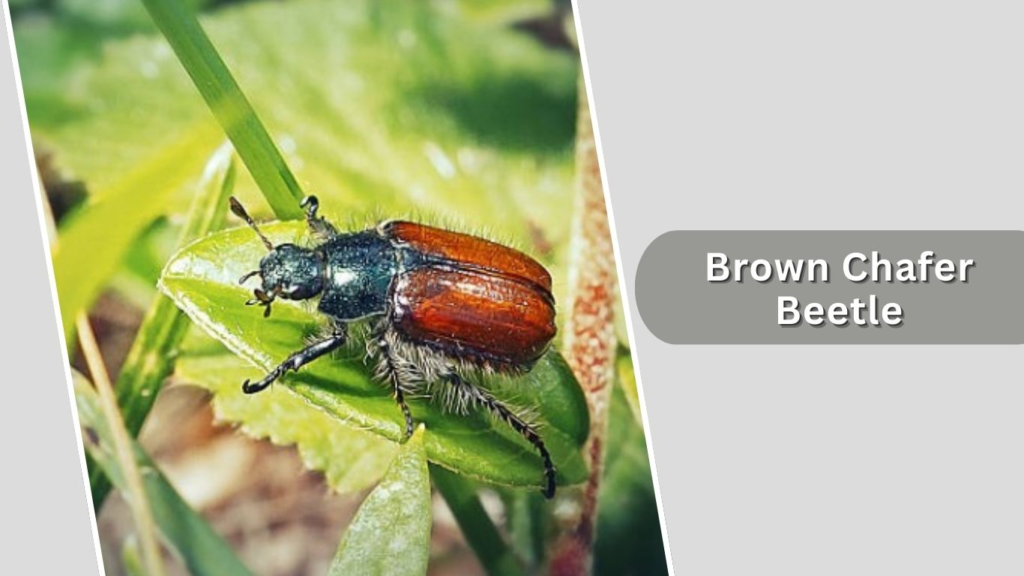
The brown chafer beetle is a common scarab beetle species often associated with lawn and pasture damage. It is closely related to other chafer beetles and is mainly problematic during its larval stage. Adults are usually short-lived and less noticeable compared to the underground grubs.
Identification
- Medium-sized, oval-bodied beetle
- Body length usually 12–18 mm
- Light brown to dark brown coloration
- Smooth wing covers with faint ridges
- Stout legs adapted for burrowing
Habitat
Brown chafer beetles are typically found in grasslands, lawns, meadows, agricultural fields, and open countryside. They prefer soils with dense grass cover, which provide suitable conditions for egg laying and larval development.
Diet
Adult brown chafer beetles feed on leaves of trees, shrubs, and grasses, usually causing minor damage. The larvae live underground and feed on grass roots, which can weaken turf and lead to patchy lawns.
Life Cycle
The life cycle includes egg, larva, pupa, and adult stages. Eggs are laid in soil during early summer, larvae develop underground for several months, pupation occurs in the soil, and adults emerge the following season.
16. Scarab Beetle
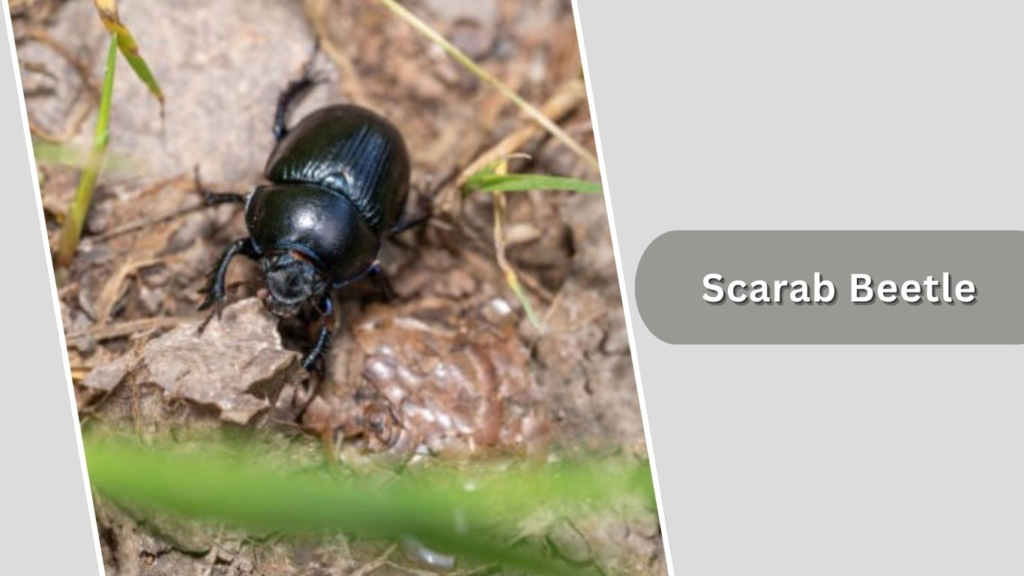
Scarab beetle is a broad common name used for beetles belonging to the family Scarabaeidae, one of the largest beetle families in the world. These beetles vary greatly in size, shape, and behavior, ranging from harmless decomposers to serious agricultural pests. Scarab beetles are found on every continent except Antarctica.
Identification
- Oval or rounded, stout-bodied beetle
- Body size ranges from very small to very large, depending on species
- Colors vary widely: black, brown, green, metallic, or patterned
- Antennae end in club-like segments that can open like a fan
- Strong legs, often adapted for digging
Habitat
Scarab beetles occupy a wide range of habitats, including forests, grasslands, deserts, farmlands, and gardens. Many species live in soil or leaf litter during their larval stage, while adults are often seen on plants, flowers, dung, or decaying matter.
Diet
Diet varies by species. Some scarab beetles feed on plant leaves, roots, flowers, or fruits, while others consume dung, decaying organic matter, or fungi. Larvae, commonly called grubs, usually feed underground on roots or decomposing material.
Life Cycle
Scarab beetles undergo complete metamorphosis with egg, larva, pupa, and adult stages. Eggs are laid in soil or organic matter, larvae develop underground, pupation occurs in earthen chambers, and adults emerge to feed and reproduce.
FAQs
What is a scarab beetle?
Scarab beetles are a large group of beetles belonging to the family Scarabaeidae. They are known for their stout bodies, clubbed antennae, and varied feeding habits. This group includes dung beetles, chafers, and rhinoceros beetles found across many ecosystems worldwide.
Are scarab beetles harmful to humans?
Most scarab beetles are harmless to humans and do not bite or sting. However, some species can be agricultural or lawn pests because their larvae feed on plant roots. They do not carry diseases or pose direct health risks to people.
What do scarab beetle larvae eat?
Scarab beetle larvae, commonly called white grubs, usually live in soil and feed on plant roots, decaying organic matter, or dung, depending on the species. Their feeding can sometimes damage lawns, crops, and pasture grasses.
Where are scarab beetles commonly found?
Scarab beetles are found worldwide in habitats such as forests, grasslands, gardens, farms, and deserts. Different species prefer different environments, ranging from tropical rainforests to temperate lawns and agricultural fields.
How long do scarab beetles live?
The lifespan of scarab beetles varies by species. Many spend several months to years in the larval stage underground, while the adult stage is usually shorter, lasting from a few weeks to several months, mainly for feeding and reproduction.
