

Damselflies are slender, graceful insects closely related to dragonflies and are most often seen near freshwater habitats. Known for their delicate wings, vibrant colors, and calm behavior, they play an important role in controlling insect populations. Across the world, many damselfly species can be identified by their unique body patterns, eye colors, and preferred environments. This guide explores 15 common types of damselfly insects, helping readers understand their identification, habitat, behavior, and life cycle in a clear and structured way.
1. Blue-tailed Damselfly
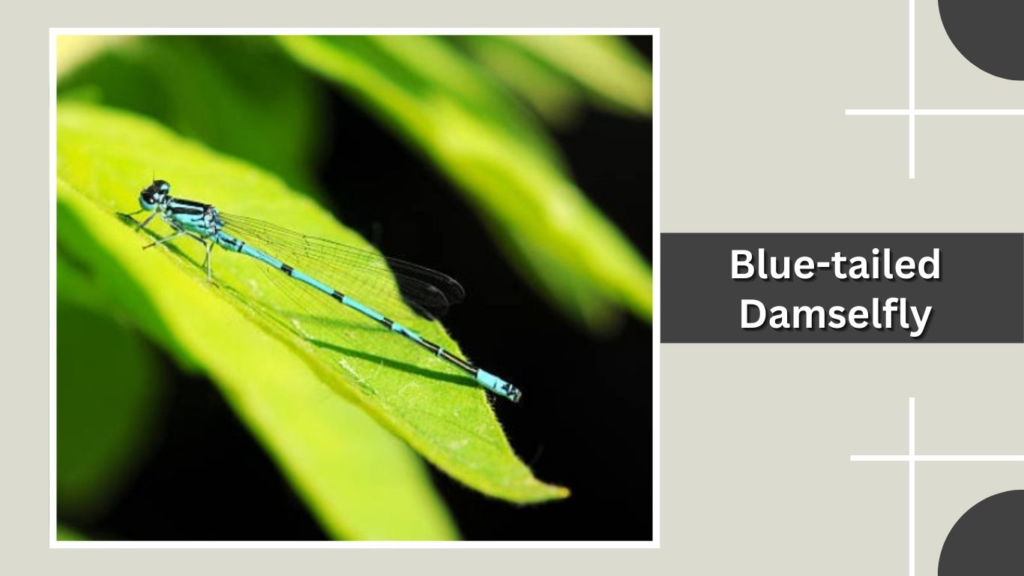
The Blue-tailed Damselfly is a small, slender insect commonly found near ponds, lakes, and slow-moving streams. It is well known for its adaptability and is often one of the most widespread damselfly species in many regions. Its delicate appearance and active flight make it easy to spot during warm months.
Identification
- Slim black body with bright blue coloration near the tail end
- Blue segment typically visible on the last abdominal segments
- Transparent wings held together above the body when at rest
- Males show brighter blue markings than females
Habitat
This damselfly thrives in a wide range of freshwater habitats, including marshes, canals, ditches, and garden ponds. It can tolerate disturbed or artificial water bodies better than many other species.
Behavior
Blue-tailed Damselflies are active fliers and can often be seen resting on vegetation near water. They are territorial but less aggressive than larger damselfly species and frequently perch low to the ground.
Life Cycle
The species undergoes incomplete metamorphosis, starting as an aquatic nymph before emerging as an adult. Larvae live underwater, feeding on small aquatic organisms, while adults prey on tiny flying insects.
2. Azure Damselfly
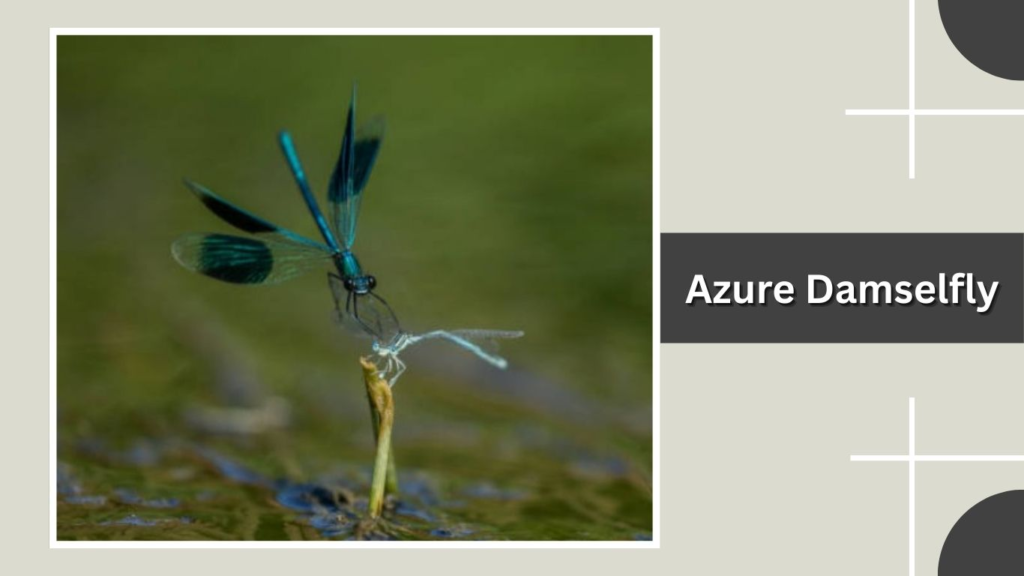
The Azure Damselfly is a strikingly bright blue species commonly seen around calm freshwater habitats. Its vivid coloration and graceful movements make it one of the easiest damselflies to recognize during spring and early summer. It is especially active on sunny days and often appears in large numbers.
Identification
- Bright sky-blue body with black markings
- Blue and black banded abdomen pattern
- Slender body with clear, narrow wings
- Females usually show more black than males
Habitat
This species prefers still or slow-moving freshwater such as ponds, lakes, canals, and slow rivers. It is often found resting on floating vegetation or grasses close to the water’s edge.
Behavior
Azure Damselflies are calm and approachable, frequently allowing close observation. Males are often seen patrolling territories near water, while pairs can be spotted flying together during mating.
Life Cycle
Eggs are laid on submerged plants, where larvae develop underwater for several months. After emerging, adults live for a short period, focusing on feeding and reproduction during the warmer season.
3. Banded Demoiselle
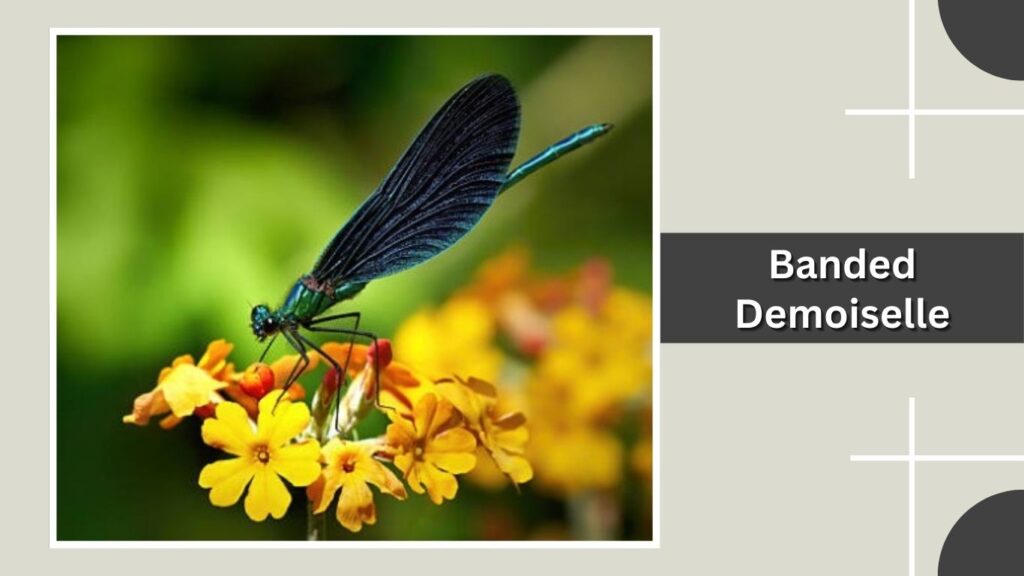
The Banded Demoiselle is one of the most visually striking damselflies, easily recognized by its broad, dark wing bands. Larger than many common damselflies, it is often seen fluttering slowly along rivers, giving it a butterfly-like appearance.
Identification
- Broad, dark metallic-blue bands across the wings (males)
- Females have greenish bodies with brownish wing patches
- Larger and wider wings compared to most damselflies
- Metallic sheen visible on the body in sunlight
Habitat
This species is strongly associated with clean, slow-flowing rivers and streams. It prefers areas with abundant riverside vegetation, which provides perching and breeding sites.
Behavior
Banded Demoiselles are slow, graceful fliers and are highly territorial. Males often display their wings to deter rivals and attract females, making them especially noticeable along riverbanks.
Life Cycle
Larvae develop underwater among aquatic plants and debris, where they may remain for over a year. Adults emerge in late spring or early summer and are active throughout the warmer months.
4. Emerald Damselfly
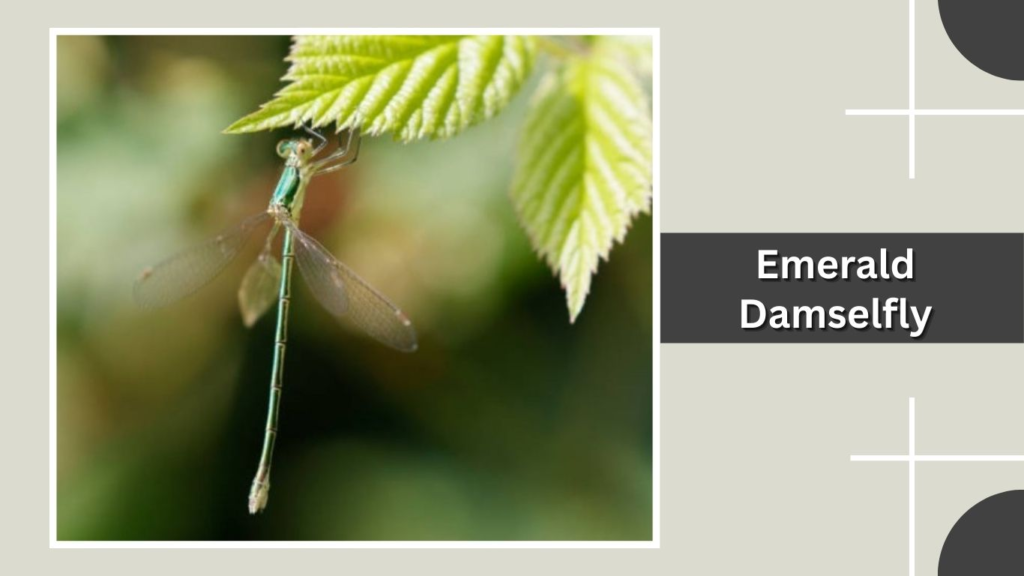
The Emerald Damselfly is admired for its glossy green coloration and elegant appearance. It is a relatively small but eye-catching species, often noticed when sunlight reflects off its metallic body. This damselfly is most active during warm, bright days in late spring and summer.
Identification
- Metallic emerald-green body with a shiny surface
- Slender abdomen with a subtle bronze or gold sheen
- Clear wings with a slight green tint
- Females appear duller and slightly more robust than males
Habitat
Emerald Damselflies are commonly found near ponds, marshes, lakes, and slow-moving streams. They prefer areas with dense aquatic vegetation, which provides shelter and breeding sites.
Behavior
This species is a gentle flier and often perches quietly on reeds or grasses near water. Males may patrol small territories but are generally less aggressive than larger damselfly species.
Life Cycle
The larvae live underwater among plants, feeding on tiny aquatic organisms. After completing development, adults emerge and spend their short lifespan feeding, mating, and laying eggs in vegetation close to water.
5. Variable Damselfly
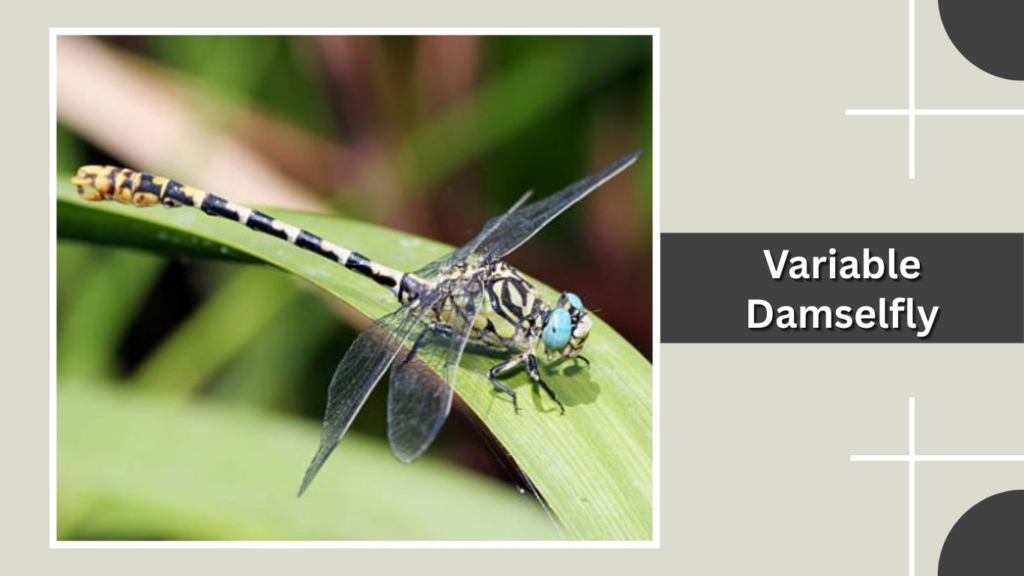
The Variable Damselfly is known for its subtle color differences and delicate build. Its appearance can vary depending on age, sex, and light conditions, which is how it earned its common name. It is most often seen during the warmer months near calm freshwater environments.
Identification
- Slender body with blue and black coloration in males
- Females show greenish or brownish tones
- Clear wings held closed above the body at rest
- Color intensity may change as the damselfly matures
Habitat
This species favors ponds, lakes, ditches, and slow-flowing canals. It prefers areas with floating or submerged vegetation, which offer ideal conditions for breeding and larval development.
Behavior
Variable Damselflies are active but unobtrusive, often resting low on plants near the water. Males may defend small territories, while females remain more hidden among vegetation.
Life Cycle
Eggs are laid on aquatic plants, and the larvae spend several months underwater. Adults emerge in late spring or early summer and have a relatively short lifespan focused on feeding and reproduction.
6. Common Blue Damselfly
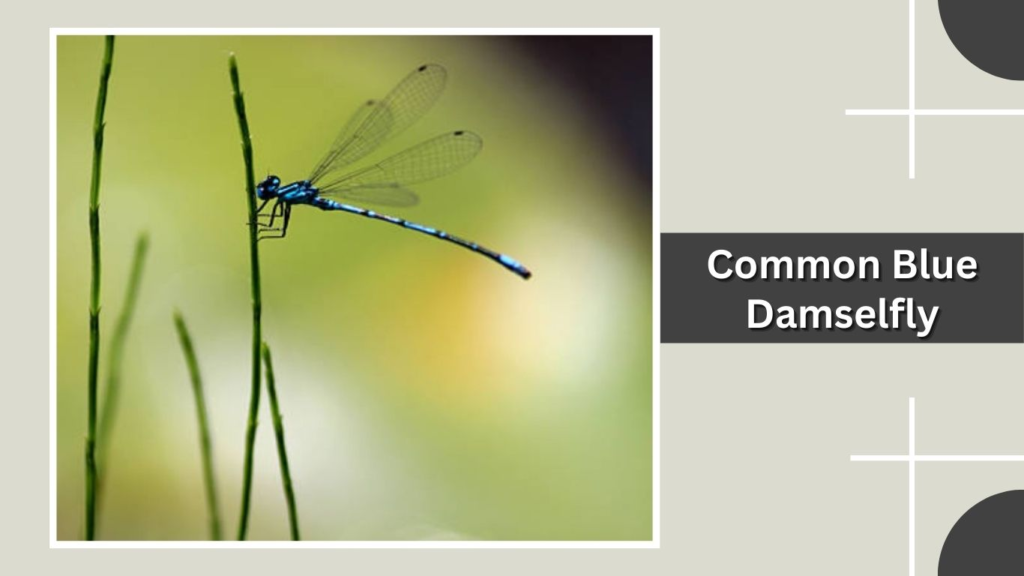
The Common Blue Damselfly is one of the most widespread and frequently observed damselflies in many regions. Its bright blue coloration and abundance make it a familiar sight near freshwater habitats, especially during summer. It is often the first species noticed by beginners interested in damselflies.
Identification
- Bright blue body with bold black markings
- Blue segments clearly visible along the abdomen
- Slender build with transparent wings
- Females appear darker with more black patterning
Habitat
This species inhabits a wide variety of freshwater environments, including ponds, lakes, canals, rivers, and marshes. It adapts well to both natural and man-made water bodies.
Behavior
Common Blue Damselflies are active during sunny weather and frequently perch on reeds, grasses, or floating plants. Males are territorial and can be seen chasing rivals away from preferred breeding areas.
Life Cycle
Larvae develop underwater, feeding on small aquatic insects and organisms. After emerging as adults, they spend their short lives hunting flying insects, mating, and laying eggs on aquatic vegetation.
7. Red-eyed Damselfly
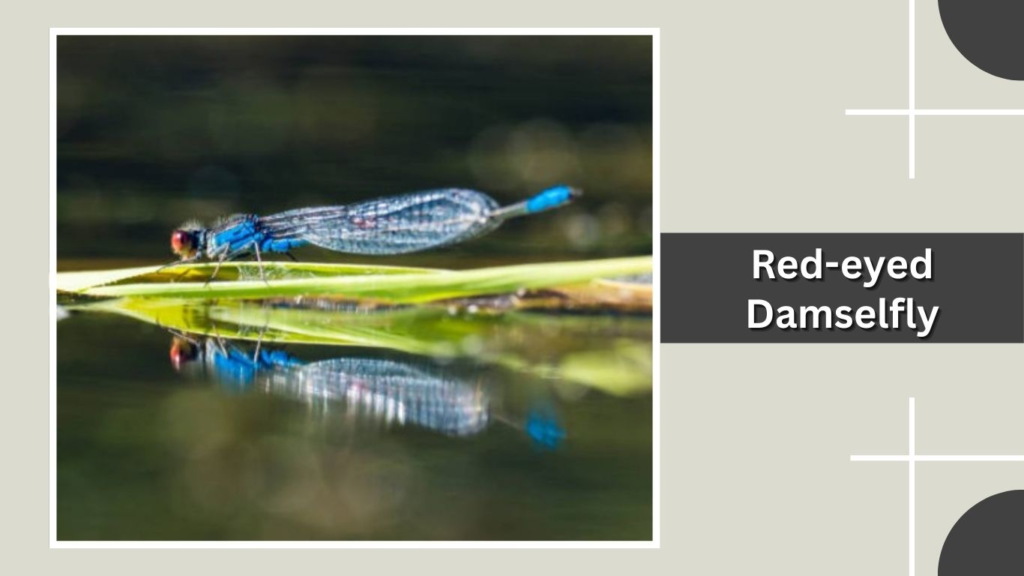
The Red-eyed Damselfly is a distinctive and elegant species, easily recognized by its vivid red eyes and contrasting body colors. It is commonly seen resting on floating vegetation and is most noticeable during the peak of summer when populations are at their highest.
Identification
- Bright red eyes that stand out clearly
- Blue and black body with pale markings
- Long, slender abdomen
- Clear wings often held slightly open when resting
Habitat
This damselfly prefers still or slow-moving freshwater habitats such as ponds, lakes, canals, and reservoirs. It is especially fond of water bodies with abundant floating plants like water lilies.
Behavior
Red-eyed Damselflies spend much of their time perched flat on floating leaves rather than upright on stems. They are strong fliers and often move between patches of vegetation in search of food or mates.
Life Cycle
Eggs are laid directly into floating plant material. The larvae develop underwater, feeding on small aquatic organisms before emerging as adults in early to mid-summer.
8. Scarce Blue-tailed Damselfly
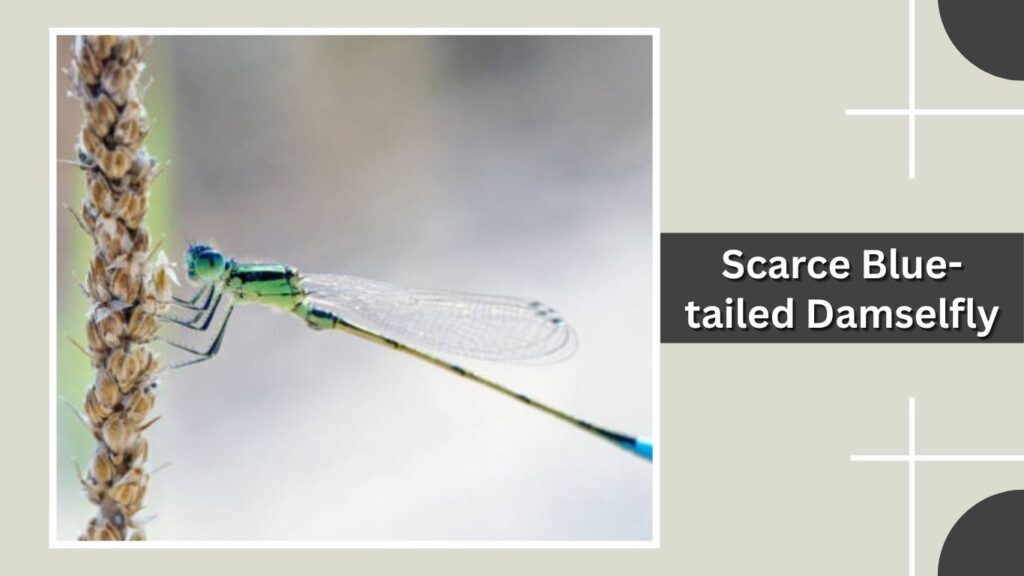
The Scarce Blue-tailed Damselfly is a more localized relative of the common blue-tailed species. It is admired for its subtle beauty and preference for cleaner, less disturbed habitats. Although not as widespread, it can be locally abundant where conditions are suitable.
Identification
- Mostly dark body with a small pale blue tail segment
- Blue marking usually limited to one abdominal segment
- Slender build with clear wings
- Females often show duller coloration
Habitat
This species is typically found near unpolluted ponds, lakes, and slow-flowing waters. It favors areas with rich aquatic vegetation and minimal human disturbance.
Behavior
Scarce Blue-tailed Damselflies are quiet and unobtrusive. They often perch low among grasses and reeds and may be overlooked due to their subtle coloring and less active flight.
Life Cycle
Larvae live underwater for several months, feeding on tiny aquatic prey. Adults emerge in late spring or early summer and spend their brief lifespan reproducing and hunting small insects.
9. Large Red Damselfly
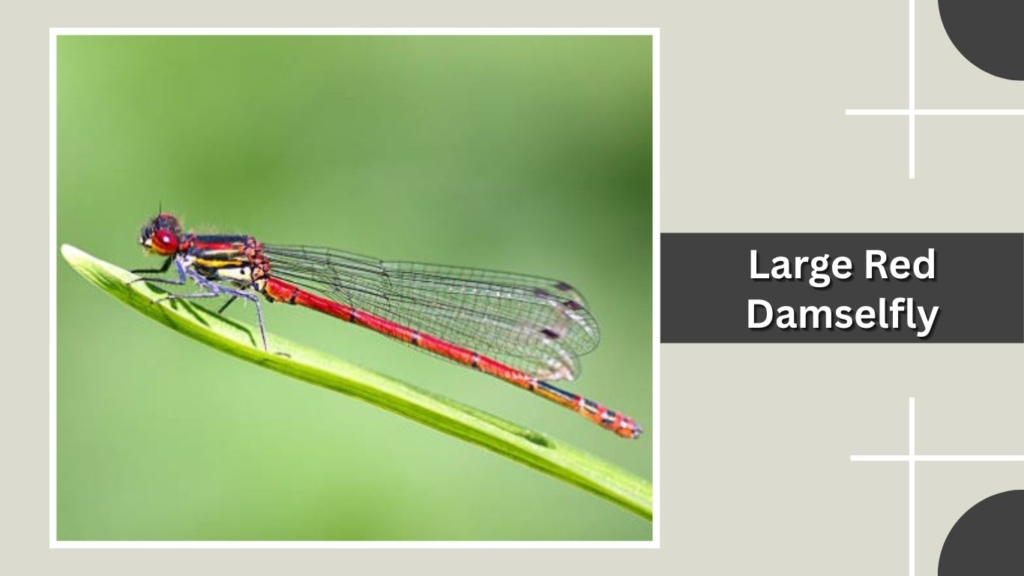
The Large Red Damselfly is one of the earliest damselflies to appear each year and is instantly recognizable by its bright red coloration. Its vivid color and early emergence make it a standout species near freshwater habitats in spring.
Identification
- Bright red abdomen with minimal black markings
- Thorax also shows red tones
- Clear wings held together when at rest
- Females display paler, brownish-red coloration
Habitat
This species is commonly found around ponds, lakes, marshes, and slow-moving streams. It prefers shallow waters with plenty of aquatic vegetation for breeding.
Behavior
Large Red Damselflies are relatively calm and often perch openly on low plants near water. They are less aggressive than many blue damselfly species and are active mainly during warm daylight hours.
Life Cycle
Eggs are laid in aquatic plants, and larvae develop underwater through several stages. Adults emerge early in the season, often before other damselfly species, and live for a short period.
10. White-legged Damselfly
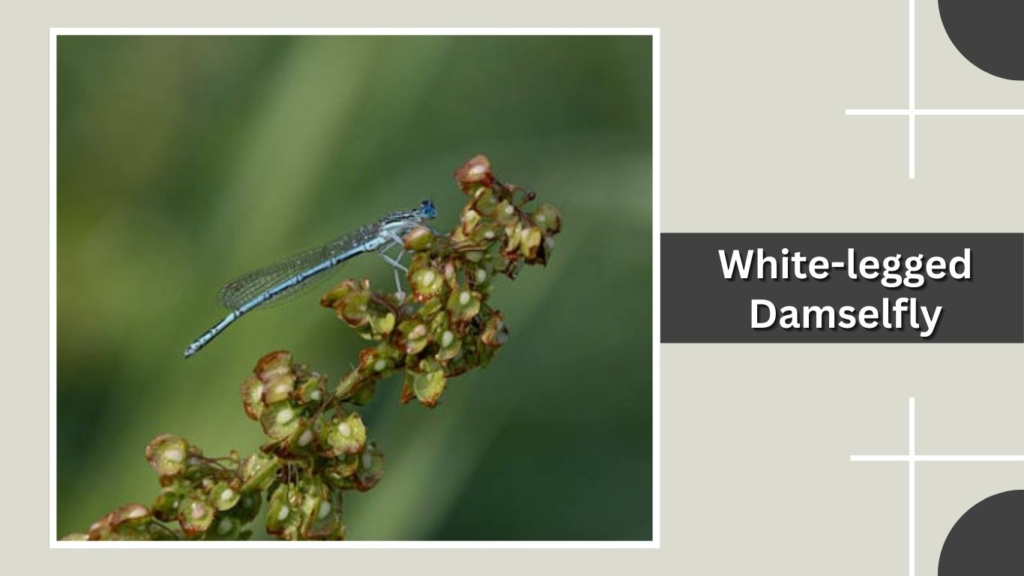
The White-legged Damselfly is a graceful and easily recognized species, named for the pale coloration of its legs. It is closely associated with flowing water and is often seen resting along shaded riverbanks during summer.
Identification
- Pale, whitish legs that contrast with the darker body
- Metallic blue or green body in males
- Females show greenish or brown tones
- Broad, clear wings held together at rest
Habitat
This damselfly prefers clean, fast- or slow-flowing rivers and streams. It is rarely found away from running water and favors areas with overhanging vegetation and shaded banks.
Behavior
White-legged Damselflies are strong fliers but often perch quietly on leaves and stems near water. Males may defend short stretches of river, while females stay more concealed in surrounding vegetation.
Life Cycle
Larvae live among submerged plants and debris in flowing water, where they develop over several months. Adults emerge in late spring or early summer and are active throughout the warmer months.
11. Willow Emerald Damselfly
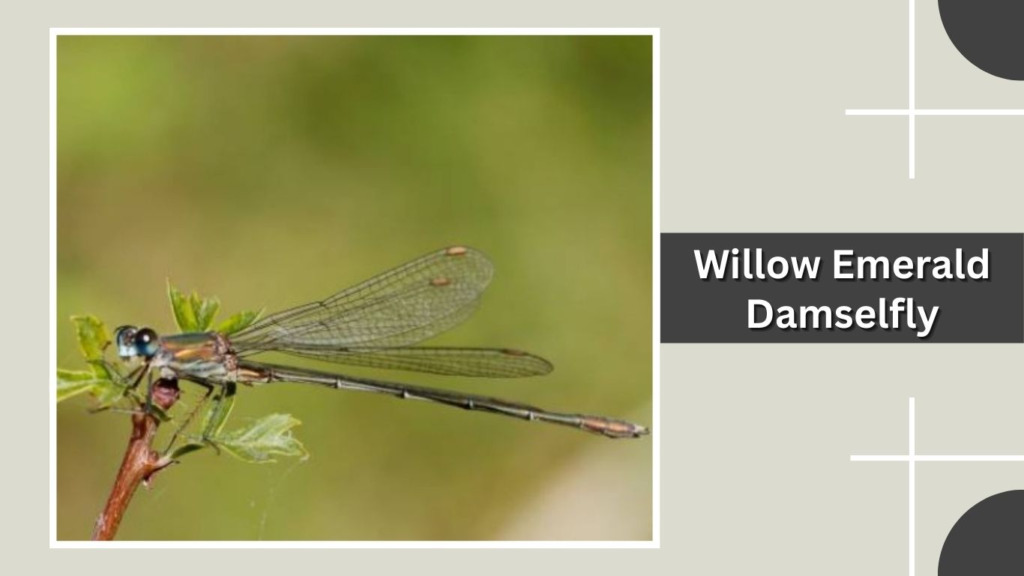
The Willow Emerald Damselfly is a distinctive species with a metallic green body and an unusual lifestyle compared to most damselflies. Unlike many others, it often spends time away from water, making it an interesting and unique species to observe.
Identification
- Shiny metallic green body with bronze reflections
- Slender abdomen with a subtle gloss
- Clear wings with slightly tinted veins
- Females appear bulkier with duller coloration
Habitat
This species is commonly found near ponds, lakes, and slow-moving waters but frequently rests in nearby trees and shrubs, especially willow and alder. It can be seen well away from water outside the breeding season.
Behavior
Willow Emerald Damselflies are less water-dependent than most damselflies. They perch high on leaves and branches and are more secretive, often flying only short distances when disturbed.
Life Cycle
Eggs are laid in tree bark rather than aquatic plants, where they overwinter. Larvae drop into the water after hatching and develop underwater before emerging as adults in summer.
12. Beautiful Demoiselle
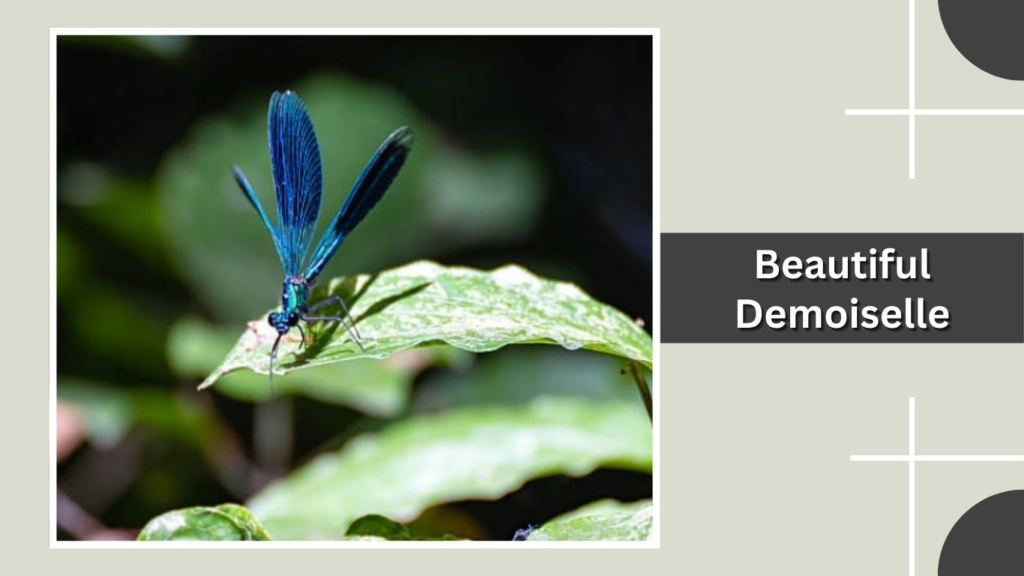
The Beautiful Demoiselle is one of the most striking damselflies, admired for its deep blue body and fully dark wings. Its slow, fluttering flight and bold appearance make it easy to distinguish from other species, especially along rivers and streams.
Identification
- Metallic deep-blue body in males
- Completely dark, broad wings
- Females have greenish bodies with translucent wings
- Larger and broader wings than typical damselflies
Habitat
This species is closely tied to clean, fast-flowing rivers and streams. It prefers areas with rich bankside vegetation, which provides both shelter and breeding sites.
Behavior
Beautiful Demoiselles are territorial and often seen displaying their wings along riverbanks. Their butterfly-like flight pattern makes them highly visible as they patrol their chosen stretches of water.
Life Cycle
Larvae develop underwater among aquatic plants and debris, where they may remain for more than a year. Adults emerge in late spring and are active throughout the summer months.
13. Dainty Damselfly
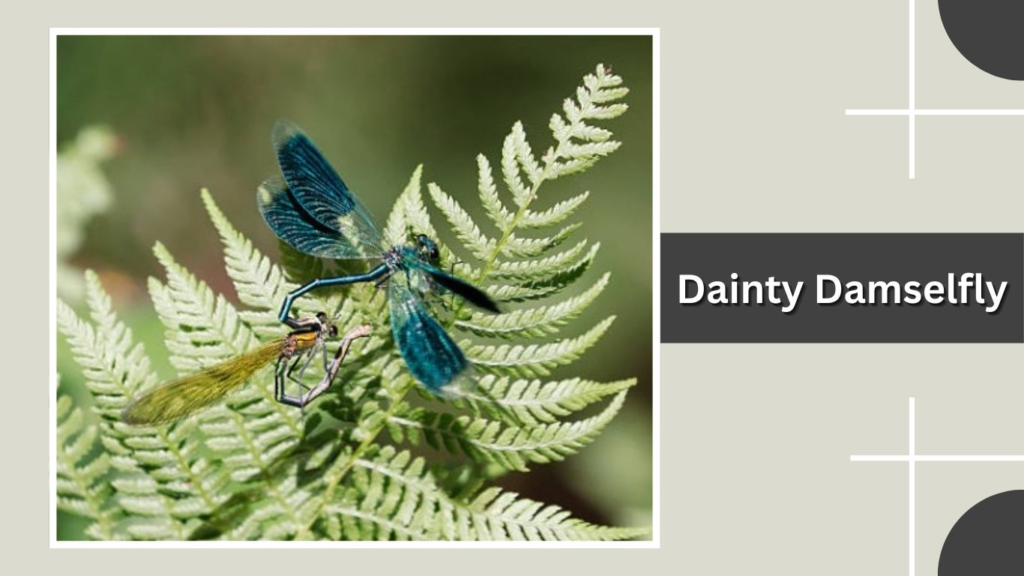
The Dainty Damselfly is one of the smallest damselfly species and is known for its fragile appearance and subtle coloring. Due to its tiny size and limited distribution, it can easily be overlooked despite its delicate beauty.
Identification
- Very small and slender body
- Pale blue markings mixed with black
- Short, narrow wings compared to other species
- Females often appear duller and more brownish
Habitat
This species prefers shallow, warm, and often temporary freshwater habitats such as ponds, marshes, and seasonal pools. It favors areas with sparse vegetation and muddy substrates.
Behavior
Dainty Damselflies are weak fliers and tend to stay close to low vegetation near water. They are quiet and unobtrusive, often resting for long periods between short flights.
Life Cycle
The larvae develop rapidly in warm water, allowing the species to exploit temporary habitats. Adults have a short flight season and focus quickly on feeding and reproduction.
14. Desert Firetail
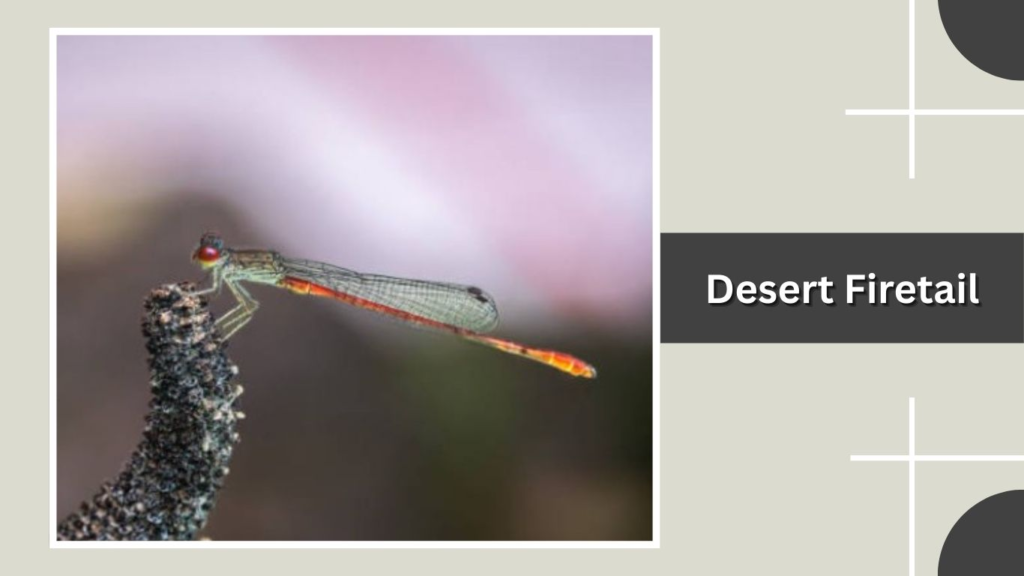
The Desert Firetail is a vividly colored damselfly adapted to hot and dry environments. Its bright red tail and compact body make it stand out in arid landscapes where freshwater habitats are limited but crucial for survival.
Identification
- Bright red or orange-red tail segment
- Darker thorax with contrasting markings
- Slender body with clear wings
- Females show paler, less intense colors
Habitat
This species inhabits desert and semi-arid regions, staying close to springs, oases, and slow-flowing streams. It relies heavily on these isolated water sources for breeding.
Behavior
Desert Firetails are fast and agile fliers, often active during the hottest parts of the day. They frequently perch on rocks or low vegetation near water to regulate body temperature.
Life Cycle
Eggs are laid in aquatic vegetation, and larvae develop quickly due to warm water temperatures. Adults emerge rapidly and complete their life cycle within a short seasonal window.
15. American Rubyspot
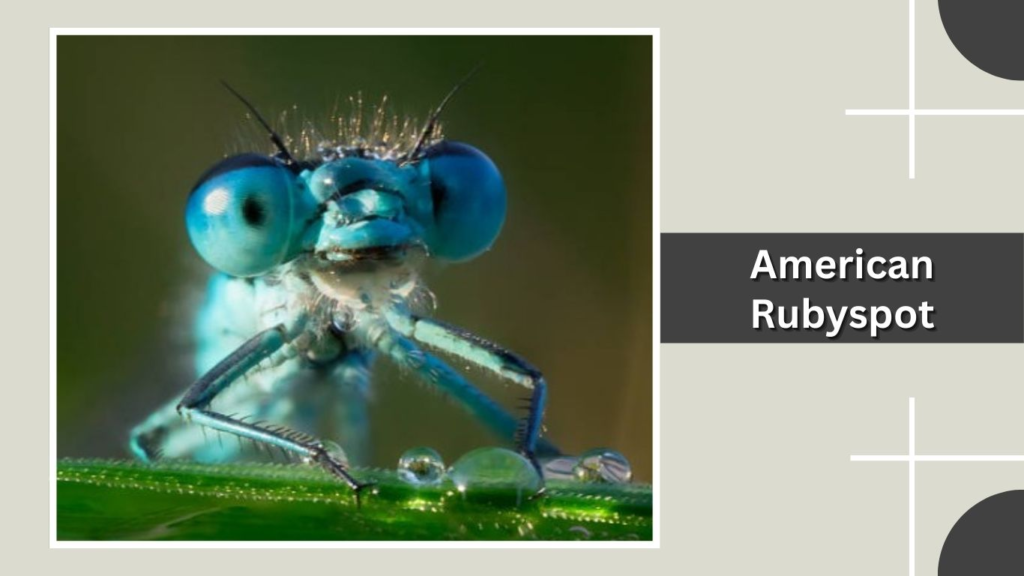
The American Rubyspot is a visually striking damselfly best known for its deep red wing patches and metallic body. It is commonly found along streams and rivers, where its bold coloration makes it one of the easiest damselflies to recognize in its range.
Identification
- Metallic green or bluish body
- Bright ruby-red patches at the base of the wings (males)
- Clear wing tips beyond the colored areas
- Females show paler or brownish wing markings
Habitat
This species is closely associated with clean, flowing freshwater such as streams and rivers. It prefers rocky or sandy shorelines with nearby vegetation for resting and breeding.
Behavior
American Rubyspots are active during sunny conditions and often perch on rocks or streamside plants. Males are territorial and frequently display their colorful wings to ward off rivals.
Life Cycle
Larvae develop underwater among stones and debris in flowing water. After emerging, adults spend their short lifespan feeding on small insects, mating, and laying eggs along stream margins.
FAQs
What is the main difference between damselflies and dragonflies?
Damselflies have slimmer bodies, equal-sized wings, and usually rest with their wings folded together above their bodies, while dragonflies are bulkier and rest with wings spread open.
Where are damselflies commonly found?
Damselflies are most commonly found near freshwater habitats such as ponds, lakes, rivers, streams, marshes, and canals where they breed and hunt.
Are damselflies harmful to humans?
No, damselflies are harmless to humans. They do not sting and rarely bite, and even if they do, it is not dangerous or painful.
What do damselflies eat?
Damselflies feed mainly on small flying insects such as mosquitoes, flies, and gnats, making them beneficial for natural insect control.
How long do damselflies live?
Most of a damselfly’s life is spent in the larval stage underwater, which can last several months to over a year, while the adult stage usually lasts only a few weeks.
