
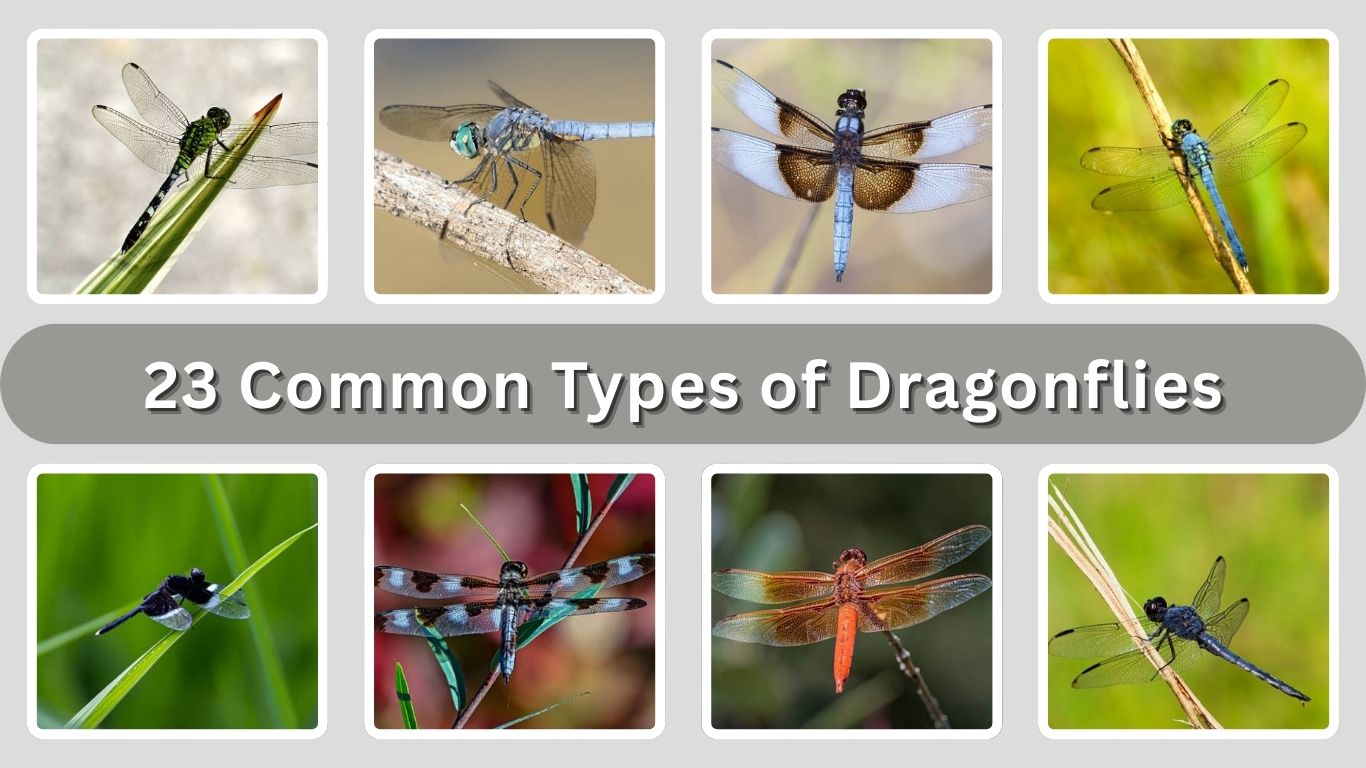
Dragonflies are among the most ancient and fascinating insects on Earth, admired for their brilliant colors, aerial agility, and important role in freshwater ecosystems. Found near ponds, lakes, rivers, and wetlands, these insects are skilled predators that help control mosquito and insect populations. From bold migratory species to small, perch-loving hunters, dragonflies vary widely in size, behavior, and appearance. Below is a carefully selected list of 23 common types of dragonflies, each briefly described to help you recognize and understand them more easily.
1. Common Green Darner
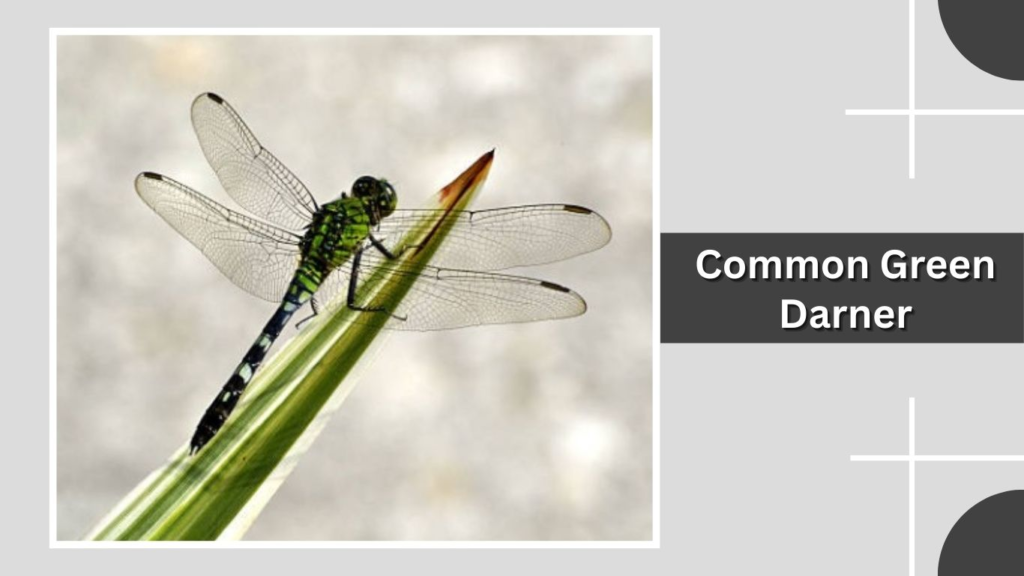
The Common Green Darner is one of the most widespread and recognizable dragonflies in the world. Known for its large size, strong flight, and seasonal migrations, this species is often seen patrolling ponds, lakes, and wetlands. Its bright green thorax and long abdomen make it easy to spot, even for beginners.
Identification
- Large dragonfly with a long, slender body
- Bright green thorax with a contrasting blue or brown abdomen
- Clear wings with strong, steady flight
- Males usually have a blue abdomen; females are more brownish
Habitat and Range
The Common Green Darner is found near freshwater habitats such as ponds, lakes, marshes, and slow-moving rivers. It has an extremely wide range, occurring across North America and extending into parts of Central America and the Caribbean.
Behavior
This species is a powerful flier and is famous for long-distance migration, sometimes traveling hundreds of miles. It is often seen flying continuously over water, rarely perching, as it hunts insects mid-air.
Life Cycle
Common Green Darners have an aquatic nymph stage that can last several months. Depending on climate, they may produce multiple generations per year, with some individuals emerging early in the season and others migrating south to breed later.
2. Blue Dasher
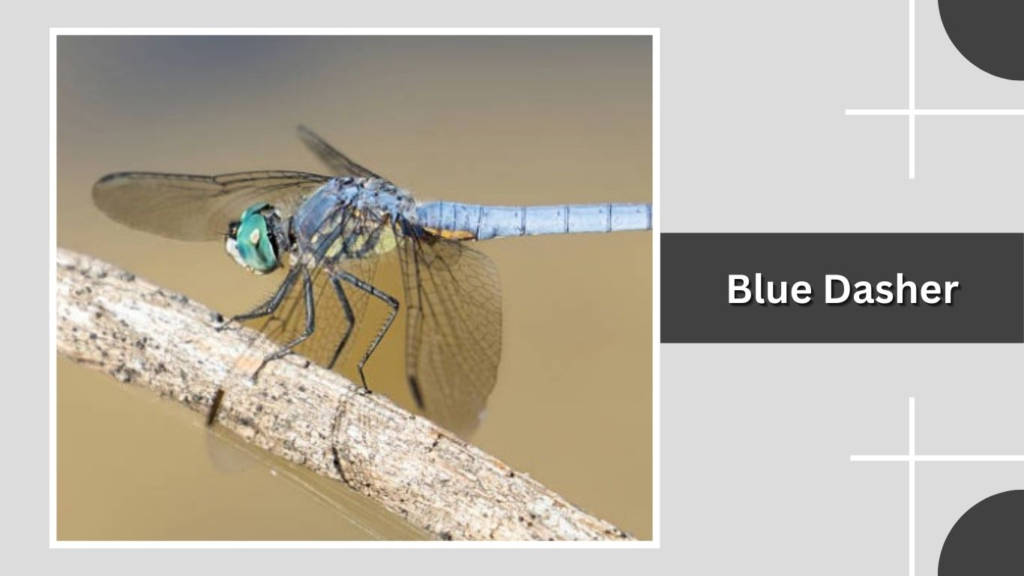
The Blue Dasher is a small but striking dragonfly commonly found around ponds and still waters. Its bright coloration and frequent perching make it one of the easiest species to observe, especially during warm summer months.
Identification
- Small dragonfly with a stout body
- Powdery blue abdomen in adult males
- Yellow-and-black striped thorax
- Clear wings often held flat while perching
Habitat and Range
Blue Dashers are widely distributed across North America. They prefer sunny ponds, lakes, marshes, and slow-moving streams with abundant vegetation.
Behavior
This species is known for its habit of perching openly on rocks, sticks, or vegetation. It makes short, quick flights to catch prey before returning to the same perch.
Life Cycle
The aquatic nymphs develop in shallow freshwater habitats. Adults typically emerge in late spring and are most active throughout summer.
3. Widow Skimmer
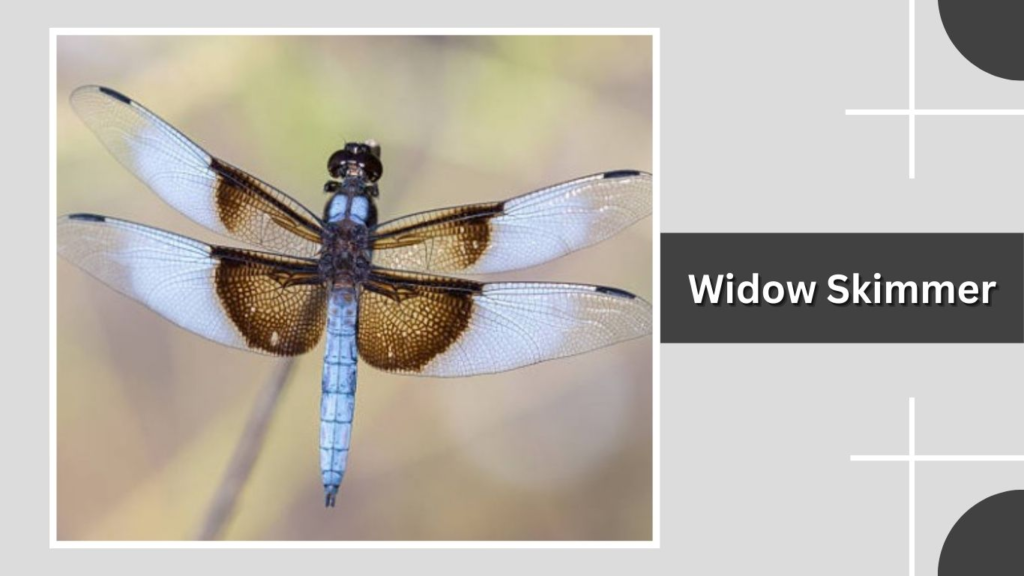
The Widow Skimmer is a medium-sized dragonfly best known for the dark patches on its wings. It is commonly seen gliding gracefully over open water or resting along pond edges.
Identification
- Medium-sized dragonfly with broad wings
- Dark brown or black wing patches near the base
- Adult males have a pale blue abdomen
- Females and juveniles are yellowish-brown
Habitat and Range
Widow Skimmers are found throughout much of North America, especially around ponds, lakes, wetlands, and calm rivers with open shorelines.
Behavior
They are strong, smooth fliers and often patrol low over water. Males are territorial and may chase away other dragonflies from their preferred areas.
Life Cycle
Larvae live underwater among vegetation and debris. Adults usually appear from late spring through early fall, depending on local climate.
4. Eastern Pondhawk
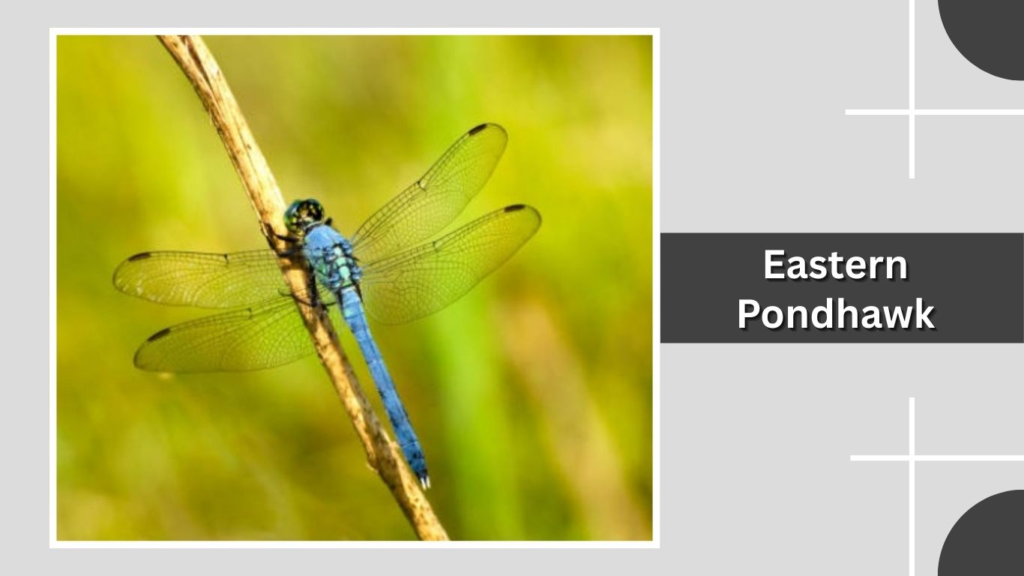
The Eastern Pondhawk is a bold, stocky dragonfly that is especially familiar around ponds and wetlands in eastern North America. Its changing coloration between males and females often causes confusion for beginners, but this same trait makes it particularly interesting to observe. It is an aggressive hunter and one of the dominant dragonflies in its habitat.
Identification
- Stocky, medium-sized dragonfly
- Adult males are bright powdery blue
- Females and juveniles are vivid green
- Dark-tipped abdomen and clear wings
Habitat and Range
Eastern Pondhawks are commonly found around ponds, lakes, marshes, and slow-moving streams. They prefer warm, sunny areas with floating or emergent vegetation. Their range extends across most of eastern and central North America, from southern Canada down into parts of Central America.
Behavior
This species is highly territorial and often seen chasing away other dragonflies, butterflies, and even birds that wander too close. Eastern Pondhawks frequently perch on lily pads, reeds, or low branches, making short, fast flights to capture prey. They are strong fliers but rely heavily on ambush-style hunting.
Life Cycle
The aquatic nymph stage occurs among submerged plants and muddy bottoms. Eastern Pondhawks have a relatively fast development cycle, allowing multiple generations in warmer regions. Adults are typically active from late spring through early fall.
5. Black Saddlebags
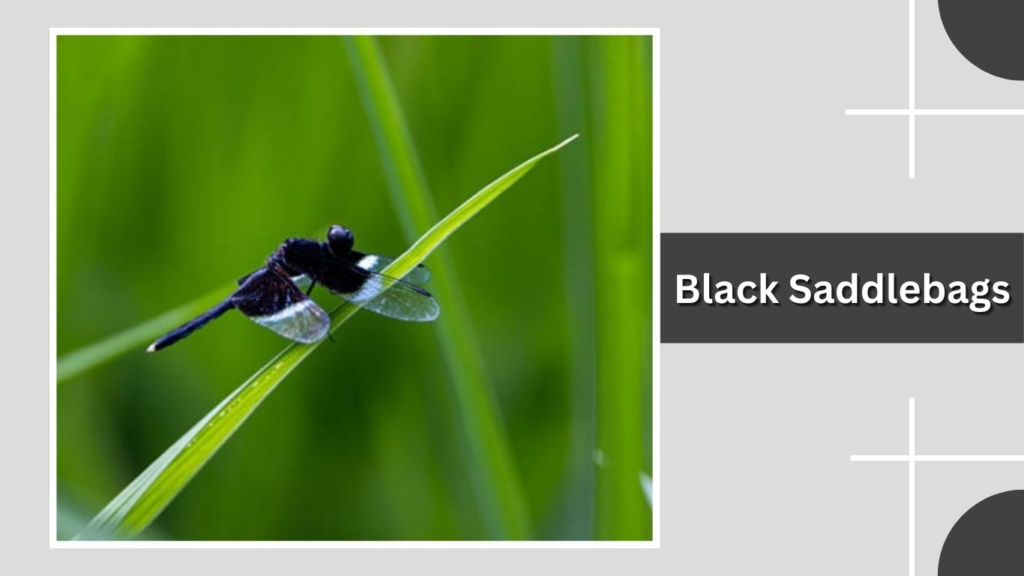
The Black Saddlebags is a large, distinctive dragonfly best known for the dark patches on its hindwings that resemble saddlebags. It is a powerful flier and one of the species most often seen traveling long distances over open water, fields, and shorelines.
Identification
- Large dragonfly with long, narrow abdomen
- Prominent black patches on the hindwings
- Reddish-brown body with dark markings
- Clear forewings and broad hindwings
Habitat and Range
Black Saddlebags are found throughout much of North America, extending into Central and South America. They are commonly seen around ponds, lakes, marshes, coastal areas, and even far from water during migration. This species tolerates a wide range of freshwater environments.
Behavior
Unlike many dragonflies, Black Saddlebags are often seen flying continuously, sometimes in loose groups. They are strong migrants and may travel hundreds of miles. When they do perch, it is usually high on branches or reeds. They feed on flying insects while on the wing and rarely sit still for long.
Life Cycle
Larvae develop in still or slow-moving freshwater habitats, often buried in sediment. Adults typically emerge in late spring and are most noticeable during mid to late summer. In warmer regions, they may remain active well into autumn.
6. Twelve-spotted Skimmer
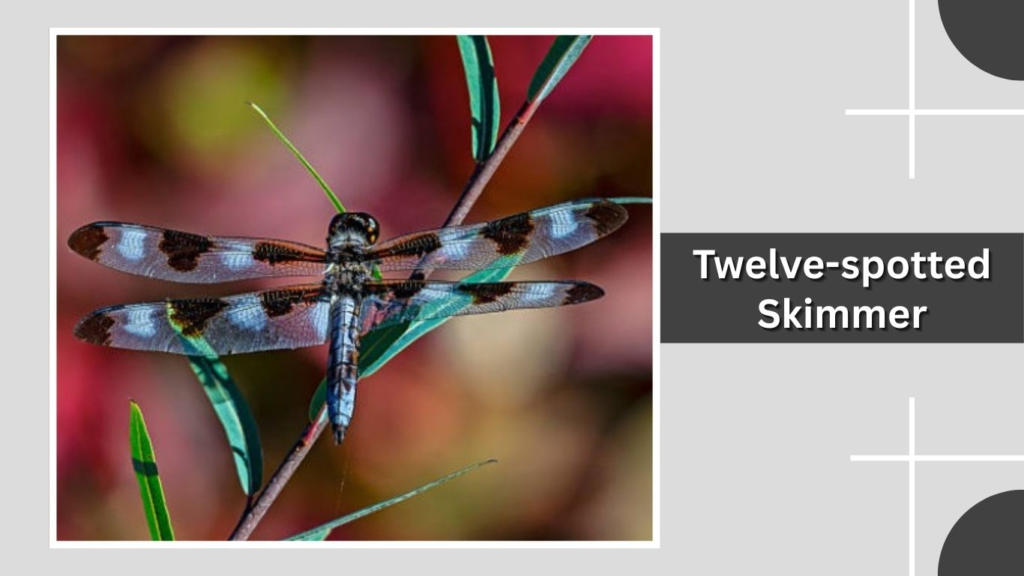
The Twelve-spotted Skimmer is a large, eye-catching dragonfly that stands out due to its bold wing markings. It is often one of the most noticeable species around ponds and lakes, where its slow, confident flight and frequent perching make it easy to observe. This species is a favorite among dragonfly watchers because of its size, visibility, and distinctive appearance.
Identification
- Large dragonfly with broad wings
- Three dark patches on each wing
- Adult males have white, chalky patches between dark spots
- Females and juveniles lack the white wing patches
Habitat and Range
Twelve-spotted Skimmers are widespread across North America. They are most commonly found near ponds, lakes, marshes, and slow-moving rivers with open, sunny shorelines. They prefer habitats with nearby trees or shrubs that provide high perching spots.
Behavior
This species is known for its relaxed but dominant behavior. Males often perch prominently on exposed branches or reeds, surveying their territory. They make short patrol flights over water and will chase away intruding dragonflies. Their flight is steady rather than fast, giving them a commanding presence in their environment.
Life Cycle
The aquatic larvae live among submerged vegetation and debris. Development may take one to two years depending on climate. Adults usually appear from early summer through early fall and can live several weeks once fully mature.
7. Flame Skimmer
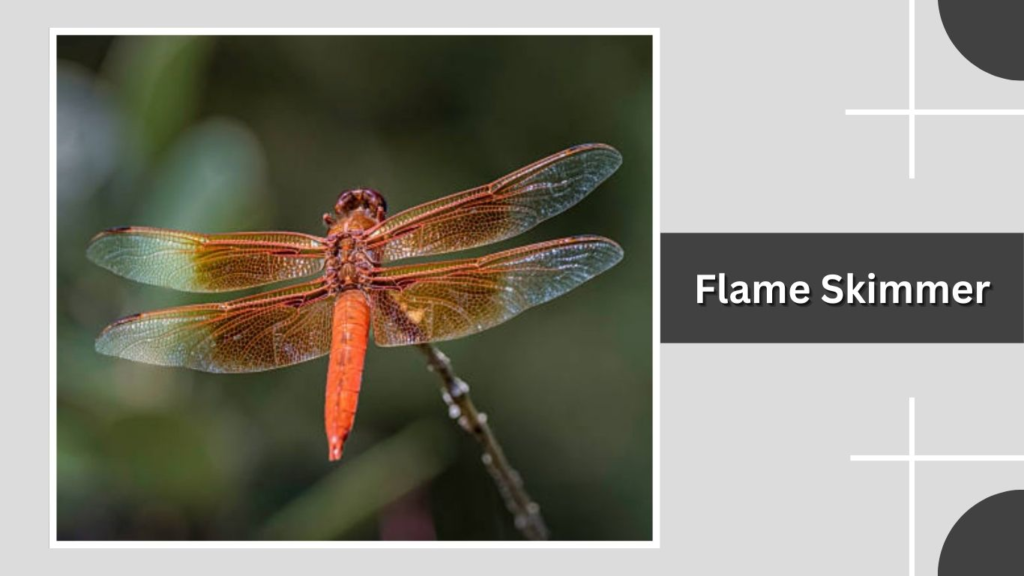
The Flame Skimmer is one of the most visually striking dragonflies in North America, instantly recognizable by the intense red coloration of adult males. This species thrives in warm climates and is often associated with sun-drenched ponds and desert wetlands. Its vivid color and active behavior make it impossible to overlook.
Identification
- Medium-sized dragonfly with slender body
- Adult males are bright red from head to tail
- Females are golden-brown with darker markings
- Clear wings with reddish veins
Habitat and Range
Flame Skimmers are primarily found in the southwestern United States, Mexico, and parts of Central America. They favor warm, shallow ponds, lakes, irrigation canals, and slow streams, often in arid or semi-arid regions where water sources are limited but permanent.
Behavior
This species is highly active and aggressive when defending territory. Males are often seen darting rapidly over water, chasing rivals and insects alike. They perch frequently but briefly, rarely staying in one place for long. Their flight is fast, agile, and direct.
Life Cycle
Larvae develop quickly in warm waters, allowing the Flame Skimmer to produce multiple generations per year in favorable conditions. Adults are most abundant from late spring through early autumn, with peak activity during the hottest months.
8. Slaty Skimmer
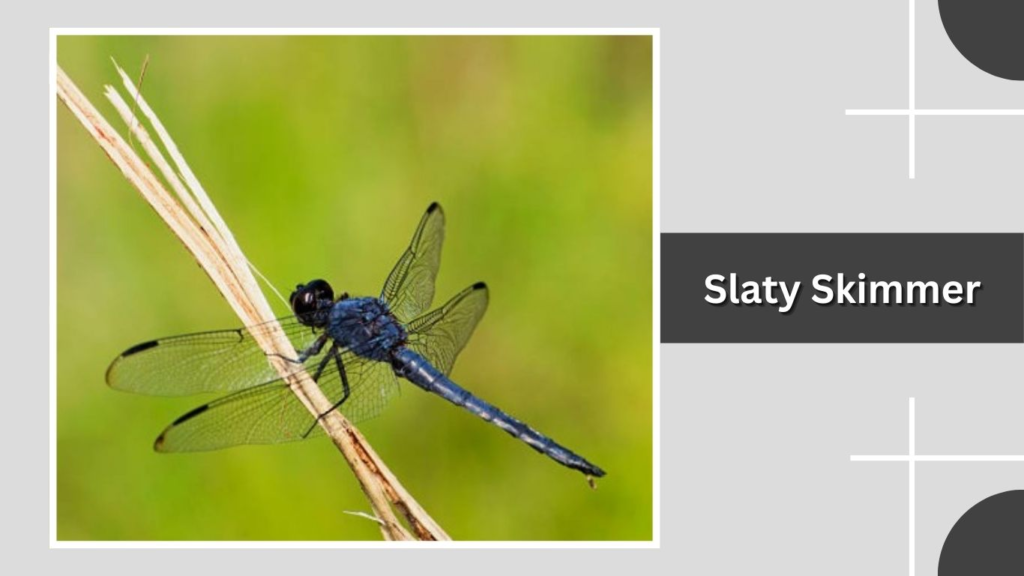
The Slaty Skimmer is a sleek, dark-colored dragonfly that often goes unnoticed at first glance but becomes striking once observed closely. Its deep blue to black coloration and glossy appearance give it a refined look, and it is a common sight around ponds and calm waterways during summer.
Identification
- Medium-sized dragonfly with slender body
- Adult males appear dark blue to black
- Females are brown with yellow side markings
- Clear wings with a slight amber tint near the base
Habitat and Range
Slaty Skimmers are widely distributed across North America, particularly in the eastern and central regions. They are most often found near ponds, lakes, marshes, and slow-flowing rivers with open banks and nearby vegetation for perching.
Behavior
This species is territorial and frequently seen patrolling the edges of water bodies. Males perch on rocks, branches, or reeds close to the water, launching short flights to capture prey or drive away rivals. Their flight is smooth and controlled rather than rapid.
Life Cycle
Larvae live underwater among plants and soft sediments. Development time varies with climate, but adults typically emerge in early summer and remain active through late summer.
9. Roseate Skimmer
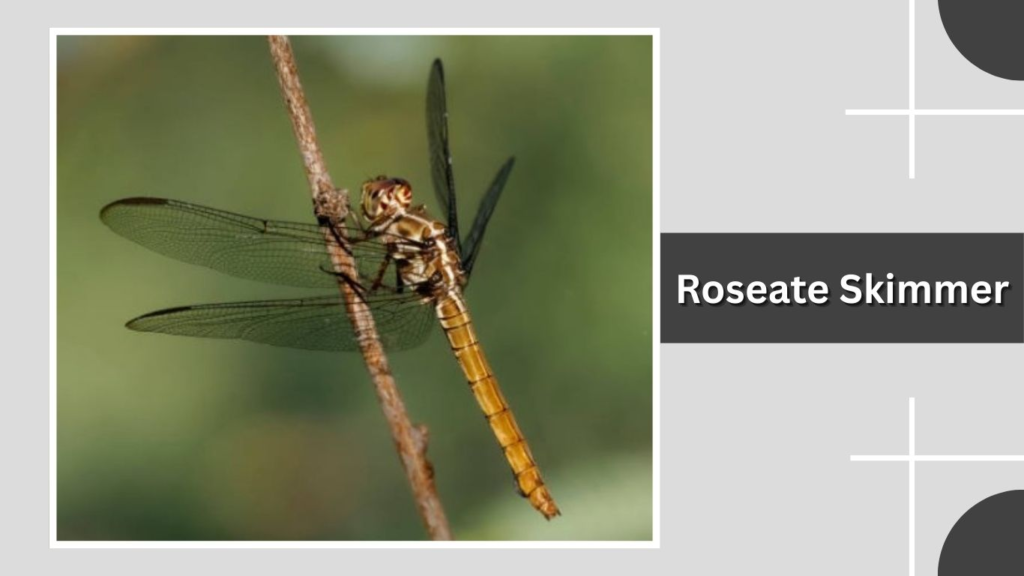
The Roseate Skimmer is a delicate-looking yet resilient dragonfly known for its soft pink to rosy-purple coloration. It is more common in warmer regions and is often associated with open, sunlit ponds where its pastel tones stand out beautifully against the water.
Identification
- Medium-sized dragonfly with slim body
- Adult males show pinkish or rose-purple abdomen
- Females are brownish with subtle pink tones
- Clear wings with light amber shading
Habitat and Range
Roseate Skimmers are primarily found in the southern United States, the Caribbean, and parts of Central and South America. They prefer ponds, lakes, wetlands, and slow-moving waterways with abundant sunlight and sparse tree cover.
Behavior
This species is an active flier and spends much of its time patrolling over open water. It perches frequently on low vegetation or floating debris. Males defend small territories and engage in short aerial chases with rivals.
Life Cycle
The aquatic nymphs develop in warm, still waters. In tropical and subtropical regions, breeding can occur year-round, while in cooler areas adults are mainly seen from late spring through early fall.
10. Wandering Glider
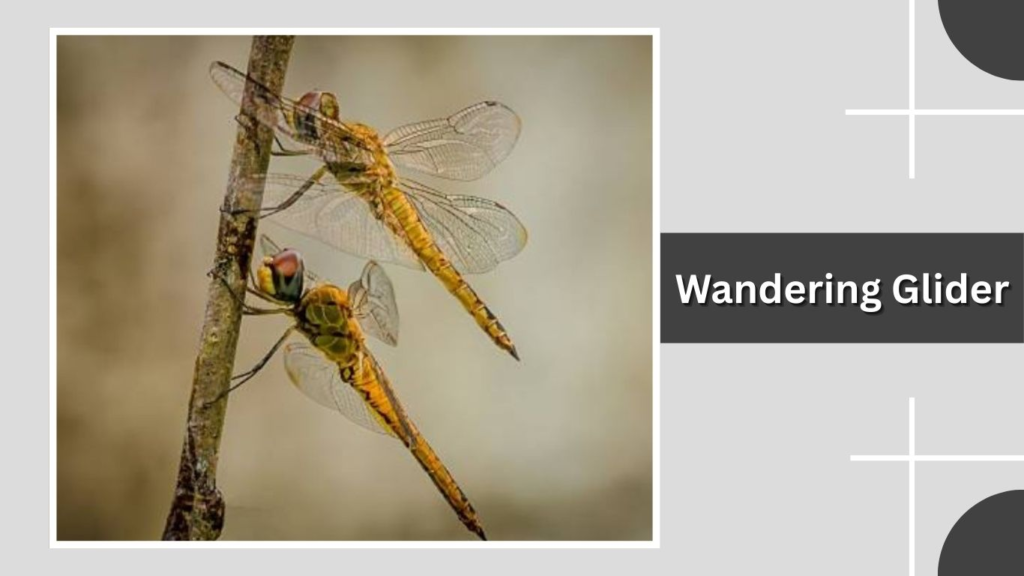
The Wandering Glider is a highly mobile and resilient dragonfly famous for its ability to travel vast distances. It is often seen far from water, gliding effortlessly over fields, coastlines, and open landscapes. This species is considered one of the most widespread dragonflies in the world due to its exceptional migratory behavior.
Identification
- Medium-sized dragonfly with long, slender abdomen
- Reddish-brown to orange body coloration
- Clear wings with broad shape and dark wing veins
- Large eyes that meet at the top of the head
Habitat and Range
Wandering Gliders are found on every continent except Antarctica. They breed in temporary or permanent freshwater habitats such as ponds, lakes, puddles, and rain-filled depressions. Their ability to use even short-lived water sources allows them to thrive in diverse environments.
Behavior
This species spends much of its life in flight, often gliding smoothly for long periods. It feeds on small flying insects while airborne and is rarely seen perched. Wandering Gliders are known to form loose swarms during migration and may cross oceans and deserts.
Life Cycle
The larvae develop rapidly, sometimes completing development in just a few weeks. This fast life cycle enables the species to take advantage of temporary water bodies. Adults can be seen year-round in tropical regions and seasonally in temperate zones.
11. Halloween Pennant
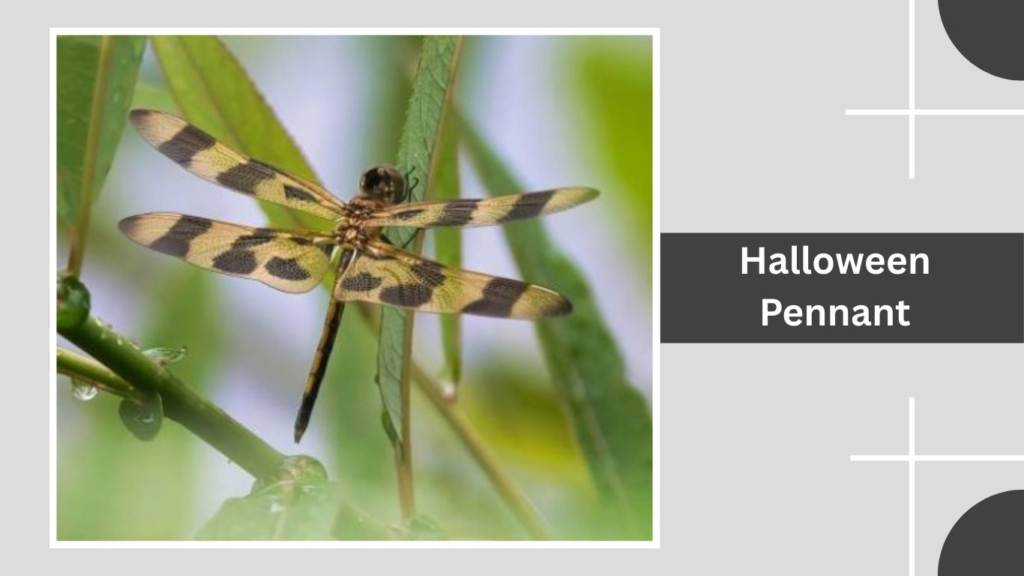
The Halloween Pennant is a small, colorful dragonfly named for its orange wings marked with dark spots, giving it a festive appearance. Its habit of perching conspicuously on tall stems makes it easy to identify and observe.
Identification
- Small dragonfly with slim body
- Bright orange wings with black spots
- Dark abdomen with reddish tones
- Wings often held open while perching
Habitat and Range
Halloween Pennants are commonly found in eastern and central North America. They prefer ponds, lakes, marshes, and slow-moving waters with tall grasses or reeds that provide ideal perching sites.
Behavior
This species is known for its pennant-like posture, hanging from the tips of grasses or twigs as the wind moves it gently. It makes short flights to catch prey and quickly returns to the same perch. Males are territorial but not overly aggressive.
Life Cycle
Larvae live in shallow freshwater habitats with abundant vegetation. Adults usually emerge in early summer and remain active through late summer and early fall.
12. Cardinal Meadowhawk
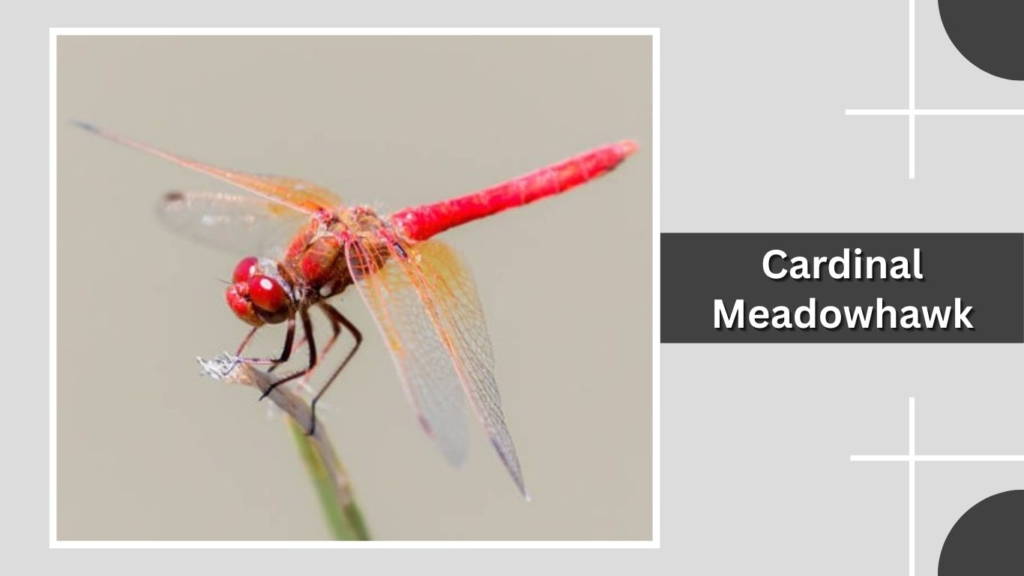
The Cardinal Meadowhawk is a brilliant red dragonfly that brings a flash of color to ponds and wetlands. Despite its small size, it is energetic and highly active, often seen darting rapidly over open water or perching low along shorelines. Its vivid coloration makes it one of the easiest meadowhawks to recognize.
Identification
- Small to medium-sized dragonfly
- Bright red abdomen and thorax in adult males
- Females are yellowish-brown with red markings
- Clear wings with reddish veins
Habitat and Range
Cardinal Meadowhawks are found throughout much of North America, especially in the eastern and central regions. They favor ponds, marshes, lakes, and slow-moving streams with grassy or muddy edges and plenty of sunlight.
Behavior
This species is an alert and agile flier. Males patrol small territories close to the water and frequently return to the same perch. They are tolerant of human presence and often remain visible even in busy wetland areas.
Life Cycle
Larvae develop in shallow freshwater habitats, often among vegetation and leaf litter. Adults typically emerge in late spring and remain active through early autumn, with peak numbers in mid-summer.
13. Variegated Meadowhawk
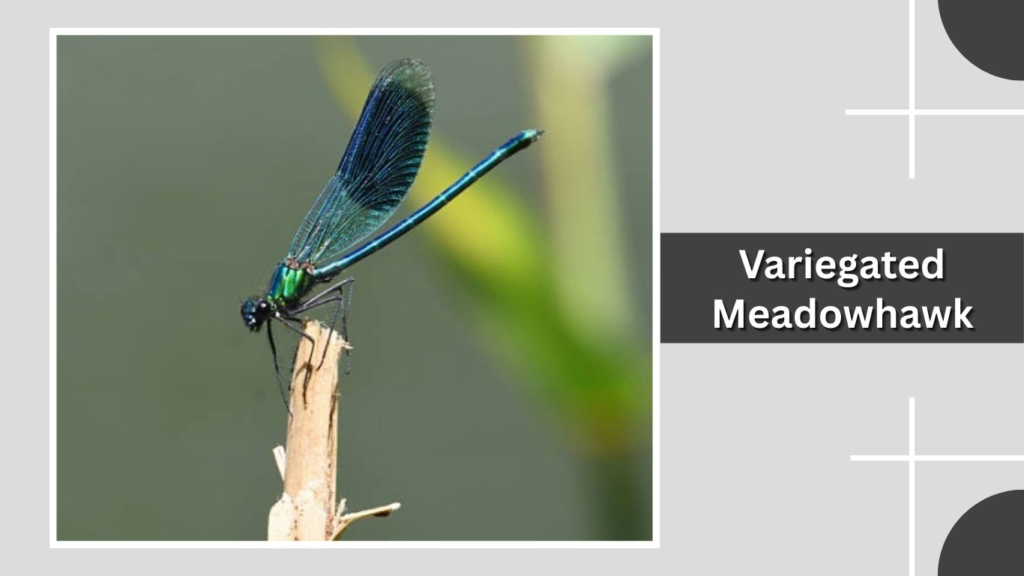
The Variegated Meadowhawk is a compact and boldly patterned dragonfly known for its striking red-and-black coloration. It is one of the more distinctive meadowhawks and is often found in cooler climates and higher elevations compared to related species.
Identification
- Small dragonfly with stout body
- Red abdomen with black banding
- Dark thorax with pale side stripes
- Clear wings with slight amber tint
Habitat and Range
Variegated Meadowhawks are widespread across North America, particularly in northern regions. They are commonly found near ponds, bogs, marshes, and slow streams, often in areas with cooler temperatures.
Behavior
This species is an active hunter and often perches low on rocks or vegetation near water. It makes quick, direct flights to capture prey and returns to its perch. Variegated Meadowhawks are less territorial than many other dragonflies.
Life Cycle
The aquatic larvae develop in a variety of freshwater environments, including bogs and shallow ponds. Adults usually appear in mid-summer and can persist into early fall, especially in northern areas.
14. Spot-winged Glider
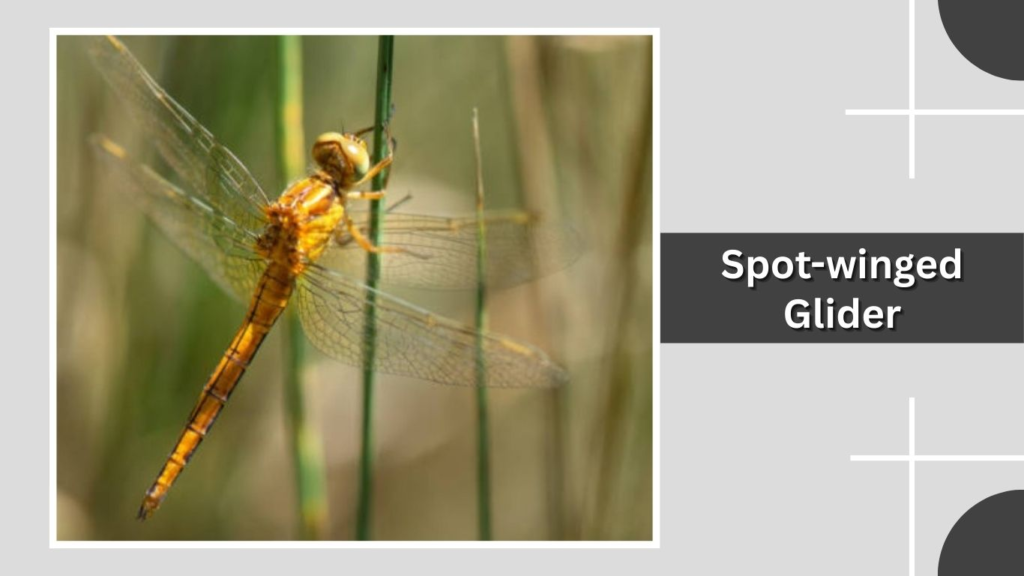
The Spot-winged Glider is a graceful, fast-flying dragonfly known for the distinct dark spots on its wings. It is often seen cruising high above ponds or open wetlands, where its long, gliding flight sets it apart from more perch-oriented species.
Identification
- Medium-sized dragonfly with slender body
- Dark spots near the tips of the wings
- Brownish to amber body coloration
- Long, narrow abdomen
Habitat and Range
Spot-winged Gliders are found across parts of North America, Central America, and the Caribbean. They prefer warm, open freshwater habitats such as ponds, marshes, lakes, and slow-moving rivers, especially in sunny, exposed areas.
Behavior
This species spends much of its time in continuous flight, gliding smoothly and rarely perching. It feeds on small flying insects caught mid-air and is often seen flying higher than many other dragonflies.
Life Cycle
Larvae develop in still or slow-moving freshwater. Development is relatively quick in warm climates, allowing adults to appear for extended periods throughout the year in southern regions.
15. Chalky Percher
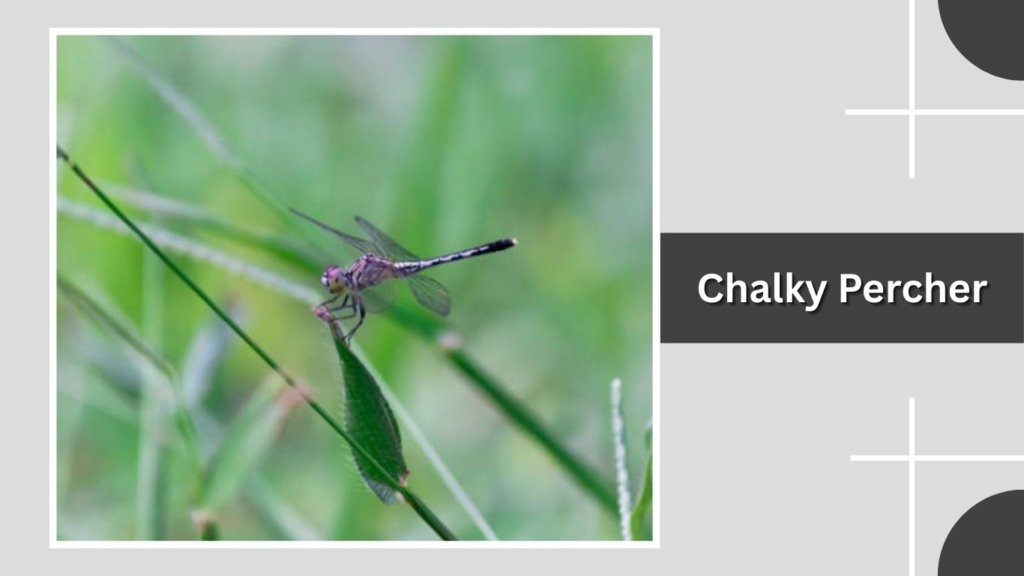
The Chalky Percher is a robust dragonfly best known for the pale, chalky blue coloration of mature males. Its habit of perching prominently near water makes it a familiar sight around ponds and wetlands, especially in warmer regions.
Identification
- Medium to large dragonfly with sturdy build
- Adult males have pale chalky blue abdomen
- Females and juveniles are brown with yellow markings
- Broad wings with dark veins
Habitat and Range
Chalky Perchers are widespread across the southern United States, Mexico, and parts of Central America. They inhabit ponds, lakes, marshes, and slow-moving rivers with open shorelines and abundant sunlight.
Behavior
This species is territorial and often seen perched on exposed branches, reeds, or rocks. Males defend their perches aggressively and make frequent short flights to chase intruders or capture prey.
Life Cycle
The aquatic larvae live among submerged vegetation and muddy substrates. Adults are typically active from late spring through early fall, with peak activity during the hottest months.
16. Four-spotted Chaser
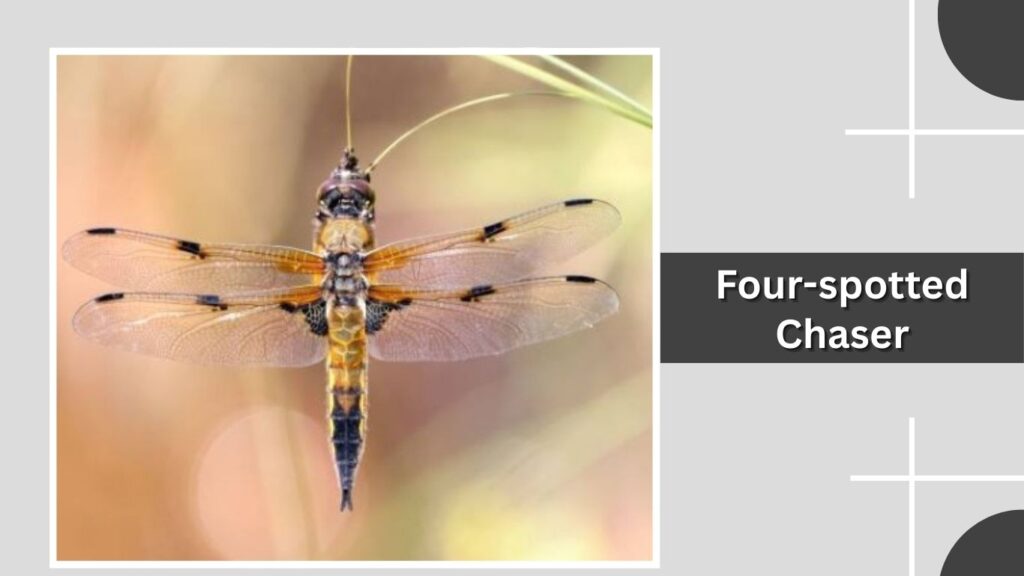
The Four-spotted Chaser is a sturdy, energetic dragonfly commonly seen patrolling freshwater habitats. It gets its name from the distinctive dark spots on each wing, which make it easy to identify in flight. This species is widespread and often among the earliest large dragonflies to appear in the season.
Identification
- Medium-sized, robust dragonfly
- Four dark spots, one on each wing
- Brown body with fine yellow markings
- Clear wings with noticeable amber shading near the base
Habitat and Range
Four-spotted Chasers are found across much of Europe, Asia, and parts of North America. They favor ponds, lakes, marshes, and slow-moving rivers with grassy or reedy margins. This species adapts well to both natural and man-made water bodies.
Behavior
This dragonfly is highly territorial and frequently seen chasing intruders from its chosen area. It alternates between energetic patrol flights and perching on tall vegetation or bare twigs. Its flight is strong and direct, often covering the same route repeatedly.
Life Cycle
Larvae develop in still or slow-flowing freshwater, usually among dense vegetation. The larval stage may last up to two years. Adults typically emerge in late spring and remain active through summer.
17. Emperor Dragonfly
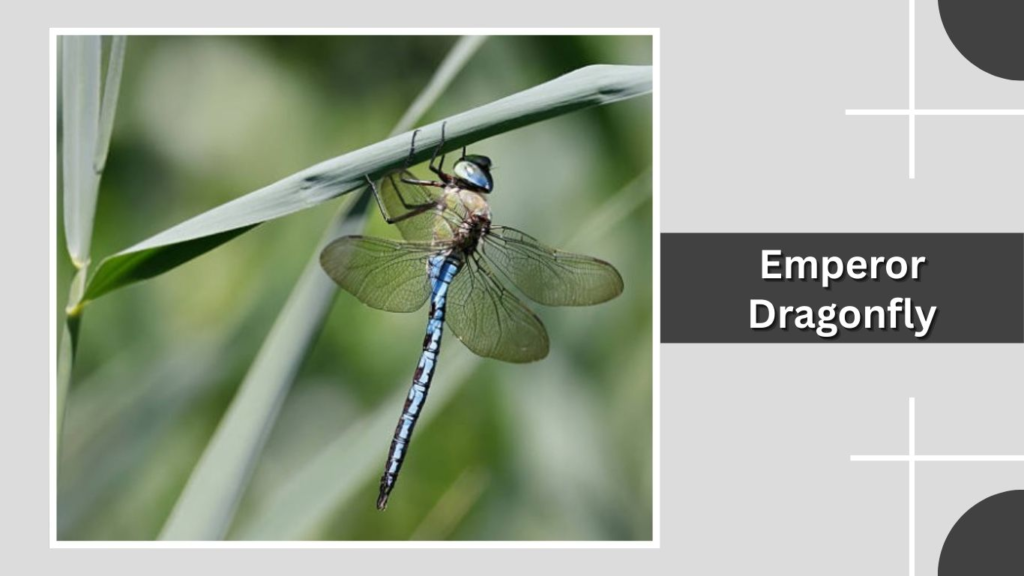
The Emperor Dragonfly is one of the largest and most impressive dragonflies in its range. With its powerful flight and striking coloration, it dominates the airspace around ponds and lakes. This species is well known for its bold behavior and constant patrolling over water.
Identification
- Very large dragonfly with long abdomen
- Bright green thorax and blue abdomen in males
- Females have a green and brown body
- Clear wings and extremely strong flight
Habitat and Range
Emperor Dragonflies are widespread across Europe, parts of Asia, and North Africa. They are most commonly found around large ponds, lakes, reservoirs, and slow-moving rivers with open water and minimal surface vegetation.
Behavior
This species is almost always on the move, flying continuously back and forth over water. Emperor Dragonflies rarely perch and can remain airborne for long periods. Males are highly territorial and will aggressively chase away other dragonflies, birds, or insects.
Life Cycle
Larvae live underwater for up to two years, preying on other aquatic insects and small animals. Adults usually emerge in late spring and are active throughout summer, with some individuals surviving into early autumn.
18. Broad-bodied Chaser
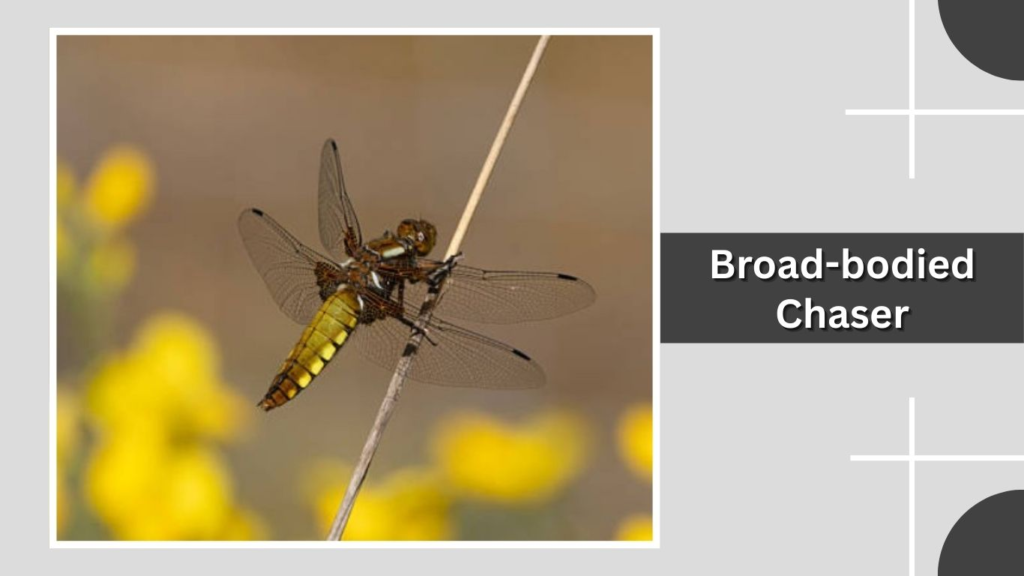
The Broad-bodied Chaser is a stocky, powerful dragonfly that is especially noticeable during the breeding season. Its broad abdomen and bold coloration give it a distinctive silhouette in flight, making it one of the most recognizable dragonflies around ponds and still waters.
Identification
- Medium to large dragonfly with very broad abdomen
- Adult males have a powdery blue body
- Females and juveniles are yellow-brown
- Dark brown patches at the base of the wings
Habitat and Range
Broad-bodied Chasers are widely distributed across Europe and parts of western Asia. They prefer still or slow-moving freshwater habitats such as ponds, lakes, canals, and marshes with sunny, open banks.
Behavior
This species is strongly territorial. Males often perch on reeds, branches, or floating vegetation, making sudden, aggressive flights to chase rivals. Their flight is fast and direct, but they perch frequently between patrols.
Life Cycle
Larvae develop in shallow freshwater environments, often among submerged plants. The larval stage may last one to two years. Adults typically emerge in late spring and are most abundant in early to mid-summer.
19. Migrant Hawker
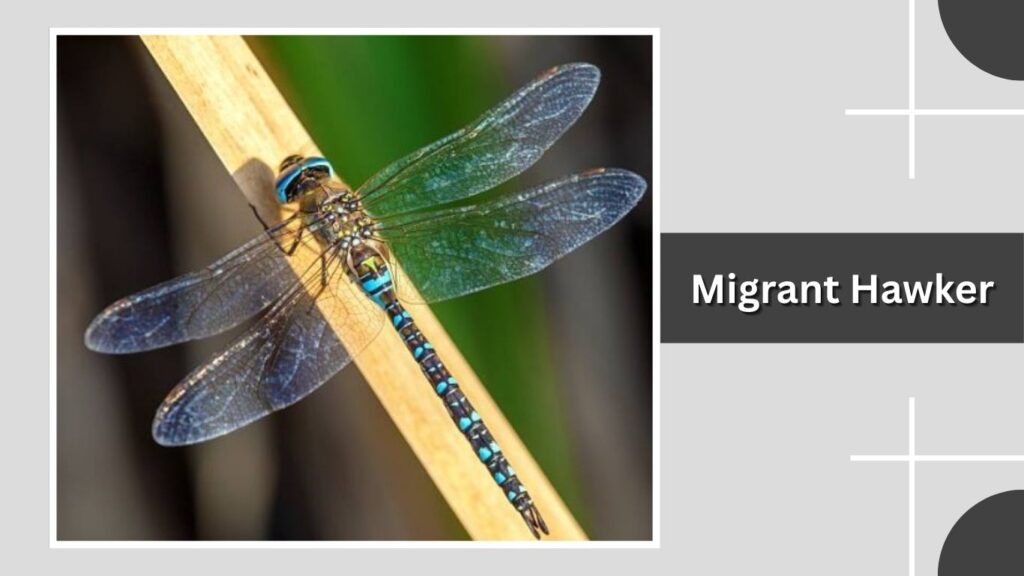
The Migrant Hawker is a large, fast-flying dragonfly known for its long-distance movements and endurance. It is often seen cruising along woodland edges, rivers, and coastlines, rarely stopping for long periods.
Identification
- Large dragonfly with long, slender abdomen
- Brown body with blue spots along the abdomen
- Clear wings held forward during flight
- Bright green eyes
Habitat and Range
Migrant Hawkers are found across Europe, Africa, and parts of Asia. They breed in ponds, lakes, marshes, and slow rivers, but can be encountered far from water during migration periods.
Behavior
This species is almost constantly in motion, patrolling large areas in search of prey. It is a strong migrant and may travel considerable distances. Perching is infrequent, as most hunting occurs on the wing.
Life Cycle
Larvae develop in freshwater habitats with vegetation and organic debris. Development may take up to two years. Adults typically appear in mid to late summer and can be seen into early autumn.
20. Southern Hawker
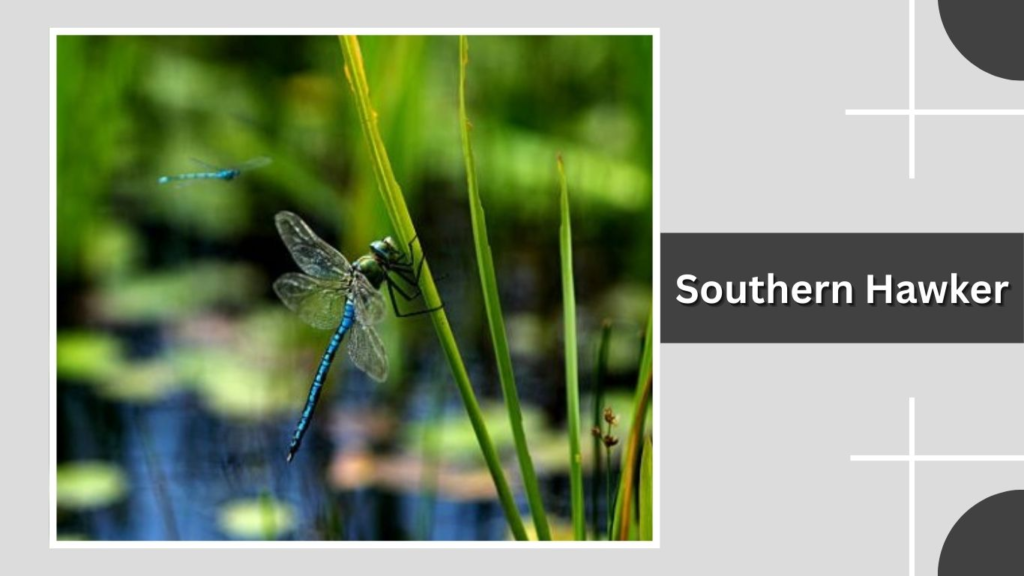
The Southern Hawker is a large, impressive dragonfly known for its vivid markings and strong, purposeful flight. It is often seen patrolling woodland ponds and lakes, weaving effortlessly between trees and reeds. Its size and bold colors make it a standout species in its range.
Identification
- Large dragonfly with long abdomen
- Green thorax with dark striping
- Blue and black patterned abdomen in males
- Clear wings with strong flight
Habitat and Range
Southern Hawkers are widely distributed across Europe, parts of western Asia, and North Africa. They favor ponds, lakes, canals, and slow rivers surrounded by trees or dense vegetation.
Behavior
This species is an active patroller, flying continuously along the edges of water bodies and woodland paths. It is less territorial than some hawkers but will still chase intruders. Perching is uncommon, as most activity occurs in flight.
Life Cycle
Larvae live among submerged vegetation and roots in freshwater habitats. Development can take two to three years. Adults usually emerge in early summer and remain active through late summer and early autumn.
21. Common Clubtail
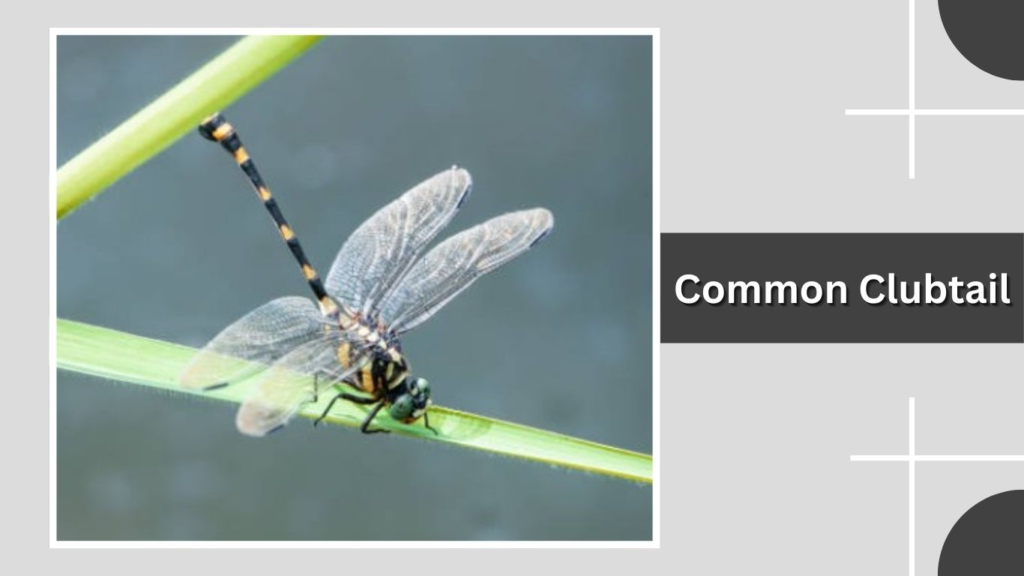
The Common Clubtail is a distinctive dragonfly named for the swollen tip of its abdomen. It is often seen along rivers and streams, where it blends surprisingly well with gravel and sandy banks when at rest.
Identification
- Medium to large dragonfly with club-shaped abdomen tip
- Yellow and black body pattern
- Clear wings with slight amber tint
- Greenish eyes that meet at the top
Habitat and Range
Common Clubtails are found across North America and parts of Europe. They prefer flowing freshwater habitats such as rivers, streams, and large creeks with sandy or gravelly bottoms.
Behavior
This species often rests on the ground rather than perching on vegetation. It makes strong, fast flights along river corridors and returns to the same resting spots. Males patrol sections of shoreline while searching for mates.
Life Cycle
Larvae live buried in sand or fine gravel on the bottoms of rivers and streams. Development may take one to three years. Adults are typically active from late spring through mid-summer.
22. Ruby-tailed Hawk
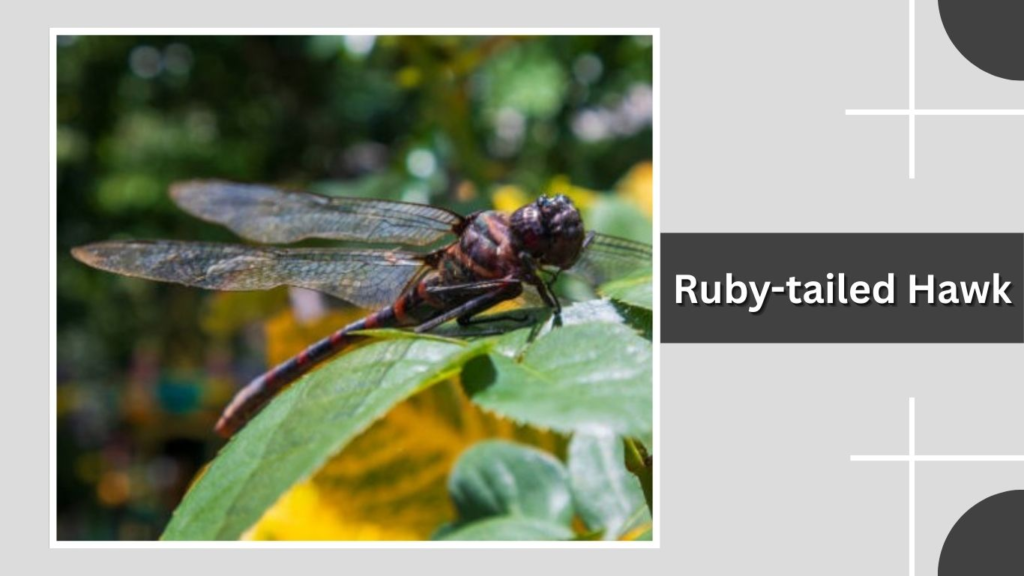
The Ruby-tailed Hawk is a striking dragonfly admired for the vivid red coloring at the end of its abdomen, which contrasts sharply with its darker body. This species is a fast, confident flier and is often noticed as it patrols open areas near water, especially during warm, sunny conditions.
Identification
- Medium to large dragonfly with slender body
- Bright red or ruby-colored tip on the abdomen
- Dark brown to black thorax and abdomen
- Clear wings with strong, agile flight
Habitat and Range
Ruby-tailed Hawks are typically found around ponds, lakes, marshes, and slow-moving rivers. They favor open freshwater habitats with nearby vegetation for resting and hunting. Their range includes parts of North America, particularly warmer regions where summer temperatures support high insect activity.
Behavior
This species is an active and assertive hunter, spending much of its time on the wing. It patrols defined routes over water and shoreline edges, capturing flying insects mid-air. Ruby-tailed Hawks perch occasionally on tall grasses or branches but usually only for short periods before resuming flight.
Life Cycle
The larvae live underwater among submerged plants and organic debris. Development time varies depending on climate and water conditions but may last one to two years. Adults are typically most visible from mid-summer into early autumn.
23. Blue-tailed Damselfly
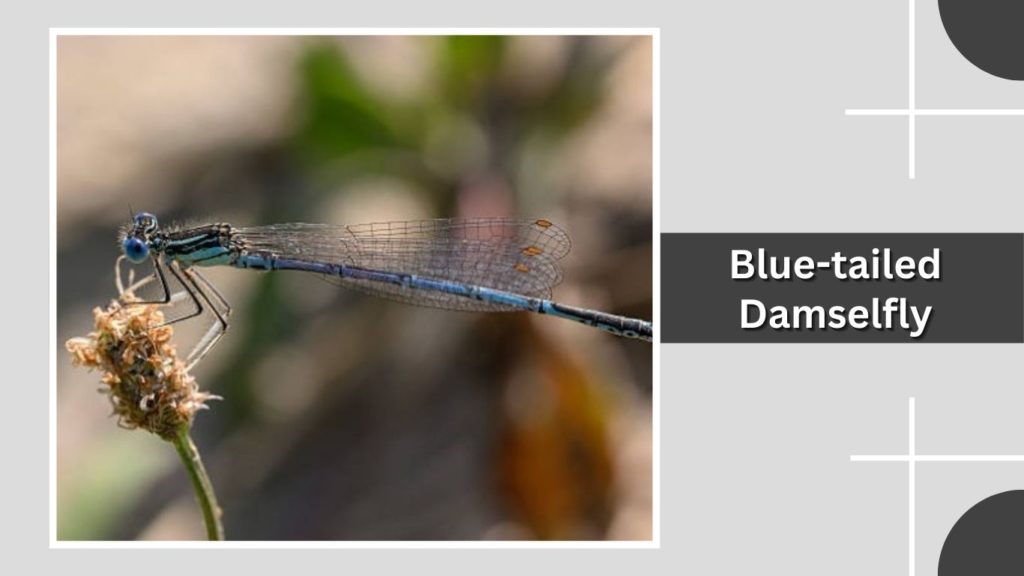
The Blue-tailed Damselfly is a small, delicate species that is often mistaken for a young dragonfly. Despite its size, it is one of the most common and widespread damselflies and is frequently seen around still or slow-moving freshwater.
Identification
- Small, slender-bodied damselfly
- Mostly black body with a bright blue tail segment
- Wings held closed over the body when at rest
- Large eyes set wide apart
Habitat and Range
Blue-tailed Damselflies are found across Europe, Asia, and parts of North America. They thrive in a wide range of freshwater habitats, including ponds, lakes, marshes, canals, and even mildly polluted waters, making them highly adaptable.
Behavior
This species is often seen fluttering weakly among low vegetation near water. Males are territorial and may chase other damselflies from preferred areas. They frequently perch on grasses and reeds, allowing close observation.
Life Cycle
Larvae develop in shallow freshwater, often among dense vegetation. The life cycle is relatively short, with adults emerging in late spring and remaining active through summer. In warmer regions, multiple generations may occur within a single year.
