
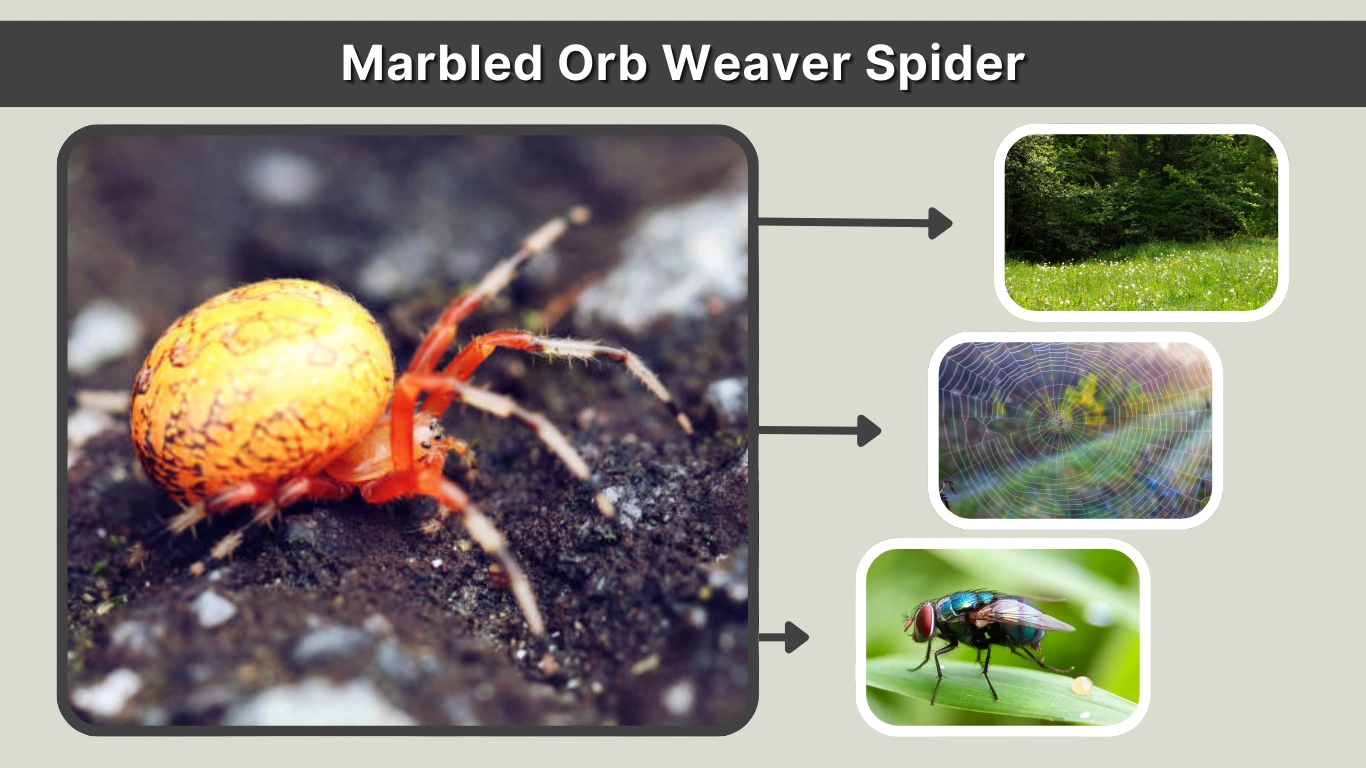
The marbled orb weaver spider is a striking garden and woodland spider best known for its rounded abdomen and bold, marbled color patterns. Commonly spotted in late summer and fall, this species builds classic circular webs that appear overnight between trees, shrubs, and outdoor structures. Despite its vivid appearance, the marbled orb weaver is harmless to humans and plays a valuable role in controlling insect populations. Its seasonal visibility, unique coloration, and impressive web design make it a frequent subject of curiosity.
Scientific Classification and Species Overview
Taxonomic Classification
The marbled orb weaver belongs to the orb-weaver group of spiders, which are known for constructing symmetrical, wheel-shaped webs. These spiders are part of a large family that relies on silk engineering rather than speed or venom strength to capture prey. Their classification reflects a long evolutionary history centered on web-based hunting strategies.
Species Background and Naming
The name “marbled” comes from the spider’s abdomen, which often displays swirling patterns resembling polished stone or marble. These patterns can vary widely in color and contrast, making each individual appear slightly different. This visual diversity has helped the species stand out among North American orb weavers.
Size and Body Structure
Marbled orb weaver spiders are medium to large-sized compared to many common garden spiders. Adult females are noticeably larger than males, often reaching body lengths of 9 to 18 millimeters. Males are smaller, slimmer, and less brightly colored, which makes them harder to spot in the web.
The spider’s body is compact, with a rounded abdomen and relatively short, sturdy legs. This body shape supports long periods of remaining motionless at the center of the web. The legs are well adapted for sensing vibrations, allowing the spider to detect even small movements caused by trapped insects.
Sexual dimorphism is pronounced in this species. Females dominate web construction and prey capture, while males usually stay near the edges of the web or nearby vegetation.
Color, Patterns, and Visual Appearance
One of the most distinctive traits of the marbled orb weaver spider is its coloration. The abdomen often features a mix of orange, yellow, cream, white, or pale green, overlaid with dark marbling or mottled markings. Some individuals may appear bright orange, while others are much lighter in tone.
Color intensity can change with age and season. In early adulthood, patterns may be muted, becoming more vivid as the spider matures. Environmental factors such as temperature and habitat can also influence coloration, adding to the spider’s visual diversity.
The legs are usually pale with darker bands, providing contrast against the abdomen. When resting in the center of the web, the spider’s colors can either stand out dramatically or blend surprisingly well with autumn foliage.
Identification Guide
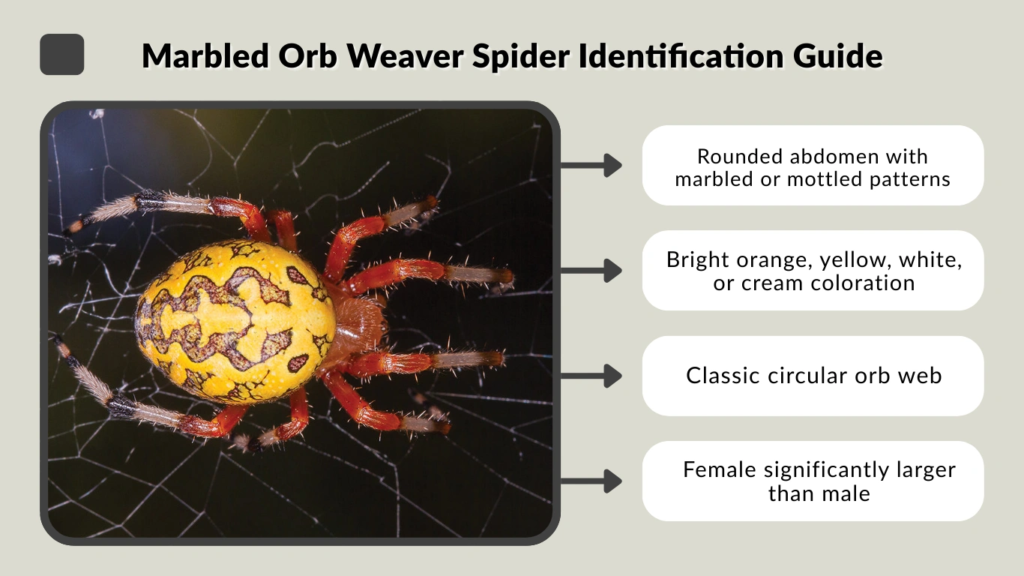
The marbled orb weaver spider can be identified using the following features:
- Rounded abdomen with marbled or mottled patterns
- Bright orange, yellow, white, or cream coloration
- Classic circular orb web
- Female significantly larger than male
- Most commonly seen in late summer and fall
Habitat and Distribution
Preferred Natural Habitats
Marbled orb weaver spiders are commonly found in woodlands, forest edges, gardens, and shrub-filled areas. They prefer environments with ample flying insects and stable structures for anchoring webs. Tall grasses, bushes, and low tree branches are favored web sites.
Geographic Range
This species is widely distributed across North America. It is especially common in the United States and southern Canada, where seasonal weather patterns support its life cycle. The marbled orb weaver adapts well to both natural and semi-urban environments, allowing it to thrive near human dwellings.
Web Structure and Silk Characteristics
The marbled orb weaver builds a classic orb-shaped web that is both functional and visually symmetrical. Webs are typically medium to large in size and are often placed at chest height or higher, stretched between branches or man-made structures.
The silk used in the web combines strength and elasticity. Non-sticky radial threads form the framework, while spiral capture threads are coated with adhesive droplets that trap insects on contact. These webs are usually rebuilt or repaired frequently to maintain effectiveness, especially during peak insect activity in late summer.
Behavior and Activity Patterns
Web-Building Habits
Marbled orb weaver spiders are most active during the evening and nighttime hours. They typically construct or repair their webs after sunset, ensuring the web is fresh and functional by morning. Web placement is carefully chosen to intercept insect flight paths, and damaged sections are often repaired rather than completely rebuilt unless the web becomes ineffective.
Feeding and Daily Activity
Once the web is complete, the spider usually rests at the center or slightly off to the side, remaining motionless for long periods. When an insect becomes trapped, vibrations travel along the silk, alerting the spider. The prey is quickly wrapped in silk and immobilized before feeding begins.
Diet and Prey
Marbled orb weaver spiders rely on their webs to capture a variety of flying insects, including:
- Flies and mosquitoes
- Moths and butterflies
- Beetles and other small flying insects
- Occasional larger prey that become entangled
Their web design allows them to subdue insects larger than their own body size, making them efficient and opportunistic hunters.
Reproduction and Life Cycle
Reproduction in marbled orb weaver spiders occurs toward the end of summer. Males cautiously approach females to avoid being mistaken for prey. After mating, the female produces one or more egg sacs, which are securely attached to nearby vegetation or hidden among leaves.
Each egg sac contains hundreds of eggs. Spiderlings hatch after several weeks but remain protected within the sac until favorable conditions allow them to disperse. Most adults die after the first frost, making the marbled orb weaver a seasonal species in many regions.
Predators and Natural Threats
Despite their size and web defenses, marbled orb weaver spiders face several natural threats:
- Birds that pluck spiders from their webs
- Parasitic wasps targeting egg sacs
- Wind, rain, and falling debris
- Human disturbance in gardens and yards
Their camouflage and web placement help reduce predation, but survival rates remain low.
Relationship With Humans
Marbled orb weaver spiders are not aggressive and pose little risk to humans. Bites are extremely rare and typically occur only if the spider is handled directly. When they do occur, bites usually result in mild redness or irritation.
These spiders provide a clear benefit by reducing insect populations around homes and gardens. Their presence is often a sign of a healthy local ecosystem, and many people choose to leave them undisturbed throughout their short seasonal lifespan.
FAQs
Is the marbled orb weaver spider dangerous to humans?
Marbled orb weaver spiders are not considered dangerous. They are shy, non-aggressive, and rarely bite. If a bite does occur, it typically causes only minor discomfort similar to a mild insect sting and does not require medical treatment.
How can you identify a marbled orb weaver spider?
This spider can be identified by its rounded abdomen with marbled patterns, bright orange or yellow coloration, and classic circular orb web. It is most often seen in late summer and fall in gardens, forests, and wooded areas.
Where are marbled orb weaver spiders most commonly found?
Marbled orb weaver spiders are commonly found across North America, especially in the United States and southern Canada. They prefer woodlands, forest edges, gardens, and shrub-filled areas with plenty of flying insects.
What time of year are marbled orb weavers most visible?
They are most visible from late summer through early fall. During this time, adult females build large, noticeable webs and display their brightest coloration before dying off after the first frost.
Do marbled orb weavers rebuild their webs daily?
Marbled orb weavers often repair their webs regularly and may rebuild them entirely if damaged. Web construction usually takes place in the evening, ensuring the web is effective during peak insect activity the following day.
