
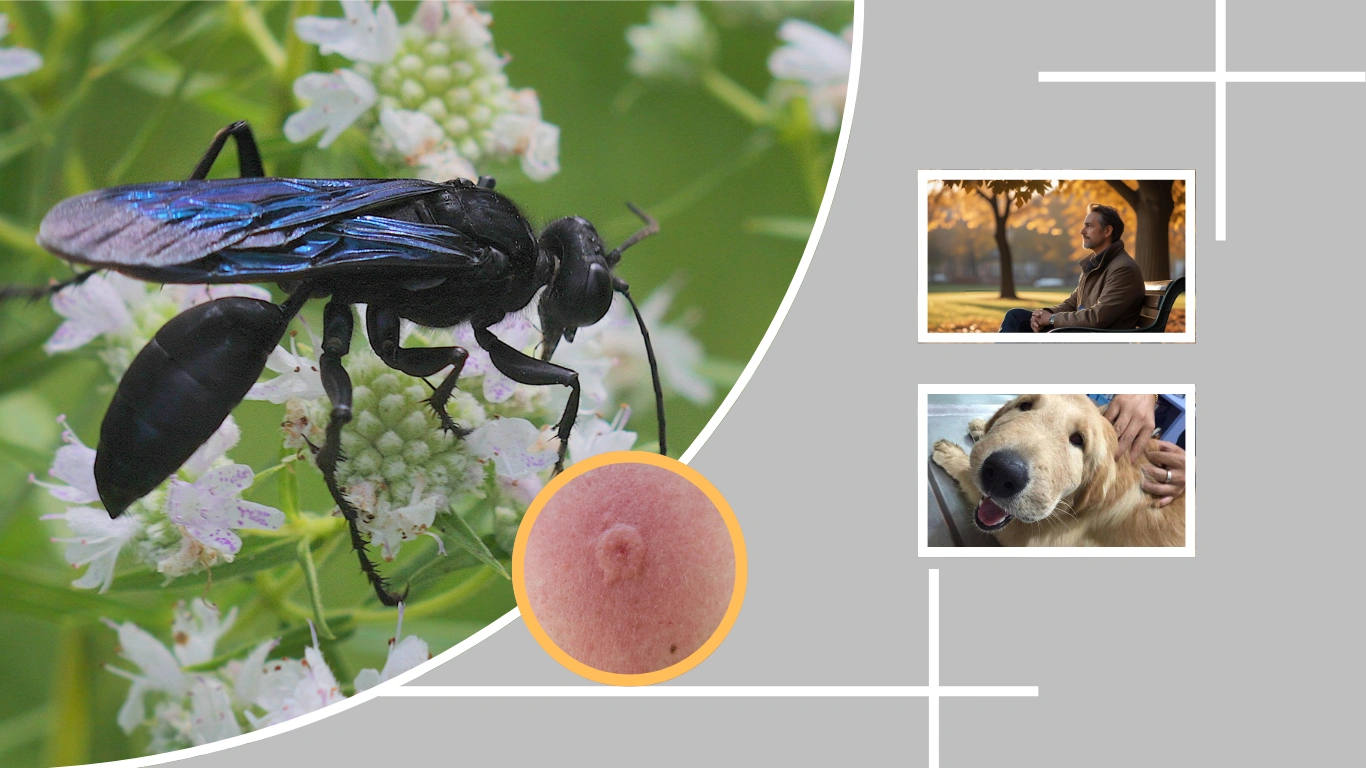
Getting stung by a wasp is never pleasant, but when it’s a big black wasp, the experience can be especially alarming. Known for their intimidating size and buzzing presence, species like the great black wasp, black digger wasp, and black and white wasp often raise concern among those who encounter them in gardens or outdoor areas. While most black wasps are solitary and non-aggressive, their sting can still pack a painful punch.
In this guide, we’ll break down what you need to know about big black wasp stings—from pain level and symptoms to at-home treatments and when to call a doctor or vet. Whether you or your pet has been stung, understanding how to react quickly and safely can make all the difference in comfort and recovery.
What Is the Great Black Wasp?
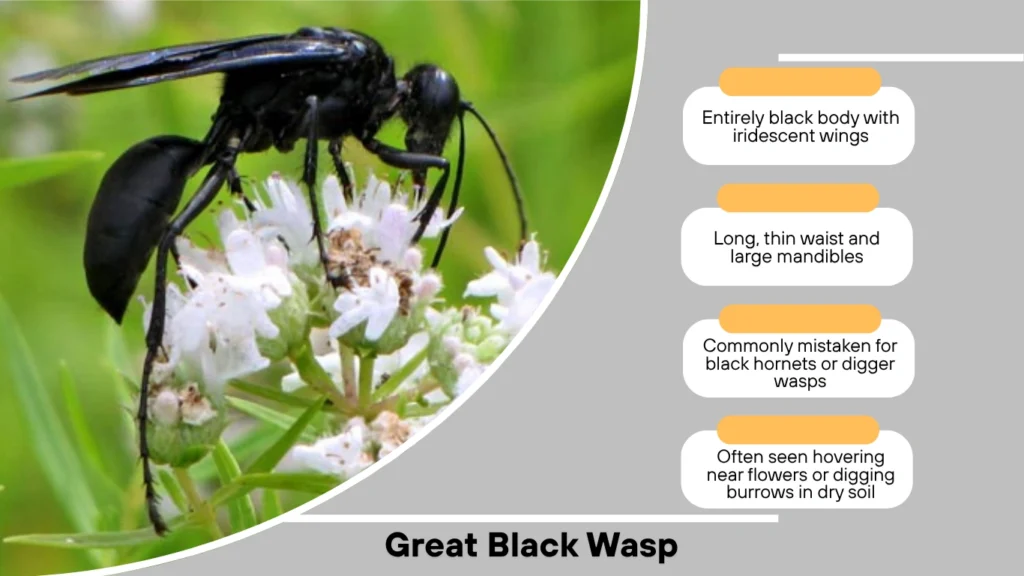
The great black wasp (Sphex pensylvanicus) is a large, solitary wasp species commonly found across North America, especially in the eastern and central United States. Despite its intimidating appearance—jet-black body, long slender wings, and a size that can reach up to 1.5 inches long—this wasp is generally not aggressive toward humans.
Unlike social wasps such as yellowjackets or hornets, great black wasps live alone and rarely sting unless they are directly threatened or handled. They play an important role in the ecosystem, feeding on nectar and preying on grasshoppers and katydids to feed their larvae.
Appearance and Identification
- Entirely black body with iridescent wings
- Long, thin waist and large mandibles
- Commonly mistaken for black hornets or digger wasps
- Often seen hovering near flowers or digging burrows in dry soil
Common Locations and Habitat
Great black wasps are typically found in:
- Gardens, meadows, and open grassy fields
- Areas with sandy or loose soil, where they build nesting tunnels
- Flowering plants, where they collect nectar as food
While their appearance may cause concern, their behavior is usually calm. Most stings occur when the wasp is accidentally provoked or trapped against the skin.
Big Black Wasp Sting Pain: What to Expect
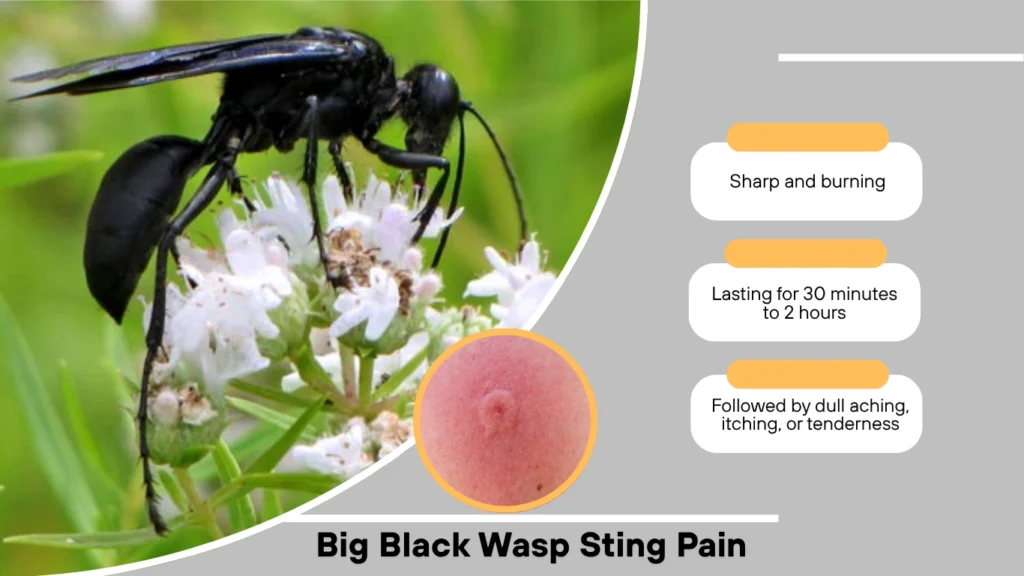
A sting from a great black wasp or other large black wasps can be painful, but it’s typically less aggressive and less dangerous than stings from social wasps like yellowjackets. That said, their size allows them to inject more venom, which can make the sting feel sharper or longer-lasting in certain individuals.
Pain Index of a Great Black Wasp Sting
On the Schmidt Sting Pain Index, which ranks the intensity of insect stings, the great black wasp falls in the moderate range. Most people describe the sting as:
- Sharp and burning
- Lasting for 30 minutes to 2 hours
- Followed by dull aching, itching, or tenderness
Pain levels can vary based on the location of the sting, your skin’s sensitivity, and whether you’ve been stung multiple times. Areas like fingers, face, or joints tend to hurt more because they have more nerve endings.
While not as fiery as a hornet sting, a black wasp sting is still strong enough to require first aid and observation—especially in children or pets.
Is a Great Black Wasp Sting Dangerous?
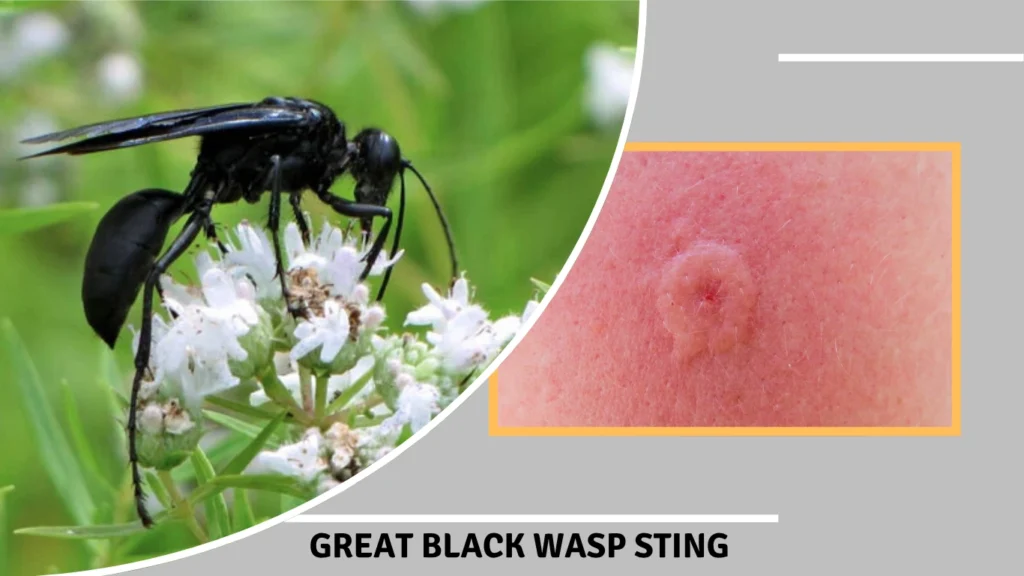
Despite their fierce look, great black wasps are solitary and non-aggressive. They don’t defend nests as fiercely as social wasps, meaning most stings happen by accident—such as swatting at one or stepping on it barefoot.
Typical Reaction
For most people, the sting results in:
- Immediate pain and redness
- A raised bump or welt
- Swelling within 10–30 minutes
- Mild itching or warmth
These reactions are normal and tend to subside within a few hours to a couple of days.
Risk of Allergic Reactions
A small percentage of people may experience an allergic reaction, especially if they’ve been stung by wasps before. Signs to watch for include:
- Rapid swelling beyond the sting site
- Difficulty breathing or swallowing
- Nausea or dizziness
- Hives or a rash away from the sting
These symptoms may indicate anaphylaxis, a life-threatening reaction that requires immediate emergency care. Anyone with a known wasp allergy should carry an epinephrine injector and seek help right away if stung.
How to Treat a Black Wasp Sting at Home
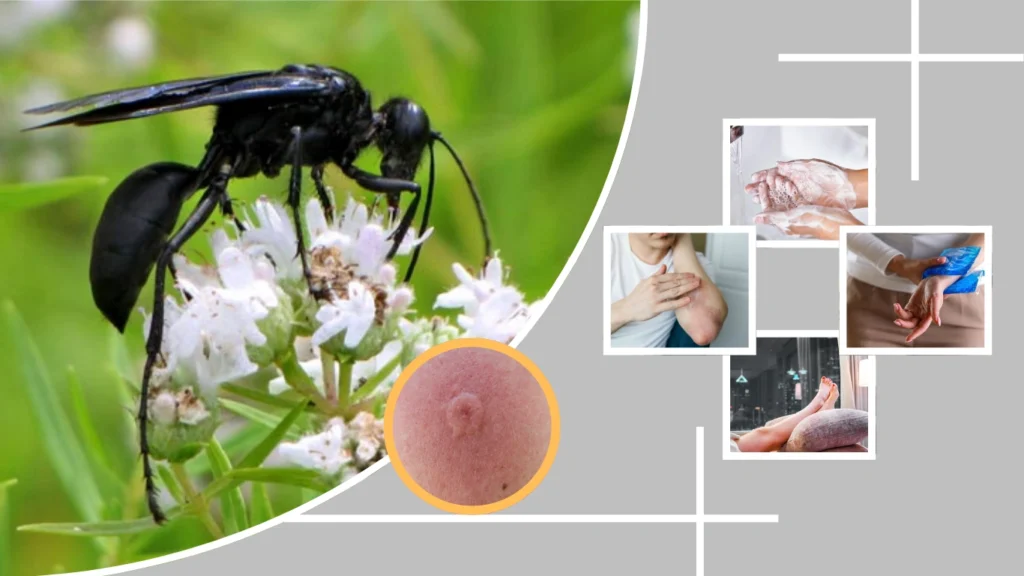
For most people, a black wasp sting can be treated safely at home using basic first aid and natural remedies. The goal is to reduce pain, swelling, and the chance of infection.
Immediate First Aid Steps
- Clean the area – Wash the sting site gently with soap and cool water to remove venom residue and reduce infection risk.
- Apply a cold compress – Use ice wrapped in a clean cloth or a cold pack for 10–15 minutes to reduce swelling and numb pain. Repeat every few hours if needed.
- Elevate the area – If stung on the arm, leg, hand, or foot, keep it elevated to help minimize swelling.
- Avoid scratching – Itching may develop after the pain fades. Scratching increases the chance of skin damage or infection.
If pain persists or swelling worsens after 48 hours, consult a doctor.
Natural Remedies and OTC Options
- Baking soda paste: Mix baking soda with water and apply to the sting to help neutralize the venom and relieve itching.
- Aloe vera gel: Soothes skin and reduces inflammation.
- Calamine lotion or hydrocortisone cream: Eases itching and irritation.
- Oral antihistamines: Products like Benadryl (diphenhydramine) help with swelling and itching, especially in more sensitive individuals.
These treatments can speed up recovery and keep you comfortable as the sting heals.
Swelling After a Black Wasp Sting
Swelling is one of the most common and visible symptoms of a black wasp sting. While it’s usually mild and localized, in some cases it can expand significantly, especially if you’re allergic or have been stung in a sensitive area.
How Long Does Swelling Last?
- Mild swelling typically appears within 30 minutes and peaks after 12–24 hours.
- In most cases, it begins to go down after 48 hours and resolves completely in 2 to 3 days.
- Itching or skin discoloration may linger slightly longer.
Swelling may last longer if the sting is on soft tissue (like the face or neck), or if the person scratched the area excessively.
How to Reduce Swelling
- Apply a cold compress regularly in the first 24 hours.
- Take an antihistamine to manage the body’s histamine response.
- Use anti-inflammatory creams like hydrocortisone to calm redness and puffiness.
- Stay hydrated and avoid heat, which may increase swelling.
Seek medical attention if swelling continues to expand rapidly, especially if it interferes with breathing, vision, or swallowing.
Black Wasp Sting in Dogs

Dogs are naturally curious, and it’s not uncommon for them to chase or snap at flying insects. Unfortunately, this behavior can result in a painful sting—especially from a big black wasp like the great black wasp or a black and white species such as the bald-faced hornet.
Signs Your Dog Was Stung
Watch for these symptoms, particularly on the nose, paws, or mouth:
- Whining or yelping suddenly
- Licking, biting, or pawing at a specific spot
- Swelling or redness (often on the muzzle or footpads)
- Limping or avoiding putting weight on the stung paw
- Vomiting, drooling, or difficulty breathing (in severe reactions)
Most dogs recover quickly, but the situation can escalate if the sting is near the throat, if multiple stings occurred, or if the dog is allergic.
Dog First Aid and When to Call the Vet
- Apply a cold compress to the sting site to reduce swelling.
- Keep your dog calm and limit activity to prevent the venom from spreading faster.
- Contact your vet before giving any medication like Benadryl. Dosage must be based on weight and condition.
- Watch for signs of allergic reaction, including pale gums, rapid breathing, collapse, or facial swelling.
Call your vet immediately if symptoms escalate. Dogs with a known insect sting allergy may require emergency intervention.
Black and White Wasp Sting: Is It Different?
Not all black wasps are created equal. One distinct type is the black and white wasp, often referring to the bald-faced hornet (Dolichovespula maculata). While it resembles a wasp, it’s technically a type of yellowjacket and is known for being more aggressive than solitary species like the great black wasp.
Species Overview
- Medium to large size, with striking black bodies and white markings on the face and abdomen
- Builds large, gray, papery nests in trees, shrubs, or under eaves
- Very territorial and likely to attack in groups when the nest is disturbed
Sting Pain and Behavior
A sting from a bald-faced hornet is typically:
- More painful than a solitary wasp sting due to higher venom volume
- Likely to cause intense burning pain that can last up to 24 hours
- Frequently followed by more severe swelling and inflammation
Because they defend their nests aggressively and sting in swarms, black and white wasps are considered more dangerous in groups than the great black wasp, which stings only when handled or threatened directly. Always take extra caution when near their nests.
FAQs
1. How painful is a great black wasp sting compared to a bee sting?
A great black wasp sting is typically more painful than a bee sting due to the larger size and amount of venom injected. However, it is less aggressive than bees, which can sting during defensive swarming. The pain usually lasts between 30 minutes to 2 hours and is often followed by swelling and itching.
2. Is swelling normal after a black wasp sting?
Yes. Swelling is a common reaction to wasp venom. It typically peaks within 24 hours and subsides in 2–3 days. If swelling spreads beyond the sting site or worsens after 48 hours, it may be a sign of infection or allergic reaction.
3. Can a black wasp sting cause an allergic reaction?
Yes. While most people only experience localized reactions, some individuals may suffer from moderate to severe allergic symptoms, including difficulty breathing, hives, or dizziness. Anyone with known insect sting allergies should carry an epinephrine auto-injector.
4. What does a black and white wasp sting look like?
Stings from black and white wasps (bald-faced hornets) usually cause sharp pain, noticeable swelling, and red welts. In some cases, the area may become very inflamed and develop a burning sensation that lasts for several hours.
