
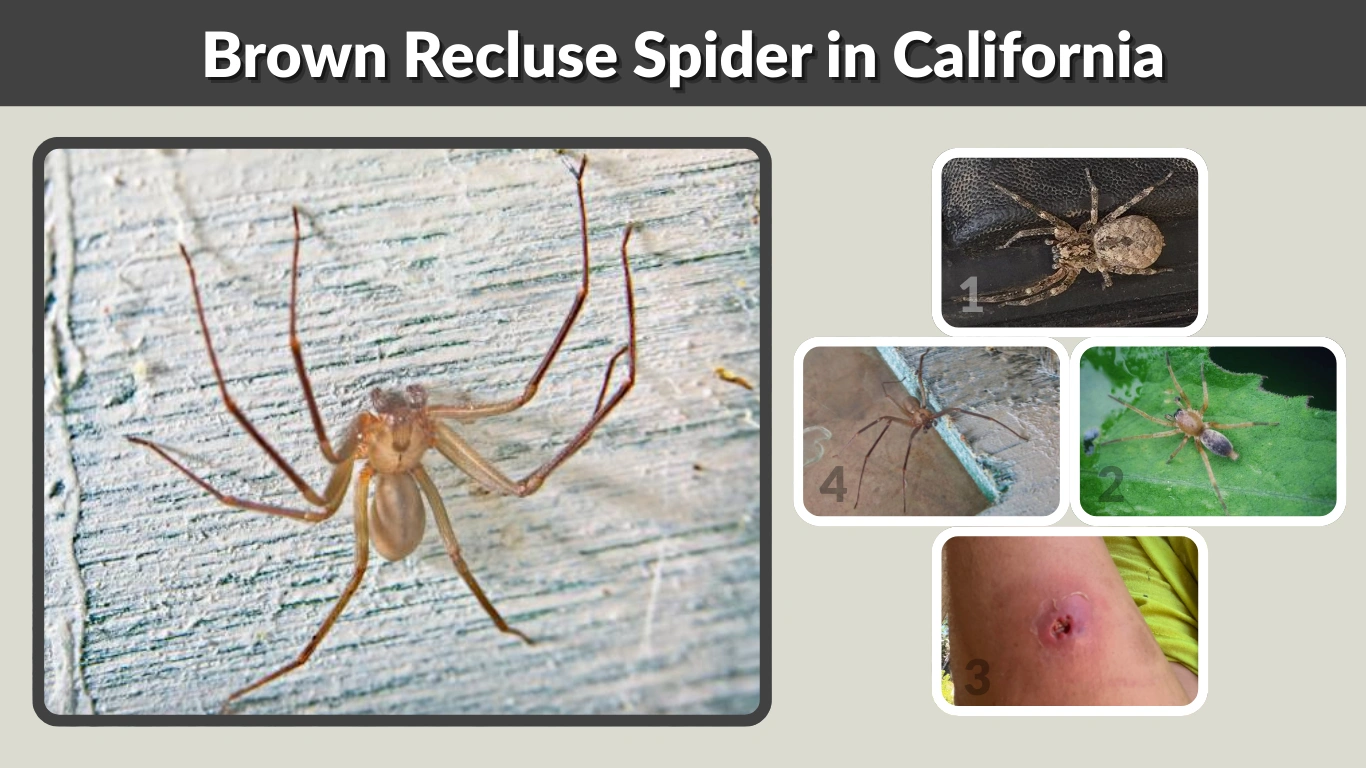
Many Californians search for brown recluse spiders after seeing a brown spider indoors or experiencing a suspicious bite. Online images and viral posts often increase fear, making people believe brown recluse spiders are common in California. In reality, this spider is widely misunderstood in the state. Knowing where brown recluse spiders actually live, what they look like, and which spiders are commonly mistaken for them helps prevent unnecessary panic and incorrect medical assumptions.
Is the Brown Recluse Spider Found in California?
Brown recluse spiders are not native to California and do not have established populations anywhere in the state. These spiders are naturally found in the central and southeastern United States, where environmental conditions support their survival.
Although rare individual spiders may occasionally arrive in California through shipping boxes, moving trucks, or cargo, these isolated incidents do not indicate a breeding population. In almost every case, spiders identified as brown recluses in California turn out to be other harmless species.
Brown Recluse Spider Distribution in the United States
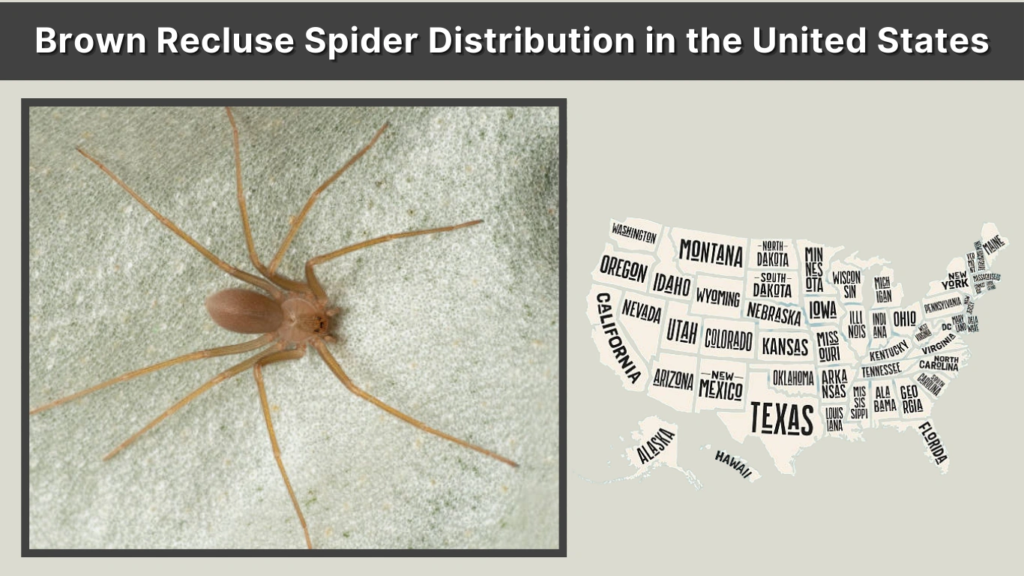
Brown Recluse Spider Range vs California
The natural range of the brown recluse spider includes states such as Missouri, Arkansas, Kansas, Oklahoma, and parts of Texas and the Southeast. These areas provide the warm, stable environments brown recluses require.
California lies well outside this natural range. The state’s coastal climate, temperature fluctuations, and ecological conditions prevent brown recluse spiders from establishing permanent colonies.
Brown Recluse Spider California Distribution: Why the Confusion Exists
Searches for “brown recluse spider California map” often lead to misleading graphics that exaggerate the spider’s range. Many of these maps show “possible sightings” rather than confirmed populations.
Confusion also comes from pest control marketing, misidentified photos online, and medical misdiagnosis of skin wounds. Together, these factors create the false impression that brown recluse spiders are common throughout California.
Brown Recluse Spider in Northern California
There are no confirmed brown recluse spider populations in Northern California. Coastal regions such as the Bay Area and Santa Cruz have climates that are unsuitable for brown recluse survival.
Spiders frequently mistaken for brown recluses in Northern California include wolf spiders, false wolf spiders, and cellar spiders. These species may appear brown and similar in size but lack the defining characteristics of a true brown recluse.
Brown Recluse Spider in Southern California
Southern California also does not have native brown recluse populations. Reports from cities like Los Angeles, Lancaster, and surrounding desert areas usually involve large brown spiders that are misidentified.
While isolated spiders may occasionally arrive via transported goods, they do not survive long enough to reproduce. Even desert regions of Southern California do not support stable brown recluse colonies.
Brown Recluse Spider in Central California
Central California sightings are often linked to agricultural storage areas, barns, garages, and warehouses where spiders commonly gather. These environments increase spider encounters but do not indicate brown recluse presence.
Most spiders found in these locations belong to common house spider species or ground-dwelling hunters such as wolf spiders.
What Does a Brown Recluse Spider Look Like in California?
A true brown recluse spider looks the same regardless of location, but spiders seen in California that resemble them are almost always different species.
Brown recluses have a light to dark brown body, long thin legs, and a distinct violin-shaped marking on the head region. They also have six eyes arranged in three pairs, unlike most spiders that have eight.
Because these features are difficult to observe without magnification, misidentification is extremely common.
Identification: Brown Recluse Spider vs California Look-Alikes
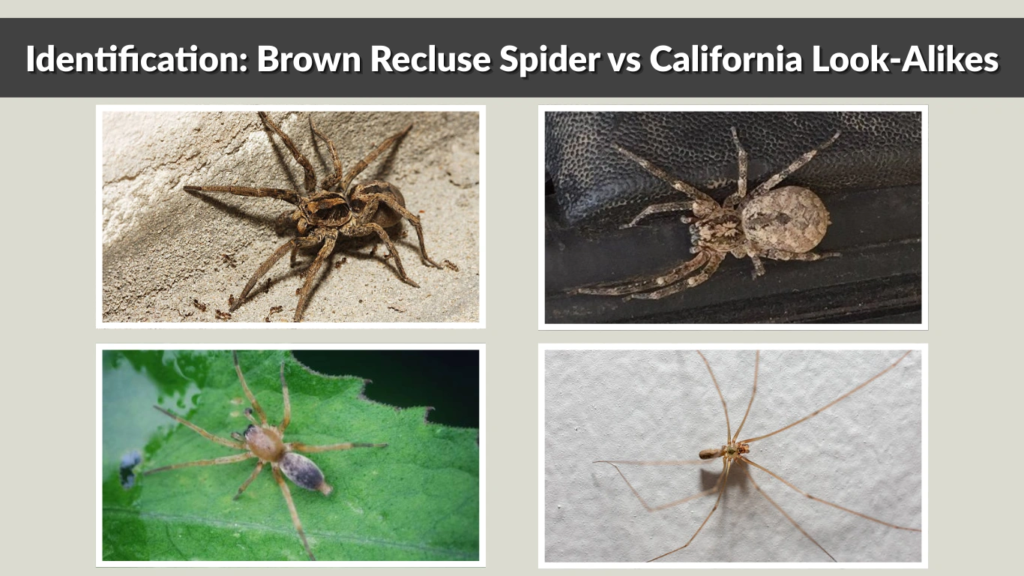
- Wolf spiders
- False wolf spiders
- Yellow sac spiders
- Cellar spiders
- Desert recluse (rare, limited desert areas)
Each of these species shares one or two visual traits with brown recluses but lacks the complete set of identifying features.
California Wolf Spider vs Brown Recluse Spider
Wolf spiders are the most commonly confused species in California. They are larger, hairier, and more robust than brown recluses. Wolf spiders have eight eyes arranged in three rows, and their eyes reflect light at night.
Brown recluse spiders, by contrast, have smooth bodies, thinner legs, six eyes, and do not exhibit eye shine. Wolf spiders are active hunters, while brown recluses are shy and avoid open areas.
Brown Recluse Spider Bite in California: A Reality Check
Most reported brown recluse spider bites in California are not caused by spiders at all. Skin infections such as MRSA, allergic reactions, and insect bites are far more common explanations.
Medical professionals in California rarely confirm brown recluse bites because the spider itself is almost never present. Without capturing and identifying the spider, bite diagnosis remains uncertain.
Brown Recluse Spider Bites in Southern California
Claims of brown recluse spider bites in Southern California are common but rarely supported by evidence. In most cases, no spider is ever captured or identified. Doctors in California frequently note that suspected recluse bites turn out to be bacterial infections, allergic reactions, or wounds caused by other insects.
Because brown recluse spiders are not established in Southern California, confirmed bite cases are virtually nonexistent. Medical professionals generally rule out brown recluse bites unless the spider is positively identified.
Are Brown Recluse Spiders Poisonous in California?
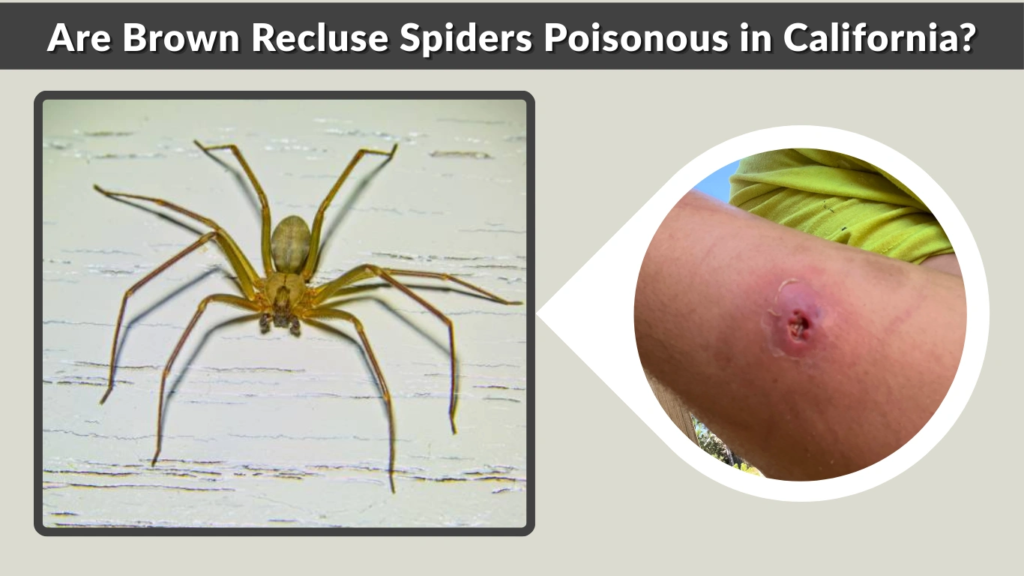
Brown recluse spiders do possess venom, but this fact often causes unnecessary fear in California. Since the spiders themselves are not present in established populations, the actual risk to Californians is extremely low.
The idea of “poisonous brown recluse spiders in California” largely comes from online misinformation and misdiagnosed wounds rather than real encounters with the spider.
Brown Recluse Spider Size Claims in California
Many Californians report seeing “large brown recluse spiders” measuring one to two inches long. These reports almost always involve misidentified species.
True brown recluse spiders are relatively small, with bodies usually less than half an inch long. Larger spiders commonly found in California homes—such as wolf spiders or false wolf spiders—are responsible for most size exaggeration claims.
Brown Recluse Spider Webs in California
Brown recluse spiders do not build large, visible webs. Their webs are small, irregular, and used mainly for shelter rather than hunting. Webs found in California garages, corners, or ceilings are almost always produced by other spider species.
Common California house spiders and cellar spiders create much more noticeable webs than a brown recluse ever would.
Brown Recluse Spider House Spiders in California
Several common house spiders in California are frequently mistaken for brown recluses. These spiders share a similar brown coloration but differ in behavior, size, and anatomy.
Most California house spiders are harmless and play a beneficial role by controlling insect populations. Identifying them correctly helps avoid unnecessary extermination or fear.
Brown Recluse Spider California Images and Pictures

Online searches for “brown recluse spider California pictures” often return mislabeled photos. Many stock images and social media posts incorrectly identify unrelated spiders as brown recluses.
Relying on images alone is unreliable. Accurate identification requires examining eye count, body shape, leg structure, and geographic location rather than matching a photo from the internet.
Why Do People Think Brown Recluse Spiders Live in California?
Several factors contribute to this widespread belief:
- Viral images and misleading articles
- Medical misdiagnosis of skin wounds
- Pest control marketing tactics
- Fear-driven online discussions
Together, these elements reinforce the misconception that brown recluse spiders are common in California.
How Common Are Brown Recluse Spiders in California?
Brown recluse spiders are not common in California. They are not native, not established, and not regularly found in homes or outdoor environments.
Confirmed cases remain extremely rare and typically involve single spiders transported from other states.
What to Do If You Think You Found a Brown Recluse in California
If you believe you have encountered a brown recluse spider:
- Capture the spider safely if possible
- Avoid handling it directly
- Seek expert identification from an extension service or entomologist
- Do not rely on online images alone
Proper identification prevents unnecessary concern and incorrect treatment.
FAQs
Is there really a brown recluse spider in California?
Brown recluse spiders are not native to California and do not have established populations. Nearly all reported sightings are misidentifications.
Are brown recluse spider bites common in California?
No. Most suspected bites are actually skin infections, allergic reactions, or insect bites rather than spider bites.
What spider looks most like a brown recluse in California?
Wolf spiders, false wolf spiders, and yellow sac spiders are commonly mistaken for brown recluses in California.
Can brown recluse spiders survive in California?
California’s climate and ecosystem do not support stable brown recluse populations, making long-term survival unlikely.
Should Californians worry about brown recluse spiders?
For most people, there is no reason to worry. Education and proper identification are far more useful than fear.
