

The brown recluse spider is one of the most talked-about spiders in North America—and one of the most misunderstood. Stories about dangerous bites often travel far beyond the spider’s actual territory, creating fear in places where the species does not naturally occur. Understanding the true range of the brown recluse, why it is limited to certain regions, and how it occasionally turns up outside that range is essential for accurate identification, medical awareness, and peace of mind. This article explores the spider’s native distribution, environmental limits, and the myths that have expanded its reputation far beyond reality.
What Is the Brown Recluse Spider?
The brown recluse (Loxosceles reclusa) is a small, secretive spider best known for the violin-shaped marking on its cephalothorax and its potential to cause medically significant bites. Adults typically measure about 6–12 mm in body length, with long, slender legs that give them a larger appearance.
Despite their notoriety, brown recluses are not aggressive. They prefer to avoid humans and bite only when pressed against skin—often when trapped in clothing, bedding, or stored items. This reclusive behavior plays a major role in both their survival and the confusion surrounding their presence.
The Native Geographic Range
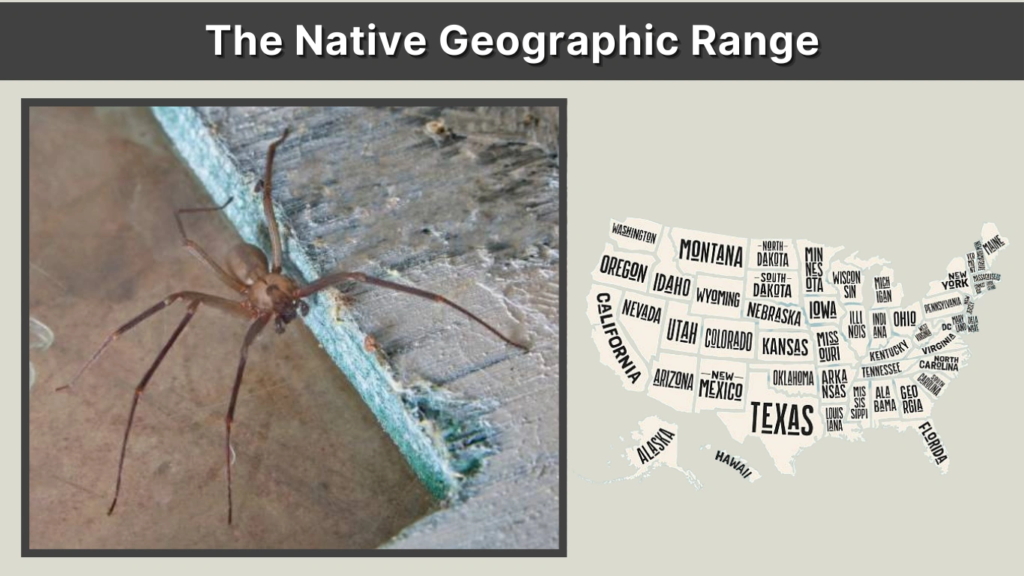
Core Distribution in the United States
The brown recluse spider has a well-defined native range centered in the south-central United States. Its core distribution includes:
- Missouri (often considered the heart of its range)
- Arkansas
- Kansas
- Oklahoma
- Tennessee
- Kentucky
- Northern Mississippi
- Northern Alabama
- Parts of Illinois, Indiana, Ohio, and Iowa
- Eastern Nebraska
- Northern Texas
Within this region, brown recluses can be locally abundant, particularly in older buildings, barns, basements, and woodpiles. In some homes within the core range, dozens—or even hundreds—may live unnoticed without causing harm.
Sharp Range Boundaries
One of the most striking aspects of the brown recluse’s distribution is how sharply it drops off outside its native area. Unlike many insects and spiders that gradually thin out across regions, brown recluses tend to stop appearing altogether beyond certain geographic limits. This abrupt boundary is a key reason many reported sightings outside the range turn out to be misidentifications.
Why the Range Is So Limited
Climate Constraints
Brown recluses are adapted to a specific climate profile: moderate humidity, relatively mild winters, and warm summers. Extremely cold temperatures limit their ability to survive outdoors, while very wet or tropical environments appear unfavorable for long-term populations.
Although they can survive indoors in colder climates, they rarely establish sustainable breeding populations outside their native range without continuous human assistance.
Habitat Preferences
In nature, brown recluses live under rocks, logs, and bark. In human environments, they prefer:
- Undisturbed storage areas
- Cardboard boxes
- Basements and crawl spaces
- Attics and wall voids
These habitats are abundant in the central U.S., particularly in older structures common in the Midwest and South. In contrast, many coastal regions and heavily urbanized areas offer fewer suitable microhabitats.
Limited Natural Dispersal
Unlike some spiders that balloon through the air as spiderlings, brown recluses do not disperse widely on wind currents. Their movement is slow and ground-based, which naturally restricts how far populations can spread without help.
Sightings Outside the Native Range
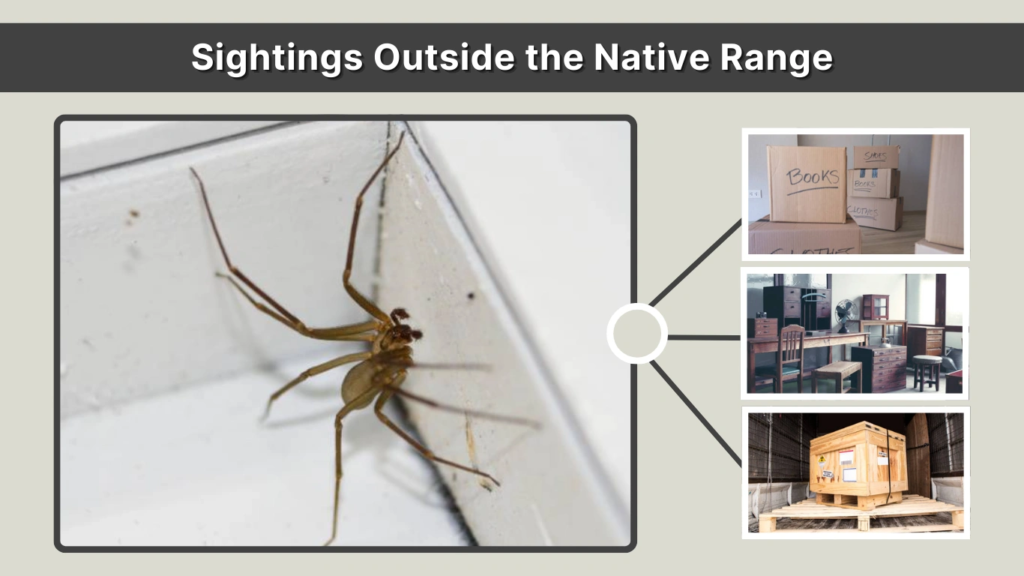
How Brown Recluses Travel
When brown recluses are found outside their native range, it is almost always due to accidental transport by humans. They may hitch a ride in:
- Moving boxes
- Furniture
- Shipping crates
- Building materials
- Vehicles
These transported individuals can survive for long periods indoors, sometimes leading homeowners to believe the species is established locally.
Why Established Populations Are Rare
Even when introduced, brown recluses usually fail to form lasting populations outside their native range. Factors include:
- Incompatible climate
- Lack of suitable shelter
- Competition with local spider species
As a result, most confirmed cases outside the core range involve isolated specimens rather than breeding colonies.
Common Misidentifications and Range Myths
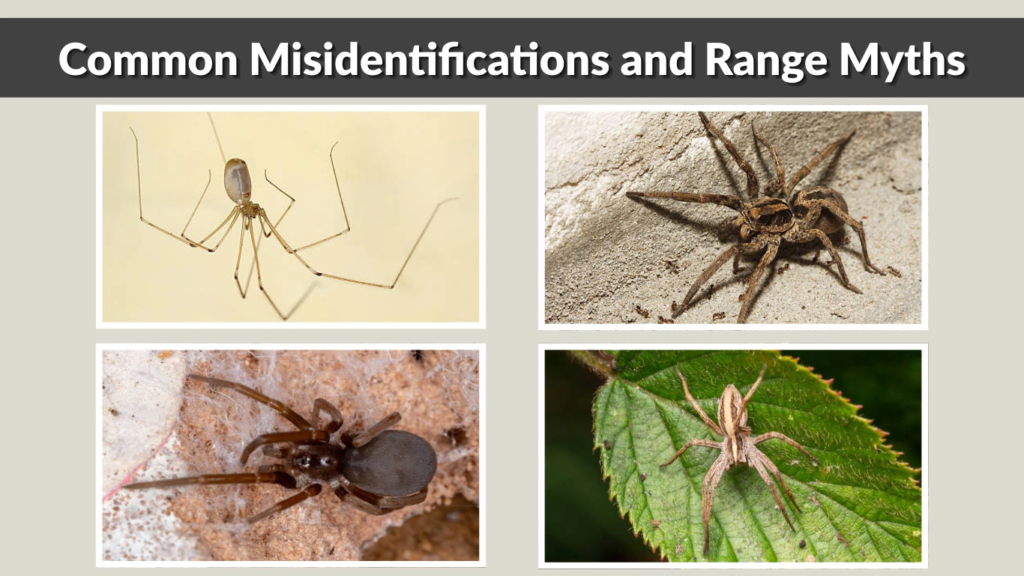
“I Saw One—So They Must Live Here”
One of the most persistent myths is that a single sighting confirms local presence. In reality, many harmless spiders resemble brown recluses, including:
- Cellar spiders
- Wolf spiders
- Southern house spiders
- Nursery web spiders
Many of these species have similar coloring but differ in eye arrangement, body shape, and behavior.
Overdiagnosis of Bites
Another reason the brown recluse’s range is often exaggerated is medical misdiagnosis. Skin lesions from infections, allergic reactions, or other insect bites are frequently attributed to brown recluses—even in regions where the spider does not exist. This has contributed significantly to the belief that the species is widespread across North America.
Urban vs. Rural Distribution Within the Range
Rural Strongholds
Brown recluses are especially common in rural settings within their range. Barns, sheds, and woodpiles offer ideal shelter and prey. These environments allow populations to persist largely unnoticed.
Urban and Suburban Areas
In cities and suburbs, brown recluses are most often found in older neighborhoods with basements and minimal disturbance. Newer buildings, with sealed foundations and fewer entry points, are less hospitable.
Interestingly, even in cities within the native range, infestations can be highly localized—one block may have many spiders, while the next has none.
Seasonal Activity and Range Perception
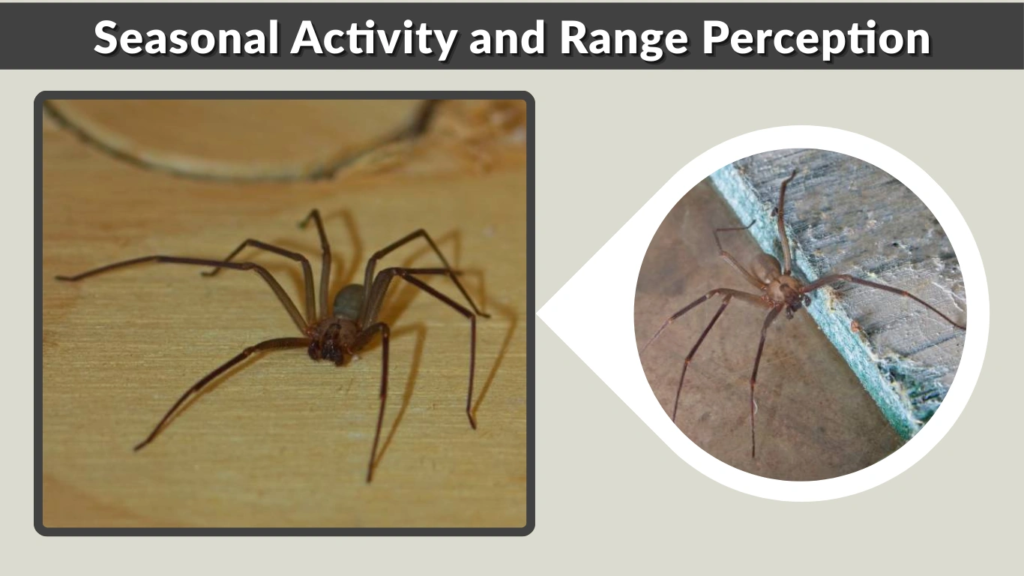
Brown recluses are present year-round within their range, but human encounters peak from late spring through early fall. Warmer temperatures increase spider activity and bring people into closer contact through cleaning, moving stored items, or sleeping with lighter bedding.
This seasonal pattern often reinforces the belief that spiders are “spreading,” when in fact they are simply becoming more active and visible.
Will Climate Change Expand the Range?
Climate change has raised questions about whether the brown recluse’s range will expand northward or eastward. While warmer temperatures could theoretically allow survival in new areas, several factors suggest expansion will be limited:
- Dispersal remains slow
- Suitable microhabitats may still be lacking
- Competition with established spider species persists
At present, there is no strong evidence of a significant natural expansion beyond the historical range.
Confirming Presence: What Actually Matters
The only reliable way to confirm that brown recluses live in a specific area is through verified specimen identification—ideally by an entomologist or extension service. Photos alone are often insufficient, and anecdotal reports are unreliable.
Within the native range, their presence is well documented and stable. Outside it, confirmed cases remain rare and isolated.
Conclusion: A Spider With a Fixed Footprint
The brown recluse spider occupies a surprisingly small and well-defined region of the United States, despite its oversized reputation. Its range is centered in the south-central Midwest and has remained largely unchanged for decades. Reports far outside this area are almost always due to misidentification or accidental transport rather than true expansion.
