
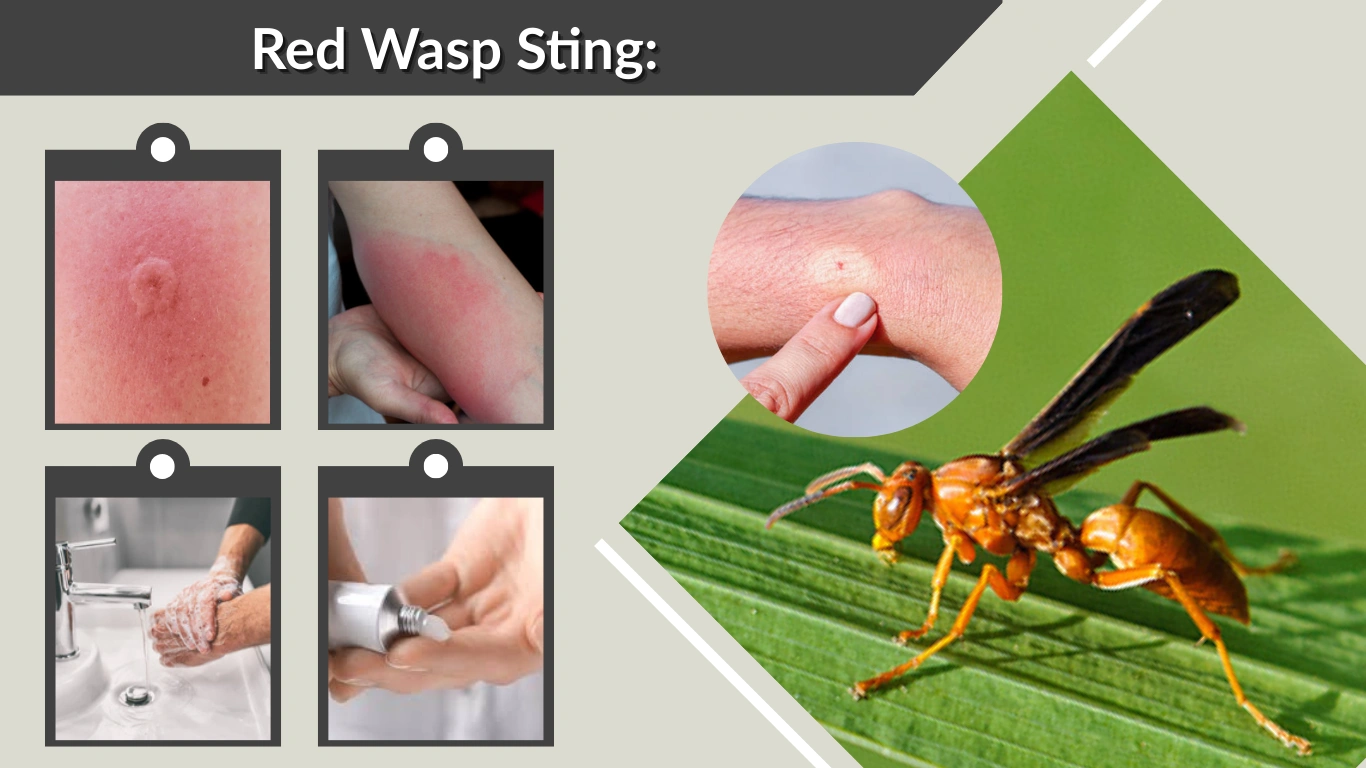
Red wasp stings are known for causing sharp pain, redness, and swelling that can alarm even people familiar with insect stings. Species such as red paper wasps, red velvet wasps, and other red-and-black wasps are common in many regions, especially the southern United States. While most stings are not dangerous, their intensity, appearance, and lingering discomfort often lead people to search for treatment, pain scale ratings, and signs of allergic reactions. Understanding what to expect helps reduce anxiety and speeds recovery.
Identification of Red Wasps

Several different wasp species are commonly referred to as “red wasps,” which can cause confusion after a sting.
- Red paper wasp: Slender body, reddish-brown color, long legs, and narrow waist
- Red velvet wasp (cow killer): Bright red and black, fuzzy appearance, technically a wingless wasp
- Red and black mason wasp: Stockier body, often seen near mud nests
- Red-legged spider wasp: Dark body with red legs, often hunts spiders
Unlike bees, red wasps have smooth stingers, which means they do not leave the stinger behind. Because of this, they do not die after stinging and can sting multiple times if threatened.
Do Red Wasps Sting?
Yes, red wasps sting humans, but they are not usually aggressive unless disturbed. Most stings occur when someone accidentally comes too close to a nest or swats at the wasp.
Red paper wasps can sting repeatedly, especially when defending their nest. Red velvet wasps sting less frequently but are known for delivering extremely painful stings when handled or stepped on. Unlike honey bees, red wasps can sting more than once because their stinger remains intact.
What Does a Red Wasp Sting Look Like

A red wasp sting usually becomes noticeable almost immediately. The most common early sign is a small red spot at the sting site, followed by swelling.
Within minutes to hours, many people experience:
- A red swollen wasp sting that feels firm
- Warmth or heat around the area
- A raised bump surrounded by redness
In some cases, the redness spreads outward, forming a larger red area. This does not automatically mean infection. A red line or spreading redness can be part of the body’s inflammatory response, especially during the first 24 hours. Over the next one to three days, swelling and redness typically peak and then slowly fade.
Red Wasp Sting Symptoms
Symptoms vary depending on the species, location of the sting, and individual sensitivity.
Common Symptoms
- Immediate sharp or burning pain
- Redness from the wasp sting
- Local swelling
- Warmth and tenderness
- Itching as the sting heals
Less Common Symptoms
- Large swelling extending beyond the sting site
- Redness spreading several inches
- Mild dizziness or nausea
- Increased pain lasting longer than expected
Most symptoms remain localized and improve within a few days without medical treatment.
Red Wasp Sting Pain Scale

Red wasp stings are considered more painful than many common insect stings.
How Painful Is a Red Paper Wasp Sting?
A red paper wasp sting produces intense, burning pain that many people rate higher than a honey bee sting. The pain is immediate and sharp, often lasting 5–10 minutes before slowly easing into soreness and itching.
Red velvet wasp stings rank among the most painful insect stings reported, sometimes described as “searing” or “electric.” However, they sting less frequently than paper wasps.
Compared to bees and yellow jackets, red wasp stings tend to cause stronger localized pain but less systemic reaction in non-allergic individuals.
How Long Does a Red Wasp Sting Last
Pain from a red wasp sting usually peaks quickly and improves within the first hour. Swelling and redness often last 24 to 72 hours, depending on the location and the person’s immune response.
In sensitive areas like the face, hands, or feet, swelling may last longer. Itching can persist for several days as the skin heals. Most uncomplicated stings resolve completely within a week.
Red Wasp Sting Treatment

Prompt treatment helps reduce pain, swelling, and redness.
What to Do Immediately After a Red Wasp Sting
Move away from the area to avoid additional stings. Wash the sting site with soap and water to remove venom residue. Apply a cold compress or ice pack for 10–15 minutes to limit swelling and numb pain.
Medical and Over-the-Counter Treatments
Antihistamines can help reduce itching and swelling. Hydrocortisone cream or calamine lotion soothes irritated skin. Over-the-counter pain relievers may be used if discomfort persists. Antibiotics are not needed unless a secondary infection develops.
Home Remedy for Red Wasp Sting
Many mild red wasp stings can be managed at home using simple remedies that reduce inflammation and discomfort.
- Ice packs help numb pain and limit swelling when applied in short intervals
- Baking soda paste may neutralize venom and ease itching
- Vinegar can help with pain relief for some people, especially early after the sting
- Aloe vera soothes irritated skin and supports healing
- Calamine lotion reduces itching and redness
- Elevating the affected area helps control swelling, particularly on arms or legs
Home remedies work best when combined with early cleaning and cooling of the sting site.
Red Wasp Sting Swelling and Redness
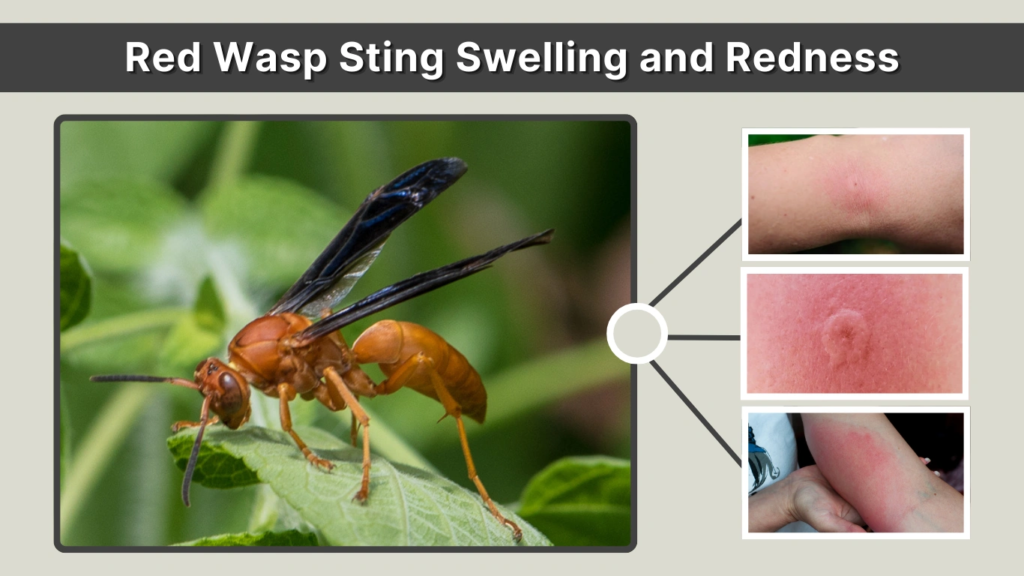
Swelling and redness are normal reactions to red wasp venom. The body releases inflammatory chemicals that increase blood flow to the area, causing warmth and puffiness.
Is Swelling Normal?
A swollen red wasp sting may spread several inches from the sting site, especially on sensitive skin. The area often feels firm, hot, and itchy. This reaction usually peaks within 24 to 48 hours and then slowly improves.
When Redness Spreading Is a Concern
Redness spreading rapidly, worsening pain after several days, pus, or fever may indicate infection rather than a normal reaction. A red line moving away from the sting site, combined with systemic symptoms, should be evaluated by a medical professional.
Allergic Reaction to Red Wasp Sting
While most red wasp stings are harmless, allergic reactions can be serious and require immediate care.
Signs of an Allergic Reaction
- Swelling of the face, lips, tongue, or throat
- Difficulty breathing or wheezing
- Widespread hives or rash
- Rapid heartbeat
- Dizziness or fainting
These symptoms may appear within minutes of the sting and can worsen quickly.
When to Seek Emergency Care
Any signs of anaphylaxis require emergency medical attention. People with known wasp sting allergies should use epinephrine immediately and seek emergency care, even if symptoms begin to improve.
Red Paper Wasp Sting vs Other Red Wasps
Not all red wasp stings feel the same. Differences in venom and behavior affect pain and reaction severity.
Red paper wasps sting more frequently because they defend their nests aggressively. Their stings cause intense localized pain and swelling but rarely lead to severe reactions in non-allergic individuals.
Red velvet wasps sting less often but deliver extremely painful stings. Red-legged spider wasps and red-and-black mason wasps are generally less aggressive and sting mainly when handled.
Texas Red Wasp Sting
Red wasps are especially common in Texas due to the warm climate and long nesting season. Red paper wasps often build nests under eaves, fences, and porch roofs.
Stings are most common during late spring and summer when nests are active. Accidental contact during yard work or home maintenance is a frequent cause of Texas red wasp stings.
Red Wasp Sting in Dogs
Dogs are curious and may snap at flying insects, making them vulnerable to red wasp stings.
Common signs include sudden yelping, swelling around the face or paws, and excessive licking. Facial stings are particularly concerning because swelling can affect breathing.
Veterinary care is recommended if swelling is severe, the sting occurs near the mouth or throat, or the dog shows signs of an allergic reaction. Human medications should never be given to dogs unless directed by a veterinarian.
Prevention Tips
Reducing exposure to red wasps lowers the risk of stings.
- Avoid disturbing visible nests
- Wear protective clothing during yard work
- Keep food and drinks covered outdoors
- Seal gaps around roofs and eaves
- Remove nests safely and professionally when possible
FAQs
Do red wasps sting more than once?
Yes, red wasps have smooth stingers and can sting multiple times without dying, unlike honey bees.
Does a red wasp leave its stinger behind?
No, red wasps do not leave their stinger in the skin after stinging.
How painful is a red wasp sting compared to a bee?
Red wasp stings are typically more painful than honey bee stings and cause stronger burning sensations.
Is spreading redness after a wasp sting normal?
Mild spreading redness is common in the first 24–48 hours, but rapid expansion or worsening pain may indicate infection.
What should I put on a red wasp sting for relief?
Ice packs, antihistamines, hydrocortisone cream, and soothing home remedies provide effective relief for most stings.
