
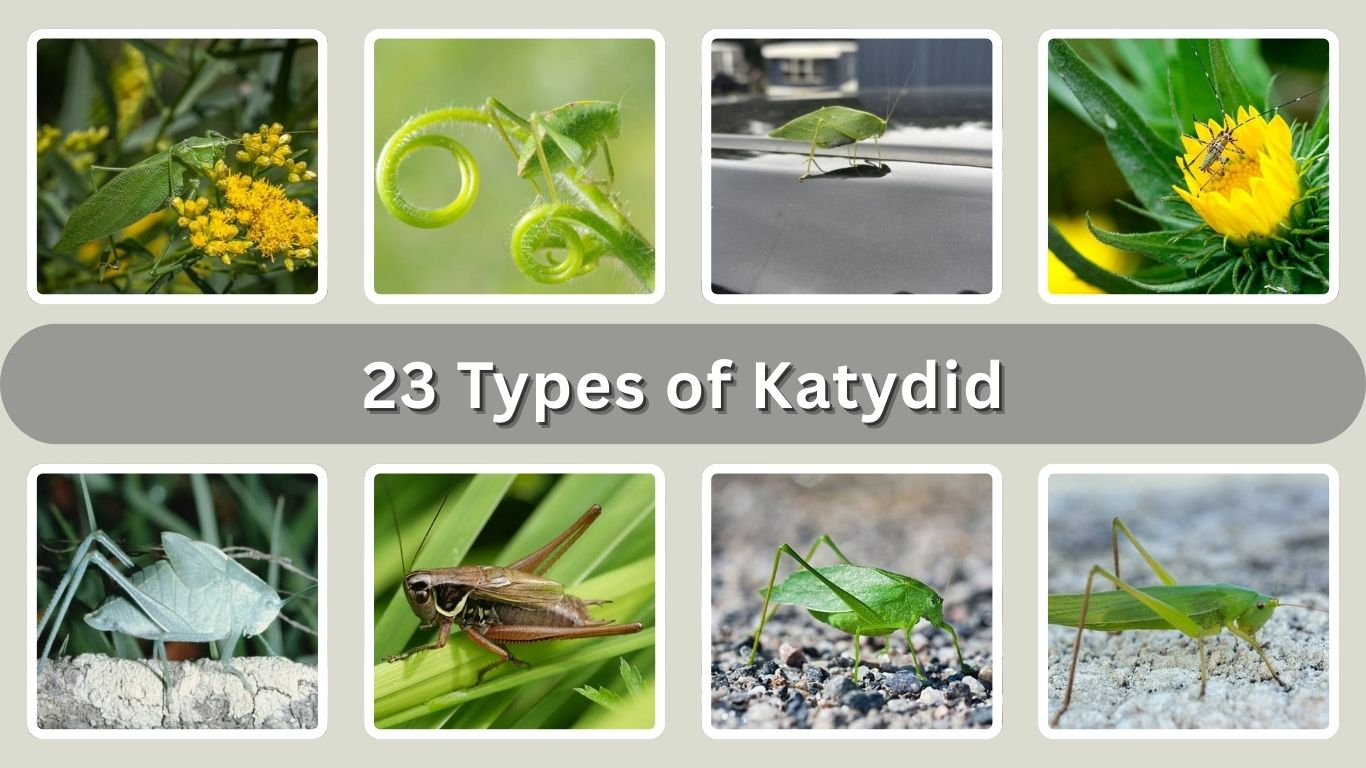
Katydids are fascinating, leaf-like insects known for their long antennae, nighttime songs, and excellent camouflage. Found in forests, meadows, gardens, and grasslands around the world, they are often heard more easily than they are seen. With thousands of species, katydids vary widely in size, color, and behavior. Most feed on plants, while some also hunt small insects, playing an important role in natural ecosystems.
1. Common True Katydid (Pterophylla camellifolia)

The common true katydid is a large, bright green katydid best known for its loud, rhythmic “katy-did, katy-didn’t” call heard on warm summer nights. With its leaf-like wings and excellent camouflage, it blends easily into trees and shrubs, making it easier to hear than to see.
Identification
- Large body size, usually 40–55 mm long
- Bright green coloration that resembles leaves
- Broad, leaf-shaped wings with visible veins
- Very long, thin antennae often longer than the body
- Strong hind legs adapted for jumping
- Females have a long, curved, sword-like ovipositor
Habitat
The common true katydid lives mainly in deciduous forests, woodland edges, gardens, and orchards. It prefers trees and tall shrubs where it can hide among leaves. This species is widely distributed across the eastern United States and parts of southeastern Canada.
Behaviors
This katydid is mostly nocturnal and becomes active after sunset. Males produce loud calls to attract females, often from high in trees. During the day, individuals usually remain motionless, relying on leaf camouflage to avoid predators.
Diet and Lifecycle
The common true katydid feeds on leaves, flowers, buds, and occasionally small insects. Its life cycle includes egg, nymph, and adult stages. Eggs are laid in plant tissue, nymphs hatch in spring, and after several molts, they develop into winged adults by mid to late summer.
2. Angle-Wing Katydid (Microcentrum rhombifolium)

The angle-wing katydid is a large, leaf-mimicking katydid named for the sharply angled edges of its wings. Its bright green color and leaf-like shape make it extremely difficult to spot in trees and shrubs, where it spends most of its life feeding and calling at night.
Identification
- Large, flattened body with leaf-shaped wings
- Bright green coloration with fine leaf-like veins
- Distinct angular edges on the wings
- Very long, thread-like antennae
- Strong hind legs for jumping
- Females have a long, blade-like ovipositor
Habitat
Angle-wing katydids live in forests, woodland edges, gardens, and orchards. They prefer trees and tall shrubs, especially oaks, maples, and other broadleaf plants. This species is commonly found across the eastern and southern United States.
Behaviors
This katydid is mostly nocturnal. Males call at night with a sharp, repetitive sound to attract females. During the day, they remain still among leaves, depending on their camouflage to avoid birds and other predators.
Diet and Lifecycle
The angle-wing katydid feeds mainly on leaves, flowers, and soft plant tissue. Its life cycle includes egg, nymph, and adult stages. Eggs are laid along leaf edges or in plant tissue, nymphs hatch in spring, and several molts occur before adults appear in late summer.
3. Broad-Winged Katydid (Microcentrum latifolium)

The broad-winged katydid is one of the largest katydids in North America and is especially known for its wide, leaf-like wings. Its excellent camouflage allows it to blend perfectly into tree canopies, where it is more often heard than seen.
Identification
- Very large, flattened body
- Extremely broad, leaf-shaped green wings
- Fine vein patterns resembling real leaves
- Very long, thin antennae
- Strong hind legs for jumping
- Females possess a long, flattened ovipositor
Habitat
Broad-winged katydids live in deciduous forests, woodlands, gardens, and orchards. They prefer tall trees and dense foliage. This species is widespread across the eastern and southeastern United States.
Behaviors
This katydid is nocturnal. Males produce loud, harsh calls from treetops to attract females. During daylight hours, they remain motionless among leaves, relying on camouflage for protection.
Diet and Lifecycle
The broad-winged katydid feeds on leaves, buds, and flowers of many trees and shrubs. Its life cycle includes egg, nymph, and adult stages. Eggs are laid in plant tissue, nymphs hatch in spring, and after several molts, adults develop by late summer.
4. Fork-Tailed Bush Katydid (Scudderia furcata)

The fork-tailed bush katydid is a slender, bright green katydid named for the distinctive forked tip at the end of the male’s abdomen. It is commonly found on shrubs and low trees and is known for its soft calls and excellent leaf-like camouflage.
Identification
- Medium-sized, slender green body
- Narrow, leaf-like wings
- Very long, thread-like antennae
- Forked abdominal tip in males
- Females have a curved, sword-like ovipositor
- Strong hind legs for jumping
Habitat
Fork-tailed bush katydids inhabit shrubs, woodland edges, forest understories, and gardens. They prefer areas with dense bushes and young trees. This species is widespread across eastern and central North America.
Behaviors
This katydid is mainly nocturnal and becomes active at dusk. Males produce soft, ticking or buzzing calls to attract females. During the day, they usually remain hidden among leaves and stems.
Diet and Lifecycle
Fork-tailed bush katydids feed on leaves, flowers, pollen, and occasionally small insects. Their life cycle includes egg, nymph, and adult stages. Eggs are laid in plant tissue, nymphs hatch in spring, and adults appear in summer after several molts.
5. Greater Angle-Wing Katydid (Microcentrum retinerve)
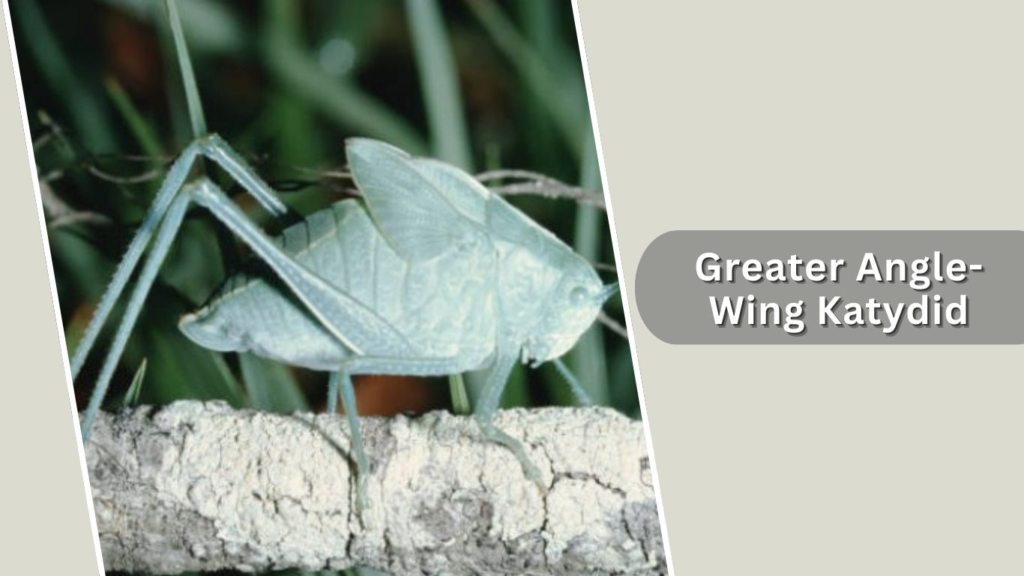
The greater angle-wing katydid is a very large katydid recognized by its sharply angled, leaf-like wings and impressive size. Its bright green color and leaf vein patterns make it almost invisible among foliage, where it spends most of its life feeding and calling at night.
Identification
- Very large, flattened body
- Bright green, leaf-shaped wings with strong veins
- Distinct angular wing margins
- Extremely long, thin antennae
- Strong hind legs for jumping
- Long, blade-like ovipositor in females
Habitat
Greater angle-wing katydids live in forests, woodlands, orchards, and gardens. They prefer tall trees and dense vegetation. This species is mainly found in the eastern and southeastern United States.
Behaviors
This katydid is nocturnal. Males produce loud, sharp calls from high in trees. During the day, individuals remain motionless, relying on leaf mimicry to avoid predators.
Diet and Lifecycle
The greater angle-wing katydid feeds on leaves, buds, and flowers of trees and shrubs. Its life cycle includes egg, nymph, and adult stages. Eggs are laid in plant tissue, nymphs hatch in spring, and adults develop by late summer.
6. Meadow Katydid (Conocephalus spp.)
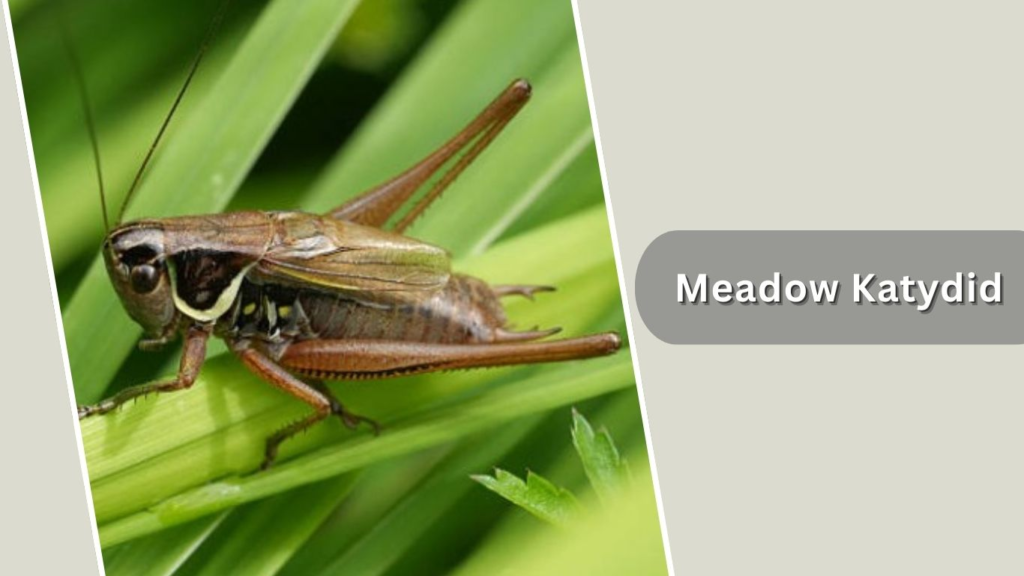
Meadow katydids are small to medium-sized katydids known for their slender bodies and their preference for grassy habitats. They are often heard producing soft, continuous buzzing sounds in meadows and wetlands, especially during warm evenings.
Identification
- Small to medium body size
- Slender, narrow green or brown body
- Long, thin antennae
- Narrow wings held roof-like over the body
- Cone-shaped or slightly pointed head
- Strong hind legs adapted for jumping
Habitat
Meadow katydids live in grasslands, meadows, marsh edges, fields, and roadside vegetation. They prefer moist areas with tall grasses and reeds. These katydids are widely distributed across North America and parts of Central America.
Behaviors
These katydids are mostly nocturnal or active at dusk. Males produce continuous buzzing or ticking calls. During the day, they usually hide low in grasses, climbing stems to feed or sing at night.
Diet and Lifecycle
Meadow katydids feed on grasses, seeds, small insects, and plant tissues. Their life cycle includes egg, nymph, and adult stages. Eggs are laid in plant stems, nymphs hatch in spring, and adults appear in summer after several molts.
7. Oblong-Winged Katydid (Amblycorypha oblongifolia)
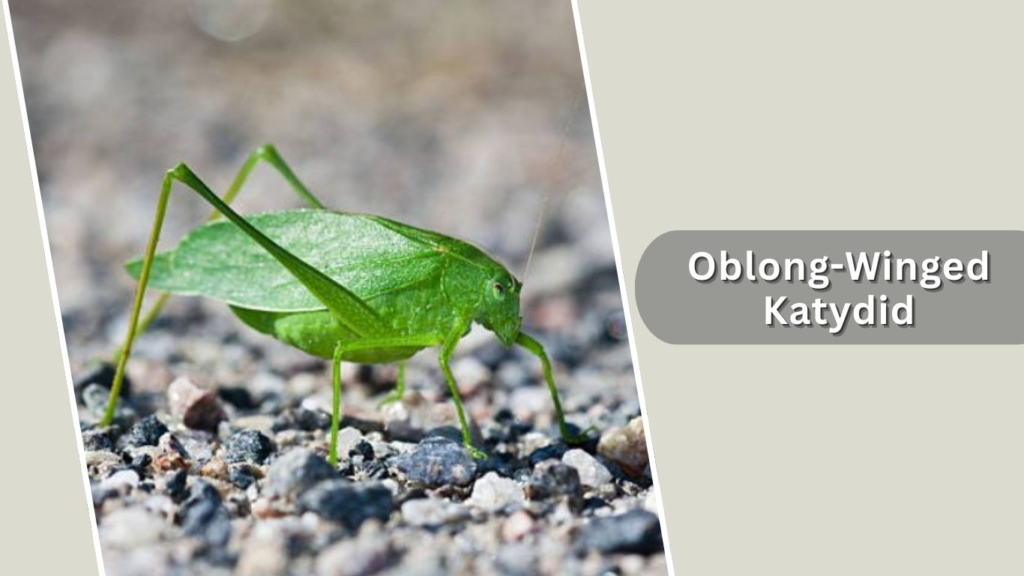
The oblong-winged katydid is a large, graceful katydid known for its long, narrow, leaf-like wings. Its bright green color and smooth shape allow it to blend easily into tree canopies, where it is most often detected by its loud nighttime calls.
Identification
- Large, slender body
- Long, narrow, oblong green wings
- Fine leaf-like vein patterns
- Very long, thread-like antennae
- Strong hind legs for jumping
- Females have a long, curved ovipositor
Habitat
Oblong-winged katydids live in deciduous forests, woodland edges, orchards, and gardens. They prefer tall trees and dense foliage. This species is widely distributed across eastern North America.
Behaviors
This katydid is nocturnal. Males produce loud, repeated calls from trees to attract females. During daylight, individuals remain motionless among leaves, relying on camouflage.
Diet and Lifecycle
The oblong-winged katydid feeds mainly on leaves, buds, and flowers of trees and shrubs. Its life cycle includes egg, nymph, and adult stages. Eggs are laid in plant tissue, nymphs hatch in spring, and adults develop by mid to late summer.
8. Conehead Katydid (Subfamily Conocephalinae)
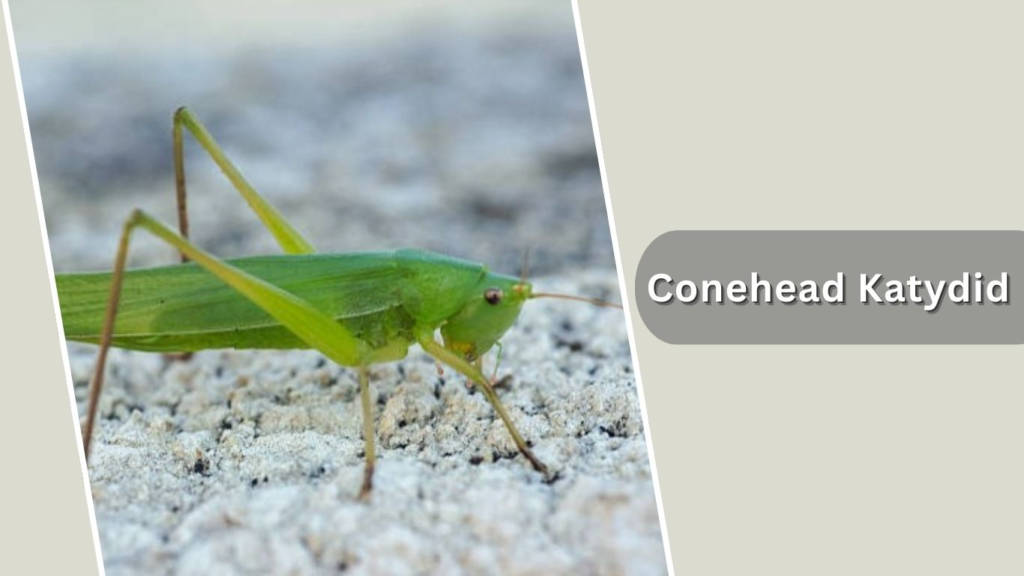
Conehead katydids are named for their distinctly pointed, cone-shaped heads. They are slender katydids often found in tall grasses and reeds, where their shape and color help them blend perfectly into narrow leaves and stems.
Identification
- Slender, narrow body
- Distinct cone-shaped head
- Green or brown coloration
- Very long, thin antennae
- Narrow wings held tightly over the body
- Strong hind legs for jumping
Habitat
Conehead katydids inhabit meadows, marshes, grasslands, crop fields, and roadside vegetation. They prefer tall grasses and reeds. This group is widely distributed across North America and many other parts of the world.
Behaviors
These katydids are mostly nocturnal and become active in the evening. Males produce continuous buzzing or ticking calls. During the day, they usually remain hidden low in grasses.
Diet and Lifecycle
Conehead katydids feed on grasses, seeds, small insects, and soft plant tissues. Their life cycle includes egg, nymph, and adult stages. Eggs are laid in plant stems, nymphs hatch in spring, and adults appear after several molts.
9. Round-Headed Katydid (Amblycorypha rotundifolia)
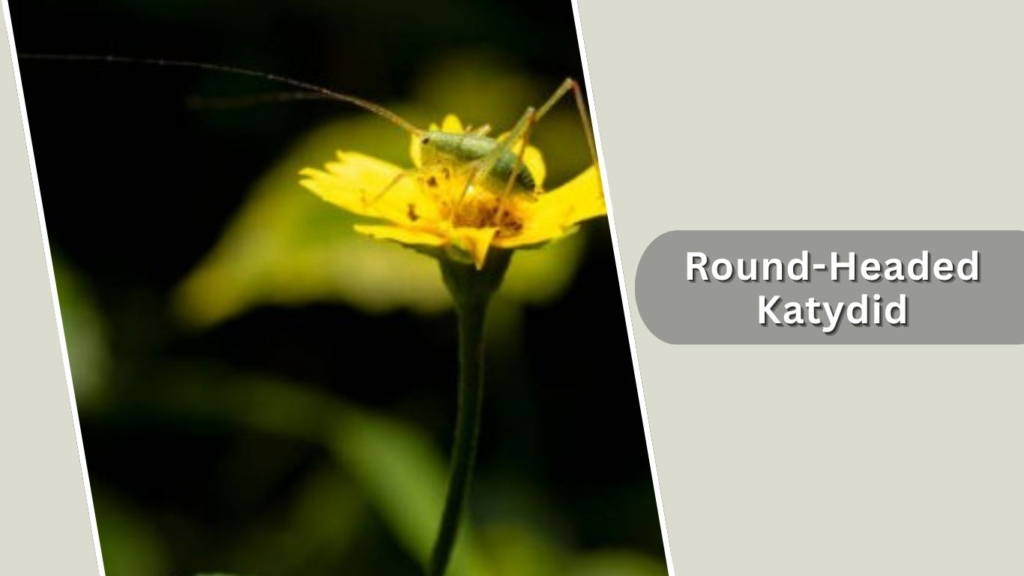
The round-headed katydid is a bright green, leaf-mimicking katydid known for its smooth, rounded head and soft nighttime calls. It blends extremely well into tree leaves, making it difficult to spot during the day despite its fairly large size.
Identification
- Medium to large, flattened green body
- Smooth, rounded head shape
- Broad, leaf-like wings with fine veins
- Very long, thread-like antennae
- Strong hind legs for jumping
- Females have a long, curved ovipositor
Habitat
Round-headed katydids live in deciduous forests, woodland edges, gardens, and orchards. They prefer trees and tall shrubs with dense leaves. This species is widely found across eastern and central North America.
Behaviors
This katydid is mostly nocturnal. Males call at night with soft, rhythmic sounds to attract females. During daylight, individuals remain motionless among leaves, relying on camouflage for protection.
Diet and Lifecycle
The round-headed katydid feeds mainly on leaves, flowers, and buds, and occasionally small insects. Its life cycle includes egg, nymph, and adult stages. Eggs are laid in plant tissue, nymphs hatch in spring, and adults develop by mid to late summer after several molts.
10. Slender Meadow Katydid (Conocephalus fasciatus)
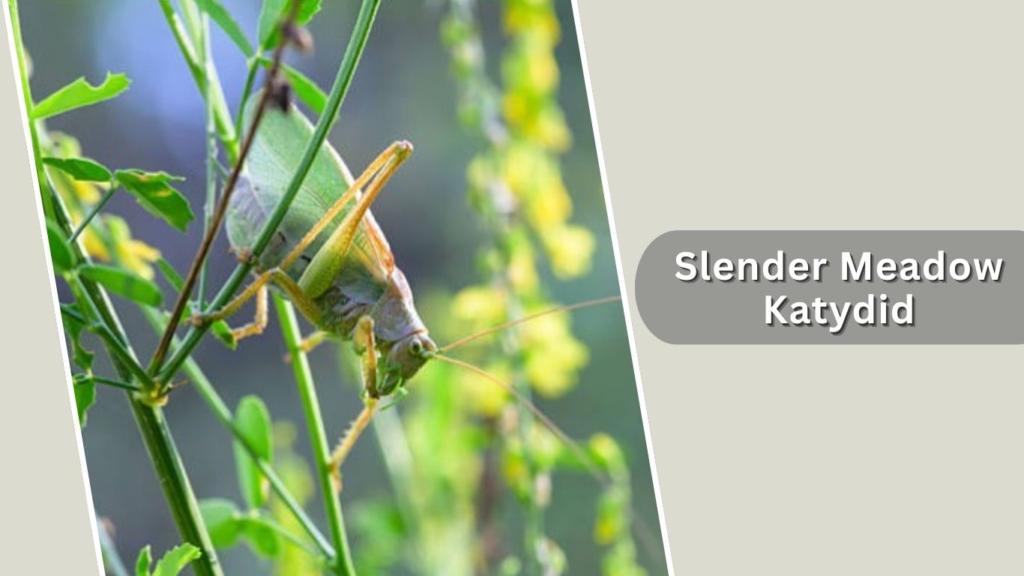
The slender meadow katydid is a small, narrow-bodied katydid commonly found in tall grasses and wet meadows. It is known for its continuous, high-pitched buzzing sound that fills grassy areas on warm summer evenings.
Identification
- Small, very slender body
- Green to brown coloration
- Distinct narrow wings
- Long, thread-like antennae
- Slightly pointed, cone-like head
- Strong hind legs for jumping
Habitat
Slender meadow katydids live in wet meadows, marsh edges, grasslands, roadside ditches, and fields. They prefer tall grasses and moist environments. This species is widely distributed across North America.
Behaviors
This katydid is mainly active at dusk and during the night. Males produce a continuous buzzing call. During the day, individuals hide low in grasses and stems.
Diet and Lifecycle
The slender meadow katydid feeds on grasses, seeds, pollen, and small insects. Its life cycle includes egg, nymph, and adult stages. Eggs are laid in plant stems, nymphs hatch in spring, and adults develop in summer after several molts.
11. Sword-Bearing Conehead (Neoconocephalus ensiger)
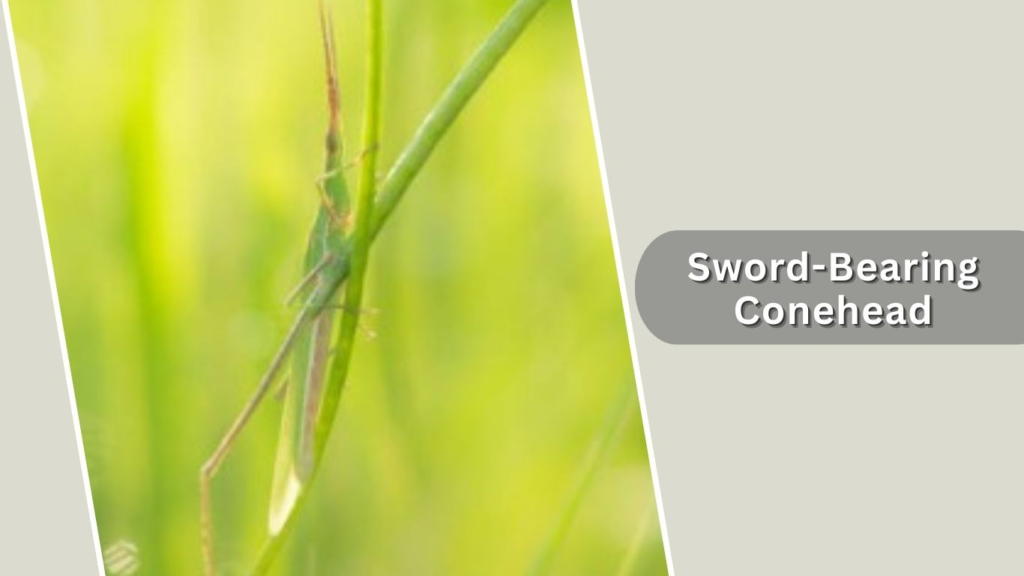
The sword-bearing conehead is a large conehead katydid named for the long, straight, sword-like ovipositor of the female. It is well known for its loud, continuous buzzing calls that are often heard in grassy and wetland areas at night.
Identification
- Medium to large, slender body
- Distinct cone-shaped head
- Green or brown coloration
- Very long, thin antennae
- Long, straight ovipositor in females
- Narrow wings extending beyond the abdomen
Habitat
Sword-bearing coneheads live in meadows, marshes, prairies, grasslands, and roadside vegetation. They prefer tall grasses and reeds, often in moist environments. This species is widely distributed across North America.
Behaviors
This katydid is nocturnal. Males produce loud, nonstop buzzing calls, especially on warm nights. During the day, they usually hide deep in grasses.
Diet and Lifecycle
The sword-bearing conehead feeds on grasses, seeds, pollen, and small insects. Its life cycle includes egg, nymph, and adult stages. Eggs are laid in plant stems, nymphs hatch in spring, and adults appear in summer after several molts.
12. Texas Bush Katydid (Scudderia texensis)
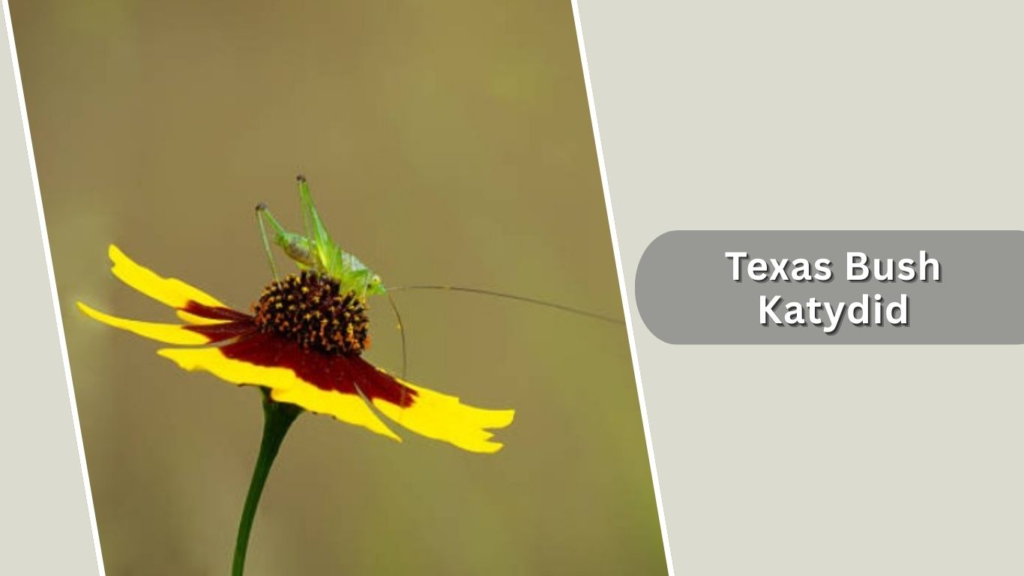
The Texas bush katydid is a slender, bright green katydid commonly found in shrubs and low trees. It is named after its strong presence in Texas and nearby regions and is known for its soft nighttime calls and excellent camouflage among leaves.
Identification
- Medium-sized, slender green body
- Narrow, leaf-like wings
- Very long, thin antennae
- Smooth body surface
- Curved, sword-like ovipositor in females
- Strong hind legs for jumping
Habitat
Texas bush katydids inhabit shrubs, woodland edges, forest understories, gardens, and hedges. They prefer areas with dense bushes and small trees. This species is mainly found in the southern United States, especially Texas and surrounding states.
Behaviors
This katydid is mostly nocturnal. Males call softly at night to attract females. During daylight hours, individuals remain hidden among leaves and branches.
Diet and Lifecycle
The Texas bush katydid feeds on leaves, flowers, buds, and occasionally small insects. Its life cycle includes egg, nymph, and adult stages. Eggs are laid in plant tissue, nymphs hatch in spring, and adults develop by summer after several molts.
13. Common Meadow Katydid (Orchelimum vulgare)
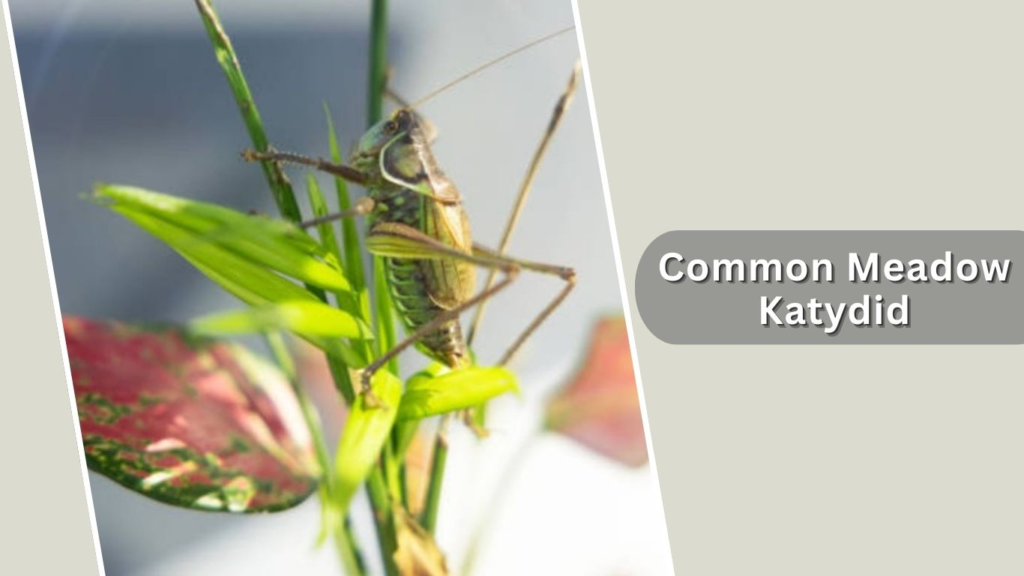
The common meadow katydid is a small to medium-sized katydid frequently heard in grassy fields and wet meadows. It is known for its sharp, repetitive buzzing calls and its habit of living low among grasses and reeds rather than in trees.
Identification
- Small to medium body size
- Green to yellowish-green coloration
- Slender body with narrow wings
- Very long, thread-like antennae
- Slightly pointed head
- Strong hind legs for jumping
Habitat
Common meadow katydids live in meadows, marsh edges, grasslands, roadside ditches, and fields. They prefer moist areas with tall grasses and reeds. This species is widespread across North America.
Behaviors
This katydid is active mostly at dusk and during the night. Males produce loud, rhythmic buzzing calls. During the day, individuals usually hide low in vegetation.
Diet and Lifecycle
The common meadow katydid feeds on grasses, seeds, small insects, and soft plant tissues. Its life cycle includes egg, nymph, and adult stages. Eggs are laid in plant stems, nymphs hatch in spring, and adults appear in summer after several molts.
14. Black-Legged Meadow Katydid (Orchelimum nigripes)
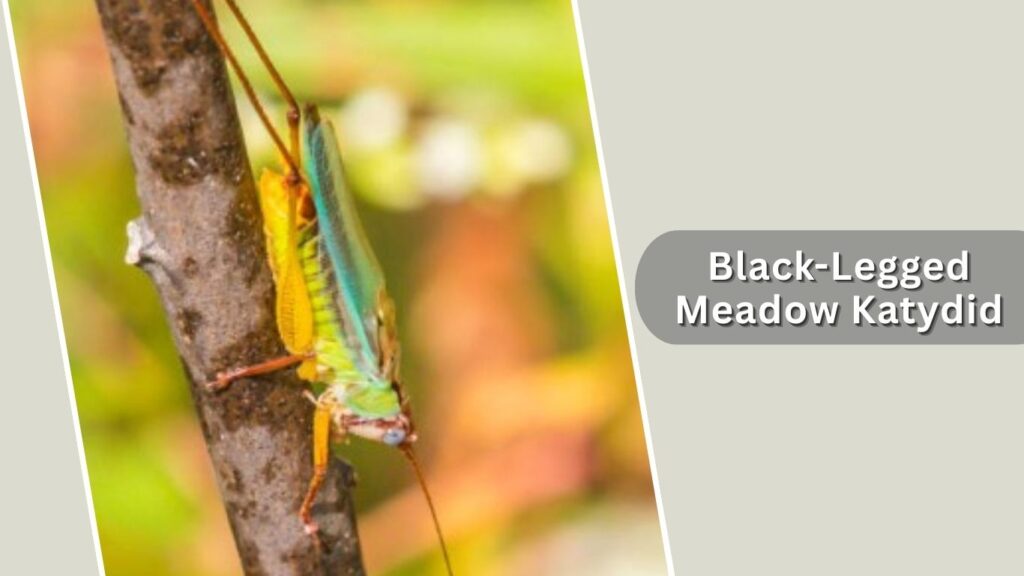
The black-legged meadow katydid is a small, slender species named for the dark coloration on its legs. It is commonly found in moist grassy habitats and is known for its sharp, rapid buzzing sounds during warm evenings.
Identification
- Small to medium-sized, slender body
- Green body with noticeably dark or blackish legs
- Narrow wings
- Very long, thread-like antennae
- Slightly pointed head
- Strong hind legs for jumping
Habitat
Black-legged meadow katydids live in wet meadows, marsh edges, grassy fields, and roadside vegetation. They prefer moist environments with tall grasses and sedges. This species is mainly found in eastern and central North America.
Behaviors
This katydid is mostly nocturnal. Males produce fast, buzzing calls to attract females. During the day, individuals hide among grass stems and leaves.
Diet and Lifecycle
The black-legged meadow katydid feeds on grasses, seeds, small insects, and soft plant tissues. Its life cycle includes egg, nymph, and adult stages. Eggs are laid in plant stems, nymphs hatch in spring, and adults mature in summer after several molts.
15. Straight-Lanced Meadow Katydid (Orchelimum gladiator)
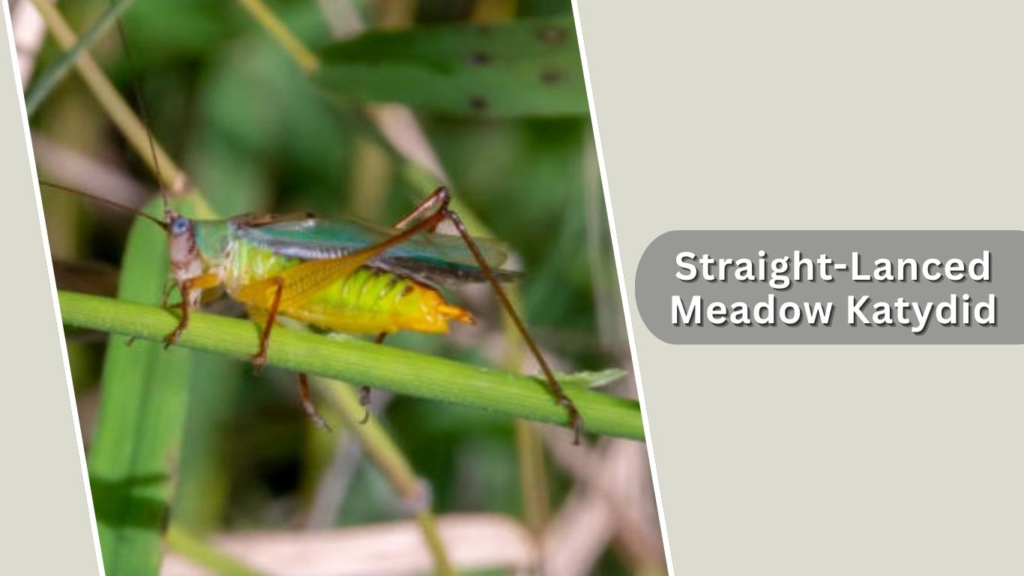
The straight-lanced meadow katydid is named for the female’s straight, lance-like ovipositor. It is a small, grass-dwelling katydid commonly found in moist meadows and grassy wetlands, where its buzzing calls are often heard on warm nights.
Identification
- Small to medium body size
- Green or yellowish-green coloration
- Narrow, slender wings
- Very long, thin antennae
- Straight, lance-like ovipositor in females
- Strong hind legs for jumping
Habitat
Straight-lanced meadow katydids inhabit wet meadows, marsh edges, grassy fields, and roadside ditches. They prefer tall grasses in moist areas. This species is widespread across much of North America.
Behaviors
This katydid is mostly active at dusk and at night. Males produce rhythmic buzzing calls. During the day, individuals remain hidden low in grasses.
Diet and Lifecycle
The straight-lanced meadow katydid feeds on grasses, seeds, pollen, and small insects. Its life cycle includes egg, nymph, and adult stages. Eggs are laid in plant stems, nymphs hatch in spring, and adults appear by summer after several molts.
16. Giant Katydid (Tettigonia viridissima)
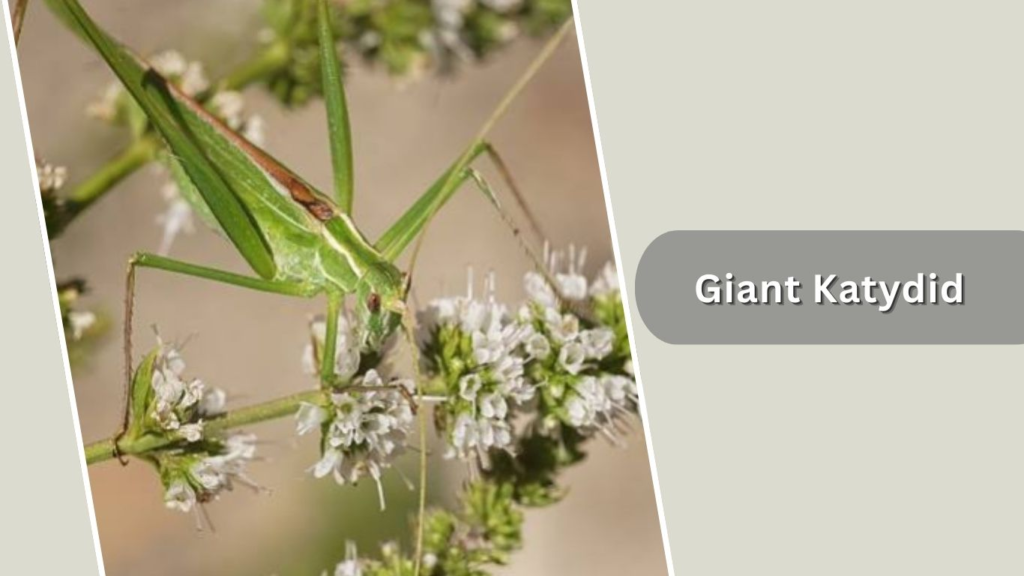
The giant katydid, also called the great green bush-cricket, is one of the largest katydids in the world. Its bright green color, powerful jaws, and loud calls make it a well-known insect across Europe and parts of Asia.
Identification
- Very large body, often 30–45 mm long
- Bright green coloration
- Long, leaf-like wings extending beyond the abdomen
- Extremely long, thread-like antennae
- Strong mandibles and powerful hind legs
- Long, sword-like ovipositor in females
Habitat
Giant katydids live in meadows, hedgerows, forest edges, gardens, and farmland. They prefer areas with tall grasses, shrubs, and dense vegetation. This species is widespread across Europe and western Asia.
Behaviors
This katydid is mostly nocturnal. Males produce loud, metallic buzzing or chirping calls. It is an active predator compared to many katydids and will sometimes hunt other insects.
Diet and Lifecycle
The giant katydid feeds on leaves, flowers, fruits, and a variety of insects. Its life cycle includes egg, nymph, and adult stages. Eggs are laid in soil, nymphs hatch in spring, and adults develop in summer after several molts.
17. Pink Katydid (Amblycorypha oblongifolia, pink form)
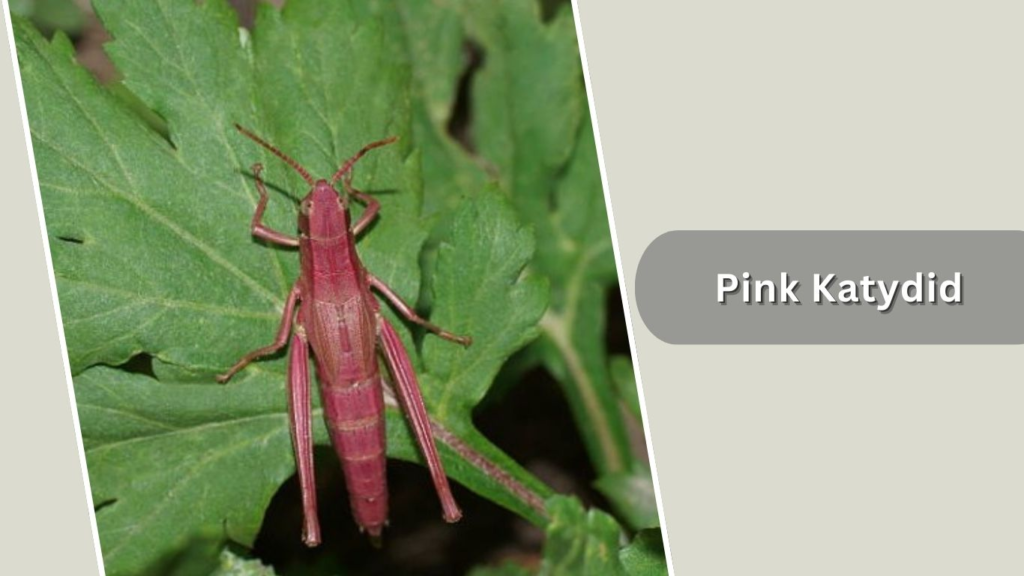
The pink katydid is not a separate species but a rare pink color form of normally green katydids. Its unusual rosy or bubblegum-pink coloration is caused by a genetic condition that affects pigments, making it one of the most eye-catching katydids.
Identification
- Medium to large body size
- Bright pink, rose, or magenta coloration
- Long, leaf-shaped wings
- Very long, thread-like antennae
- Strong hind legs for jumping
- Females have a long, curved ovipositor
Habitat
Pink katydids are found in the same habitats as green katydids, including forests, woodland edges, gardens, and orchards. They live among leafy trees and shrubs where katydids normally occur.
Behaviors
This katydid is mostly nocturnal. Males call at night to attract females. During the day, pink individuals hide among leaves, although their bright color makes them more visible than green forms.
Diet and Lifecycle
Pink katydids feed on leaves, flowers, buds, and occasionally small insects. Their life cycle includes egg, nymph, and adult stages. Eggs are laid in plant tissue, nymphs hatch in spring, and adults appear by late summer.
18. Shield-Backed Katydid (Subfamily Tettigoniinae)
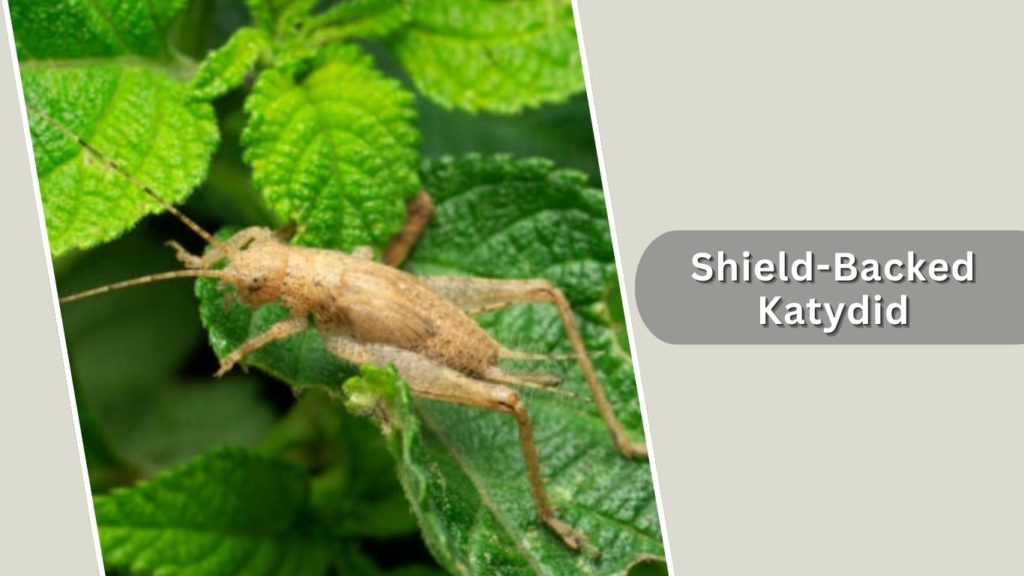
Shield-backed katydids are named for the large, rounded shield-like plate (pronotum) that covers much of their back. Many species are heavier-bodied than leaf katydids and are often found on the ground or low vegetation.
Identification
- Thick, heavy-bodied appearance
- Large shield-like pronotum covering the back
- Shorter wings than leaf katydids (in many species)
- Brown, green, or mottled coloration
- Very long antennae
- Strong hind legs for jumping
Habitat
Shield-backed katydids live in grasslands, shrublands, forest edges, rocky slopes, and sometimes caves or logs. They prefer cooler or shaded habitats compared to many leaf katydids. These katydids are found in North America, Europe, and Asia.
Behaviors
Most shield-backed katydids are nocturnal and hide under stones, logs, or dense plants during the day. Males produce chirping or buzzing calls at night. Some species are slow-moving and rely on their tough bodies for protection.
Diet and Lifecycle
Shield-backed katydids feed on leaves, seeds, fungi, and small insects. Their life cycle includes egg, nymph, and adult stages. Eggs are laid in soil or plant material, nymphs hatch in spring, and adults develop after several molts.
19. Spiny Predatory Katydid (Panacanthus cuspidatus)
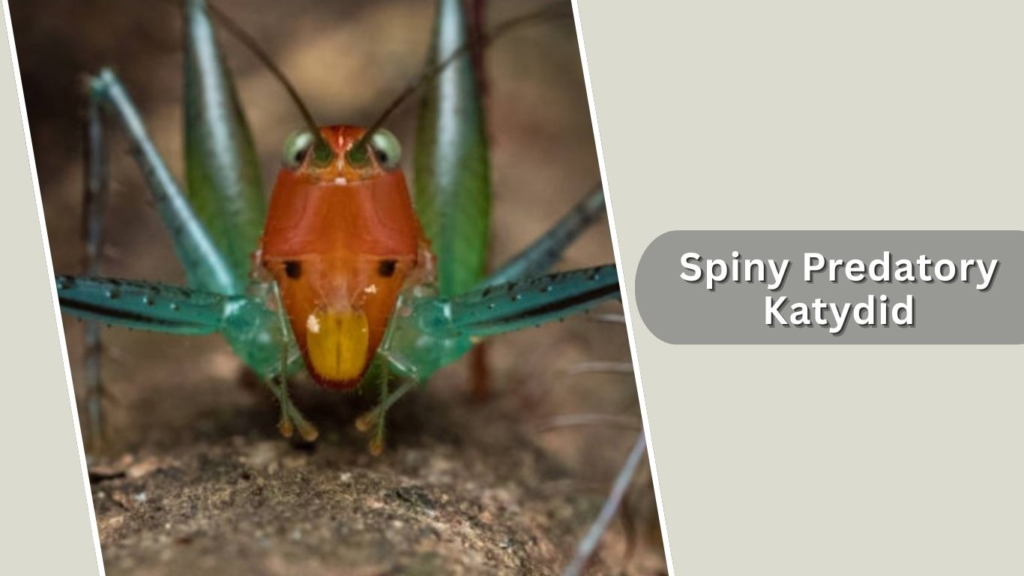
The spiny predatory katydid is a striking species known for the sharp spines covering its body and legs. Unlike many plant-eating katydids, this species is partly carnivorous and uses its strong jaws to capture other insects.
Identification
- Medium-sized, elongated body
- Prominent sharp spines on the body and legs
- Green to yellowish-green coloration
- Narrow, leaf-like wings
- Very long, thin antennae
- Powerful jaws adapted for predation
Habitat
Spiny predatory katydids live in tropical and subtropical forests, forest edges, and dense shrubs. They prefer areas with thick vegetation where insects are abundant. This species is mainly found in Central and South America.
Behaviors
This katydid is mostly nocturnal and an active hunter. It waits quietly on vegetation and grabs passing insects. Males also produce soft calls at night. During the day, individuals hide among leaves and branches.
Diet and Lifecycle
The spiny predatory katydid feeds on other insects such as moths, flies, and small grasshoppers, along with some plant material. Its life cycle includes egg, nymph, and adult stages. Eggs are laid in plant tissue, nymphs hatch in warm seasons, and adults develop after several molts.
20. Drumming Katydid (Meconema thalassinum)
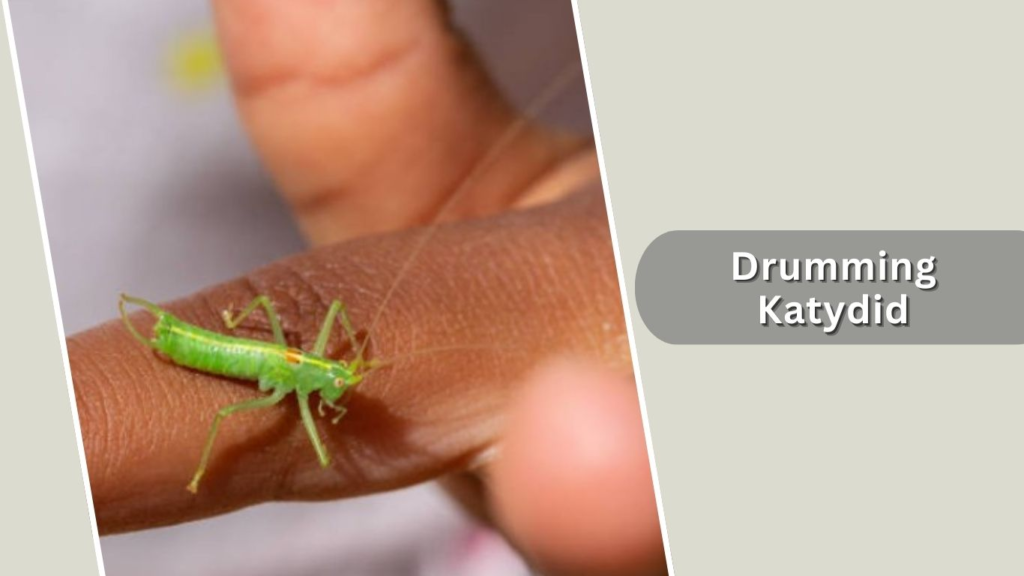
The drumming katydid is a small, pale green katydid best known for the unusual way males communicate. Instead of loud chirps, they “drum” by tapping their abdomens on leaves, producing soft vibrations that attract females.
Identification
- Small, slender body
- Pale green to yellowish coloration
- Short, delicate wings
- Very long, thin antennae
- Slender legs adapted for climbing
- Females have a short, curved ovipositor
Habitat
Drumming katydids live mainly in trees, shrubs, gardens, parks, and forest edges. They prefer leafy vegetation where they can climb and feed. This species is native to Europe and parts of western Asia and has been introduced to some other regions.
Behaviors
This katydid is nocturnal. Males communicate by tapping on leaves rather than producing loud calls. During the day, individuals hide quietly on the undersides of leaves.
Diet and Lifecycle
The drumming katydid feeds on small insects such as aphids, as well as soft plant material. Its life cycle includes egg, nymph, and adult stages. Eggs are laid in bark or plant tissue, nymphs hatch in spring, and adults develop by summer after several molts.
21. Greater Leaf Katydid (Phylloptera spp.)
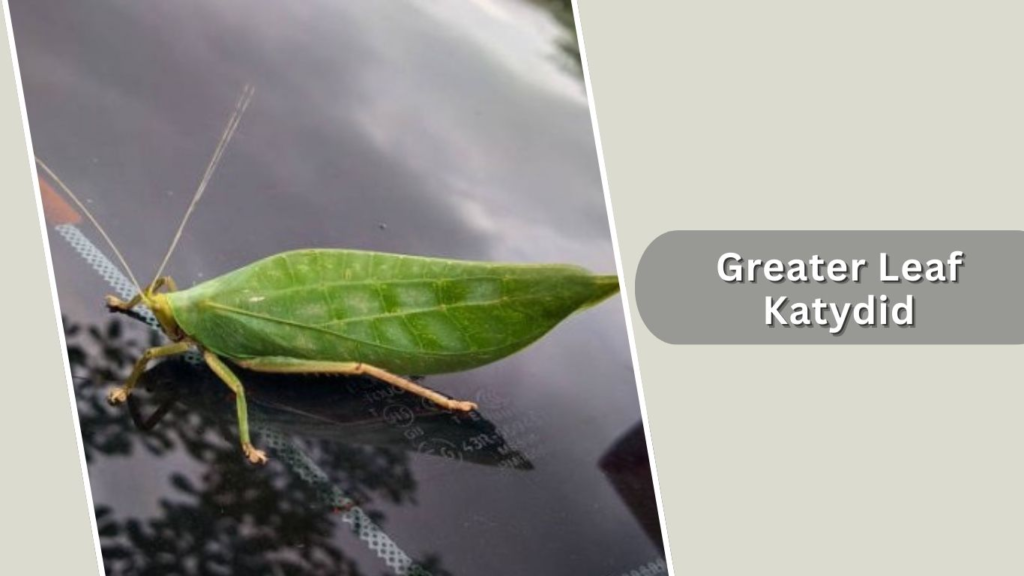
The greater leaf katydid is a tropical katydid famous for its extreme leaf mimicry. Its body, wings, and even vein patterns closely resemble real leaves, sometimes complete with spots that look like leaf damage, making it nearly invisible in forest foliage.
Identification
- Medium to large, flattened body
- Broad, leaf-shaped wings with strong vein patterns
- Green or brown coloration resembling leaves
- Very long, thread-like antennae
- Strong hind legs for jumping
- Excellent camouflage with leaf-like shape
Habitat
Greater leaf katydids inhabit tropical forests, forest edges, and dense shrublands. They prefer warm, humid environments with abundant foliage. These katydids are mainly found in Central and South America.
Behaviors
This katydid is nocturnal. Males produce soft calls at night, and individuals move slowly through vegetation. During the day, they remain motionless among leaves.
Diet and Lifecycle
Greater leaf katydids feed mainly on leaves, flowers, and soft plant tissue. Their life cycle includes egg, nymph, and adult stages. Eggs are laid on plants, nymphs hatch in warm seasons, and adults develop after several molts.
22. Ant-Loving Katydid (Myrmecophilus spp.)
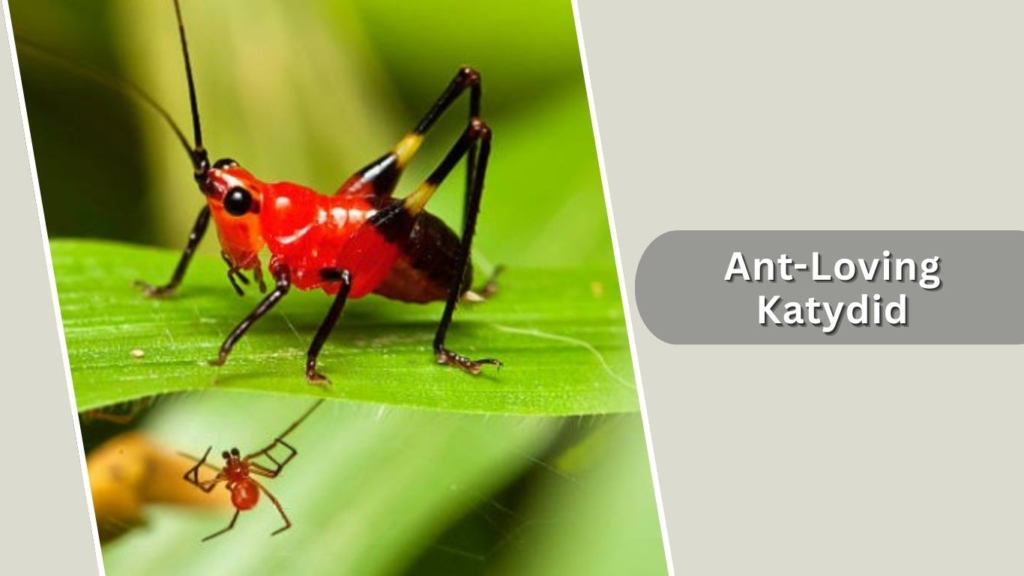
The ant-loving katydid is a very small, unusual katydid that lives closely with ant colonies. Unlike most katydids that live on plants, this group spends much of its life inside ant nests, where it feeds and hides among the ants.
Identification
- Very small body size
- Brown to dark brown coloration
- Short wings or wingless appearance
- Very long, thin antennae
- Flattened body adapted for tight spaces
- Resembles small crickets more than leaf katydids
Habitat
Ant-loving katydids live inside or near ant nests in soil, under stones, rotting wood, and leaf litter. They are found in warm regions across parts of Europe, Asia, Africa, and the Americas.
Behaviors
These katydids live quietly among ants and use chemical mimicry to avoid being attacked. They move quickly through ant tunnels and are rarely seen outside nests.
Diet and Lifecycle
Ant-loving katydids feed on food scraps, fungi, and secretions within ant colonies. Their life cycle includes egg, nymph, and adult stages. Eggs are laid inside or near ant nests, and development occurs within this protected environment.
23. Leaf-Mimic Katydid (Family Tettigoniidae)
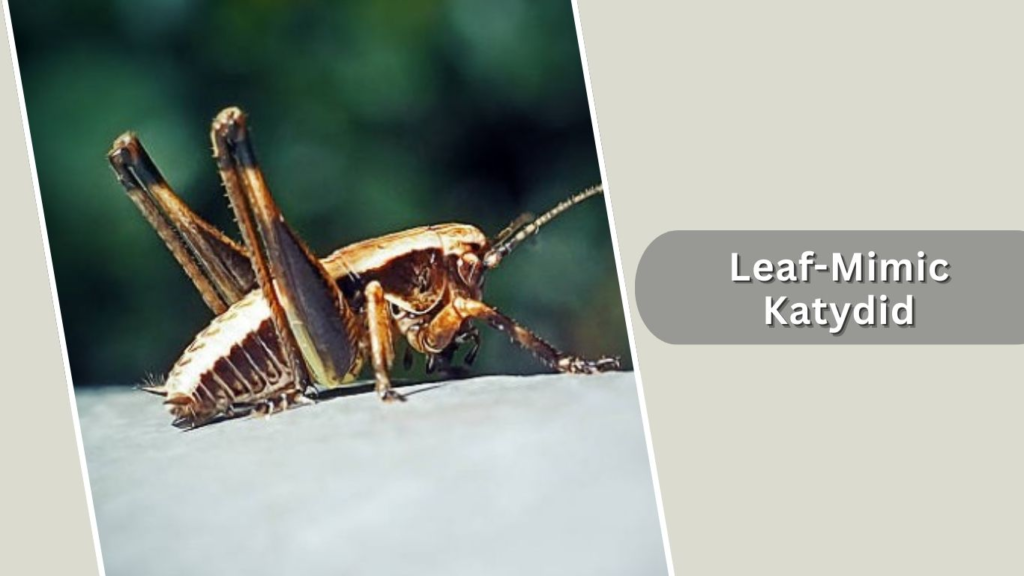
Leaf-mimic katydids are famous for their extraordinary resemblance to real leaves. Their wings often show detailed vein patterns, uneven edges, and even spots that look like insect damage, providing near-perfect camouflage in forests.
Identification
- Flattened, leaf-shaped body
- Broad wings with detailed leaf-like veins
- Green or brown coloration
- Very long, thread-like antennae
- Strong hind legs for jumping
- Often shows “leaf spot” markings
Habitat
Leaf-mimic katydids live mainly in tropical and subtropical forests, forest edges, and dense shrublands. They prefer environments with thick foliage. Many species occur in Central and South America, Africa, and Southeast Asia.
Behaviors
These katydids are mostly nocturnal and move slowly through vegetation. During the day, they remain still among leaves, relying on camouflage to avoid predators.
Diet and Lifecycle
Leaf-mimic katydids feed on leaves, flowers, and soft plant tissues, and some also eat small insects. Their life cycle includes egg, nymph, and adult stages. Eggs are laid on plants, nymphs hatch in warm seasons, and adults develop after several molts.
FAQs
What is a katydid and how is it different from a grasshopper?
Katydids belong to the family Tettigoniidae and are closely related to grasshoppers and crickets. They are usually distinguished by their very long antennae, leaf-like wings, and mostly nocturnal behavior. Grasshoppers typically have shorter antennae and are more active during the day.
Where do katydids usually live?
Katydids are found worldwide in forests, meadows, grasslands, wetlands, and gardens. Most species prefer areas with dense vegetation such as trees, shrubs, and tall grasses, where their leaf-like bodies provide excellent camouflage from predators.
What do katydids eat?
Most katydids feed on leaves, flowers, fruits, and soft plant tissues. Some species are omnivorous or predatory and will also eat small insects, aphids, or even other katydids. Their diet often depends on habitat and species type.
Why are katydids so good at camouflage?
Katydids have evolved leaf-shaped wings, green or brown coloration, and vein-like patterns that closely resemble real leaves. This camouflage helps them avoid birds, reptiles, and mammals by blending perfectly into surrounding vegetation.
Are katydids harmful to humans or gardens?
Katydids are harmless to humans and rarely bite. In most cases, they cause little damage. However, in large numbers, some species may chew on garden plants or crops, but they are not considered major agricultural pests.
